Three-Step Coffee Tasting: Aroma, Flavor, and Aftertaste
Many coffee enthusiasts run into the same situation: I buy a bag of beans described as citrus and peach, but I cannot taste either. Is it the beans, my brewing, or my senses that are the problem?
Coffee flavor troubles many people. With so many flavors on the wheel, why can't I taste them? Not everyone has professional sensory training, after all. Or maybe I taste plum where the label says peach. Such differences come from culture, lifestyle, diet, and region; they are simply different descriptions of the same cup. That is why the most important part of tasting is communication. Sharing how different beans feel to you leads to different experiences and different descriptions, and that exchange brings real enjoyment.
Here is a simple example from the SCAA flavor wheel: the chocolate aroma from the Maillard reaction, such as milk chocolate, dark chocolate, and white chocolate. Without specialized training or high-level tasting skill, which enthusiast can truly tell the three apart? (Even chocolate has its own flavor wheel now.)
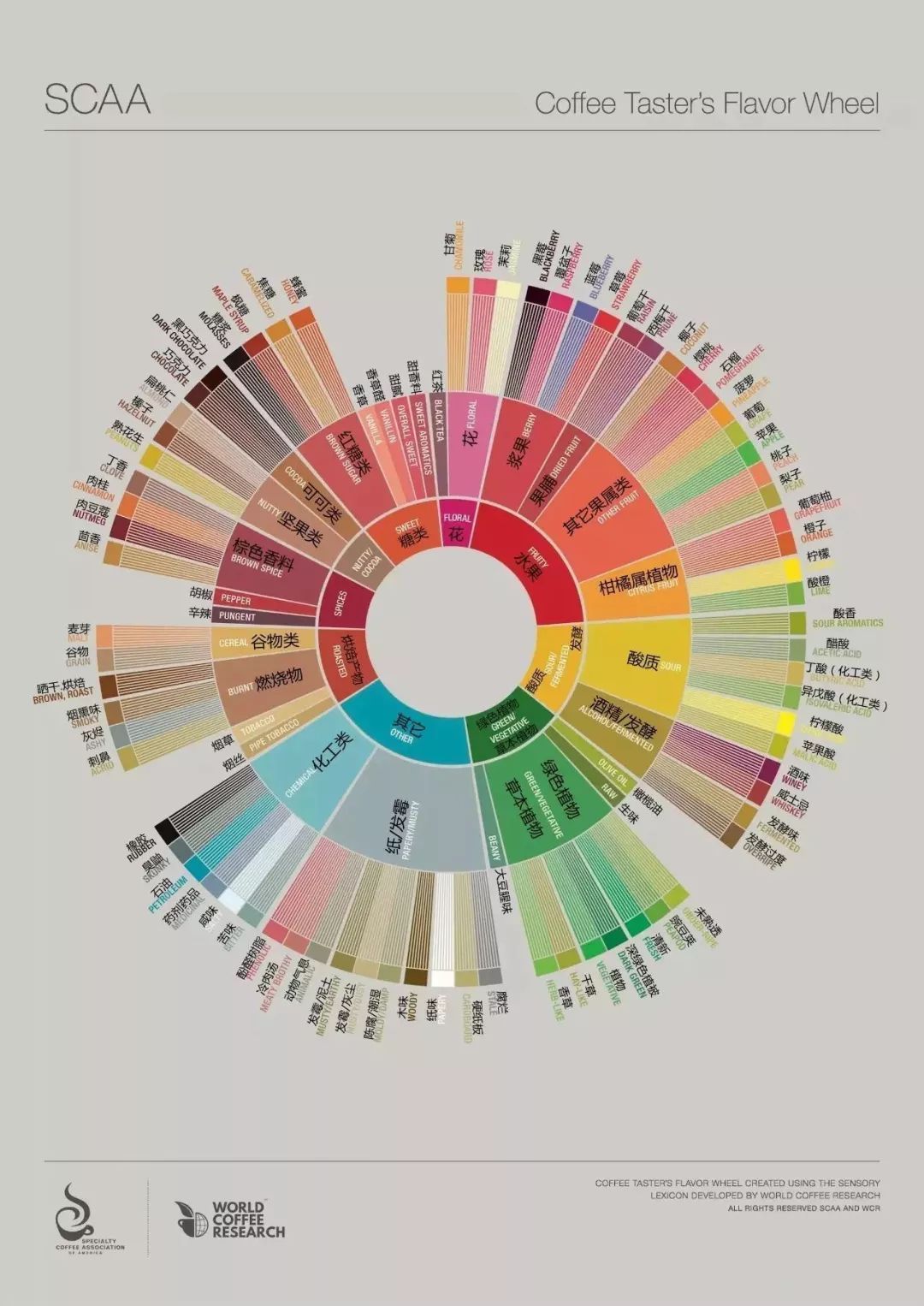
Three Conditions for Understanding Coffee
To truly understand coffee, you need three conditions.
First: Have you had similar taste and smell experiences? If you have never eaten a peach, of course you cannot recognize peach flavor. This is the importance of sensory training, starting with the olfactory chapter.
Second: Wait until the coffee has cooled completely before tasting. Fruity notes usually become more recognizable when the coffee is cool, and flavors unfold as the temperature drops. This is how you learn to identify lemon, grapefruit, and honey notes in coffee.
Third: Coffee strength also affects a cup's character. For light-roast coffees with floral notes, brewing weaker spreads out the flavor spectrum and makes the tastes easier to distinguish (which is why cupping uses a 1:18.18 coffee-to-water ratio). Can you tell the floral aromas in coffee apart?
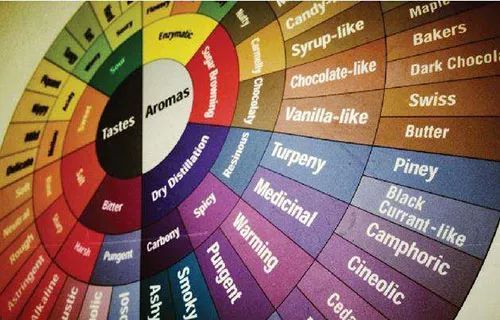
Tasting Example: Yirgacheffe Coffee
For example, when tasting a good cup of Yirgacheffe, follow these steps:
- Drink in small sips, slowly, even swishing gently, keeping the coffee in your mouth and stirring it lightly
- Each sip reveals different layers as the temperature changes. The first couple of sips may taste bitter at the back of the tongue; as the coffee cools it shifts from bitter to acidic, revealing subtle citrus acidity
- Halfway through, it changes from acidic to sweet and from bitter to pleasant, beginning to develop an aftertaste. The tongue surface feels sweet, finally showing a caramel sweetness that lingers between mouth and nose. Taste the finish through retronasal olfaction
- After finishing, do not rush to wash the cup. Smell the sweet, pleasant aroma at the bottom
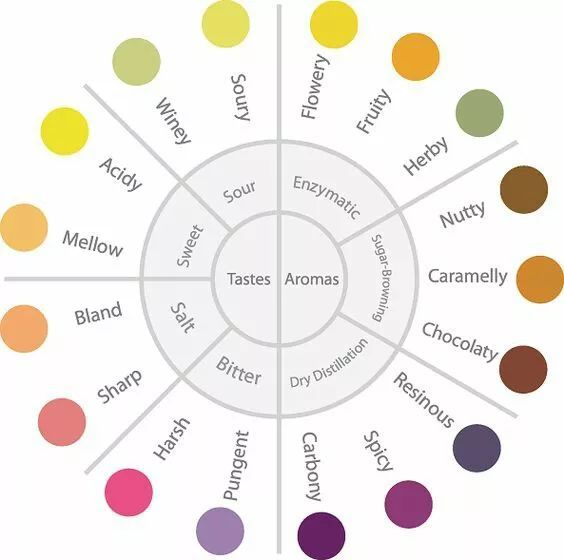
The Science of Flavor Perception
Brain receives information, compares, analyzes, remembers; that is the whole process.
We can smell an aroma and taste a flavor but may not describe them accurately. The flavor wheel concretely categorizes the human taste system, corresponding to the aroma wheel for the olfactory system. Practicing with both together lets you clearly perceive the most subtle differences among aromas.
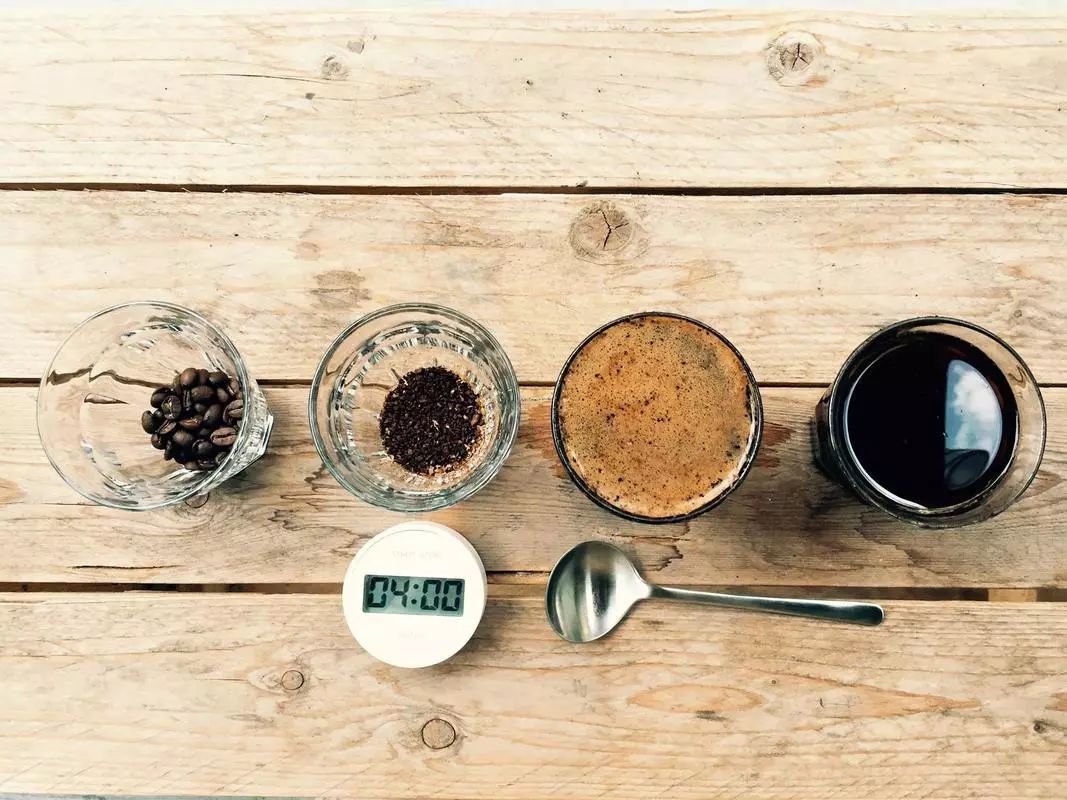
Three Steps to Coffee Tasting: Smell, Taste, and Savor
Step 1: Aroma
Start by smelling the aroma.
Before tasting, use your nose to take in the coffee's aroma, and here you can confidently borrow wine-tasting vocabulary. First check whether your coffee has aroma: floral, fruity, or wine-like. Also check for abnormal earthy, moldy, volatile acidic, or spicy flavors, which come from poor bean quality or improper storage. If the coffee is in good condition, its aroma delivers great enjoyment. The wine-tasting system works well for evaluating coffee, seeking out fruit, flower, plant, roasting, and spice aromas. Since heat helps aroma diffuse, you can effortlessly capture the rich, complex fragrances of coffee.
Bring it close to your nose and mouth and you will perceive the dry aromas of coffees from different origins. Latin American coffees, for instance, show nutty and dark chocolate-like flavors, while African coffees often feature floral and fruity notes. Close your eyes and slowly smell the wet aroma.
Step 2: Flavor
Tasting the flavors.
When coffee enters your mouth, you can feel its flavors. Many enthusiasts, especially those new to tasting, think coffee does not taste as good as it smells. Sensory discrimination of coffee liquid in the mouth does take practice, but over time the flavors become detectable. Good coffee has no off-flavors; it is pure and clear. Cleanliness means that from the first sip to the final aftertaste there are no unpleasant off-flavors or textures.
Body is what we commonly call the mature, mellow, rich taste expressed by the coffee liquid. The difference between a cup of water and a cup of coffee is that water has no flavor and is not viscous, while espresso, rich in oils, has excellent body. A coffee with good body lets the aroma linger longer in the mouth and creates a longer finish.
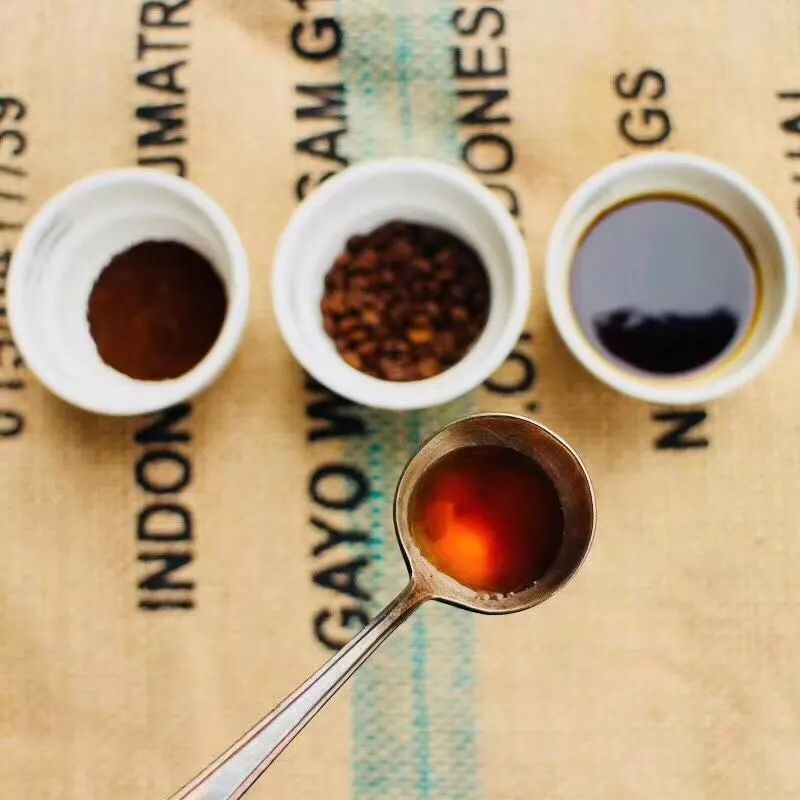
Distinguishing Sweet, Salty, Sour, and Bitter
Where does sweetness come from?
People have long held a misconception: those who like black coffee do not necessarily like bitterness, and bitterness should not be the main flavor a normal black coffee shows. If the coffee berries are fully ripe, properly roasted, and kept fresh, the coffee itself will have some sweetness, especially caramel, honey, or even sugarcane sweetness in the aroma. Meanwhile, many coffees inherently have excellent rounded textures. These delicate, worthwhile characteristics can be completely overwhelmed by a single spoonful of sugar and milk. Of course, if it is mediocre or stale coffee, skipping milk and sugar is simply being hard on yourself.
Where does saltiness come from?
Many people can taste sweet, sour, and bitter in coffee, but there is another flavor, salty, that is often overlooked. These four flavors influence and inhibit one another, and saltiness excels at hiding beneath the other three.
Saltiness in coffee mainly comes from water-soluble minerals such as potassium oxide and sodium oxide. The bean's growing environment, roast level, freshness, processing method (such as Indian monsooning), and brewing technique all affect its saltiness too.
Concentration or water pH can also make coffee taste salty.
Where does sourness come from?
Those who drink single-origin coffee often think of FrontStreet Coffee's Yirgacheffe beans when they hear about sour coffee, and indeed FrontStreet Coffee's Yirgacheffe is a representative of acidic coffee. Beginners who have not met single-origin coffee may wonder how coffee can be sour, and whether sour coffee is expired or poor quality. This sourness is different: coffee contains hundreds of acidic compounds.
Coffee is the seed of a fruit, so it naturally holds fruit-acid components such as citric acid and malic acid. Citric acid is an important organic acid that peaks in light roasts and continuously breaks down during later roasting. Typically, domestic roasters use a light roast for Yirgacheffe, Geisha, and Kenya, so they taste acidic.
Quality coffee's fruit acids have distinctive aromas that give coffee its soul; conversely, cheap coffee's acidity lacks aroma and can even taste strange, so roasters remove it. Appropriate acidity increases coffee's liveliness, brightness, and fruity character.
Where does bitterness come from?
Take a gentle sip: if there is a bitter taste, it affects the whole cup's complexity. Negative astringency reveals flaws in quality. But if bitterness can transform into a pleasant aftertaste and astringency can stimulate saliva, quality bitterness can sometimes signal good coffee.

Step 3: Perceiving the Aftertaste
The final aspect of tasting is aftertaste, the lingering sensation coffee leaves in the mouth and throat. After swallowing, a flavor always returns from the throat. Some aftertastes are long-lasting and clear, others brief and vague. Longer, clearer aftertastes indicate higher quality.
Throat sensation is generally divided into sweet, smooth, dry, and cool:
- Sweet: the feeling of a sweet aftertaste in the throat
- Smooth vs. Dry: smooth means a comfortable, smooth feeling in the throat; dryness makes the throat uncomfortable and dry, and in severe cases can even make swallowing difficult. Besides the discomfort, dryness also makes the drinker anxious
- Cool throat sensation is the most pleasant to experience, like the slight coolness from drinking mint water
Next, when you pick up a cup and bring it to your mouth, whether or not you consciously explore its olfactory performance, its aroma has already entered your nasal cavity and been recorded by your brain.
Learning to taste coffee is a long process. Beginners should not be discouraged by temporary difficulty. Expose yourself to more coffee, taste more coffee, and use the three steps of smelling, tasting, and savoring to appreciate it. Gradually you will discover the wonders of coffee flavor.
FrontStreet Coffee Recommendation
Sourness is often the note that confuses newcomers most, and Ethiopia is the clearest place to learn it. FrontStreet's Yirgacheffe Gedeb Cooperative is a favorite first stop in specialty coffee, showing bright citrus, berry, and floral notes with a green-tea-like finish. Unlike the sharp "sour coffee" people imagine, a good Yirgacheffe is soft and bright, tasting like the sweet-and-sour of real fruit rather than an aggressive acidity, which makes it very approachable for a beginner.
For a bigger fruit expression, FrontStreet's Ethiopia Huakui has become one of the market's star products in recent years. Its defining trait is an extremely prominent tropical fruit aroma, often showing strawberry, passion fruit, jackfruit, and even lychee. Sweetness is clear and bitterness is minimal, and it is smooth and juicy on entry, so many drinkers describe it as "the coffee that tastes least like coffee."
To taste a precise, structured acidity, try FrontStreet's Kenya Cherry Tomato, a Kenyan washed single origin built on bright cherry-tomato and smoked-plum acidity with a full, juicy body. It comes from Kenya's Thika region, grown at 1,550-1,750 meters from the classic SL28 and SL34 varieties, and uses Kenya's signature 72-hour double washed fermentation. Light roasted to preserve the lively acidity, it shows dried cherry tomato and florals in the dry aroma, then cherry tomato and smoked plum in the cup with a clean, lingering finish of yellow sugar and light green tea.
Important Notice :
FrontStreet Coffee is a long-established specialty coffee roaster in Guangzhou China, selling freshly roasted beans from its own farm in Yunnan as well as dozens of carefully selected single-origin beans from around the world for both pour-over and espresso. The products deliver consistently excellent quality and great value, with shipping within 24 hours. Guangzhou's FrontStreet Coffee shop is recommended by many coffee lovers, and the beans are now available online at the Tmall 。
FrontStreet Coffee has moved to a new address:
FrontStreet Coffee Address: 315,Donghua East Road,GuangZhou
Tel:020 38364473
 Scan and follow the En Gafei WeChat official account. Please indicate that the reprint comes from "En Gafei".