Key Considerations for Selecting Packaged Coffee Beans _ Packaging Options for Bagged Coffee Beans _ Recommended Packaged Coffee Beans
Professional coffee knowledge exchange. For more coffee bean information, please follow Coffee Workshop (WeChat official account: cafe_style).
Freshness is the Life of Coffee - How to Determine the Freshness of Bagged Coffee Beans
There are three steps: smell, look, and peel.
Smell
Bring the beans close to your nose and take a deep sniff. Can you clearly smell the coffee's aroma? If so, the beans are fresh enough. If the aroma is faint, or has already turned greasy, similar to the smell peanuts or nuts develop when left too long, the beans are no longer fresh at all.
No matter how much care you put into grinding and brewing beans like these, you cannot make a good cup of coffee from them.
Look
Pour the beans into your hand and spread them out. Confirm the origin and variety, and check whether the beans have been roasted evenly.
Peel
Take one bean and try to split it open with your fingers. If the beans are fresh, it should split easily, with a crisp sound and a clean break. If they are not fresh, you will find that opening even a single bean takes real effort.
Splitting a bean open also lets you check another important thing: whether the heat during roasting was even. If it was, the color of the outer layer and the inner layer will match. If the surface is clearly much darker than the inside, the roast heat may have been too high, which also affects the beans' aroma and flavor.
Purchase Considerations for Bagged Coffee Beans
When you start buying coffee beans, first choose a well-run coffee shop. The freshness of roasted beans is the life of coffee, so pick a shop that stores fresh beans in a clean warehouse with no residual oil from old beans, no direct sunlight, and no high temperatures nearby. Shops that roast their own beans and take pride in their aroma are another good sign.
When buying roasted beans, you can ask for a crisp-tasting coffee. If you want something with a slightly sour edge, beans with strong bitterness work better, or you can simply tell the staff to pick according to your preferences.
If you have the shop grind the beans after purchase, be sure to tell the manager which brewing equipment you use so they can grind for those tools, such as electric coffee makers, filters, filter paper, or syphons.
When buying canned coffee powder in supermarkets, choose based on the labels, such as bean type or flavor tendency, according to your own preferences.
Secrets to Coffee Bean Storage
Roasted coffee beans oxidize easily in contact with oxygen in the air, which causes the oils they contain to go rancid and their aromas to volatilize and disappear. Temperature, humidity, and sunlight speed up the decline further.
Decaffeinated beans, which have been through multiple treatments, oxidize even faster. To preserve coffee's aroma and quality, how beans are packaged and stored becomes a major consideration.
After roasting, coffee beans release carbon dioxide equal to three times their volume. So the most important part of coffee packaging, beyond avoiding contact with air, is managing the carbon dioxide the beans produce.
Gas-Inclusive Packaging
This is the most common packaging, using empty cans, glass, paper bags, or plastic containers for beans and powder, sealed with a lid or a closure. Its preservation quality is low, and because the coffee is constantly in contact with air, it must be consumed quickly, with a drinking window of about one week.
Vacuum Packaging
Here the container, whether a can, aluminum foil bag, or plastic bag, has its air removed after being filled with coffee. Although it is called vacuum, at most 90% of the air is removed, and because coffee powder has more surface area than whole beans, even the small amount of air left can easily combine with the powder and affect flavor.
Gas-Filled Packaging
A pinhole is designed into the metal bag. After filling with coffee, inert nitrogen is added, pushing the carbon dioxide in the bag out through the pinhole. This method is common, but once the gas is expelled, oxygen quietly re-enters through the pinhole.
Gas Absorbent Packaging
Absorbents made from deoxidizers and decarbonizers are placed in the bag. The air inside can be absorbed easily, and the carbon dioxide the coffee produces can be absorbed too, but the drawback is that the coffee's aroma is absorbed along with it.
One-Way Valve Packaging
This is currently the most ideal external coffee packaging, and it is used only for whole beans, not powder. It is similar to the pinhole metal bag, except that gas inside the bag can escape through the pinhole while a one-way piston keeps oxygen outside from coming in.
Coffee manufacturers cool and package the beans immediately after roasting and fill the bag with nitrogen to push the gas out. This method is ideal, but the materials are expensive and costs are high. Today only selected coffees from large companies use it.
Coffee beans, those small dark-brown beans that seem so ordinary, actually involve considerable expertise at every stage.
Coffee Purchase Considerations
When purchasing coffee, pay attention to the packaging method, because coffee releases more than three times its own volume in carbon dioxide (CO2) after roasting. If the beans keep contact with air, fat oxidation accelerates and the coffee loses its delicious taste. Sealed packaging, meanwhile, can easily be damaged by the expansion of carbon dioxide inside the bag. Most packaging today punches a hole in the bag and sticks a plastic patch over it. When the pressure of the escaping carbon dioxide is just enough to push the patch open, it springs back to cover the hole and keep air out. The cost is low, so most merchants use it, but the frustrating part is that the simple adhesive construction makes it liable to fall off, and at the moment the patch springs back, a small amount of air still gets in.
The most effective method today is packaging filled with a special patented one-way exhaust valve, which releases the carbon dioxide the coffee produces from the inside while preventing outside air from entering. The valve is sealed firmly inside the bag using high temperature and pressure. The machine and valve cost relatively more, but this is currently recognized as the most ideal preservation method, letting you taste freshly roasted coffee anytime, anywhere.
To keep coffee fresh, decide your purchase quantity based on personal consumption, about half a pound (around 200 grams) at a time. Store it away from light, high temperature, and moisture. Because of its climate, Taiwan has high humidity, making coffee prone to flavor changes and deterioration in storage. After purchase, squeeze the air out of the bag and quickly move the coffee into a sealed container or wrap it in newspaper. Once opened, coffee beans keep about one week at room temperature and about half a month in the freezer; coffee powder keeps about three days at room temperature and about one week in the freezer.
Bagged Coffee Bean Brand Recommendations
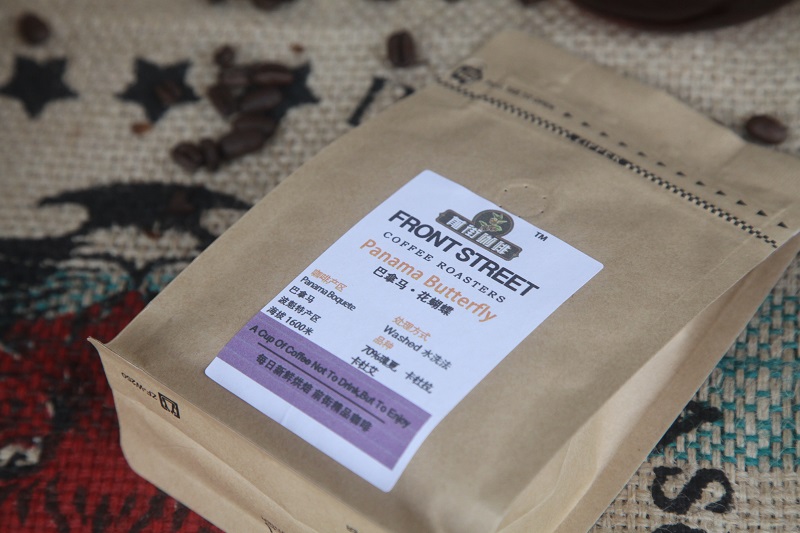
FrontStreet Coffee's freshly roasted single-origin bagged coffee beans are fully guaranteed in both brand and quality and suit a range of brewing equipment. More importantly, they offer exceptional value. A half-pound bag of 227 grams costs only around 80-90 yuan. At 200ml per cup with a coffee-to-water ratio of 1:15, one package makes 15 cups of specialty coffee, putting each cup at only about 5-6 yuan, remarkable value next to cafes charging dozens of yuan per cup.
FrontStreet Coffee: A roasting shop in Guangzhou with a small storefront but diverse bean varieties, where you can find various famous and lesser-known beans, while also providing online store services. https://shop104210103.taobao.com
FrontStreet Coffee Recommendation
For beans that hold up well in a bag and brew consistently, medium roasts are a safe bet, and FrontStreet Coffee's medium-roast line covers a wide range. The FrontStreet Brazil Queen Estate is a rare yellow Bourbon from Brazil, the world's largest coffee producer; its clean, sweet profile brings out cream, peanut, chocolate, toasted bread, and sugarcane after a medium roast and works in a filter, a moka pot, or an espresso machine. The FrontStreet Strawberry Candy, a blend of Costa Rican honey-processed coffee and washed Panama Geisha, is roasted medium to show both orange-blossom honey sweetness and a rounded body, and suits cold brew, pour-over, and espresso alike.
On the softer, more balanced side, the FrontStreet 2013 Natural Typica is a Yunnan single origin roasted medium to bring out nut, brown sugar, black tea, and dried apricot notes, useful for pour-over, cold brew, and drip machines and priced very affordably. And for a classic, the FrontStreet Jamaica Blue Mountain No.1 is roasted medium to fuse acidity, bitterness, sweetness, and body into one elegant whole, with chocolate, roasted nuts, cream, and caramel unfolding from the first sip.
Important Notice :
FrontStreet Coffee is a long-established specialty coffee roaster in Guangzhou China, selling freshly roasted beans from its own farm in Yunnan as well as dozens of carefully selected single-origin beans from around the world for both pour-over and espresso. The products deliver consistently excellent quality and great value, with shipping within 24 hours. Guangzhou's FrontStreet Coffee shop is recommended by many coffee lovers, and the beans are now available online at the Tmall 。
FrontStreet Coffee has moved to a new address:
FrontStreet Coffee Address: 315,Donghua East Road,GuangZhou
Tel:020 38364473
 Scan and follow the En Gafei WeChat official account. Please indicate that the reprint comes from "En Gafei".