What's the Right Grind Size for French Press Coffee? What Coffee Beans Work Best_ French Press Coffee Bean Recommendations
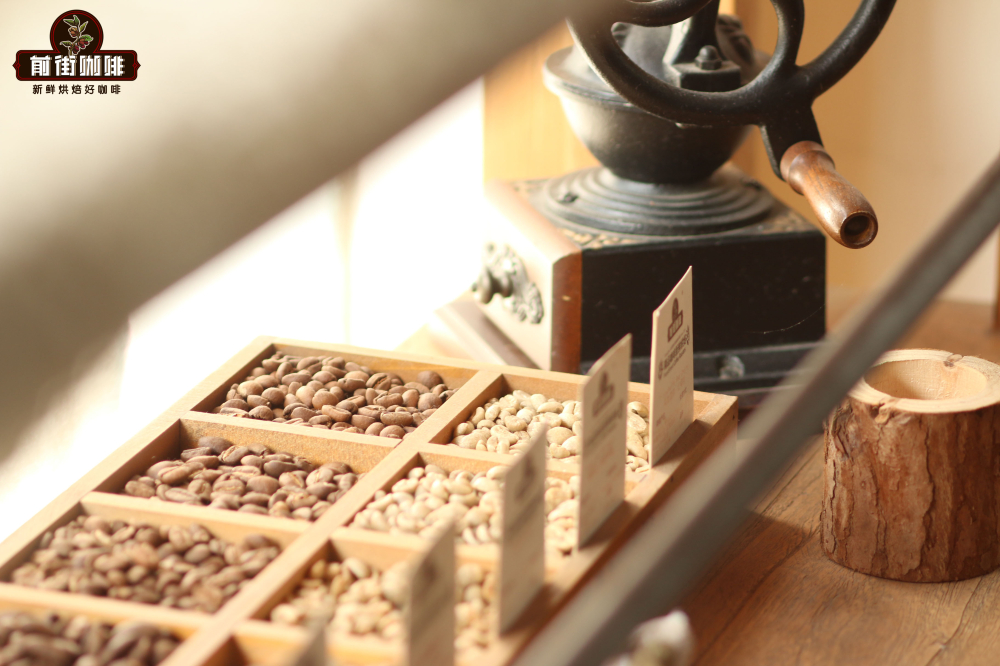
In a world of material abundance, pursuing refinement is the ideal of anyone who takes life seriously. When you visit a coffee shop and want a cup of black coffee, it is actually quite simple: stand at the counter and order. Then comes the barista's performance, with coffee beans, filter cup, filter paper, sharing pot and hot water all laid out, and through that whole process the coffee's flavors are fully revealed.
That set of tools, however, takes real effort to use and takes up space when it is not in use. Isn't there a convenient tool that lets coffee lovers enjoy a refined cup? When this question was put to the baristas at FrontStreet Coffee, they immediately produced their long-dusted French press.
History of the French Press
The French press, also called the press pot, is a brewing tool that has become widely popular among office workers for its simplicity and convenience. The earliest written records of the French press date to the 1850s, when two Frenchmen filed a patent for a related device: a metal can connected to a movable rod, with a hole at the bottom of the rod, sandwiched between two layers of flannel. When the rod was pressed to the bottom of the can, the coffee grounds were isolated at the bottom of the container, producing a relatively clean cup.
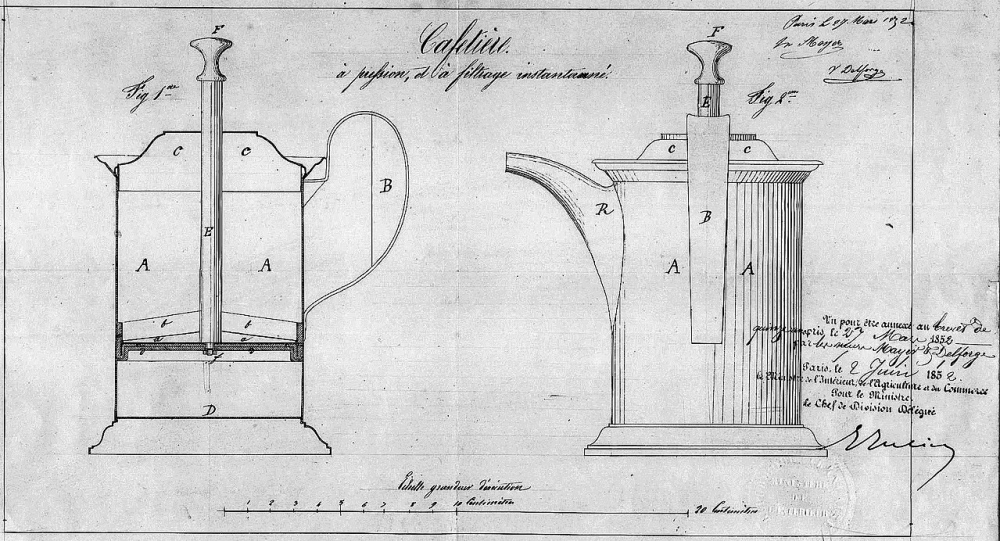
Because the design could not create a sealed state inside the container, other designers stepped in with technical improvements, leading to new versions of the French press.
In 1929, after a company from Milan, Italy registered a modified version of the French press in the United States, the prototype of the modern French press emerged.
How the French Press Works
A French press consists of a glass carafe and a metal filter attached to a plunger. To brew, coffee grounds go into the carafe and hot water is added to immerse them fully. The plunger with the metal filter then separates the coffee liquid from the grounds.
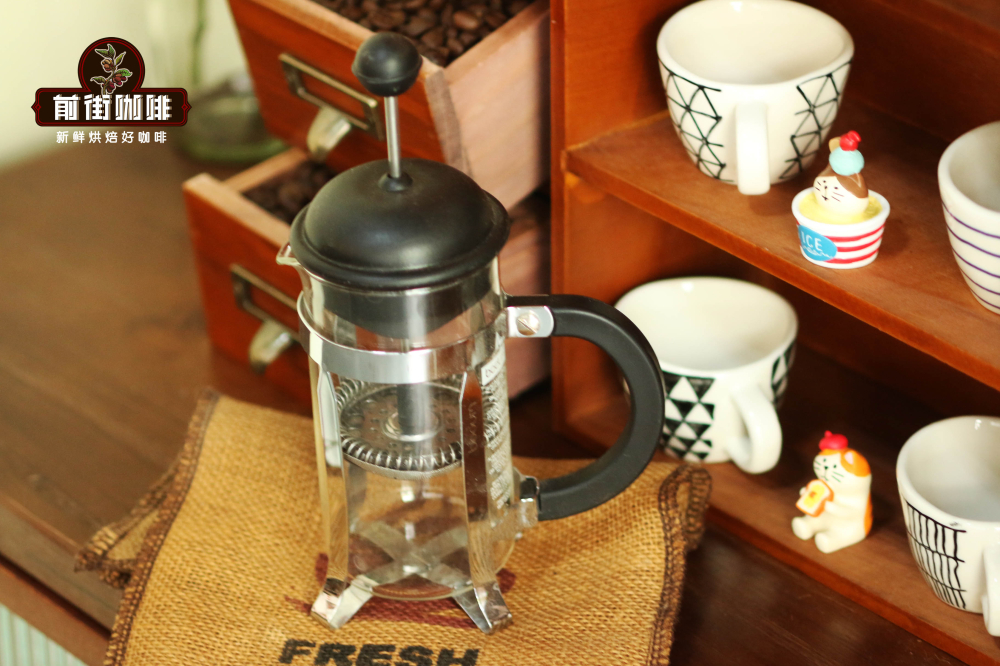
FrontStreet Coffee's baristas note that the gaps in the metal filter are relatively large. Compared with filter paper, some fine coffee particles pass through easily. And because the liquid keeps steeping the grounds until it is poured out, the resulting coffee has a richer mouthfeel and preserves more of the coffee's texture and oils.
French Press Usage Guidelines
When a barista makes coffee, it always tastes good. Brewing at home, many people struggle to reach the refined taste they get in a cafe. Compared with pour-over, which demands real skill and is difficult, many people turn to the simplest brewing method of all, the French press.
If you want a cup with refined flavor, though, even the French press, which is as user-friendly as a mother's care, has its requirements. Grind size and water temperature both impose certain limits.
Grind Size
FrontStreet Coffee's baristas often get the question: what specific grind setting should I use? FrontStreet Coffee uses an EK43s grinder, while some enthusiasts use a Comandante C40 hand grinder. With different equipment, different burr types and varying maintenance conditions, the same setting produces a different grind size.
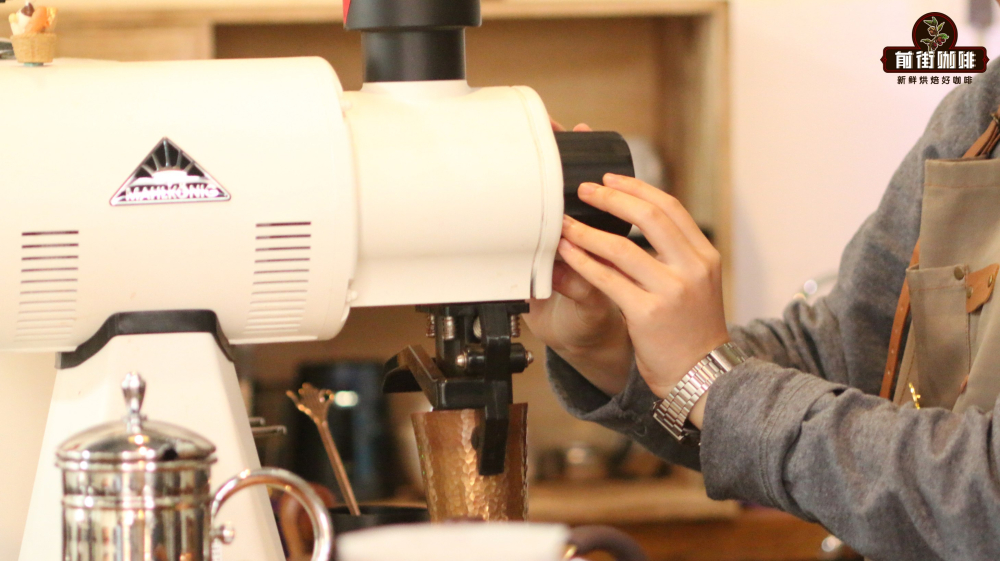
For that reason, when FrontStreet Coffee recommends a grind size it generally uses the Chinese standard No. 20 sieve pass rate as the primary reference. FrontStreet recommends an 80 percent pass rate for medium-light roast beans and a 75 percent pass rate for medium-dark roast beans. Because of equipment differences, specific settings need to be confirmed through sieve testing and brewing trials before further adjustment.
Water Temperature
As temperature rises, the rate of material exchange becomes more significant. When FrontStreet Coffee brews different beans, it adjusts the water temperature according to the roast level.
The lighter the roast, the more compact the bean's internal structure, and the more slowly flavor compounds are released when it meets water. To extract more delicate floral notes and quality fruit acidity from lighter roasts, water between 90°C and 92°C is generally used.
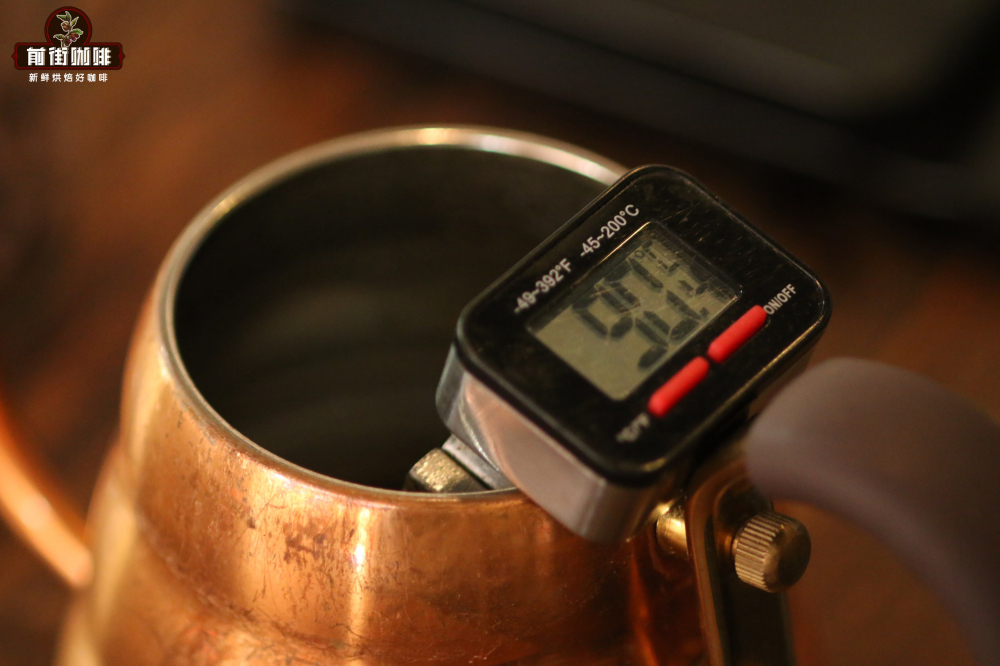
When beans are roasted darker, the roasted volume expands more and the internal structure becomes more porous. Once ground, they absorb water more efficiently and dissolve flavor compounds faster. Higher water temperature accelerates the extraction of larger molecular-weight flavor compounds, which easily produces bitter and burnt flavors. So when FrontStreet Coffee brews medium to dark roast beans, it generally uses water between 86°C and 88°C.
FrontStreet Coffee's French Press Brewing Tutorial
Next, FrontStreet Coffee will use Guji coffee beans as an example to demonstrate French press brewing.
Brewing Equipment: French Press
Water Temperature: 90°C
Coffee Amount: 15 g
Coffee-to-Water Ratio: 1:15
Grind Size: Chinese standard No. 20 sieve, 70 percent pass rate
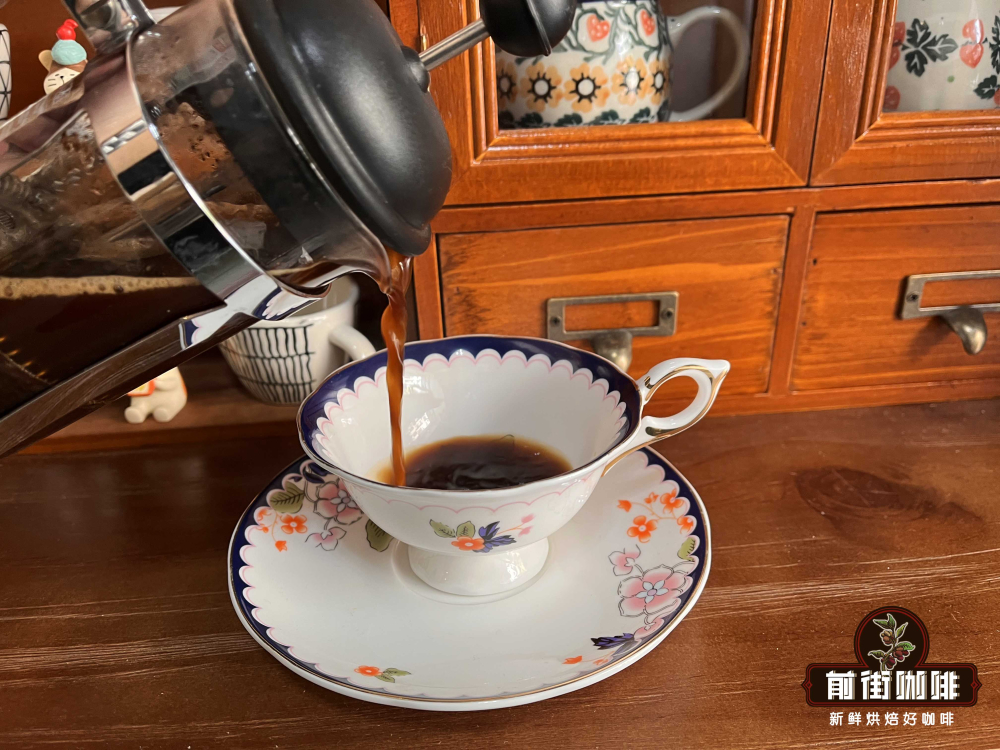
Pre-warm the French press carafe. Add 15 g of freshly ground Guji coffee powder and pour in 225 g of 90°C hot water. Pull the plunger to its highest position and cover with the lid, then steep for 4 minutes. Gently and slowly press down the plunger, then pour out the coffee.
Brewed with these parameters and steps, the Guji coffee has an entry like compound berry juice, with a rich and long-lasting cream aroma in the aftertaste, full-bodied and rich overall.
Guji coffee, produced in the Guji zone of Ethiopia's Sidamo region, won the championship in the natural processing category of the 2017 TOH Ethiopia competition. At the time it was described as having intense strawberry and cream flavors. The same year, Guji coffee was introduced to China and appeared at the World Coffee Brewers Championship China region. Since then its fame has soared, and it has become an annual must-have bean for coffee connoisseurs.
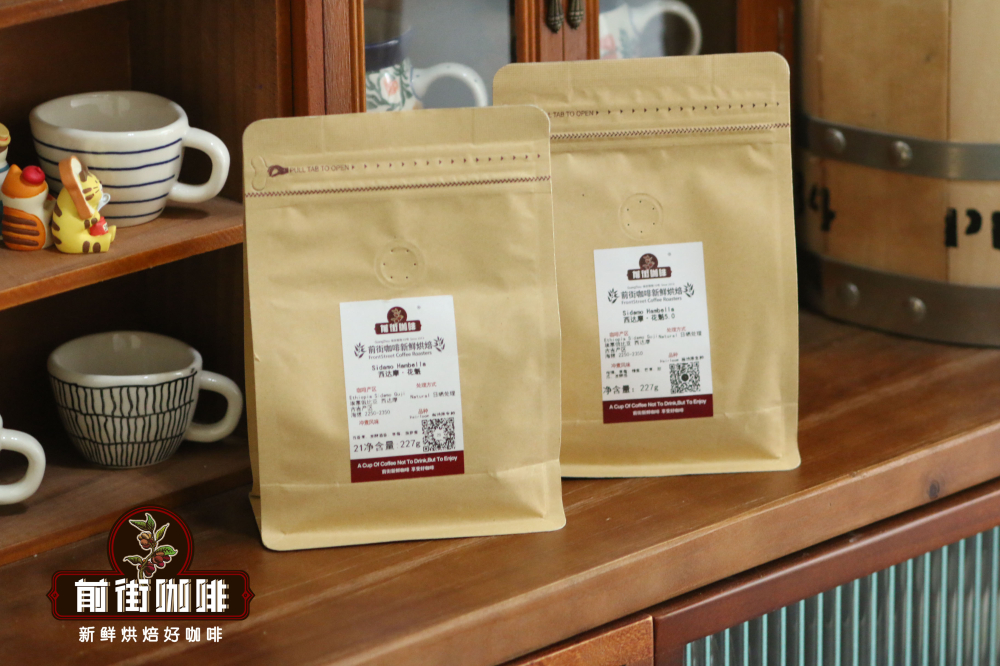
On FrontStreet Coffee's bean shelf there are nearly fifty different coffees. Guji represents the wild flavors and superior quality of natural-process Sidamo beans among that range.
For professional coffee knowledge exchange and more coffee bean information, follow Coffee Workshop (WeChat public account: cafe_style).
For more specialty coffee beans, add FrontStreet Coffee on WeChat: qjcoffeex
FrontStreet Coffee Recommendation
The French press is an immersion brewer, so the grind matters as much as the bean. FrontStreet suggests grinding to a coarse-sugar consistency, around EK43s setting 10.5 or hand-grinder setting 26, closer to small gravel than fine sand. Too fine a grind lets the water extract the coffee too quickly and can push fine particles through the metal filter, leaving sediment in the cup. A ratio of 1:15, or 15 g of coffee to 225 g of water, is a good place to start; that yields a concentration around 1.1-1.2 percent and a fuller, richer cup. For water temperature, boil and then let it rest for 2-3 minutes, landing near 90°C, and remember that because the French press adds no agitation, raising the temperature by 1-2°C over a typical pour-over helps make up the extraction. Steep for 3-5 minutes, beginning at 4 minutes and adjusting to taste.
Because immersion suits medium and darker roasts, two FrontStreet coffees work especially well. The FrontStreet Strawberry Candy Geisha Blend, made from honey-processed Costa Rican coffee and washed Panama Geisha, releases rose, citrus, grape and dried blueberry aromas in the press, and takes on a strawberry gummy character when milk is added. For a low-acid, oil-rich black coffee, the FrontStreet PWN Golden Mandheling is the pick: machine and hand sorted for even, luminous beans, roasted medium-dark, it brings dense spice, caramel, cedar and dark chocolate aromas and a thick, full-bodied cup.
Important Notice :
FrontStreet Coffee is a long-established specialty coffee roaster in Guangzhou China, selling freshly roasted beans from its own farm in Yunnan as well as dozens of carefully selected single-origin beans from around the world for both pour-over and espresso. The products deliver consistently excellent quality and great value, with shipping within 24 hours. Guangzhou's FrontStreet Coffee shop is recommended by many coffee lovers, and the beans are now available online at the Tmall 。
FrontStreet Coffee has moved to a new address:
FrontStreet Coffee Address: 315,Donghua East Road,GuangZhou
Tel:020 38364473
 Scan and follow the En Gafei WeChat official account. Please indicate that the reprint comes from "En Gafei".