Which Coffee Beans Are Best for French Press_ French Press Usage Guide & Coffee Making Tips
Coffee Workshop is a space for professional coffee knowledge exchange and a steady source of bean information.
French Press: The Most Convenient Home Coffee Maker
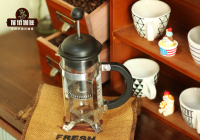
The French press may be the most convenient home coffee maker there is, and at the same time one of the methods that preserves coffee flavor most completely. It shows off coffee's unique, rich character beautifully. Its structure is simple and unassuming, yet it has plenty of advantages. So which beans suit French press coffee? Today, let's go through what to keep in mind when brewing with one.
History of the French Press
The French press originated in France in 1850 as a simple brewing device made of a heat-resistant glass body (or clear plastic) and a metal filter screen attached to a press rod. At first it was used to brew black tea, so some called it a tea brewer.
In March 1852, a French craftsman and a merchant jointly obtained a patent for a "piston filter coffee device." The patent described a metal can connected to a movable rod, with holes at the bottom of the rod and flannel layers sandwiched above and below. After the rod is pulled by hand, it moves within the cylindrical container. "Press the rod to the bottom," the inventors wrote, "and the filtered coffee remains above the rod, clear and refreshing."
It was not until the late 1920s, after a Milan company patented a modified version, that the French press gradually became well known. The company refined the design over the few years after registering the patent. In 1935 it launched an improved French press with a spring fitted to the disc at the bottom of the piston to keep the disc level with the bottom of the container. It caught on, but winning over America took some effort. In the early 1980s, some Americans learned from the British to use the French press, calling it a cafetiere, while others called it a "French piston coffee machine."
If you simply want a cup of coffee, the French press is a good choice, because its brewing principle is immersion and it does not demand much technique.
Making French press coffee means steeping the grounds fully in the pot, then using the press rod and metal filter screen to separate the coffee from the grounds. This method gives coffee excellent body, enhances texture and oils, and still yields a fairly clean cup.
How to Use a French Press
So how should you use one? First, you need a French press. You also need a grinder, thermometer, scale, timer, kettle, and - most important - coffee beans.
Operating Steps:
(Taking Costa Rica Monsherry as an example, making two servings)
- Weigh 20 grams of beans and grind to a coarse sugar size, with a coffee-to-water ratio of 1:15.
- Preheat the French press with hot water, then pour it out; pour the coffee grounds into the French press.
- Pour in 89-degree hot water and start timing. After pouring, stir gently to make sure all the grounds are wetted.
- After four minutes, slowly press the plunger down and pour the coffee out.
The Costa Rica Monsherry made with a French press has some body, with bright lemon acidity, and also carries some grapefruit peel and melon seed flavors.
Important Considerations
- Grind Size: French press coffee is prone to over-extraction, so the grind should be coarser - generally slightly larger than table sugar particles. If the grind is too fine, extraction runs very fast and small grounds pass through the metal filter, making the coffee taste less clean.
- Coffee Brewing Ratio: The brewing ratio is the ratio of coffee to water. Common ratios range from 1:15 to 1:18. A 1:15 ratio means 15 grams of coffee needs 225 grams of water. If you are using a French press at home, adjust the ratio to your taste.
- Pressing Technique: After steeping, when pressing the plunger down, press it to the bottom in one steady motion. If you repeatedly pull up and press down, grounds escape easily and leave sediment.
Because the French press extracts by immersion rather than drip, there is not much emphasis on pouring gestures and technique. As long as you follow the right coffee-to-water ratio, water temperature, and time, brewing a delicious pot is not difficult.
For beginners, the difficulty level is not too high, and it is well worth trying.
French Press Coffee Bean Brand Recommendations
FrontStreet Coffee's roasted single-origin French press beans offer solid guarantees in both brand and quality and suit a range of brewing devices. Just as important, the value is excellent: a half-pound (227 grams) package costs only around 80 to 90 yuan. At 300ml per cup of French press coffee with a 1:15 coffee-to-water ratio, one package makes about 11 cups, so each cup costs only 8 to 9 yuan. Compared with cafe prices that often reach tens of yuan a cup, that is extremely cost-effective.
FrontStreet Coffee is a Guangzhou roastery with a small storefront but a wide range of beans, carrying both famous and lesser-known origins.
FrontStreet Coffee Recommendation
The French press is an immersion brewer with a metal mesh filter, which is why the coffee it makes keeps more oils and lands with a heavier, fuller body. That also means it suits medium or dark roasts better than light ones: steeped for a long time, a light roast tends to extract too much acidity and drown out its own floral and fruity lift, while a fuller roast expresses sweetness and caramel notes more clearly. FrontStreet Coffee's Strawberry Candy is a nice counterpoint if you like a brighter cup - a Geisha blend built from a Costa Rican honey-processed coffee and a Panamanian washed Geisha, it brings rose, citrus, grape, and raisin aroma in the press and a strawberry-gummy sweetness when paired with milk.
For a low-acid, full-bodied black coffee, FrontStreet Coffee's PWN Golden Mandheling is the go-to. One of Asia's best-known specialty coffees, it goes through three hand sorts plus one machine sort, leaving beans even and bright; roasted medium-dark, it has large, full beans and a rich aroma of spice, caramel, fir, and dark chocolate, and it extracts into a full, creamy French press cup.
Grind matters most in the press. FrontStreet suggests a coarse-sugar setting - around 10.5 on an EK43s electric grinder or 26 on a hand grinder - closer to small gravel than fine sand. Grind too fine and water runs through the grounds too fast; in most immersion brewers that is not a problem, but in a French press fine grounds can slip through the metal mesh and leave a lot of sediment in the cup. On the water side, a common starting point is a 1:15 powder-to-water ratio (15 grams of coffee to 225 grams of water), which extracts to a concentration of roughly 1.1 to 1.2 percent and a fuller, more rounded taste; adjust the coffee or water from there to taste. Without a thermometer, boil the water and let it sit for 2 to 3 minutes (depending on air temperature) so it brews at about 90 degrees. Because the press is filled in one pour and there is no stirring to raise extraction, you can nudge the water temperature 1 to 2 degrees above a normal pour-over. And since stirring is not part of the method, steeping time does the work: aim for 3 to 5 minutes, or start at 4 minutes. A dark roast may turn bitter and astringent by 5 minutes, while a light roast may need more than 3 minutes to give up its flavor. In practice, take the filter out, add the grounds, pour in 15 times their weight in hot water, stir gently, and set the plunger on top without pressing. After 4 minutes, press slowly to the bottom and pour carefully, without stirring up the sediment at the base.
Important Notice :
FrontStreet Coffee is a long-established specialty coffee roaster in Guangzhou China, selling freshly roasted beans from its own farm in Yunnan as well as dozens of carefully selected single-origin beans from around the world for both pour-over and espresso. The products deliver consistently excellent quality and great value, with shipping within 24 hours. Guangzhou's FrontStreet Coffee shop is recommended by many coffee lovers, and the beans are now available online at the Tmall 。
FrontStreet Coffee has moved to a new address:
FrontStreet Coffee Address: 315,Donghua East Road,GuangZhou
Tel:020 38364473
 Scan and follow the En Gafei WeChat official account. Please indicate that the reprint comes from "En Gafei".