What are the derivative varieties of Robusta coffee beans? What are the cultivation advantages of Robusta coffee beans
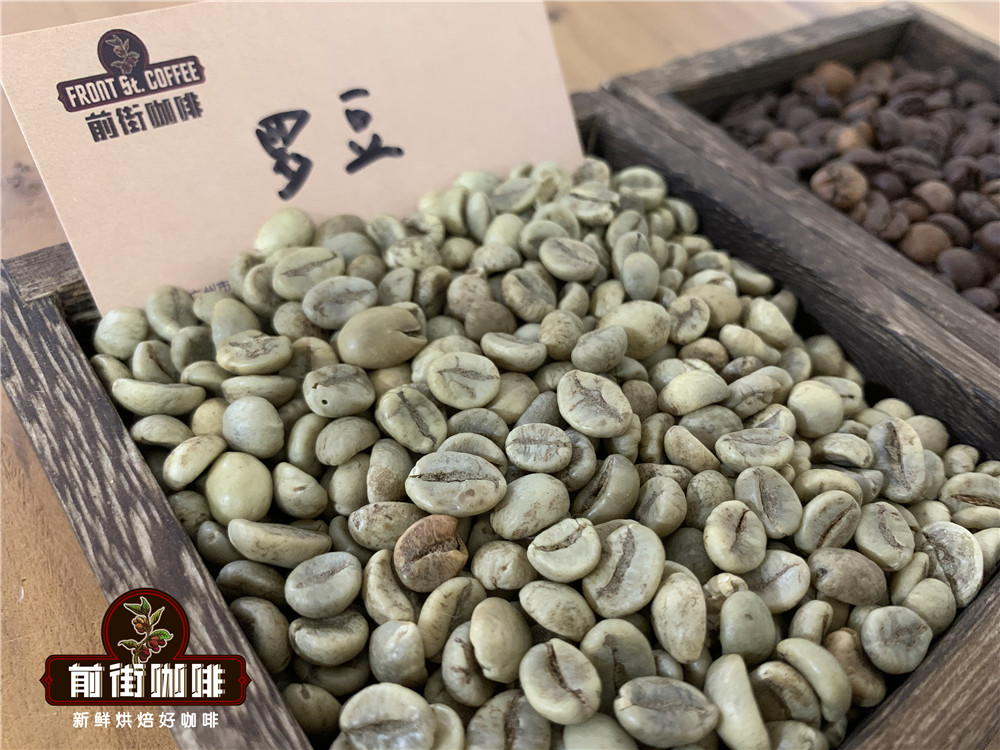
There is a coffee species that, despite being relatively rare in our daily cups and less charming on the palate, still occupies a very important corner of the global market: Robusta. Below, FrontStreet Coffee walks through the strengths and weaknesses of Robusta beans.
Robusta's Greatest Advantage: Extremely Strong Survival Ability
From a botanical standpoint, Robusta belongs to the species Coffea canephora, also known as the Congo species or medium-bean coffee. Just as we often say Geisha belongs to the Arabica species, within Coffea canephora only Robusta has been commercially cultivated and promoted on a large scale, so Robusta has practically become a synonym for the entire canephora lineage. Timor and Catimor, varieties derived from the natural hybridization of Robusta and Arabica, are now widely grown as well, though they are classified under the broader Arabica category.
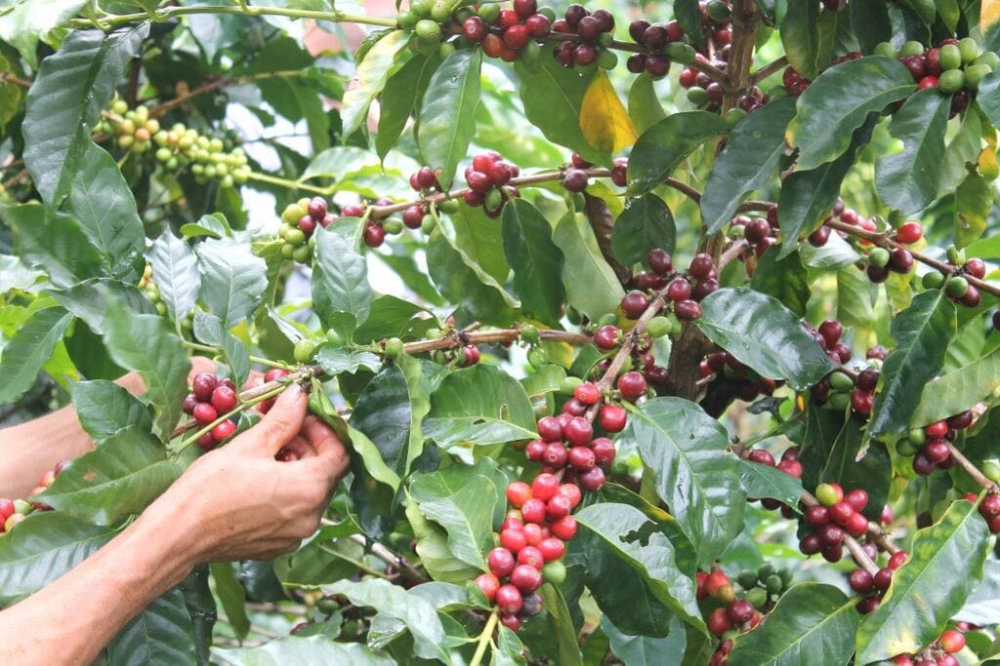
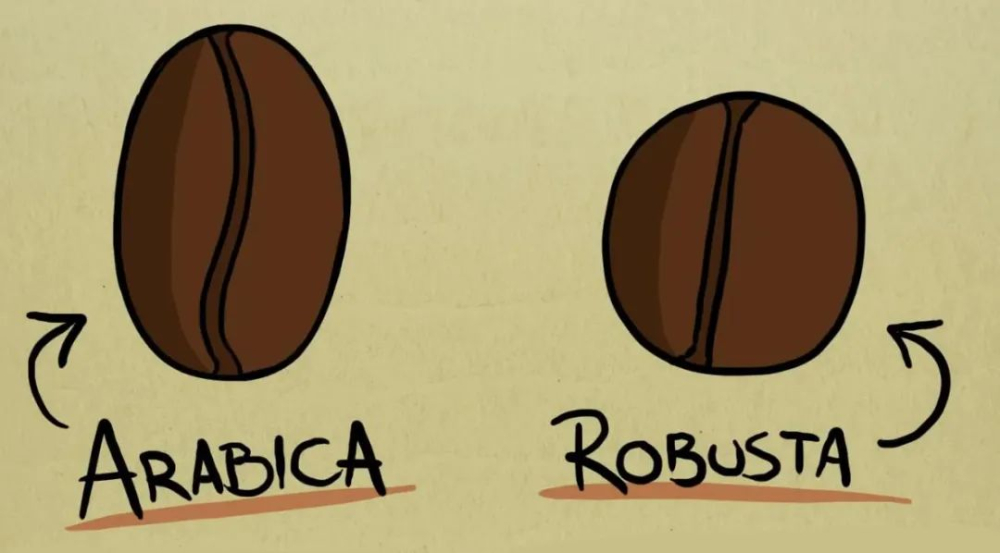
From a cultivation standpoint, Robusta coffee trees tolerate heat, cold, drought and humidity alike, with remarkably high survival rates. Their caffeine content is also high (1.7%-3.0%), roughly twice that of Arabica. Caffeine acts as a natural pesticide, shielding Robusta from most insect damage. A single Robusta plant yields a heavy crop, and its cherries are slightly rounder and smaller than Arabica berries. The beans are flat and round, with a straight crease down the middle.

Precisely because of this tenacious vitality, high yield, fast maturation and strong environmental adaptability, Robusta is generally planted on low-altitude plains, where it can be managed and harvested with mechanized, unified systems. Cultivation costs are therefore lower, which makes it well suited to large-scale commercial production - and naturally, the selling price is cheaper. The vast majority of coffee planted in Hainan, China, for example, is Robusta. Given all these benefits, why do people still look down on this species, and even on the hybrid varieties descended from Robusta and Arabica?
The Taste of Robusta Is Its Fatal Flaw
In everyday life we constantly see coffees advertised as "100% Arabica," yet it is nearly impossible to find a bag labeled "100% Robusta." The reason lies in how Robusta tastes.
Analysis shows that Robusta beans carry very high chlorogenic acid levels and lower sucrose content. Chlorogenic acid is the source of coffee's bitterness, while sucrose is the precursor of the many aromatic compounds we perceive in the cup. Robusta therefore tends to show low acidity with a heavy, deep bitterness, and a flavor profile built around walnuts, peanuts, hazelnuts, barley tea and grains. When processed carelessly, it can also throw off harsh, pungent earthy notes and negative rubbery tastes - qualities people have summed up as the "Robusta flavor." Catimor, the variety most widely planted in Yunnan, China, carries 25% Robusta genes, which is one reason its flavor is often criticized.
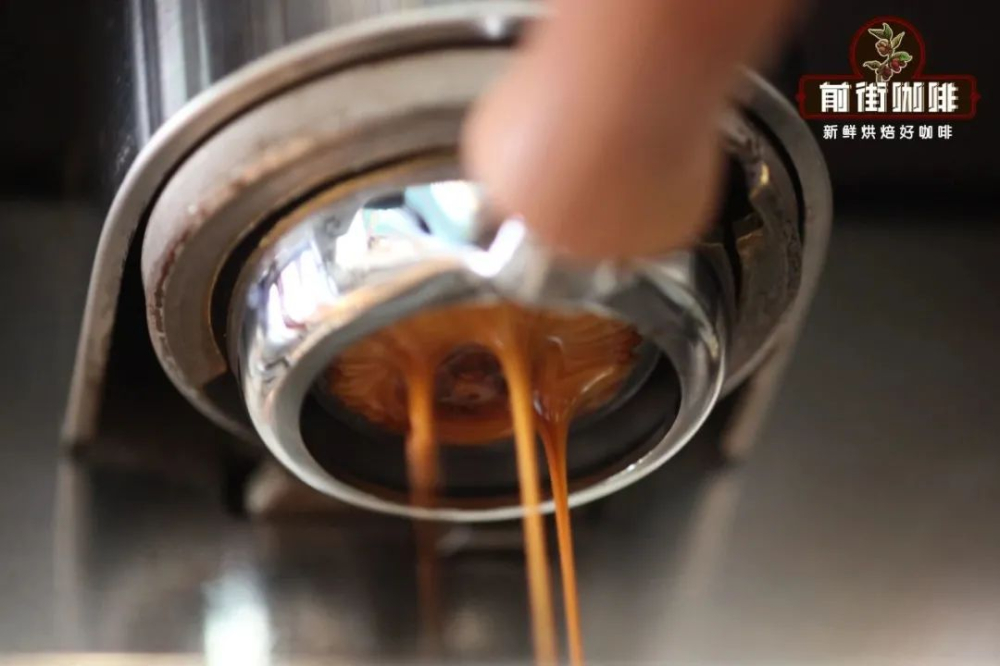
Dark-roasted Robusta beans accumulate a large amount of gas, and when pulled as espresso they release abundant crema. Their solid flavor profile also lends the coffee more body. Traditional coffee preferences lean toward strong bitterness and heavy body with little acidity, which matches the character of dark-roasted Robusta perfectly - and that is exactly why Robusta still survives in the specialty coffee era.
Although most people still drink Arabica today, climate and environmental problems across coffee-growing regions have made growing conditions increasingly difficult, and coffee cultivation will face serious challenges in the years ahead. Since Robusta's natural resilience is so impressive, it is likely that more hybrid varieties with Robusta lineage will appear in the future.
It Is Worth Giving Robusta a Light Try
As interest in coffee knowledge keeps growing, many friends also want to taste Robusta for themselves. Top-tier Robusta, however, demands more investment in production and sells at a high price, and its overall flavor is intense in a way that not everyone enjoys. FrontStreet Coffee therefore suggests starting with an espresso blend that contains Robusta beans.
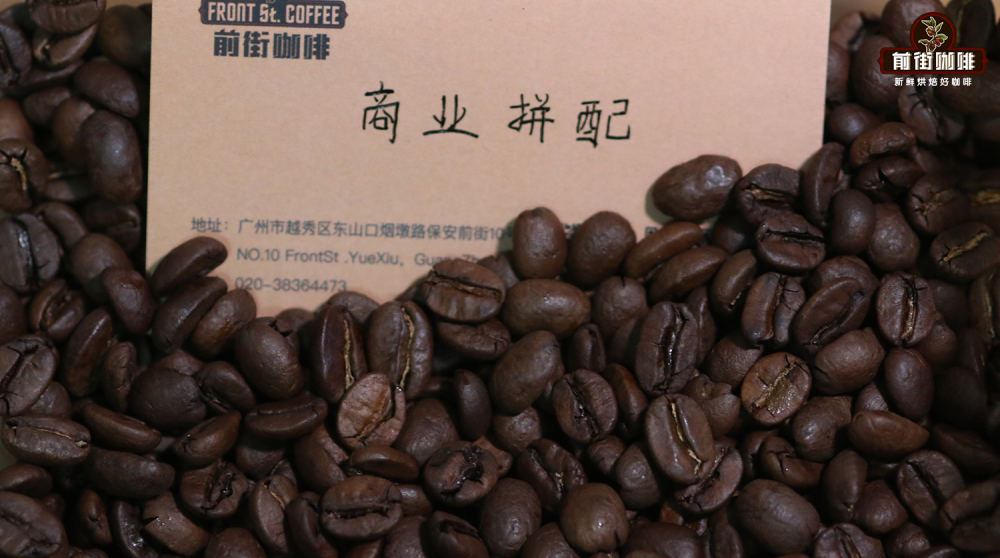
As noted above, dark-roasted Robusta produces generous crema under pressure. FrontStreet Coffee wanted one of its espresso blends to pour a thick, aromatic crema, so it added 10% washed Robusta beans, combined with 30% washed Colombian beans and 60% natural pulped Brazilian beans to create the FrontStreet Coffee commercial blend. The resulting espresso shows abundant golden crema and a nutty aroma. On the palate there is a caramelized coffee bitterness, but it is carried by a creamy, full body, and after swallowing the bitterness fades into a fragrant aftertaste.
FrontStreet Coffee Recommendation
If Robusta has piqued your curiosity about the other side of the coffee world, FrontStreet Coffee's Boquete Geisha from Panama is a wonderful place to explore what a pure Arabica variety can do. It is an entry-level Geisha that lets you taste the classic Panama character - orange-blossom honey sweetness, an oolong-tea-like body and delicate, clearly layered fruit acidity - without the eye-watering price of auction lots.
Because Geisha is a dense, medium-light roasted bean with pronounced floral and fruit aromatics, FrontStreet Coffee suggests grinding it fairly coarse (about 78% pass rate on a #20 standard sieve, roughly the size of fine granulated sugar) and brewing with 91°C water: 15g of coffee in a Hario V60, a 1:16 ratio, a 30g bloom for 30 seconds, then pours to 125g and finally 225g, for a total extraction of about 2 minutes 10 seconds to 2 minutes 20 seconds.
Once you fall for that floral elegance, the Esmeralda Red Label Geisha from Panama's Hacienda La Esmeralda is the next step up. Sold as "Esmeralda Special," it grows at 1600-1800 meters, and every batch must cup above 90 points, with all the beans in a batch coming from a single named lot so buyers can choose the micro-flavor that suits them best.
Important Notice :
FrontStreet Coffee is a long-established specialty coffee roaster in Guangzhou China, selling freshly roasted beans from its own farm in Yunnan as well as dozens of carefully selected single-origin beans from around the world for both pour-over and espresso. The products deliver consistently excellent quality and great value, with shipping within 24 hours. Guangzhou's FrontStreet Coffee shop is recommended by many coffee lovers, and the beans are now available online at the Tmall 。
FrontStreet Coffee has moved to a new address:
FrontStreet Coffee Address: 315,Donghua East Road,GuangZhou
Tel:020 38364473
 Scan and follow the En Gafei WeChat official account. Please indicate that the reprint comes from "En Gafei".