What Grade is Kenya (Benvar) Benvar Estate Coffee Bean? How to Pour Over [Kenya Benvar]
What Grade is Kenya (Benvar) Estate Coffee Bean? How to Pour Over Kenya Benvar Washed Bean Without Excessive Acidity?
Located in East Africa below the equator, Kenya cultivates high-quality Arabica beans. The beans are thick and round in the cup, and they are sorted into seven grades by size, with flavors divided into six grade specifications from top to bottom. In tasting evaluations, "Kenya AA" earns high praise for its slightly acidic, rich aroma, making it very popular among Europeans — in Britain especially, Kenyan coffee surpasses Costa Rican coffee to become one of the most popular coffees.
The government-run auction system follows a grading system based on particle size, weight and shape appearance, which serves as the primary basis for auction pricing.
Kenya Official Green Bean Grading System:
E Grade (Elephant Bean):
Kenya's largest bean grade, above 18 screen (18/64"), also known as elephant bean. Extremely rare, and this grade is almost never seen on the Taiwanese market.
AA Grade:
Particle size (Screen Size) between 17–18 screen (7.20mm sieve).
AB Grade:
Particle size (Screen Size) between 15–16 screen (6.8mm–6.2mm sieve), accounting for the majority of production and the most common green bean grade.
PB Grade:
Round green beans, accounting for approximately 10% of all coffee beans.
C Grade:
Particle size (Screen Size) between 12–14 screen (4.8mm–5.6mm sieve).
TT Grade:
Lighter green beans blown out of AA and AB grade lots by air classifiers, indicating soft beans that do not meet the hardness standard.
T Grade:
Particle size (Screen Size) below 12 screen (4.8mm sieve). These are lighter beans blown out of C grade lots by air classifiers — soft beans that fail the hardness standard, small in particle size, with some broken and defective beans.
MH/ML Grade:
Unwashed, unsorted beans and fallen beans left after harvest, accounting for approximately 7% of all coffee beans. This is the lowest grade, supplied only to Kenya's domestic market.
Beyond the official national grading system above, private companies, Kenyan exporters and green bean traders add their own proprietary grades (not officially recognized by Kenya) for AA and AB lots. The common ones include AA TOP, AA+ (plus), AA++ (double plus), AB+ (plus) and AA FAQ.
"FAQ" is the abbreviation of "Fair Average Quality," meaning an average, standard quality — the basic model of the AA grade.
AB+ (plus):
Although this grade has smaller particles than AA, it accounts for the highest proportion of a coffee tree. When grading by fruit, the largest particles naturally command the highest price. Slightly smaller than the largest, its flavor is not necessarily worse — conclusions must rest on cupping results. Adding plus (+) to AB grade: for the same beans, human factors mean Company A and Company B apply different standards and so reach different results. After all, there is no unified grading standard for this grade, so adding a plus (+) naturally makes it more attractive.
AA+ (plus) & AA++ (double plus):
The same issue applies to AA grade with a plus (+) or double plus (++) added: for the same beans, human factors mean Company A and Company B apply different standards and so reach different results, since there is no unified standard for this grade. Coffee flavor cupping results have no standard for grading AA+ or AA++; it can only be used as a reference. Everything must come back to doing your own cupping.
AA TOP:
As with the AA+ and AA++ issue, the grading rests on cupping results. This is not currently an official Kenyan national grading standard; exporters assign it themselves, inevitably weighing commercial considerations, so it can only be used as a reference. Everything must come back to your own roasting and cupping to be correct and practical.
Kenya is a model country for producing excellent coffee. Kenya's high-altitude Arabica washed beans are among the world's finest. Most beans are uniformly graded and inspected by the Kenya Coffee Board and then sold at auction. The Board is strict about coffee research, development and quality management. Through an excellent auction system, bean prices are raised to help poor coffee farmers, and through agricultural education, farmers' cultivation techniques are continually updated and improved to produce better coffee. Coffee bags marked [AA] indicate top-quality beans. Kenyan coffee's quality and price are proportional and very stable. High-quality Kenyan coffee with a blackberry fruit aroma is produced in very limited quantities. Such beans come from excellent estates established in Kenya by foreign companies, or excellent estates acquired by Kenyan companies, making them a target for many bean merchants.
Benvar Estate is a high-mountain farm in southeastern Kenya. It is a small coffee farm with low production. Coffee grows on volcanic slopes at altitudes exceeding 5,000 feet, with only about 50–70 bags of production per season. After harvest, the coffee is sent to government-built washing stations for unified processing to ensure Kenyan quality, with the entire process strictly monitored by the Kenya Coffee Board. This time we have brought in Kenya Benvar Estate beans, grade AA TOP, with defective beans hand-sorted down to approximately 4%. Roasted to light roast (city), the bean's weight-loss ratio is 13%, with empty-shell and defective beans accounting for 8%. When roasted through to the drying stage, the berry acidity is low and steady but carries an obvious berry sweetness. The green beans expand about 2/3 from roasting to completion, showing that the beans are fresh with the higher moisture content of the current season, so the dehydration and drying time needs to be extended appropriately to let the coffee heat evenly, then a lower temperature-rise curve is used into first crack to preserve more aroma and sweetness while reducing acidity and astringency.
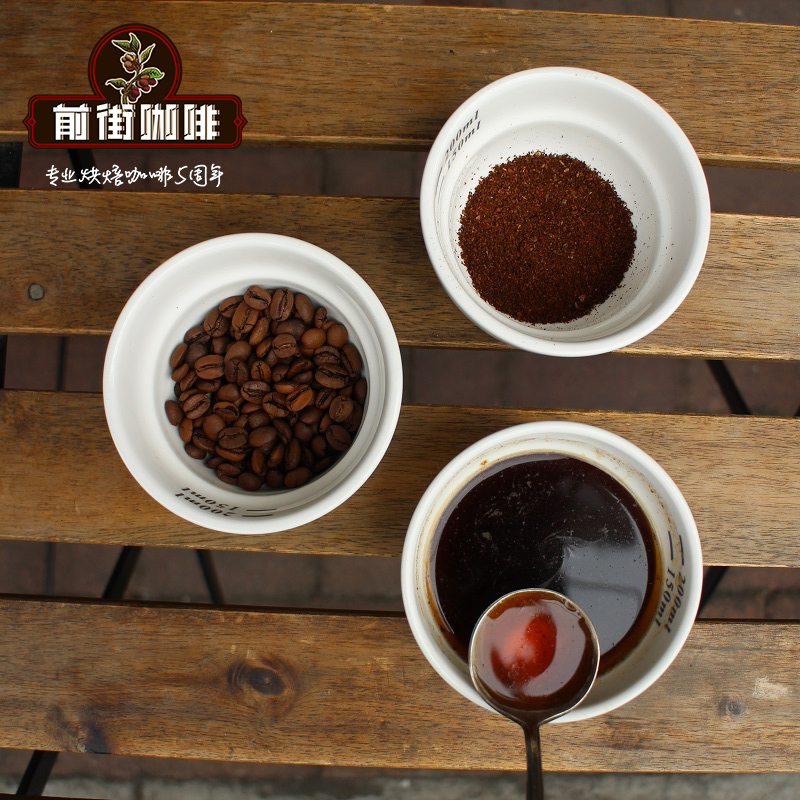
Benvar Estate beans expand about 2/3 after roasting, an ideal expansion ratio that represents normal moisture content for this batch of coffee.
Light Roast City (fragrant): After grinding, the dry aroma carries a spicy condiment heat. When brewed, the citrus acidity is not strong — it is a low-profile, elegant and steady acidity. Instead, a mature yellow-orange aroma comes forward clearly. The acidity gradually strengthens over time and transforms into fruit sweetness. The mouthfeel is complex and layered, with some spiciness at the finish. The aftertaste between the cheeks shows a long blackberry flavor followed by a cool mint aroma. After a sip of plain water, brown sugar sweetness slowly appears.
Those who dislike the acidity of a light-roast Kenyan coffee are usually put off by the strong acidity that hits the moment they sip. But when you experience an acidic coffee and appreciate the perfect transformation of acidity into sweetness in the aftertaste, you have richly enlarged your coffee journey. This fruit acidity will be your clearest and most beautiful memory.
Medium Roast (General B): When slurping, there is green plum aroma above the nose. The wine-like acidity is soft, neither strong nor bright, and sits very comfortably in the cup. It has a gentle, smooth, emulsified mouthfeel. The aftertaste carries grape and berry fruit aromas. For those just starting with light-roast Kenyan beans, this roast level is the most comfortable and the easiest way to brew a quality cup with a personality of its own. It has some height and some distance but won't intimidate.
Dark Roast (General C): After sufficient caramelization, most of the blackberry acidity recedes. There is a layered hazelnut-chocolate aroma that is very smooth. When slurping, the aroma overflows. The malt-milk-candy sweetness is thick but not stiff, and elastic. Once cooled, the throat aftertaste has blueberry acidity and raisin sweetness.
Roasted to even darker levels (Full-City+ or dark), this is — along with Golden Mandheling — one of the most suitable beans for a dark roast. The main reason is that both coffees keep a very rich mouthfeel when dark roasted and do not turn bitter. Chocolate and cocoa aroma and sweetness are the main flavors of Kenyan beans at this roast level. Pulled on an espresso machine to make lattes and cappuccinos it is very suitable; adding only fresh milk, with no sugar or creamer, makes it very sweet.
FrontStreet Coffee Recommended Brewing:
Filter: V60
Water to Coffee Ratio: 1:15
Grind Size: Small Fuji 3.5
Water Temperature: 91°C
Brewing Method:
Use 30g of water to bloom for 30s, then slowly inject water with a small flow to 120g in a second stage, then increase the flow slightly and brew slowly to 225g.
Total Time: 2'15"
Sweetness: ☆☆
Acidity: ☆☆
Bitterness: ☆
Body: ☆☆
Aftertaste: ☆☆
Other Drip Extraction Suggestions:
French Press: recommended grind size 3.5–4 / water temperature 90°C
AeroPress: recommended grind size 2.5, water temperature 88°C
FrontStreet Coffee Recommendation
Kenyan coffee is at its best poured over, and the choice of dripper matters. FrontStreet Coffee recommends the Hario V60 for these bright, structured coffees because its conical, 60-degree form and single large hole make the water travel to the center before dripping through, extending contact between water and grounds and extracting more aroma and acidity. Before the third wave, the market favored medium-dark roasts and flavors of body, sweetness and caramel; as lighter roasting took hold, the V60's fast extraction proved ideal for the more three-dimensional aromas and lively acidity of coffees like Kenya's.
FrontStreet suggests pairing the V60 with floral and fruit-forward beans of the kind that benefit most. Ethiopia Yirgacheffe Gutingding brings citrus, berry and floral notes with green-tea sweetness; Ethiopia Hunkute is richer in tropical fruit, with strawberry, passion fruit and jackfruit; FrontStreet's Strawberry Candy blend, combining Costa Rican honey and Panamanian Geisha, offers floral delicacy with a sweet fruit character; and FrontStreet's Costa Rica Mozart adds a raisin-honey note. For a Kenyan-style bright washed coffee in the same vein, FrontStreet's Kenya Small Tomato, from the Thika region at 1,550–1,750 meters, is grown from SL28 and SL34 and given a 72-hour double washed fermentation for a juicy, sweet-sour cup.
Important Notice :
FrontStreet Coffee is a long-established specialty coffee roaster in Guangzhou China, selling freshly roasted beans from its own farm in Yunnan as well as dozens of carefully selected single-origin beans from around the world for both pour-over and espresso. The products deliver consistently excellent quality and great value, with shipping within 24 hours. Guangzhou's FrontStreet Coffee shop is recommended by many coffee lovers, and the beans are now available online at the Tmall 。
FrontStreet Coffee has moved to a new address:
FrontStreet Coffee Address: 315,Donghua East Road,GuangZhou
Tel:020 38364473
 Scan and follow the En Gafei WeChat official account. Please indicate that the reprint comes from "En Gafei".