Bolivian Coffee Flavor Profile Characteristics Bolivian Coffee Story How to Drink Bolivian Coffee

Bolivia is one of the poorest countries in Latin America, sitting close to Brazil and Colombia, two major coffee-producing nations. Although Bolivia's economy is not strong, FrontStreet Coffee is very optimistic about Bolivian coffee, believing the country has real export potential.

One of the Bolivia Java coffees launched by FrontStreet Coffee comes from the Waliki Estate. Waliki is a small estate of only six hectares, located in Caranavi, Bolivia's main coffee-producing region. The altitude is quite high, above 1660 meters, and the climate there is cold, which results in a relatively long coffee cultivation cycle.
FrontStreet Coffee also understands that although high altitude causes coffee cherries to mature more slowly than those at lower altitude, extending the growing cycle, there is a benefit: this slow ripening can increase the sugar concentration in the cherries, making them sweeter. Coffee from Bolivia's high-altitude regions carries not only sweetness but also soft citrus acidity and berry flavors. Coffee from relatively lower altitudes, by contrast, shows balanced flavors with chocolate sweetness and mild acidity.
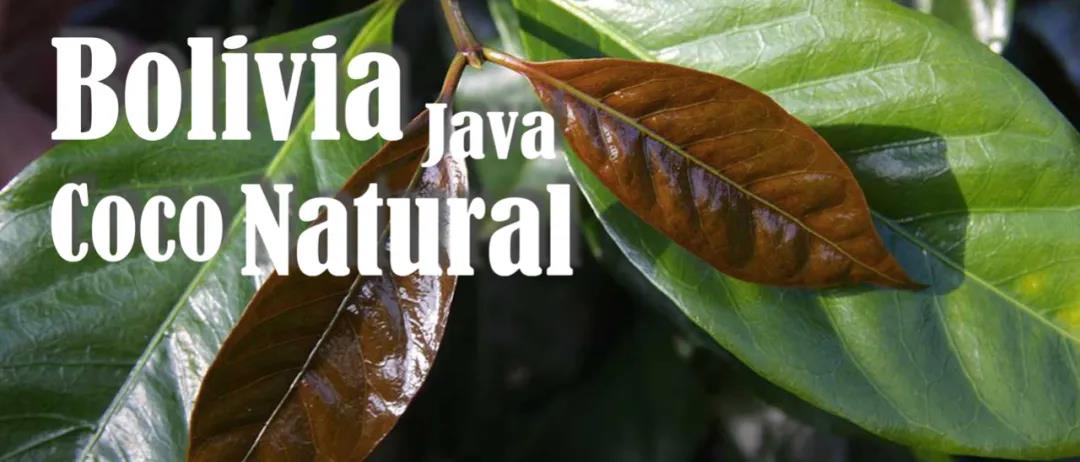
Coffee Varieties and Quality
Coffee flavor is closely related not only to altitude and terrain but also to variety. Most coffee varieties grown in Bolivia are Typica, with a small amount of Caturra, but the most special is the Java variety. According to FrontStreet Coffee's knowledge, Java actually descends from Ethiopian coffee varieties, and is called "long-shaped bean" locally in Bolivia because the bean is quite long, hence its official name Java. Do not underestimate the Java variety: it has strong resistance to leaf rust disease, making it suitable for smallholders, and its flavor is outstanding, not inferior to Geisha.
Even though Bolivia's coffee flavor is excellent and can be compared to Geisha, and the country has some of the best conditions for coffee cultivation, production is extremely low. FrontStreet Coffee believes this is partly because Bolivian coffee is dominated by small farmers and partly because of Bolivia's coffee culture. FrontStreet Coffee understands that about 40% of the coffee beans produced in Bolivia are mainly for domestic consumption.

Transportation Challenges
In addition, Bolivia is a poor region, so its transportation cannot be as convenient as in neighboring Brazil and Colombia, which have well-established coffee transport systems. Bolivia's main coffee-producing region is the Yungas area. The infrastructure there is very backward and lacks large-scale washing stations. What is more, transport in the Yungas is extremely inconvenient along the road known as the "Death Road." Such roads can easily cause coffee cherries to ferment and spoil during transport, producing pungent odors. FrontStreet Coffee believes this situation is very unfavorable for Bolivia's coffee exports.

Processing Methods
Bolivian farmers mainly use the washed method to process green beans: selected coffee cherries go into a depulper to remove the skin and pulp; the beans with remaining pulp and mucilage are placed in water to ferment for about 24 hours; after fermentation, the parchment beans are washed in flowing water channels to remove the remaining pulp and mucilage; after washing, the beans are dried in the sun or with dryers to reduce moisture content to about 12%, and finally the parchment is removed before the green beans are stored in warehouses.
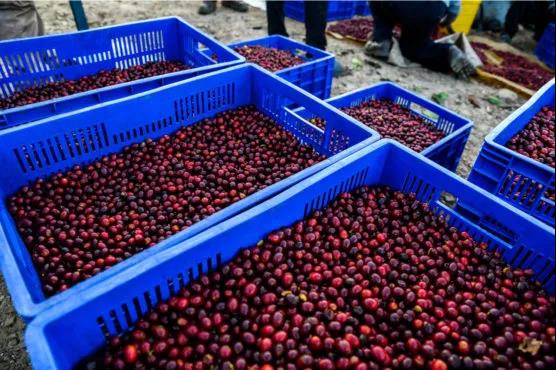
Other producing regions in Bolivia occasionally use natural processing as well. FrontStreet Coffee believes these regions may be considering Bolivia's relatively cold climate, so many farmers use machine drying instead of sun-drying. This processing method is called the Cocoa Natural process. Many people may not have heard of cocoa dryers being used for coffee, but this method was first used by Pedro Rodriguez of the Rodriguez family, applying the latest technology to dry coffee slowly and continuously at low temperature in cocoa dryers, thereby reducing the impact of the weather.
The Cocoa Natural process generally works like this: the most mature cherries are picked at optimal ripeness. After selection and weighing, the cherries are carefully washed and placed on African drying beds, then turned every hour. After a week, the cherries are moved into a cocoa dryer. The processed green beans are then stored in warehouses.

FrontStreet Coffee believes that as Bolivian coffee grows more popular, producers will pay more attention to quality and bring a new wave of Bolivian specialty coffee cultivation.
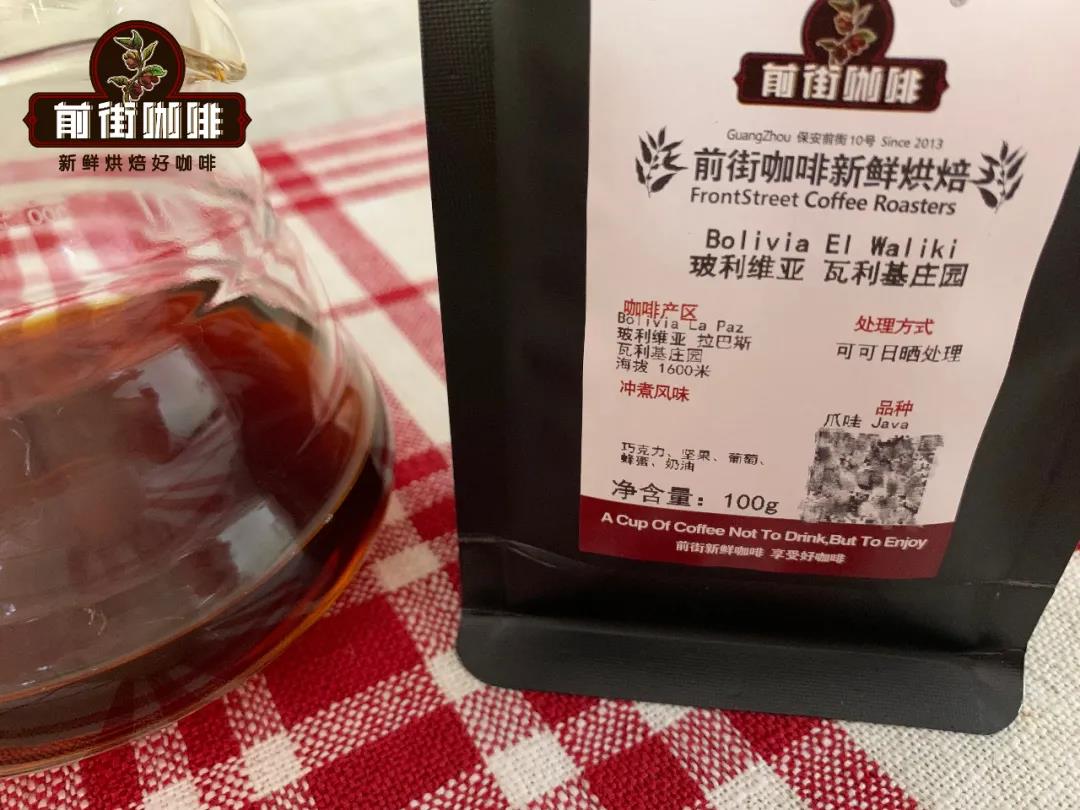
FrontStreet Coffee Bolivia Waliki Estate Cocoa Natural Java Coffee Beans
Coffee Region: La Paz
Altitude: 1600 meters
Variety: Java
Processing Method: Cocoa Natural
Flavor: The entry shows obvious citrus and hawthorn sweet and sour notes, with fruit chocolate and vanilla cream in the aftertaste. When cooled, it carries light maple syrup and jasmine tea notes, with a long-lasting sucrose sweet aftertaste.
FrontStreet Coffee's Brewing Recommendations for Bolivian Coffee
FrontStreet Coffee uses a V60 dripper to brew this coffee. The V60 conical dripper has large holes and a unique spiral rib design that lets air escape more easily, improving extraction quality. The body may not be especially thick, but its high concentration of sweet and sour notes and its distinct aroma are its major characteristics.

Water Temperature: 90-91°C
Grind Size: EK43s grinder setting 10 (fine sugar size)
Coffee-to-Water Ratio: 1:15
Coffee Amount: 15 grams
FrontStreet Coffee Brewing Method: First pour 30 grams of water for a 30-second bloom, then pour 95 grams more (the scale shows around 125 grams), completing in about 1 minute. When the water level drops to 2/3 of the coffee bed, pour the remaining 100 grams (the scale shows around 225 grams), completing in about 1 minute 40 seconds. Finish extraction between 1'55" and 2'00", then remove the dripper.

Brewing Flavor: Slight fermentation, grapes, mild nuts, floral notes, medium acidity, juice-like mouthfeel.
FrontStreet Coffee Recommendation
For coffee lovers drawn to the sweet, clean character of high-grown beans, FrontStreet Coffee's single-origin range is a good place to explore. Their Brazil Queen Estate coffee, a rare Yellow Bourbon grown in the Mogiana area, is roasted to bring out a clear sugarcane sweetness alongside fruit and chocolate notes. Like the Bolivian coffees described here, it is a balanced, low-acid cup that works in a pour-over, moka pot, or home espresso machine.
Important Notice :
FrontStreet Coffee is a long-established specialty coffee roaster in Guangzhou China, selling freshly roasted beans from its own farm in Yunnan as well as dozens of carefully selected single-origin beans from around the world for both pour-over and espresso. The products deliver consistently excellent quality and great value, with shipping within 24 hours. Guangzhou's FrontStreet Coffee shop is recommended by many coffee lovers, and the beans are now available online at the Tmall 。
FrontStreet Coffee has moved to a new address:
FrontStreet Coffee Address: 315,Donghua East Road,GuangZhou
Tel:020 38364473
 Scan and follow the En Gafei WeChat official account. Please indicate that the reprint comes from "En Gafei".