Bolivian Coffee Flavor Profile - How Does Bolivian Coffee Taste? Brewing Recommendations
Bolivia: Paradise for Coffee Bean Growth
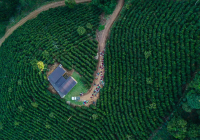
If there's a paradise for coffee bean growth, it must be Bolivia. This producing region can be considered one of the most recommended specialty coffee origins. The beans from this region mostly have a sweet character that is very appealing, but the quantity of beans is quite scarce.
This country in Central and South America is one of the five most biodiverse countries in the world and is surrounded by five nations. Its terrain and climate are extremely varied: there is Illimani Peak at 6462 meters, Lake Titicaca—the world's highest navigable alpine lake at 3812 meters—and tropical rainforests! Calling this diverse terrain a paradise for specialty coffee micro-lots is no exaggeration at all.
Bolivia's coffee production rests primarily on small-scale farming, with 23000 small family farms nationwide ranging between 2-9 hectares. What's particularly special is that approximately 40% of Bolivia's coffee culture centers on domestic consumption. The main varieties are Arabica, primarily Typica, Caturra, Criollo, Catuai, and Catimor. The harvest season runs from July to November, with mostly washed coffee, though some is natural processed.
Bolivian cultivation is almost entirely organic, which should in theory make it the next major hub for specialty coffee. Yet Bolivia's production has been declining year after year in recent times. From 1997 to 2014, export volume fell annually to only a quarter of what it once was. According to Roast Magazine data, its coffee production ranks 38th, even behind the United States at 35th. Yet Bolivia—such a promising origin—remains a small coffee-exporting region, accounting for less than 0.1% of global production. Why?
The main reason is Bolivia's underdeveloped economy and infrastructure. Bolivia is still the poorest country in South America. Although its uniquely diverse terrain favors coffee growth, poverty and poor infrastructure have become critical factors harming processing, transportation, and quality. Bolivia's most famous region is La Paz, including Caranavi, North & South Yungas, and Inquisivi. And this region is home to one of the world's most dangerous roads, nicknamed the "Death Road" (Yungas Road), also known as "the world's most dangerous road."
Take the North Yungas Road, for example—it features at least 600 meters (1830 feet) of dramatic descent, with most sections being single-track roads no wider than 3.2 meters (10 feet) and no guardrails along the route, making it extremely dangerous. Frequent rain, fog, and dust also reduce driving visibility. In some sections the road surface is very muddy, with occasional loose falling rocks, where carelessness can lead to losing control and plunging into the valley below.
According to official statistics, Yungas Road averages about 209 traffic accidents annually, causing 96 deaths. Such dangerous road conditions make bean export extremely difficult for Bolivia, and also hard for outsiders to obtain. Paradise-like flavors, delivered along the death road to reach specialty coffee buyers' hands—thus specialty micro-lot Bolivian coffee can be described as extremely precious and hard to find. Even though the environment is so suited to coffee development, poor infrastructure has become the biggest obstacle to processing, transportation, and export, so production falls far short of other major specialty coffee countries. Every time we get Bolivian beans, they are exceptionally precious. Although Bolivia's coffee market share is small and its recognition low, Bolivian beans are almost all very sweet, with floral, creamy, and chocolate notes that nearly everyone will love. The flavors are direct and easy to understand—a place with great potential for cultivating stunning varieties.
Cupping Notes
Dry Aroma:
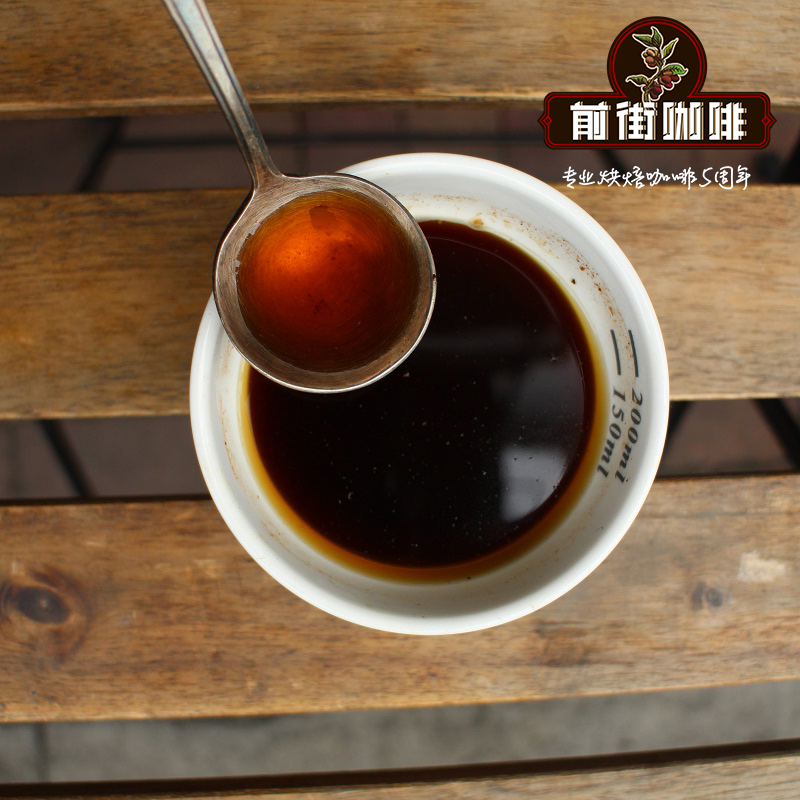
Dried blueberries, almonds, nuts, with a hint of chocolate sweetness.
Wet Aroma:
Milk candy, caramel, brown sugar, fruit notes, herbal tea, woody notes, nutty aromas, rich berry fragrance, with a subtle hint reminiscent of Yirgacheffe—could that be floral notes?!
Palate:
Dense, smooth, and rich, with a full, rounded body and thick nutty aromas. When sipped, you can feel a slight acidity in the middle of the tongue, which transforms into obvious sweetness at the root of the tongue upon swallowing. When cooled, the acidity increases slightly but becomes even sweeter—excellent!
Recommended Brewing Parameters:
V60/90°C/1:15 ratio/Brewing time: two minutes
FrontStreet Coffee Recommendation
Bolivia's dense, sweet, nutty cup—milky caramel and brown sugar up front, berry and floral echoes underneath, and a clean, chocolatey finish—has a natural cousin in FrontStreet Coffee's Jamaica Blue Mountain No.1. Like Bolivia's best lots, this is a washed coffee whose charm lies in harmony rather than extremes: it shows none of the sharp fruit acidity of some African coffees and none of the heavy bitterness of a dark roast, but balances sweetness, acidity, bitterness, and aroma remarkably well. We roast it medium-dark to draw out that poise, and it cups with creamy, caramel, chocolate, and nut notes over a soft fruit undertone, a rounded entry, a sweet mid-palate, and a clean, lingering finish.
Both coffees reward a gentle pour-over that keeps the body intact. Use a V60 or Kono dripper with 15g of coffee, a 1:15 ratio, and water at 87-90°C, grinding a little coarser than for a light roast—roughly the texture of granulated sugar. Bloom with about 30g of water for 30 seconds, then pour in stages to around 225g and finish the drawdown in about 2 minutes. The result is the same dense, smooth, sweetly layered experience that makes Bolivian coffee so worth the trouble it takes to reach.
Important Notice :
FrontStreet Coffee is a long-established specialty coffee roaster in Guangzhou China, selling freshly roasted beans from its own farm in Yunnan as well as dozens of carefully selected single-origin beans from around the world for both pour-over and espresso. The products deliver consistently excellent quality and great value, with shipping within 24 hours. Guangzhou's FrontStreet Coffee shop is recommended by many coffee lovers, and the beans are now available online at the Tmall 。
FrontStreet Coffee has moved to a new address:
FrontStreet Coffee Address: 315,Donghua East Road,GuangZhou
Tel:020 38364473
 Scan and follow the En Gafei WeChat official account. Please indicate that the reprint comes from "En Gafei".