Are Drip Bag Coffee Good? How to Use Coffee Drip Bags & How Much Do They Cost Per Bag
Drip Bag Coffee: Convenience Meets Quality
Drip bag coffee — who isn't familiar with these clever little pouches? Traveling, working, or simply relaxing, this simple, convenient format has become a favorite among coffee lovers everywhere.
Instant Coffee vs. Drip Bag Coffee
Start with instant coffee. It is made by grinding roasted beans, extracting the soluble compounds into water under controlled temperature and pressure, then drying the extract — typically by spray drying. The trouble is that coffee's aromatic compounds are highly heat-sensitive and volatilize readily at high drying temperatures (some are already lost during extraction and concentration). That is the main reason instant coffee lacks the rich aroma of freshly ground coffee.
Some writers go so far as to say that instant coffee's chemical makeup is no longer really coffee at all but an industrial product. In specific situations — a long train ride or flight, say — it is an acceptable stand-in, but it is no longer coffee in the original sense. Traditional coffee enjoyment lies in the care given to every step: grinding, brewing, filtering, choosing equipment, mastering technique. During the manufacturing of instant coffee, much of coffee's original character and complexity simply disappears. What you drink tastes vaguely of coffee, but the nuance and the culture are gone.
Judging Drip Bag Coffee: Two Angles
1. Convenience and Portability
People new to brewing often assume that a gooseneck pour-over kettle is unnecessary. Instant coffee is partly to blame for this impression — after all, you can just dump boiling water over the powder from any height.
So how much does the kettle actually matter? Sometimes a lot, sometimes a little. Some modern electric kettles have slender, unobstructed spouts that offer decent flow control. But many household kettles simply cannot deliver a fine, steady stream, which makes proper extraction nearly impossible. So what is a pour-over kettle actually for?
First, it controls the flow rate and speed of the water. Pour-over starts with a roughly 20-second bloom to open up the coffee, letting the grounds absorb water and swell into that "burger-like" dome. Then comes extraction. If your water stream hits the filter paper directly, that water runs straight down the side without ever touching the grounds — effectively diluting the cup and thinning the body. More importantly, extraction takes time, and controlling flow means controlling time. Without a controllable, stable water flow there is no proper extraction, and without extraction, it is not really a cup of coffee.
Second, heat retention. Brewing 15g of coffee by hand takes about a minute and a half to two minutes, and pour-over is very sensitive to temperature. If you start with 88°C water but the kettle sheds heat quickly and drops to 80°C within a minute, the cup changes dramatically. An inexpensive silver-plated kettle, for example, might cost only thirty or forty yuan, look beautiful, and pour a slender stream — but it loses heat fast. Most Japanese kettle brands, by contrast, use materials that hold temperature well, at a considerably higher price.
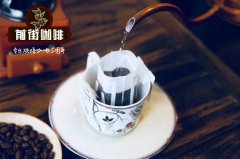
Modern drip bags are square, so their extraction dynamic differs slightly from classic pour-over and actually resembles a French press — as if you were using pour-over technique to reach French press extraction. This makes the kettle's role even more important. Carrying a dripper and a small kettle is still far easier than hauling a full kit. The drip bag was originally developed and patented in Japan: the ground coffee is sealed in a filter pouch with cardboard flaps on both sides that hang over the rim of a cup, and the whole thing is discarded after brewing. It delivers a fresh-filtered cup with minimal fuss. Drip bag coffee is instant-brewing, freshly-ground coffee. The drip method draws out the acidity, sweetness, bitterness, body, and aroma of the beans, and all you need is hot water and a cup. It is especially well suited to home, office, and travel.
2. Taste and Quality
If drip bags produced terrible coffee, you might as well drink sweetened instant. So let's set convenience aside and talk quality.
Unlike instant coffee, drip bags are filled with freshly ground beans and brewed directly, which preserves as much of the beans' aroma and flavor as possible. Each bag holds about 10 grams of coffee — exactly right for a 150ml to 200ml cup. The pouch design gives the grounds maximum room to breathe and tumble, letting them release their deeper aromas in the hot water. In effect, one small bag bundles the functions of beans, grinder, scale, dripper, and filter paper. At brew time, all you add is a kettle and a cup.
Drip bags with floral and fruity aromas are the most popular, offering gentle acidity on the palate. To pair with them, choose desserts with equally prominent fruit character — think mango mille crepe cake, coconut ice cream, or durian crepes.
And if even a drip bag feels like too much work, you can always visit a dedicated pour-over shop in your city — places like FrontStreet Coffee, Wo Chao Cafe, or Bank Cafe — and let the baristas serve you.
The Cultural Side of Drip Bag Coffee
Drip bag coffee helps more people find the balance between a busy life and specialty coffee. That matters: the goal is to help more people discover and enjoy single-origin coffee through better methods. Single-origin coffee reflects your attitude toward life. A person who loves coffee — especially someone fascinated by single origins — is usually someone with dreams and direction, a true connoisseur of everyday living.
Recommended Drip Bag Coffee Brands
FrontStreet Coffee's seasonal drip bag line offers solid guarantees on both brand and quality, and the value is hard to beat: a box of ten bags costs just 40 yuan. Based on 10g of coffee per bag brewing 150ml, each cup works out to only about 4 yuan — exceptional value compared to the tens of yuan a cup at most coffee shops.
FrontStreet Coffee Recommendation
If you prefer a bright, floral cup, the FrontStreet Coffee Yirgacheffe Guodingding drip bag is a great starting point. It comes from the Gedeb working group in Ethiopia's Yirgacheffe region — 1900-2300m, heirloom varieties, washed process, grade G1 — with a clean, refreshing profile: bright citrus acidity, fresh jasmine florals, and a honeyed finish.
For tropical fruit character, try the FrontStreet natural-process Flower Queen (Hua Kui) drip bag: grown at 2250-2350m in Sidama, Ethiopia, and naturally processed, it offers pronounced tropical fruit aromas, notes of berries, floral tea, honey, lemon, and a black-tea finish — high sweetness with low bitterness.
And if you want a rich, roast-forward cup with zero sourness, the FrontStreet Mandheling G1 drip bag fits the bill. This wet-hulled Sumatran coffee shows spice, nut, chocolate, and caramel flavors with a thick, mellow body — bold yet never astringent.
Important Notice :
FrontStreet Coffee is a long-established specialty coffee roaster in Guangzhou China, selling freshly roasted beans from its own farm in Yunnan as well as dozens of carefully selected single-origin beans from around the world for both pour-over and espresso. The products deliver consistently excellent quality and great value, with shipping within 24 hours. Guangzhou's FrontStreet Coffee shop is recommended by many coffee lovers, and the beans are now available online at the Tmall 。
FrontStreet Coffee has moved to a new address:
FrontStreet Coffee Address: 315,Donghua East Road,GuangZhou
Tel:020 38364473
 Scan and follow the En Gafei WeChat official account. Please indicate that the reprint comes from "En Gafei".