Introduction to Java Coffee Bean Varieties_Roasting Recommendations for Java Coffee Beans_How to Buy Java Coffee
Professional Coffee Knowledge Exchange
For more information on coffee beans, read on.
The Unique Character of Java Coffee
Every coffee variety carries the character of its origin. Mandheling, masculine and intense, has the personality of a man of steel; mellow, fragrant Blue Mountain evokes a gentle, lingering longing. Java coffee is different again, consistently light and aromatic, and it suits drinkers who prefer subtle flavors, people who do not want to treat a cup as a formal occasion for contemplating acidity, sweetness, bitterness, and astringency. They simply want a delicious cup of coffee, enjoyed the most straightforward way. A hot cup of Java lets them feel that quiet richness, the kind that comes from being free of the pull of fame and fortune while holding a rich inner world. The happiness of life lies in reaching such a state.
Java coffee beans strike a fine balance among acidity, bitterness, and sweetness. Their distinctive aroma fills the whole mouth after you drink, and when you exhale the aroma from your mouth through your nose, it is remarkably full-bodied. You might find it almost too bold, the way it claims your taste buds, your thoughts, and even your soul. Why resist? Our lives already hold their share of acidity, sweetness, bitterness, and astringency, so let the fragrance of coffee carry away the noise of the everyday world. What we savor is not simply a cup of coffee but the moment of calm it brings.
Java has a mild climate and humid air, and its varied conditions make it a year-round harvest region, with different coffee types ripening at different times. The coffee grown here has a distinctive quality, and the beans ground from these varieties produce rich, memorable flavors, truly deserving the title of coffee treasure. Many people treat "Java coffee" as shorthand for high quality and good taste.
Two Major Coffee Series
World coffee falls into two broad camps. One is the hard coffee represented by Brazil, with intense flavors; the other is the soft coffee represented by Java, light and aromatic. The difference comes down to the altitude of the growing region and the cultivation methods used. Coffee planted in the red soil of hillsides tends to be farmed more extensively, while Java coffee is tended with meticulous care in the black soil of the mountains.
The Philosophical Nature of Java Coffee
Java coffee has a clear bitterness, its clarity mirroring life itself, and bitterness is part of being human. The aftertaste that lingers at the back of the tongue becomes a complete recollection of the past. Looking back at that clarity and bitterness makes you appreciate the sweetness and warmth all the more, and you want to linger a little longer in that awakened perception. Bitterness is pain, clarity brings calm, and the aftertaste becomes a quiet victory of the spirit.
Java Coffee Beans
Java coffee is a particularly representative, excellent variety within the Arabica species. It is a traditionally deep-roasted coffee with an intense, memorable flavor.
The Beautiful Land of Java
Located in the northwest of South America, Java is a beautiful country with a long history. From ancient times, indigenous peoples lived and multiplied on this land. It became a Spanish colony in 1531 and gained independence in 1819. In 1886 it was renamed Java Coffee to commemorate Columbus, the discoverer of the American continent. Java has beautiful mountains and rivers, magnificent scenery, and pleasant weather, spring-like the year round, with fresh, invigorating air. Strolling the streets of the capital, Bogota, brings a sense of ease and joy: green weeping willows sway in the gentle breeze; tall, straight palm trees stand like bronze-skinned giants, holding wide umbrellas in formation to welcome distant guests; and blooming kapok trees spread their large red leaves, as if offering fiery hearts to greet friends.
Java's Rich Resources
Java is rich in natural resources, with coffee, flowers, gold, and emeralds known as its "four treasures." In 1808, a priest first introduced coffee to Java from the French Antilles by way of Venezuela. Today the country is the second-largest coffee producer after Brazil and an exporter of Arabica and washed coffee beans. Java coffee is often described as silky smooth. Among all coffees it shows excellent balance, with a soft, smooth mouthfeel that can be enjoyed at any time. It has earned praise matched by few others and is celebrated as "green gold."
The Excellence of Java Coffee
Java coffee is classified into more than 200 grades, which says a great deal about how strongly regional characteristics come through. The country's coffee-producing regions lie in the Andes Mountains, where the climate is mild and the air is humid. Three Cordillera mountain ranges run north to south, reaching toward the Andes, and coffee is planted along the highlands of these ranges. The mountain terraces offer a diversity of climates, making the region a year-round harvest area where different coffee types ripen at different times. Java does not have to worry about frost damage. Mature Java coffee beans enjoy a reputation in the coffee world akin to that of jadeite in the jade world, naturally flawless and quietly luxurious: heavy beans, rich in nutrients, intensely aromatic, with a soft, smooth mouthfeel and excellent balance.
Recommended Java Coffee Bean Brands
FrontStreet Coffee's roasted Indonesian honey-processed West Java beans guarantee both brand and quality, and they offer outstanding value: a 100-gram bag costs only around 250, and at 15 grams per single-origin serving, one bag makes 6 cups, or just 4-5 yuan a cup. Set beside cafe prices that often top 100 yuan a cup, that is exceptional value.
About FrontStreet Coffee
FrontStreet Coffee is a roastery in Guangzhou with a small shop but a remarkably varied lineup of beans, carrying both famous and lesser-known origins, and it also offers online store services.
FrontStreet Coffee Recommendation
Coffee may have begun in Ethiopia, but Indonesia is where it took on some of its most distinctive forms. The Dutch transplanted coffee trees to Java toward the end of the 17th century, and the island's success made "Java" a byword for coffee itself. Early in the 20th century, coffee leaf rust swept Java and devastated its trees, and production shifted north to Sumatra, which now accounts for more than 60% of Indonesia's coffee and is the country's largest source of both Arabica and Robusta. Sumatra's high-altitude north, in Aceh and North Sumatra, is dominated by Arabica, the beans the world knows as Mandheling. The newer Aceh region near Lake Tawar is prized for a delicate aroma and a bright mouthfeel, while the classic Lintong region around Lake Toba, with its varied plant life, ideal altitude, and long reliance on the wet-hulled process, produces the mysterious, full-flavored Mandheling profile that defines the style.
Wet-hulling grew out of necessity: Sumatra's rainy season overlaps with the harvest, so sun-drying the way African farms do is impractical. Since the 1970s the method has shaped Mandheling's flavor. Growers strip the skin and pulp, rinse the beans briefly, dry them until they are half dry and half wet, then machine off the parchment so the green coffee sits exposed to the air and dries faster. That is what builds the heavy body and earthy, herbal character so many coffee drinkers find addictive. At the top of this tradition stands FrontStreet PWN Golden Mandheling. PWN buys only high-grade Mandheling green coffee and screens it strictly: beans of at least 18 mesh, with fewer than 3 defective beans in a 300-gram green sample, meeting the top G1 grade, followed by three rounds of hand sorting to remove every flaw. The result is uniform, plump, translucent beans with far less earthiness and a notably clean, sweet cup. Much of the genuine Golden Mandheling goes to the Japanese and American markets, which is why the certificates and PWN-stamped bags FrontStreet shows with the bean are what set it apart from other Golden Mandheling on the shelf.
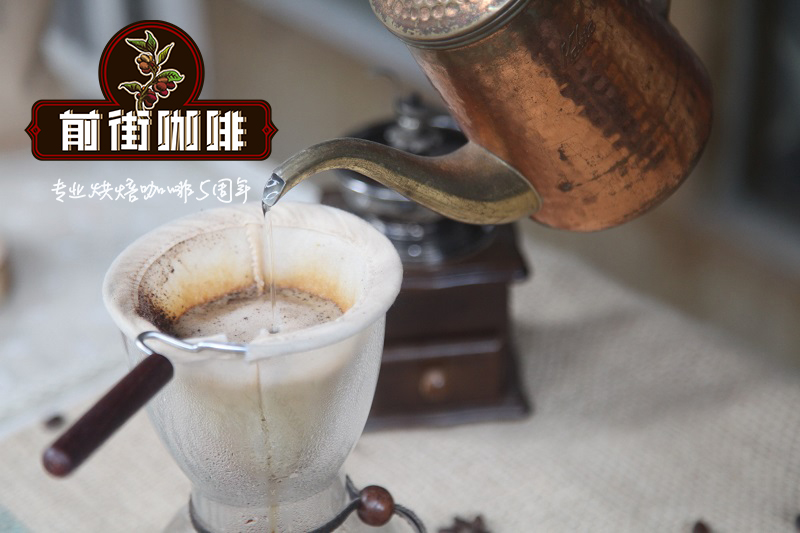
FrontStreet PWN Golden Mandheling shows its best in a pour-over. FrontStreet suggests water at 87 to 88 degrees C, 15 grams of coffee, a 1:15 coffee-to-water ratio, and a grind about the size of coarse sugar, poured in three stages. The first pour is 30 ml, just enough to wet all the grounds and let them degas so later extraction pulls more flavor; the second pour adds 100 ml to bring up the golden foam and lift the coffee bed; and the final pour is a gentle 95 ml down the center, which lifts the sweetness and rounds out a thick, full body with caramel sweetness and chocolate and nut notes. Prefer espresso? FrontStreet's most reordered classic blend builds on Brazil's creamy nut character, adds a medium-dark-roasted Mandheling for butter, roasted chestnut, and caramel, and includes a small amount of Robusta to enrich the crema, making it easy to pour latte art or build a layered Dirty.
Important Notice :
FrontStreet Coffee is a long-established specialty coffee roaster in Guangzhou China, selling freshly roasted beans from its own farm in Yunnan as well as dozens of carefully selected single-origin beans from around the world for both pour-over and espresso. The products deliver consistently excellent quality and great value, with shipping within 24 hours. Guangzhou's FrontStreet Coffee shop is recommended by many coffee lovers, and the beans are now available online at the Tmall 。
FrontStreet Coffee has moved to a new address:
FrontStreet Coffee Address: 315,Donghua East Road,GuangZhou
Tel:020 38364473
 Scan and follow the En Gafei WeChat official account. Please indicate that the reprint comes from "En Gafei".