Steps for Brewing Washed Yirgacheffe with a Siphon Brewer? How Does a Siphon Brewer Work? What Are the Steps for Making Siphon Coffee?
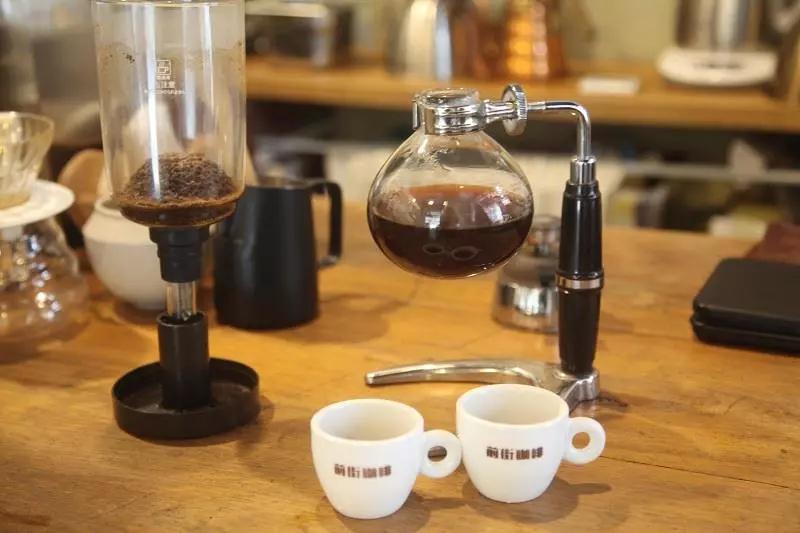
Few brewing methods make a washed Yirgacheffe as transparent and expressive as a siphon, and this guide walks through both ways of loading the grounds.
Siphon Brewing Steps for Washed Yirgacheffe Worka? How Does a Siphon Work? What Are the Steps for Making Siphon Coffee?
The siphon pot is not only aesthetically pleasing but also offers a visual experience during operation. Siphon coffee best expresses coffee flavors, highlighting taste differences between various single-origin coffees and resulting in richer, fuller flavors. Because the heat source keeps the water moving, the brew passes through high, medium and low temperature ranges as it extracts, creating rich flavor variations.
Brewing coffee with a siphon pot is a test of technique, with strict requirements for time and water temperature. Just as there are several stirring methods for siphon coffee, the way of adding coffee grounds is also a matter of technique. The most common methods are adding grounds first and adding grounds later, also called bottom-adding and top-adding. Neither method is absolutely right or wrong; they simply have different control points that they handle better. Now we will use Yirgacheffe Worka Washed as an example to brew coffee with both methods.
Yirgacheffe Worka Washed G1
[Yirgacheffe Washed Worka]

Grade: G1
Region: Worka
Roast Level: Light Roast
Processing Method: Washed
Variety: Local Landrace
Processing Station: Worka Cooperative
Flavor: Lemon, Kumquat, White Grape Juice
01 | Region Introduction
Yirgacheffe is a small town in Ethiopia, set at an altitude of 1700-2100 meters, and its name is synonymous with Ethiopian specialty coffee. This area has been wetland since ancient times. In the local language, "Yirga" means "settle down," and "Cheffe" means "wetland," so Yirgacheffe means "let's settle and make a living in this wetland."
Yirgacheffe (Specialty Region): Altitude 1,800-2,000 meters | Garden Coffee System
Yirgacheffe is subordinate to the Sidamo region. Because of its unique flavor, it has been separated out as a category of its own.
In addition to the town of Yirgacheffe, the area also includes surrounding sub-regions such as Wenago, Kochere, Gelena and Abaya.
Beneath Yirgacheffe lie numerous villages, micro-regions, cooperatives and processing stations. In most parts of Ethiopia, coffee farmers still live very difficult lives. They do not have sufficient capacity to build family-style processing workshops, so many processing stations exist to centrally purchase coffee cherries from surrounding smallholders, process them, and then sell them to green bean merchants.
Working Principle
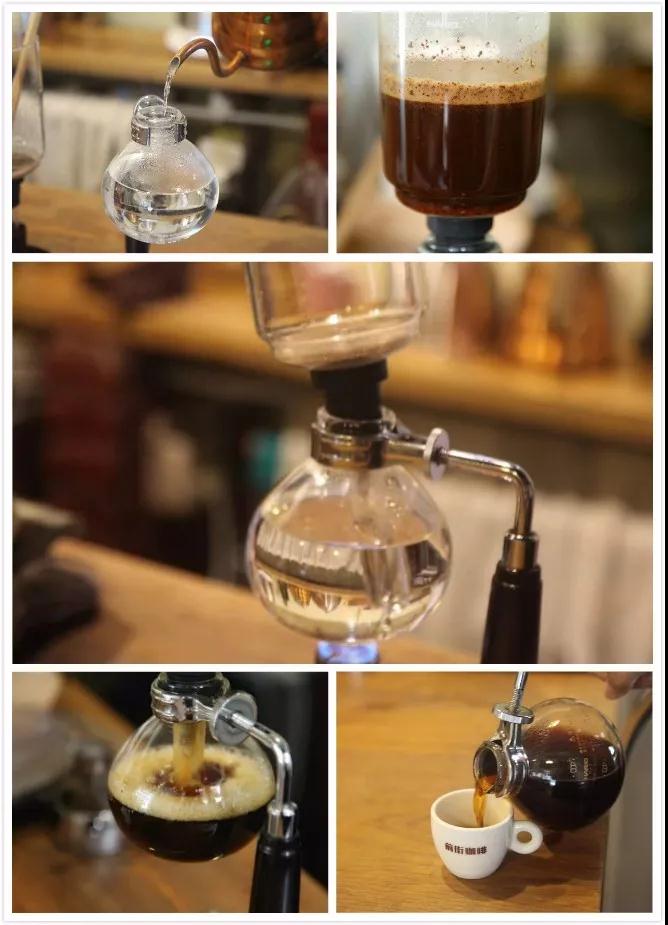
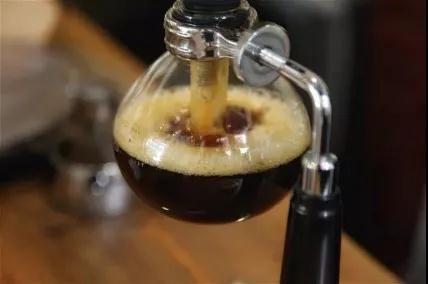
The main principle of coffee extraction with a siphon pot is pressure difference. First, heat the water in the lower chamber to boiling, then insert the upper chamber, which creates a high-pressure state in the lower chamber. Because of the pressure difference between the lower and upper chambers, hot water rises to mix with the coffee grounds in the upper chamber for extraction. After extraction ends, remove the heat source from the lower chamber, and the pressure difference between the two chambers drops instantly. The siphon effect between the chambers then draws the coffee extract back down to the lower chamber. To speed up the return, you can wipe the lower chamber with a damp cloth, which reduces the pressure difference and shortens the return time.
Preparation Work
1. Add water to the siphon's lower chamber. For making two cups of coffee, add water to 5mm above the 2-cup mark on the siphon. Since coffee grounds absorb water, if you want to end up with two cups of coffee liquid, you need to add slightly more water.
2. Grind the coffee beans and prepare 25g of coffee grounds (about 15g for a single cup), at a medium grind setting, meaning particles between white sugar and brown sugar in size.
3. After adding water, remember to wipe the outside of the lower chamber dry with a soft cloth to avoid water residue, which could cause the pot to crack during heating.
4. Add hot water to the lower chamber and heat with a gas stove. Generally, a single cup uses about 180g of water, and a double portion 300g (coffee-to-water ratio 1:12).
5. After completing all the above steps, start heating the water.
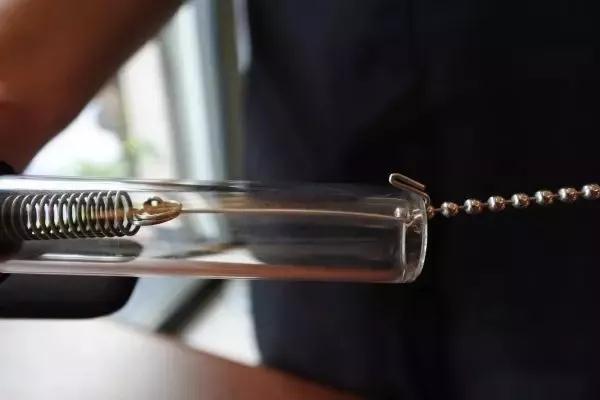
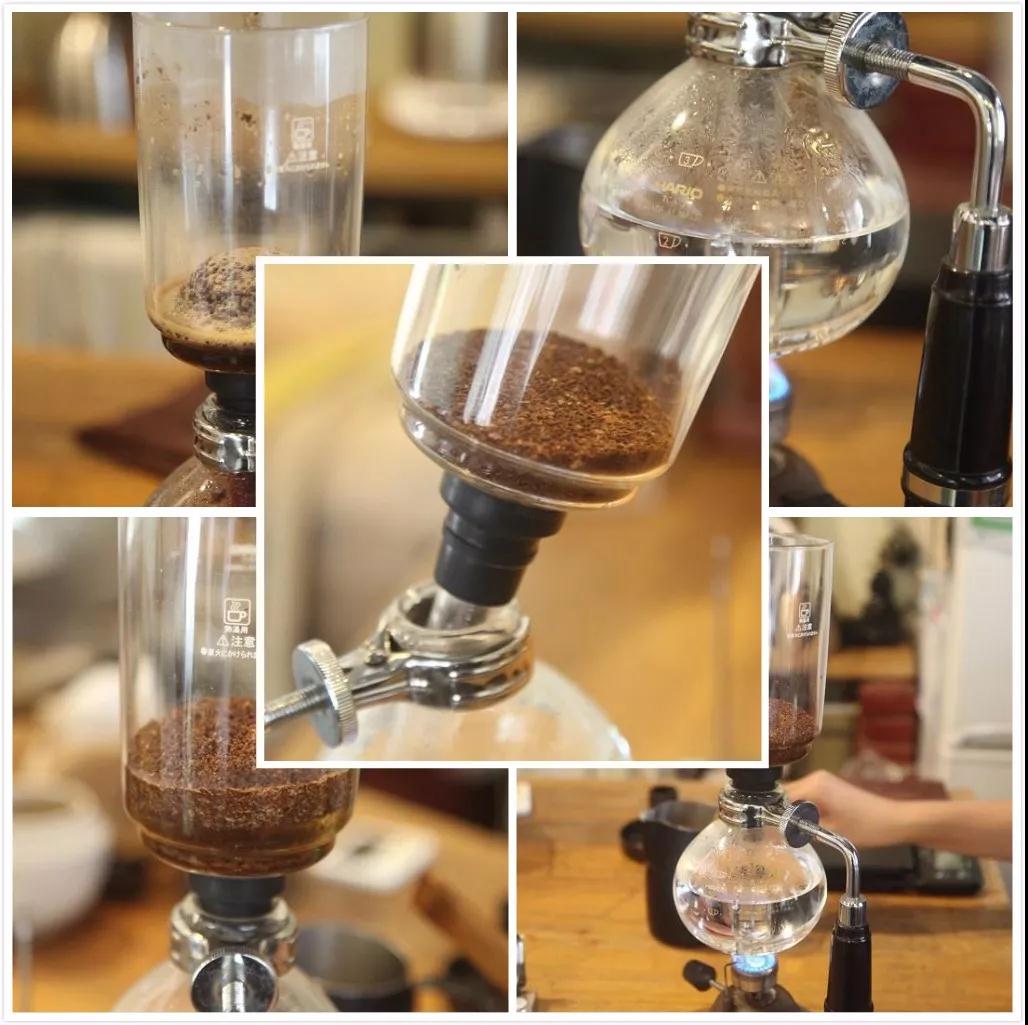
When the water reaches brewing temperature, install the filter cloth in the upper chamber. Be sure to hook it as shown in the picture below! Otherwise, when water from the lower chamber rushes to the upper chamber, the filter will be pushed open.
Adding Grounds First
Adding grounds first means putting the coffee grounds into the upper chamber first, then letting the water rise to meet them. This method requires higher control over heat. As the water rises, you must adjust the flame to an appropriate size to avoid large bubbles that would destroy the bloom. At the same time, it is best to pre-boil a pot of water to test whether the filter screen position is centered; if it is not centered, it will also generate continuous large bubbles. The advantage of adding grounds first is that it provides a gradual moistening process for the coffee grounds, reducing the number of initial stirs and forming a better bloom. However, temperature control is less precise, so timing the insertion of the upper chamber into the lower chamber is particularly important. In other words, adding grounds first may look simpler, but in practice it demands more experience than adding grounds later.
FrontStreet Coffee's barista-recommended technique [using Washed Yirgacheffe Worka]
(1) When the lower chamber water temperature reaches 90°C, pour in the grounds and straighten the upper chamber;
(2) After water completely wets the coffee grounds, perform the first stir and start timing. Adjust the flame to an appropriate size as the water approaches the upper chamber;
(3) After blooming for 30 seconds, perform the second stir;
(4) Around 50 seconds, perform the final stir, then remove the heat source to let the coffee liquid flow back.
Adding Grounds Later
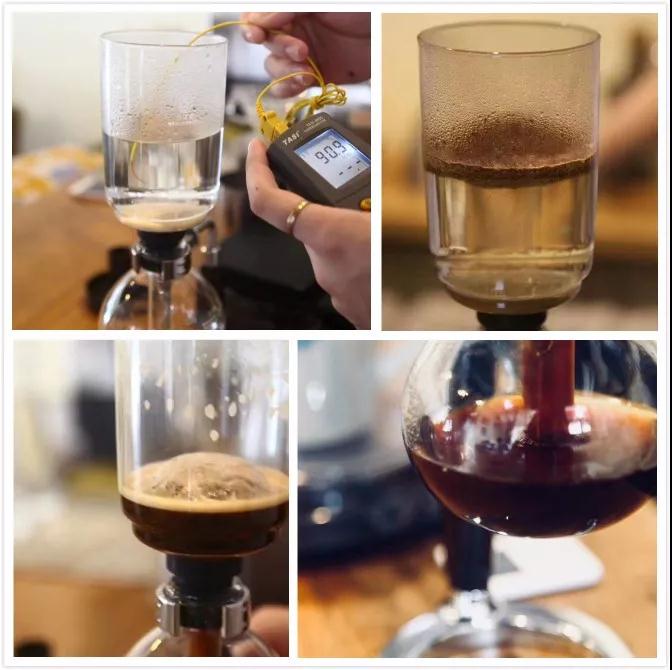
Contrary to adding grounds first, adding grounds later means waiting for the water from the lower chamber to rise completely to the upper chamber before adding the coffee grounds. Before adding grounds later, we have ample time to reduce the heat source flame to just enough to support the upper chamber water without it falling back. Then adjust the lower filter screen position to keep it centered, and finally wait a few moments to let the water temperature drop slightly. Generally, when water from the lower chamber first rises to the upper chamber, the temperature is around 90-95°C, so we can let it drop 2-5 degrees before adding the coffee grounds. Generally, the higher the water temperature, the more bitter the coffee becomes, even appearing burnt. Lower temperatures highlight acidity and aroma, but too low a temperature can cause under-extraction, reducing body and making the acidity very sharp. Choosing an appropriate water temperature for the coffee being extracted is therefore crucial.
FrontStreet Coffee's barista-recommended technique [using Washed Yirgacheffe Worka as example]
(1) When water temperature reaches 90°C, straighten the upper chamber. When water rises to the upper chamber, pour in the coffee grounds, stir, and start timing;
(2) Adjust the flame to an appropriate size. After blooming for 30 seconds, perform the second stir;
(3) Around 50 seconds, perform the third stir. After stirring ends, remove the heat source to let the coffee liquid flow back.
Conclusion
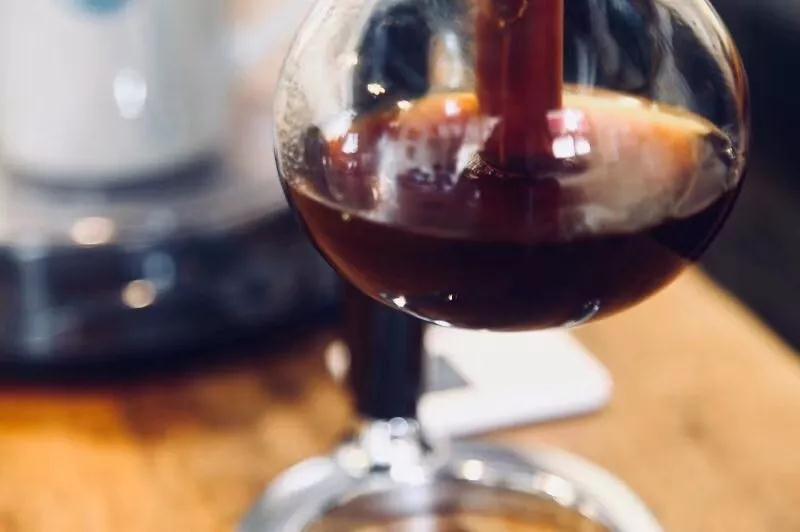
[Adding Grounds First] emphasizes high cleanliness and a full, long-lasting aroma, with prominent lemon acidity, citrus and white grape juice flavors. It does, however, demand precision; poor control can easily cause under-extraction or over-extraction with wide deviations.
[Adding Grounds Later] has richer flavor, with more prominent mid-palate caramel and honey notes. Cleanliness is relatively weaker, the aroma is less lifted, and temperature control matters more.
Everyone can try both methods. Even after accumulating some experience, you can choose different ground-adding methods based on different coffee bean characteristics or different extraction goals.
FrontStreet Coffee Recommendation
A washed Yirgacheffe like Worka is the classic candidate for siphon brewing, and FrontStreet Coffee's Yirgacheffe range is built around precisely that clean, floral profile. The Yirgacheffe Guodingding Cooperative beans are graded G1 and washed in the traditional way, showing elegant white florals, citrus, orange and green tea, while the everyday Washed Yirgacheffe is the classic entry point to the region, known for white jasmine, bright citrus and lemon acidity with a tea-like finish.
If you prefer a fruitier, more aromatic cup in the siphon, the Natural Red Cherry from Yirgacheffe is a fully ripe, whole-cherry natural lot: citrus acidity, berry juice, honeyed sweetness and a creamy body, still recognizably Yirgacheffe but with the tropical fruit lift that natural processing brings. Any of these will reward the two ground-loading techniques described above.
Important Notice :
FrontStreet Coffee is a long-established specialty coffee roaster in Guangzhou China, selling freshly roasted beans from its own farm in Yunnan as well as dozens of carefully selected single-origin beans from around the world for both pour-over and espresso. The products deliver consistently excellent quality and great value, with shipping within 24 hours. Guangzhou's FrontStreet Coffee shop is recommended by many coffee lovers, and the beans are now available online at the Tmall 。
FrontStreet Coffee has moved to a new address:
FrontStreet Coffee Address: 315,Donghua East Road,GuangZhou
Tel:020 38364473
 Scan and follow the En Gafei WeChat official account. Please indicate that the reprint comes from "En Gafei".