Seven Major Factors Affecting Pour-Over Coffee_How Much Impact Do Coffee Beans Have on Pour-Over Coffee
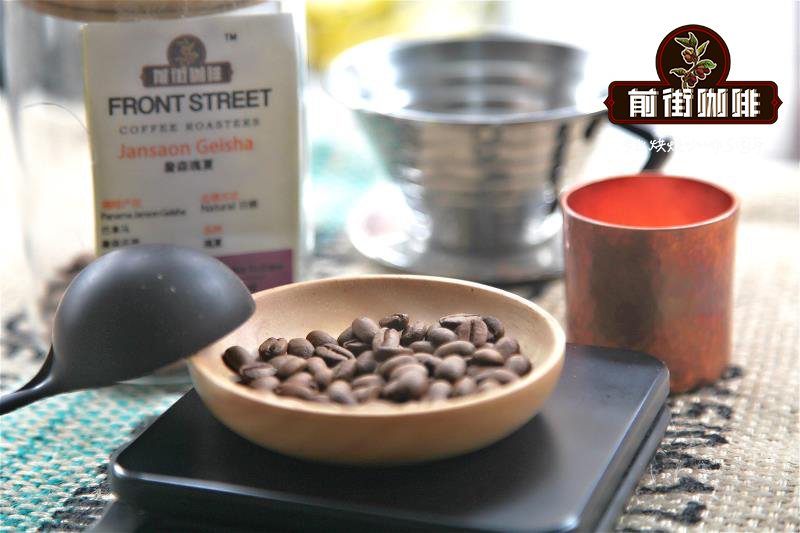
For a long time the variable factors affecting pour-over coffee have been split into: 1. Pour-over coffee beans; 2. Grind size; 3. Water; 4. Equipment; 5. Blooming time.
Pour-over Coffee Beans
Choosing beans that suit your taste is an important standard for judging whether your pour-over is delicious. Many people complain that their coffee is too weak, astringent or full of off-flavors -- and the first thing to consider is the beans. Roasted too lightly, beans tend to develop astringency because they are undercooked. That is why I still recommend beginners choose medium-dark roast beans, and wait until their technique is solid or they genuinely crave light roast before buying light roast beans to try. So stop worrying about whether your pour-over technique is wrong, and start by choosing beans that suit you. Coffee knowledge runs deep, and this is a magical plant -- don't try to master it all at once by immediately taking on beans with low controllability.
Grind Size
There are many kinds of grinders on the market, and a good grinder ensures the grounds are uniform in size. If the grounds are uneven with too many fine particles, the resulting coffee will not taste pure (by which we mean clean). So what is the appropriate coarseness for pour-over? The answer is a medium grind, about the size of sugar granules. If the grounds are too coarse, hot water passes through too quickly and it becomes hard to extract the aromatics. If the grounds are too fine, the filter clogs easily, water and grounds soak too long, and the coffee turns bitter and astringent. Many beginners fall into the misconception that coffee should be ground as finely as possible, but the result is the opposite -- controlling coarseness is the single most important factor in letting a coffee express its correct flavor.
Of course, before adjusting the grind setting you must first understand the beans in front of you. If you are using medium-dark roasted beans such as Mandheling, going finer can bring richer aroma and body, but also bitterness and astringency. Going coarser may bring out some grassy aromas, but a Mandheling that loses most of its body is incomplete, so you have to adjust again and again until you reach a taste that satisfies you. If you are using medium-light roasted beans such as Yirgacheffe, too fine a setting can produce strong acidity and severe astringency, easily leading to over-extraction, especially when you extend the extraction time. Too coarse a setting may bring bright acidity, but the aroma and sweetness of the Yirgacheffe also become much duller. The right setting matters enormously for a bean, and each coffee's optimal expression needs a different setting, because grinders vary greatly -- even two grinders of the same model differ -- so you must tune by your own palate. After all, whether it tastes good is very subjective.
Freshness
"Freshly ground" is the first condition for good coffee; it protects the flavor. Once coffee is ground, the grounds oxidize faster and the aroma begins to fade after 40 seconds. If the grounds lose their aroma badly, the flavor disappears with it.
Leveling
After pouring the grounds into the dripper, you need to shake it gently to spread them evenly -- an easily overlooked step, though using too much force or shaking too many times is equally unwise. The evenness of the coffee bed determines how uniformly the pour-over blooms and extracts, which directly affects the taste.
Water
Water Quality
A cup of pour-over is 98% water, and the soluble solids (TDS) in the water should ideally range between 100-250ppm. Don't use tap water, don't use tap water, don't use tap water. Filtered water is fine, and mineral water works too, but be sure not to use an unknown brand -- if something goes wrong, this editor is not responsible.
Water Temperature
When answering questions, it is often surprising how many beginners ignore water temperature, and that will not do. Pay attention to water temperature. For pour-over, choosing between 85-95°C is generally fine. Water that is too hot makes the coffee's bitterness stronger, while lower temperatures make the acidity stronger. Recommendation: dark roast beans suit 80-85°C, while medium-light roast beans extract best around 90°C.
Water Flow
For pouring, pay attention to just two things: a stable flow rate, and not continuously pouring at a single spot for a long time, except at the center. Here are a few common mistakes:
A. The water column is too large or too tilted, which washes a hole into the side of the coffee bed so water escapes straight through the filter paper, leaving the coffee under-extracted.
B. The water column is held too high, which destroys the coffee bed structure and easily introduces air bubbles, leading to uneven extraction. It also exposes the stream to too much air and drops the water temperature, so the column should stay as close to the coffee as possible.
C. The flow is unstable, surging and then dripping, so different areas of the grounds soak unevenly and the taste suffers.
Coffee-to-Water Ratio
There is no need to explain how important the coffee-to-water ratio is -- the frequent questions of "Why is my coffee so weak?" and "Why is it so strong?" very likely come down to your ratio. Different people have different tastes and strength preferences, but we can refer to the Golden Cup extraction theory, where the golden extraction concentration range is 1.15%-1.35%, with a ratio around 1:13 to 1:15. That said, ratios from 1:13 to 1:18 are all acceptable for most palates. Some people chase intensity with very little water, but the result is not pleasant. Others expect more water to extract more, not realizing that the later the extraction, the more diluted it becomes, leaving the concentration insufficient. With a new bean, start at 1:15 and adjust from there to your taste.
Equipment
Dripper Material and Shape
Common drippers today include V60 conical single-hole drippers, Kalita three-hole trapezoidal drippers and basket-shaped drippers. Different drippers produce different flavors, and you cannot crudely say one is good or bad -- there is no good or bad, only different expressive abilities. What matters in a dripper is the material, which is very important for preserving aroma. Common materials include resin, ceramic, glass, stainless steel, pure copper, copper-plated and silver-plated, each with its own advantages and drawbacks.
Filter Paper
Please choose high-quality filter paper. It does not have to be unbleached; as long as it comes from a major brand, has no odor and is of moderate thickness, it is fine. Many people use cheap, inferior filter paper to save money -- it is very thin, prone to leaking, and some papers filter so slowly that water is poured but nothing flows down, which inevitably causes over-extraction and spoils the taste. People wonder why they bought good coffee yet the taste is poor; the reason lies in the filter paper.
Pour-over Kettle
Choose a pour-over kettle according to your skill level. Beginners should still start with a long-spout kettle, and be careful to keep the lid on while pouring, otherwise the temperature drops as you pour -- so don't come asking why your coffee tastes so acidic.
Blooming Time
Blooming uses the steam from hot water to open up the fibrous structure in the grounds so extraction can be more complete. Those who can should try extraction without blooming -- you will definitely get an under-extracted, watery taste. Blooming generally uses relatively little water: pour from the center with a small stream in circles outward until the grounds are moistened, then let them expand and breathe on their own. Blooming time is generally 15-35 seconds, with dark roast beans getting correspondingly shorter blooms and light roast beans longer. The bloom dome is also smaller for light roasts and larger for dark roasts. Blooming calls for a smaller flow because too much water at this stage damages the wetting structure on the surface of the grounds, and the water-hammer effect of too large a flow washes many fine particles straight to the bottom of the dripper, affecting later extraction.
Pour-over Coffee Bean Brand Recommendations
FrontStreet Coffee's roasted single-origin pour-over beans come with full guarantees in brand and quality. More importantly, the value is extremely high -- a half-pound (227 grams) package averages around 80-90 yuan. At 15 grams per cup of single-origin coffee, one package makes 15 cups, working out to only about 6 yuan per cup. Compared to cafe prices that often reach dozens of yuan per cup, that is outstanding value.
FrontStreet Coffee Recommendation
Given how central grind size and water temperature are to pour-over, a bean that is forgiving and expressive is a great place to start. FrontStreet Coffee's Ethiopia Yirgacheffe Gudingding is a classic washed pour-over choice: clean and transparent with lemon and citrus acidity, jasmine florals and a green-tea-like finish, and it responds well to the medium grind and roughly 90°C water recommended above.
For a more fruit-forward, tropical cup, try FrontStreet Coffee's Ethiopia Huakui. Roasted light, it is packed with strawberry, passion fruit, jackfruit and even lychee aromas, with obvious sweetness, very low bitterness and a juicy, smooth body -- ideal for a V60 on a steady, gentle pour.
Important Notice :
FrontStreet Coffee is a long-established specialty coffee roaster in Guangzhou China, selling freshly roasted beans from its own farm in Yunnan as well as dozens of carefully selected single-origin beans from around the world for both pour-over and espresso. The products deliver consistently excellent quality and great value, with shipping within 24 hours. Guangzhou's FrontStreet Coffee shop is recommended by many coffee lovers, and the beans are now available online at the Tmall 。
FrontStreet Coffee has moved to a new address:
FrontStreet Coffee Address: 315,Donghua East Road,GuangZhou
Tel:020 38364473
 Scan and follow the En Gafei WeChat official account. Please indicate that the reprint comes from "En Gafei".