What is Espresso Blend? Can Espresso Blends Be Brewed by Pour-Over? The Difference Between Blended Coffee and SOE
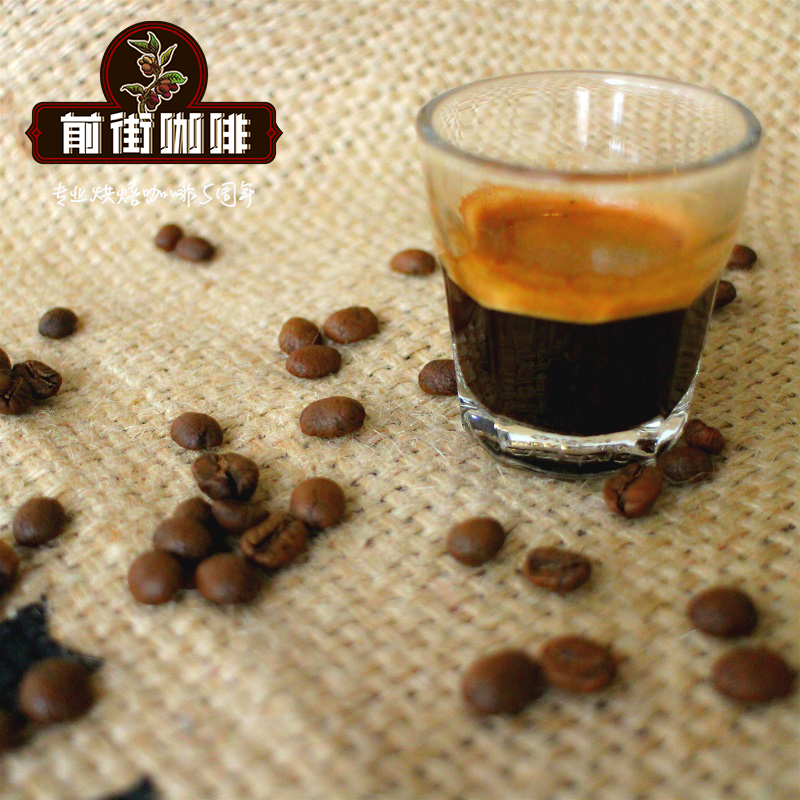
What is Espresso?
Espresso is a strict preparation method — specific water pressure, water temperature, extraction time, and so on. Only coffee produced through these specific parameters can truly be called espresso.
Italian coffee, in turn, refers to the whole family of drinks built on an espresso base extracted from an espresso machine. The steam-pressure extraction machine was invented by the Italians, and the concentrated coffee it produces is Italian espresso.
Using that espresso as a base and combining it with milk, milk foam, chocolate, ice cream, and other additions produces the various specialty and creative coffees we call Italian coffee. The two core keywords are "espresso machine" and "espresso." Every drink in this system belongs to Italian coffee.
In short, Italian coffee is a system — one built on coffee quickly extracted under steam pressure.
The Art of Coffee Blending
Blending is genuinely an art form; it is not a matter of casually stirring coffee beans together.
The Reasons and Purposes of Blending
People blend coffees from different origins for several purposes. The most ideal purpose, of course, is to create a coffee that tastes better than any of its individual components. In practice, however, a good single-origin Arabica can already make a delicious cup — fragrant, smooth, and sweet on the finish — so strictly speaking, blending is not necessary.
Commercially, the main purpose of blended coffee is to reduce costs: using less-than-stellar components to build a coffee that still tastes quite good, thereby improving margins. Another purpose is to create a signature flavor — a distinctive taste belonging to a particular brand, one that loyal customers can only get from that producer. A further advantage is stability: however the taste of individual origins shifts from harvest to harvest, the blend's flavor stays the same.
Is Blending Just Randomly Mixing Beans?
Before blending any coffee, you must first understand the flavor characteristics of the components and have a clear target — a cup profile that no single origin can achieve on its own. If a blend doesn't taste better than at least one of its component coffees, that is genuinely regrettable; better not to blend at all.
Although some fixed-variety coffees stand perfectly well on their own, most single coffees carry some kind of flavor defect — a lack of distinctive notes, insufficient depth, inadequate strength, or certain flavors that run too loud. To compensate, several beans with complementary characteristics must be combined into a harmonious, deep flavor. Some people believe the joy of coffee lives precisely in the roasting and blending stages, and that drinking it is merely enjoying the fruits of that victory.
Sometimes a blend of two excellent coffees can even suppress each other's unique qualities, so blending is never just throwing specialty beans into one bag. It is like a painter mixing captivating colors on a palette: the blender uses coffee beans to create tempting flavors. It is no exaggeration to call blending an art. As artists, blenders need not only experience and inspiration but also a measure of scientific calculation — great blends are not accidents but the culmination of long accumulation. Generally, a blended coffee does not need more than five component beans; beyond that, the flavor structure becomes so complex that only a very few experts could keep it under control.
SOE Blended Coffee?
Some baristas might tell you: "This latte we're serving is made with SOE blended coffee beans!"
That statement is incorrect. SOE beans are single-origin espresso beans, while blends are made from two or more single origins combined. By definition, a blend cannot be an SOE — there is no such contradictory thing as "SOE blended beans"!
Baristas may say this to ride the trend and inflate the perceived value of their coffee, or simply because they misunderstand the term. Perhaps they mean to say that their blend is all Arabica, with no Robusta. But Robusta beans can be single-origin too — and an espresso made from a single Robusta origin is an SOE. Obviously, it can be!
What is Italian Blended Coffee?
Blended coffee is made from multiple beans mixed in different proportions — components with similar or contrasting taste profiles — giving the resulting coffee characteristics, above all in flavor, that no single origin possesses. Blending is an art form that demands repeated trials and inspiration to produce a good bag of beans. These well-balanced blends are usually destined for espresso, where high temperature and high pressure extract their aromatic, concentrated liquid.
Can Italian Blended Coffee Only Be Used for Espresso?
Not necessarily! Take FrontStreet Coffee's house-roasted "FrontStreet Specialty Italian Blend" as an example: brewed with a KONO dripper at 88°C with a medium-coarse grind, a 1:14 coffee-to-water ratio, and a total brew time of one minute and fifty seconds, the result is remarkably balanced — chocolate and hazelnut flavors with a rich texture — which is quite a pleasant surprise!
FrontStreet Coffee Recommendation
For pour-over lovers, FrontStreet Coffee's single origins show just how distinct each origin's character can be. With a Hario V60 — the cone with the signature 60-degree angle that speeds extraction and lifts aromatics — the go-to choices are floral-and-fruit lots: the FrontStreet Ethiopia Guodingding, a beginner-friendly washed Yirgacheffe G1 with bright citrus, berry, and white florals and a green-tea-like finish whose acidity is soft and luminous rather than sharp; the FrontStreet Ethiopia Huakui, a natural with an explosion of strawberry, passion fruit, jackfruit, and lychee, so sweet and juicy that drinkers call it "the coffee for people who don't like coffee"; and the legendary FrontStreet Esmeralda Red-Label Geisha, with elegant jasmine, citrus, bergamot, and black-tea nuance in a clean, transparent cup.
If your tastes run to the darker, heavier style that blends were born for, the FrontStreet PWN Golden Mandheling delivers a full-bodied, low-acid cup with herbal, dark chocolate, and faint earthy notes, while the FrontStreet Brazil Queen Estate is a balanced everyday workhorse with nut and cocoa aromas, clear caramel sweetness, and superb crema. The FrontStreet Jamaica Blue Mountain No. 1 sits in between — the classic balance of acidity, sweetness, bitterness, and aroma with cream, caramel, chocolate, and honey — and the FrontStreet 2013 Yunnan Natural Typica offers a clean cup of citrus and caramel with nut, chocolate, and brown-sugar undertones, proof of how far China's own Typica has come.
Important Notice :
FrontStreet Coffee is a long-established specialty coffee roaster in Guangzhou China, selling freshly roasted beans from its own farm in Yunnan as well as dozens of carefully selected single-origin beans from around the world for both pour-over and espresso. The products deliver consistently excellent quality and great value, with shipping within 24 hours. Guangzhou's FrontStreet Coffee shop is recommended by many coffee lovers, and the beans are now available online at the Tmall 。
FrontStreet Coffee has moved to a new address:
FrontStreet Coffee Address: 315,Donghua East Road,GuangZhou
Tel:020 38364473
 Scan and follow the En Gafei WeChat official account. Please indicate that the reprint comes from "En Gafei".