How to Roast Brazilian Red Bourbon _ Pour-Over Red Bourbon Coffee Bean Tutorial _ How Much is a Cup of Red Bourbon Coffee
Introduction to Red Bourbon Coffee Bean Origin
South Minas, with its hilly terrain at elevations of 700-1200m, is Brazil's earliest coffee production area. Because labor costs have risen, mechanical harvesting is now predominantly used there. This region is also where coffee was first commercialized, and many large exporters established themselves here. The Bahia producing region, in northern Brazil, mainly produces washed Brazilian coffee, while the coastal Espírito Santo region is Brazil's main export area for Robusta varieties.
Brazil's coffee growing areas fall into two main types of terrain: the Brazilian plateau above 500 meters and the Brazilian plains below 200 meters. The main cultivated and well-known varieties include Bourbon (including Yellow Bourbon, Red Bourbon and Flat Bean Santos). Brazilian coffee's flavor is characterized by low acidity, nutty flavors, balance and a moderate body. In the specialty coffee world Brazilian coffee may not stand out, but it is often used as a blending component in espresso, and because of its high balance it is frequently used by merchants as a Blue Mountain-style bean.
The Bourbon Variety
Let me briefly explain what Bourbon coffee is. Bourbon coffee was initially cultivated on Réunion Island, which was called Bourbon Island before 1789. The Bourbon variety is a sub-variety that mutated from Typica and, together with Typica, belongs to the oldest coffee varieties still in existence. When the green fruits mature, they turn bright red.
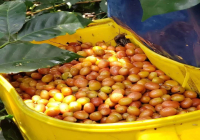
Generally, after Red Bourbon coffee trees flower and bear fruit, the color of the cherries follows this pattern: green, then light yellow, then light orange, then mature red, then darker red at full ripeness. Hence the name "Red Bourbon." In fact, Red Bourbon is what we generally mean by the Bourbon variety. Bourbon grown at high altitude typically has a better aroma, a brighter acidity and may even taste wine-like.
Simply put, the Bourbon variety is a coffee tree belonging to the Arabica branch. It generally produces red fruit, called Red Bourbon; besides this there is also Yellow Bourbon and Orange Bourbon. Yellow Bourbon has a relatively lower yield but better quality.
Spread of the Bourbon Variety
Because the Typica variety introduced to Brazil in 1727 had a low yield and was susceptible to disease, the Bourbon variety was brought to Brazil around 1860 via Campinas in the south and quickly spread northward to other regions of South and Central America. Today in Latin America, although most Bourbon has been replaced by its variants — especially Caturra, Catuai and Mundo Novo — it is still cultivated in countries such as El Salvador, Guatemala, Costa Rica and Peru.
In Africa, French missionaries known as Spiritans (from the Holy Spirit congregation) played an important role in spreading Bourbon. In 1841 the first mission was established on Réunion, and a branch was set up in Zanzibar in 1859. From Zanzibar, branches were established in 1862 in Bagamoyo (Tanzania coast, then called Tanganyika) and St. Augustine (Kikuyu, Kenya), and another branch was established in Bura (Taita Hills, Kenya) in 1893. Each branch establishment was accompanied by the planting of coffee seeds brought from Réunion.
In 1899, seedlings cultivated in Bura were taken to another French mission at Santa Cruz, near Nairobi. In 1900 they were introduced to the Kilimanjaro region of Tanzania, and seeds were distributed to local residents willing to grow coffee. This was the origin of what is called "Missionary Bourbon." The Kent variety followed in 1920. To this day, therefore, coffee in Tanzania is still mainly Bourbon and Kent.
— 1732: Round Bourbon to the British territory of St. Helena Island
— 1860: Pointed Bourbon to New Caledonia, Yemen
— 1860: Round Bourbon to Brazil
— 1900: Round Bourbon to Rwanda, Kenya, Tanzania
— After 2000: Pointed Bourbon to Colombia
Processing Method Introduction
Semi-washed Method
After the cherries are harvested, unripe fruit and foreign objects are removed through water channels, then the outer skin and part of the pulp are removed, followed by a mucilage remover to eliminate the remaining mucilage. Removing mucilage reduces the sun-drying time required and lowers fermentation risk. This method is used mostly when climate conditions are not ideal: if air humidity is high, the climate warm or there is rainfall, the risk of mould during drying is higher. Most washed beans used for commercial trade in Brazil are therefore processed by the semi-washed method.
Analysis of Red Bourbon Coffee Bean Green Beans
Brazilian coffee comes in many varieties, with natural processing the main method, and it is classified according to producing state names and transport ports.
Because production areas are scattered and quality is inconsistent, classification standards are not uniform.
Brazil's grading system evaluates defect percentage, size, flavor and cupping score, with its own independent grading system that is more complex than other countries'. For example, "Brasil Santos, NY 2 SC17/18 SS FC" — here NY2 is the defect percentage grade, where larger numbers indicate a higher defect percentage. The sequence runs 2, 2/3, 3, 3/4 and so on, with NY indicating the New York grading standard as the benchmark.
SC 17/18 indicates bean size. SS FC (Strictly Soft and Fine Cup) indicates flavor and cup quality, divided into two groups. The first group includes Strictly Soft, Soft, Softish, Hard, Hardish, Rioy/Rioysh and Rio; the second includes Fine Cup and Good Cup. Brazilian coffee's main characteristics are high sweetness, cleanliness, smoothness and low acidity, with broad applications and widespread popularity.
Brazilian Red Bourbon
Country: Brazil
Variety: Red Bourbon
Processing: Hand-picked, then semi-natural processing
Origin: South Minas
Elevation: 700-1200m
Processing Method: Semi-washed
Flavor: High sweetness, clean, smooth, low acidity, with tropical fruit aroma
Roasting Analysis
Brazilian coffee generally grows at elevations of 1000-1300 meters, so its density is relatively low, its moisture content moderate, its bean texture relatively soft and the distance from bean surface to core thin. It is therefore not suited to roasting at too high a temperature, which would produce burnt bitterness. We use a medium heat when dropping the beans, maintain heat through the dehydration stage, and make fine adjustments as the temperature rises after first crack begins, to promote more complete caramelization. This semi-washed bean heats up slowly after first crack and can be dropped when it approaches second crack.
Roaster: Yangjia 600g semi-direct flame
Preheat roaster to 200°C, open damper to 3. After 30 seconds, turn on heat, adjust to 160, damper unchanged. Return temperature at 1'30", maintain heat. Yellow at 5'00", grassy smell disappears, enter dehydration stage, reduce heat to 130, open damper to 4. At 168°C, reduce heat again to 100.
At 8'00", dehydration is complete, the bean surface shows wrinkles and black spots, the toast smell turns to coffee aroma — the prelude to first crack. Pay attention to the first crack sounds. First crack begins at 8'50", damper fully open to 5. Development time after first crack: 3 minutes 10 seconds. At 190°C, heat reduces to 50; at 194°C it reduces again to 30; drop at approximately 200°C.
This is a flavor-balanced coffee with the typical Brazilian style. Nutty and chocolate flavors are prominent, with low acidity.
Red Bourbon Coffee Bean Brewing Data
Recommended brewing method: Pour-over
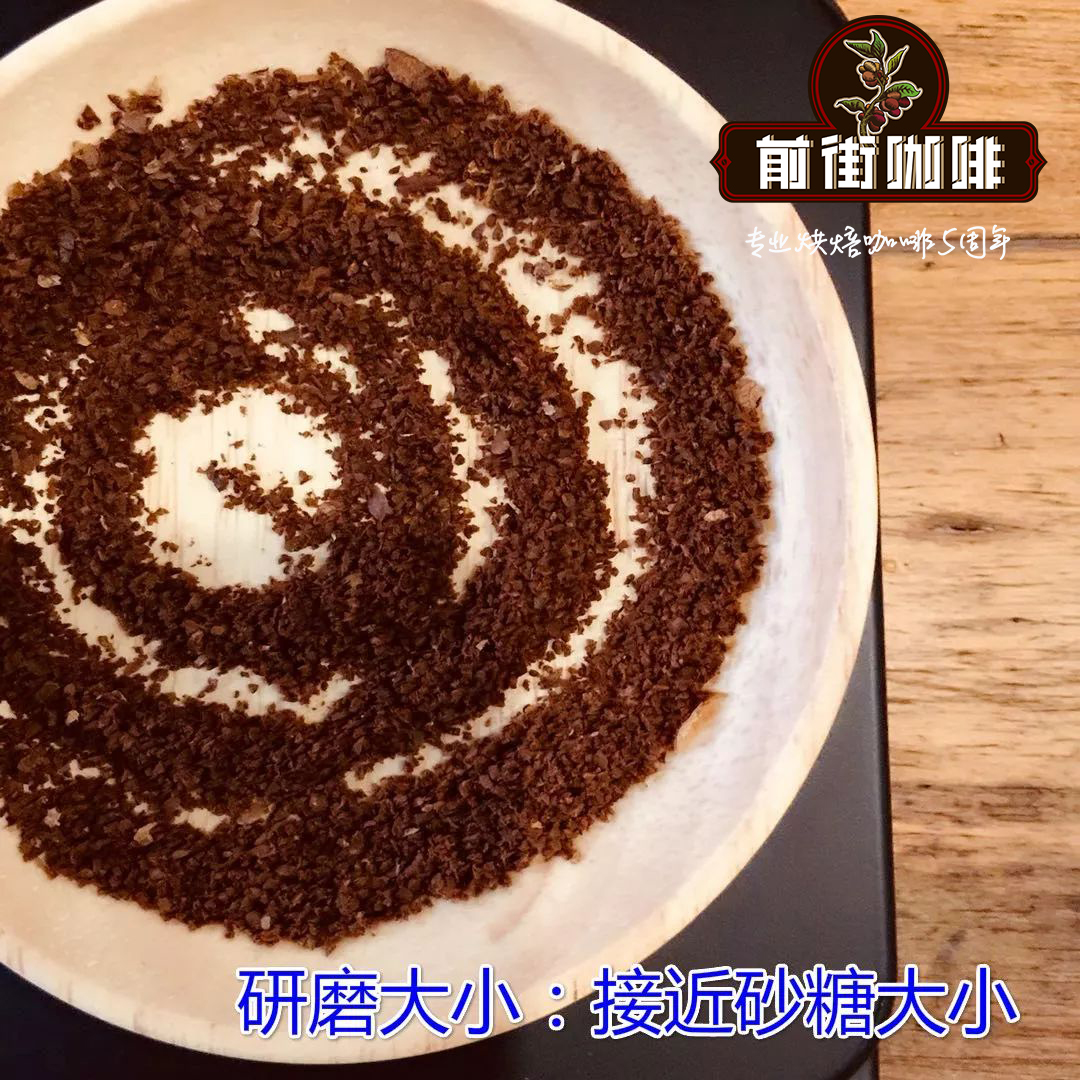
Grind size: 4 (Japan Fuji R440)
Water temperature: 89°C
V60 dripper, 15g coffee, water temperature 90-91°C, grind 3.5, water-to-coffee ratio close to 1:15
30g water for bloom, bloom time 30s
Segmented pour: pour water to 120ml, then stop the flow and slowly pour to 225ml
That is, 30-120-75, total extraction time 2 minutes
Other Drip Extraction Recommendations:
French press: recommended grind size 3.5-4 / water temperature 90°C
AeroPress: recommended grind size 2.5, water temperature 90°C
Red Bourbon Coffee Bean Brand Recommendations
FrontStreet Coffee's roasted Brazilian Red Bourbon coffee beans offer full guarantees in both brand and quality. More importantly, they offer extremely high value — a half-pound (227g) package costs only about 45 yuan. Calculated at 15g per single-origin coffee, one package makes 15 cups, at only about 3 yuan each. Compared to café prices that often reach dozens of yuan per cup, that is excellent value.
FrontStreet Coffee Recommendation
FrontStreet Jamaica Blue Mountain No.1 — Brazilian coffee is often used by merchants as a Blue Mountain-style bean precisely because of the balance it shares with the real thing, so a genuine Jamaican Blue Mountain No.1 makes a natural companion to this article. FrontStreet's Blue Mountain No.1 is a top-tier lot from the long-established Clifton estate, where coffee has been grown and processed since around 1750. The growing and processing area sits at an average elevation of 4,300 feet (1,310.64 meters); ample altitude, gentle afternoon cloud that shades the trees, plentiful sunshine and mineral-rich soil give the coffee trees excellent conditions and extend the ripening of the cherries. Authentic FrontStreet Blue Mountain coffee is what the cup is all about: extremely clean, complex and gentle, with chocolate sweetness and a very strong body. The sour, sweet and bitter elements marry perfectly, with no bitterness at all, only a moderate and beautifully judged acidity and a long fruit finish. It is a coffee that is remarkably easy for almost anyone to like.
Important Notice :
FrontStreet Coffee is a long-established specialty coffee roaster in Guangzhou China, selling freshly roasted beans from its own farm in Yunnan as well as dozens of carefully selected single-origin beans from around the world for both pour-over and espresso. The products deliver consistently excellent quality and great value, with shipping within 24 hours. Guangzhou's FrontStreet Coffee shop is recommended by many coffee lovers, and the beans are now available online at the Tmall 。
FrontStreet Coffee has moved to a new address:
FrontStreet Coffee Address: 315,Donghua East Road,GuangZhou
Tel:020 38364473
 Scan and follow the En Gafei WeChat official account. Please indicate that the reprint comes from "En Gafei".