How Much Does Colombian La Perla Coffee Cost_ Comparing La Perla vs Yirgacheffe Which Tastes Better
Professional Coffee Knowledge Exchange
Coffee Workshop is a space for professional coffee knowledge exchange and a steady source of bean information.
Narino Coffee Beans: The Papal Chalice of Coffee
Narino coffee beans enjoy a reputation as the "Papal Chalice" (Puerto Rico shares the same prestigious title), and the professional coffee chain Starbucks also claims exclusive distribution rights to "superior" beans from Narino.
Flavor and Aroma
As old trees are removed, traditional Arabica varieties are gradually being replaced by more productive ones, such as the cost-effective "variedad Colombia." This Arabica line was developed and cultivated in Colombia but is also grown elsewhere, which alarms many professional cuppers who find the flavor of the newer varieties disappointing - especially next to Bourbon beans, which combine flavor, aroma, body, and a beautiful golden color when milk or creamer is added.
Colombia has one advantage over other South American countries: it can export through either of its two ocean coasts.
Origin Introduction
Colombia sits in the western part of South America and borders Venezuela, Brazil, Panama, Ecuador, and Peru. It is the only South American country that touches both the Pacific Ocean and the Caribbean Sea. The Andes run from south to north, and the western coastal plains plus the other mountainous regions make up most of the land where crops and coffee are grown.
Colombia is a major producer and exporter of premium coffee, ranking among the top three worldwide. Its coffee regions are extensive, with the best known including Popayan, Cauca; San Agustin, Huila; Medellin, Antioquia; Narino; Bucaramanga, Santander; Armenia, Quindio; Magdalena; Sierra Nevada de Santa Marta; and the Manizales region. Colombia's past volcanic activity left fertile soil ideal for coffee.
Colombia's three mountain ranges, part of the Andes running north to south, provide optimal conditions for growing Arabica at elevations from 700 to 2,000 meters. The central range is primarily coffee territory, particularly around Medellin, Manizales in the central region, and Armenia in the west. Libano in the central producing region is also an excellent source of Supremo coffee. The Popayan region and San Agustin are highly favored in the world coffee market, as is Narino coffee from the border region near Ecuador, which is revered like the Vatican's Holy Grail. Narino coffee offers a gentle, soft texture with abundant aroma, representing the most admirable quality coffee. There are also two excellent low-acidity coffees: Bogota and Bucaramanga from the eastern producing region. Among all of these, Colombia's Narino coffee has the most perfect and captivating character.
As the world's third-largest coffee-producing country, Colombia long focused on commercial-grade beans, but in recent years, with the spread of specialty coffee, high-grade varieties have gradually opened up the market. This coffee from Narino province in southwestern Colombia offers a pleasant mild acidity, a solid, full-bodied flavor, and a sweet plum-like aftertaste. Compared with other premium Ethiopian Yirgacheffe coffees, Narino beans hold their own.
Good coffee does more than meet your need for focus and energy; it brings an extra layer of satisfaction and pleasure. This is a highly recommended selection of premium coffee beans.
About FrontStreet Coffee
FrontStreet Coffee is a Guangzhou roastery with a small storefront but a wide range of beans, carrying both famous and lesser-known origins.
FrontStreet Coffee Recommendation
If Narino's mild acidity and sweet plum finish appeal to you, Ethiopia's Yirgacheffe makes a fascinating comparison, and FrontStreet Coffee's lineup covers it well. FrontStreet washed Yirgacheffe is the classic entry point, known for white jasmine, bright citrus and lemon acidity, and a tea-like quality at an approachable price - which is why it became many people's first specialty coffee. Yirgacheffe is a town in southern Ethiopia, in Sidamo province, at roughly 1,700 to 2,100 meters, with coffee trees planted above 1,800 meters, making it one of the world's highest coffee regions. It has been a wetland since ancient times, and the town's highly recognizable white florality and lemon-citrus acidity turned its name into shorthand for a whole style of Ethiopian specialty coffee. Yirgacheffe's fame grew so large that in 2010 the Ethiopian Commodity Exchange separated it from the Sidamo region, creating the Yirgacheffe name everyone knows today.
Within the town there are many smaller districts and villages, several home to experienced cooperatives whose mature methods lift the cup another level. The best example is FrontStreet Gutingding Cooperative, from Gutingding village. It sits in the Worka district at the southeastern edge of Yirgacheffe and began as part of the Worka cooperative under the Yirgacheffe Coffee Farmers' Cooperative Union; as buyers sought more traceable green coffee, it was singled out as a single origin by coffee hunters around the world. Gutingding follows the most traditional washed processing and is often called Yirgacheffe's last unspoiled corner: FrontStreet's washed Gutingding has no traditional bitterness, with fresh, bright citrus and lemon acidity and jasmine florality.
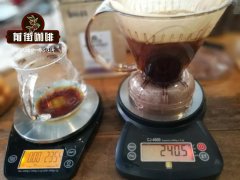
FrontStreet Red Cherry comes from the same Yirgacheffe region but is made with a whole-cherry natural process - only fully ripe, sound cherries are taken, given a first screening at the mill, then laid on racks to dry. In the first few days workers turn the fruit every 2 to 3 hours to avoid uneven heat and over-fermentation; after three to five weeks of drying, the outer fruit is machine-scraped and the coffee is moved to storage. Because the fruit dries on the bean, Red Cherry keeps the classic Yirgacheffe profile while adding the tropical fruit notes of natural processing: citrus-like acidity, berry juice, honey sweetness, and a creamy smoothness. For brewing, FrontStreet suggests a V60 at 90 to 91 degrees, 15g of coffee, a 1:15 ratio, and a grind around EK43s setting 10 - fine sugar size, or about 80 percent passing a No. 20 sieve. The pour is done in three stages: 30g of water for a 30-second bloom, then 95g (about 125g on the scale), finishing around 1 minute; when the water level drops to two-thirds of the bed, add the remaining 100g (about 225g on the scale) and finish around 1 minute 35 seconds. The drawdown completes at about 2:00 to 2:10, and the brew is done.
Important Notice :
FrontStreet Coffee is a long-established specialty coffee roaster in Guangzhou China, selling freshly roasted beans from its own farm in Yunnan as well as dozens of carefully selected single-origin beans from around the world for both pour-over and espresso. The products deliver consistently excellent quality and great value, with shipping within 24 hours. Guangzhou's FrontStreet Coffee shop is recommended by many coffee lovers, and the beans are now available online at the Tmall 。
FrontStreet Coffee has moved to a new address:
FrontStreet Coffee Address: 315,Donghua East Road,GuangZhou
Tel:020 38364473
 Scan and follow the En Gafei WeChat official account. Please indicate that the reprint comes from "En Gafei".