Did You Know? Distinguishing Arabica and Robusta Coffee Cannot Be Based Solely on Bean Center Lines and Shape
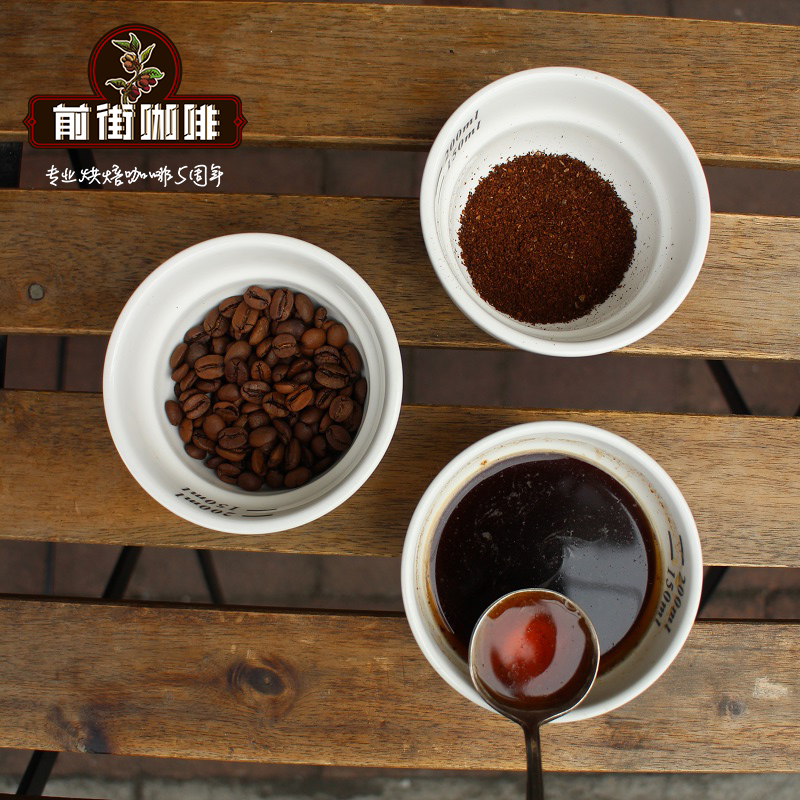
Coffee Bean Varieties: Arabica vs Robusta
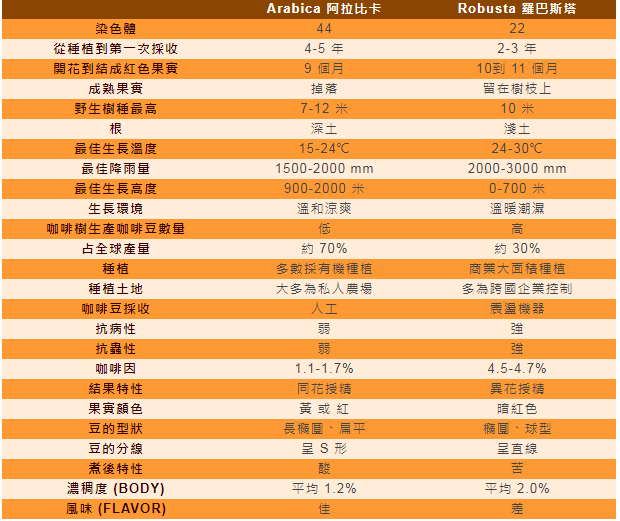
Coffee beans are the seeds of plants in the Rubiaceae family. Under the Coffea genus there are at least 25 major species, the two most important being Coffea arabica (Arabica coffee) and Coffea canephora, better known as Robusta coffee. Arabica accounts for 70 percent of global production, while Robusta accounts for about 30 percent. Arabica has 44 chromosomes, while Robusta has 22, which makes it impossible for the two to cross-pollinate as crops.
Environmental Factors and Market Impact
Coffee trees are affected by regional climate, altitude, soil quality, and other factors that influence the quality and flavor of the beans, just like other agricultural products such as tea and wine. So even within the same country, different regions produce different flavors, and prices vary accordingly. Coffee trees are evergreen plants cultivated in tropical and subtropical regions. The most suitable growing conditions include moderate rainfall and well-drained soil, which is why they are often planted on sloping land rich in volcanic ash and organic matter. This is also why high-quality Arabica beans are mostly harvested by hand and then carried down the mountains by horses or mules.
Climate has a major impact on coffee prices. In 1994, Brazil, the world's largest coffee-producing country, suffered two severe frosts, and bean prices skyrocketed from around $1,000 per ton to approximately $2,400. This also drew coffee merchants to Vietnam to rush into coffee cultivation. Under unrestrained large-scale planting, prices then collapsed, falling to only $500-600 per ton in 2001 and 2002. In 2002, roughly one million farmers engaged in coffee-related work across Central and South America lost their jobs, and countless families fell into hardship. (See "Ethics in your Coffee Cup.")
Physical Characteristics
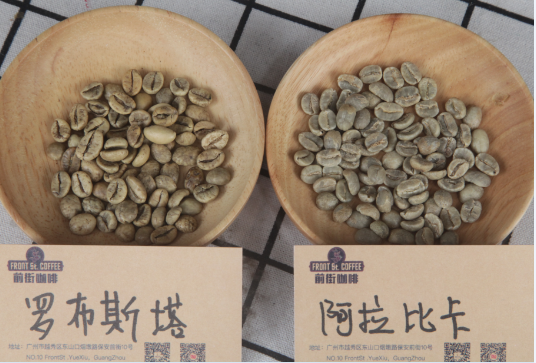
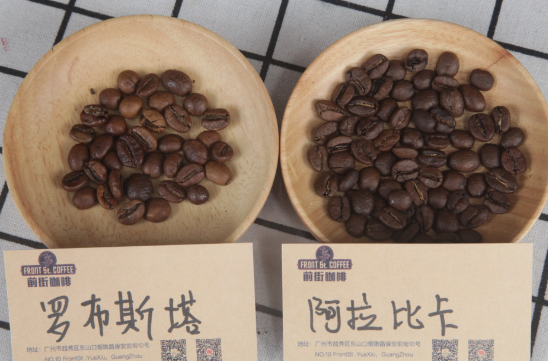
Arabica beans are smaller, with a long elliptical shape on the front, narrow zigzagging S-shaped cracks in the middle, and a relatively complete arc on the back. Robusta beans are larger, with a more rounded front and straight cracks in the middle. (The VivOle Arabica beans in the image below are Maragogype elephant beans, a higher grade that is also larger in size.)
Cultivation and Usage Differences
In cultivation, Robusta trees tolerate heat, cold, drought, and humidity, resist pests and disease, and adapt easily. They can grow well even on flat land, but unfortunately the beans they produce lack aroma and carry strong bitterness due to high caffeine content, with insufficient acidity, so they are mostly used for instant coffee, canned coffee, or instant three-in-one mixes. In Italy, many coffee shops add an appropriate proportion of Robusta to their espresso to enhance the mouthfeel, adding intensity and boldness.
Key Differences Between Arabica and Robusta
Many people know that "Arabica coffee" is famous but do not know the difference between it and the "Robusta coffee" commonly used in canned drinks. The differences are summarized below:
FrontStreet Coffee Recommendation
Brazil, the country featured in this article's price history, is also where FrontStreet Coffee sources several of its most approachable beans. The FrontStreet Brazil Cerrado Red Bourbon is a classic single origin roasted medium, with creamy peanut, toasted bread, caramel, and hazelnut over a rounded, low-acid cup. For a rarer variety, the FrontStreet Queen's Estate Yellow Bourbon comes from Mogiana and shows the clean sugarcane sweetness and fruit that the yellow Bourbon mutation is known for. If you drink milk-based coffee, the FrontStreet blends, including the Classic Blend, FrontStreet Coffee's Premium Blend, and FrontStreet Coffee's Black Cocoa Blend, all lean on Brazilian beans to provide chocolate and cream notes and a balanced, stable extraction. Since Brazilian coffee is lower in acidity and easy to enjoy, it is a friendly way for newcomers to move from Robusta-based instant coffee toward the world of Arabica.
Important Notice :
FrontStreet Coffee is a long-established specialty coffee roaster in Guangzhou China, selling freshly roasted beans from its own farm in Yunnan as well as dozens of carefully selected single-origin beans from around the world for both pour-over and espresso. The products deliver consistently excellent quality and great value, with shipping within 24 hours. Guangzhou's FrontStreet Coffee shop is recommended by many coffee lovers, and the beans are now available online at the Tmall 。
FrontStreet Coffee has moved to a new address:
FrontStreet Coffee Address: 315,Donghua East Road,GuangZhou
Tel:020 38364473
 Scan and follow the En Gafei WeChat official account. Please indicate that the reprint comes from "En Gafei".