What are the Flavor Characteristics of Brazilian Coffee Beans, What Growing Regions for Brazilian Specialty Coffee, and How Should You Drink Brazilian Cerrado Coffee
Brazil: The World's Leading Arabica Coffee Producer
Brazil is the world's largest Arabica coffee producer, accounting for roughly 30% of total global output. Brazilian coffee beans are also a key driver of coffee futures prices each year: in a bumper harvest year, Brazil ships green beans to the US ICE exchange for inspection and storage. When Arabica inventories at the exchange are plentiful, prices for all Arabica coffee on the market fall; when they run short, prices rise.
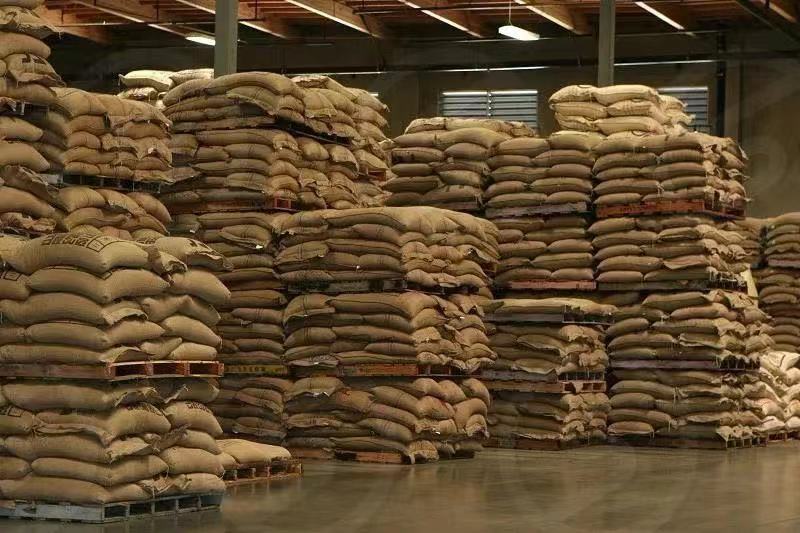
Why Does Brazil Excel at Growing Arabica Coffee?
Coffee cultivation in Brazil dates back to the 1720s, when Francisco de Mello Palheta, a Brazilian-born captain in the Portuguese service, charmed the governor's wife in Cayenne, then the capital of French Guiana, and managed to bring coffee seeds from French Guiana back to Brazilian soil, where coffee took root and flourished.
In the early days, coffee was not produced on a large scale in Brazil and was mostly consumed domestically. Later, in the wake of the American Revolutionary War, Washington championed a shift from tea-drinking culture to coffee consumption, which sharply increased American coffee imports and accelerated the expansion of coffee cultivation in Brazil. As growing coffee became increasingly profitable, it turned into a major export crop—by 1850 it accounted for almost half of Brazil's total exports.
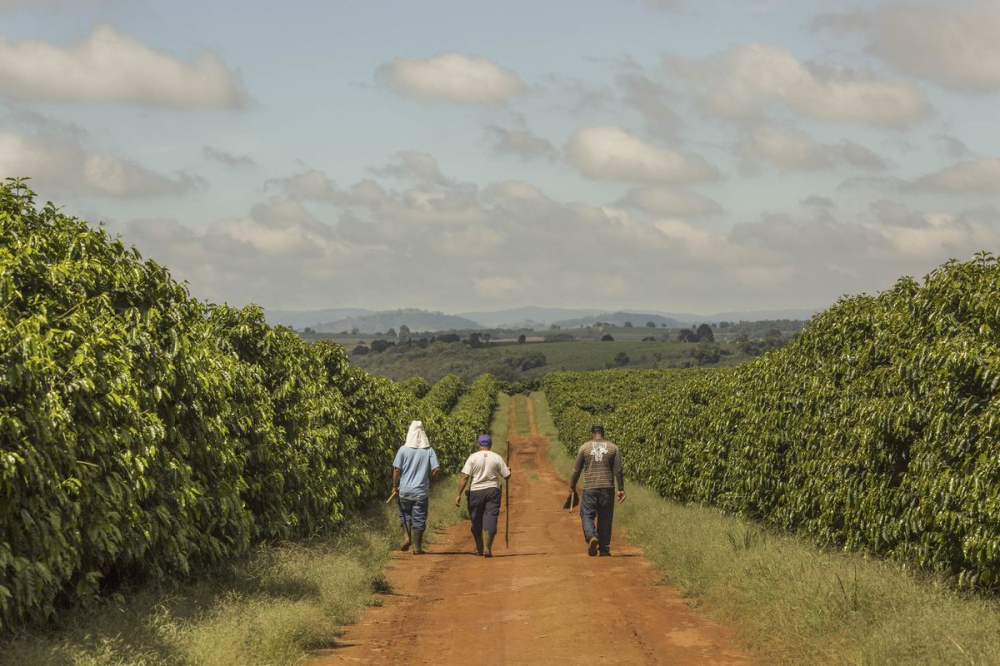
Brazil's geography is unusually well suited to coffee: nearly the entire country lies within the tropics. Most of Brazil is low-altitude flatland with clearly defined seasons, so coffee cherries tend to ripen at roughly the same time, which makes unified harvesting convenient. The drawback is that compared with other coffee regions of Central and South America, Brazil's altitudes are lower and its terrain flatter, so microclimates are hard to come by. As a result, Brazilian beans are not as dense as their Central and South American counterparts, and they lack the delicate, bright, layered acidity of those origins. Instead, they are defined by chocolate and nutty notes—though that has done nothing to dampen the world's affection for Brazilian coffee.
Flavor Characteristics of Brazilian Coffee Beans
FrontStreet Coffee believes Brazilian beans win so many admirers for two reasons. First is their outstanding value for money. Second, even though the flavor profile is not especially complex, the mellow, full body and nutty character evoke a nut pie. Whether brewed on their own as single-origin coffee or used as the backbone of a blend, they perform beautifully—a bean of mellow, rounded balance.

Brazilian Coffee Growing Regions
As FrontStreet Coffee understands it, the main regions currently producing Brazilian coffee are Minas Gerais, São Paulo, Bahia, and Espírito Santo. Together these four account for 90% of Brazil's total production, and Mogiana, within São Paulo state, is the most famous of them. The highest-altitude growing areas, however, are not in Mogiana but in Cerrado and South Minas, in Minas Gerais.
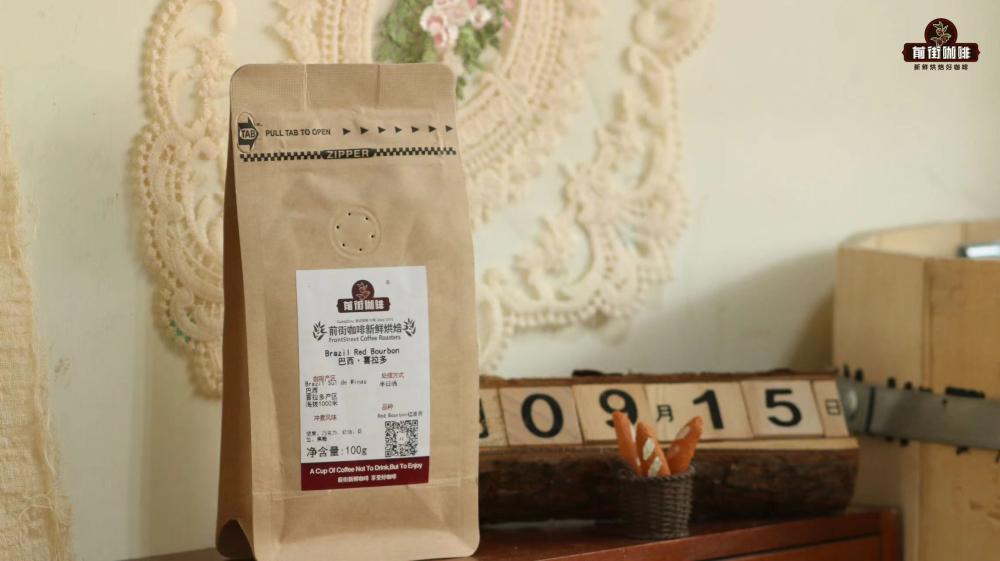
FrontStreet Coffee currently carries two Brazilian beans: a Yellow Bourbon from Queen's Farm in Mogiana, São Paulo, and a Red Bourbon from the Cerrado region of Minas Gerais.
Mogiana sits very close to South Minas. Coffee is grown among scrub, grassland, and other vegetation. Many farming families work the area—some still run traditional large-scale estates, while others have adopted smaller, modern operations. This blend of modern technique and mountain coffee-growing culture yields some of the finest green coffee in Brazil.
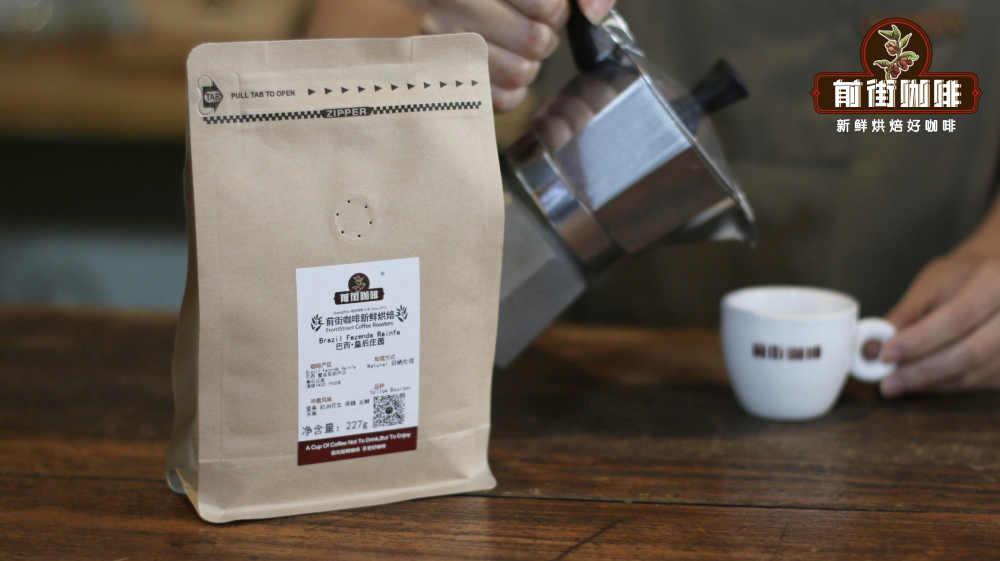
Queen's Farm lies in Mogiana at altitudes of 1400–1950 meters. The estate covers 280 hectares, of which 200 hectares are planted with Yellow Bourbon. Its distinctive terrain and agreeable climate make it an ideal site for specialty coffee production.
Cerrado is a vast savanna covering 22% of Brazil's total land area, deep in the country's interior. When FrontStreet Coffee refers to the Cerrado coffee region, we do not mean the whole savanna, but only the coffee-growing areas above 1000 meters in the central-western part of Minas Gerais—the heart of the Cerrado, with high altitudes and fertile soil, where specialty beans of clear sweetness, heavy body, and high cleanliness can be grown.
Brazilian Coffee Varieties
Red Bourbon
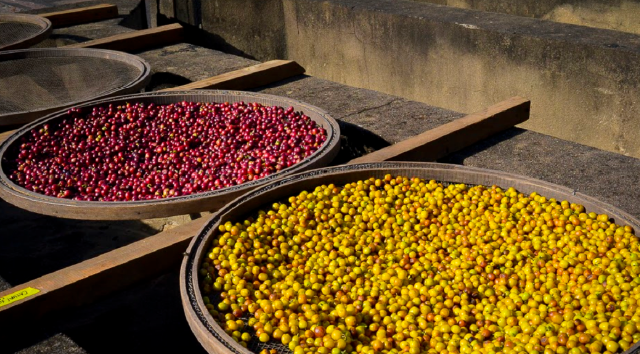
Bourbon is a subspecies that arose from a mutation of Typica and, like Typica, ranks among the oldest coffee varieties in existence. Its ripe cherries turn a bright red. Compared with Typica, Bourbon plants have broader leaves and grow more densely. Yields are higher than Typica's, but the trees take 2 years to bear a harvest, so it remains a relatively low-yielding variety. FrontStreet Coffee's cupping notes for Red Bourbon find an excellent texture, with winey acidity and a sweet finish.
Yellow Bourbon
Yellow Bourbon is another genetic mutation of Bourbon. Bourbon has long been regarded as a leader among coffees for its quality; Yellow Bourbon is a variant unique to São Paulo state. Unlike Red Bourbon, its cherries turn orange-yellow when ripe, hence the name. Because Yellow Bourbon is grown at very high altitudes, its flavor is exceptional. FrontStreet Coffee's cupping typically finds nuts and chocolate, with smooth, balanced acidity, a faint and clean bitterness, and an overall bright, refreshing character.
What Is Pulped Natural Processing?
Anyone familiar with FrontStreet Coffee's daily beans knows that most of the series is washed-processed. Washing removes the pulp and mucilage before fermentation, so the resulting cup is cleaner. As we have noted before, coffee flavor usually depends on variety, growing climate and environment, and processing method—and Brazil's green-been processing grew out of the local climate.

Brazil's climate is dry, which in theory suits traditional natural processing perfectly. But individual Brazilian harvests are enormous, and rough natural processing easily produces negative flavors such as earthiness. Washed processing, meanwhile, is costly, so Brazilians adapted to local conditions and invented a method halfway between natural and washed: pulped natural (also called semi-washed). The ripe cherries are depulped—skin and pulp removed. Because the skin of underripe green cherries does not peel off easily, this step doubles as a re-sorting of defective beans, guaranteeing uniform ripeness. The parchment beans are then spread out on drying patios until they reach the proper moisture content, and finally hulled and packed. FrontStreet Coffee finds this method takes less time than traditional natural processing and saves a great deal of water compared with washing.
How to Brew Brazilian Coffee
Whatever brewing method you choose, freshly roasted beans are essential—only fresh roasts show their fullest aroma and flavor layering. Every bean FrontStreet Coffee sells is shipped within 5 days of roasting, guaranteed freshly ground.
To bring out the mellow body of Brazilian beans, FrontStreet Coffee roasts them to a medium-dark level. The longer the roast, the more porous the bean structure becomes and the faster its soluble compounds release. We therefore recommend grinding coarser when brewing Brazilian coffee and avoiding water that is too hot, to restrain late-stage extraction and keep bitterness to a minimum.
FrontStreet Coffee Store Extraction Parameters
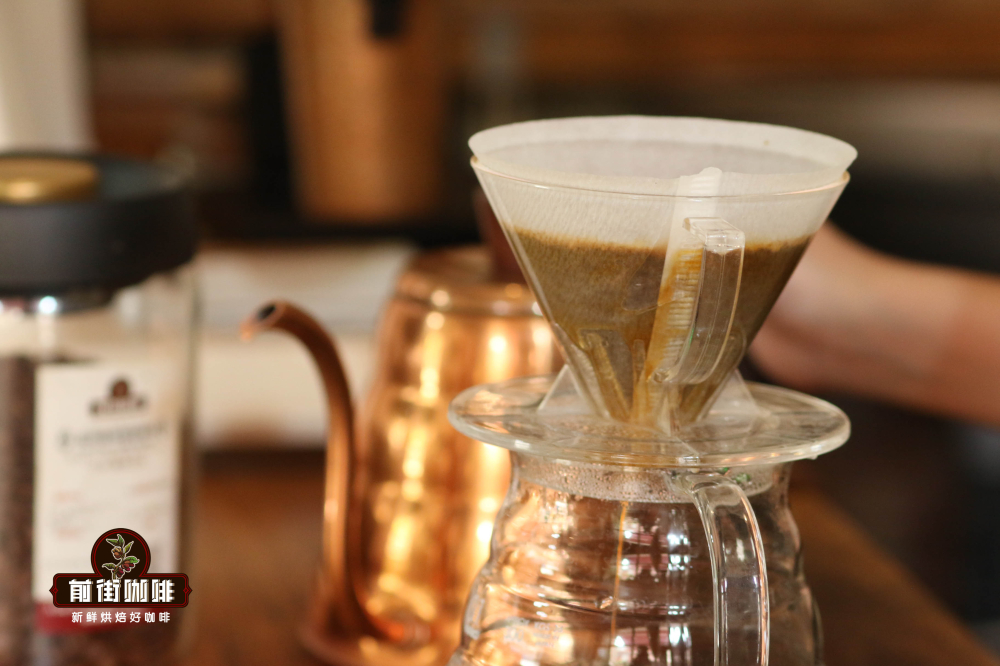
Filter: KONO
Dose: 15g
Water temperature: 89°C
Grind size: Medium grind, 75% pass-through rate on a #20 standard sieve
Water-to-coffee ratio: 1:15
Bloom with 30g of water for 30 seconds. Continue pouring in small circles to 125g, then pause. When the water level drops and the coffee bed is about to be exposed, pour again to 225g and stop. Once the level drops and the bed is about to be exposed, remove the dripper. (Timing starts from the beginning of the bloom.) The KONO's extraction runs slightly long, with total brew time of 2'10". (With a V60, total extraction time is 2'00".)

Brazilian Cerrado Coffee Bean Flavor
Obvious sweetness on the first sip, with a faint lemon note, rich nutty flavors through the middle, and a prominent dark chocolate finish. The overall experience is rounded and cohesive.
Brazilian Queen's Farm Coffee Bean Flavor
Balanced mouthfeel, led by almond and cocoa, with the clean sweetness of cane sugar to the fore. A coffee with good fullness and abundant sweetness.
FrontStreet Coffee Recommendation
If you simply want a taste of what Brazil does best, start with FrontStreet Coffee's pulped natural Cerrado Red Bourbon—a classic Brazilian single origin. Cerrado is a renowned coffee region famous for high-quality beans; this Red Bourbon, roasted medium, opens up rich aromas of creamed peanut, toast, caramel, and hazelnut, with a rounded, non-acidic cup and just a trace of bitterness. It works for pour-over, but also for moka pot, espresso SOE, siphon, and French press brewing.
FrontStreet Coffee's other Brazilian single origin, Queen's Estate Yellow Bourbon, comes from Mogiana near South Minas, where fertile red volcanic soil feeds the cherries and builds their full aroma. The rare Yellow Bourbon, a mutation of Red Bourbon, gives an exceptionally clean fruity character: brewed by pour-over, moka pot, or home espresso machine, you'll find a sugarcane sweetness found in no other origin, alongside fruit and chocolate notes. And since low-acid, balanced Brazilian coffee is a favorite base for espresso blends, FrontStreet's classic blend, nut-forward premium blend, black cocoa blend, and commercial café blend all include Brazilian components—adding chocolate and cream aromas, gentle acidity and bitterness, and the steady balance that keeps extraction consistent.
Important Notice :
FrontStreet Coffee is a long-established specialty coffee roaster in Guangzhou China, selling freshly roasted beans from its own farm in Yunnan as well as dozens of carefully selected single-origin beans from around the world for both pour-over and espresso. The products deliver consistently excellent quality and great value, with shipping within 24 hours. Guangzhou's FrontStreet Coffee shop is recommended by many coffee lovers, and the beans are now available online at the Tmall 。
FrontStreet Coffee has moved to a new address:
FrontStreet Coffee Address: 315,Donghua East Road,GuangZhou
Tel:020 38364473
 Scan and follow the En Gafei WeChat official account. Please indicate that the reprint comes from "En Gafei".