Starbucks Barista Wages Shockingly Low? How to Earn the Black Apron - Understanding Starbucks' Black Apron Status
The Reality Behind Working at Starbucks: Baristas Share Their Experiences
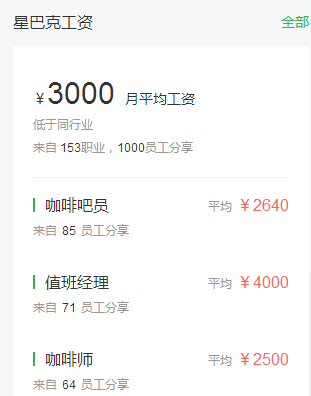
Recently, many readers have asked me questions about working at Starbucks cafés. Looking at Starbucks reviews on Zhihu, most say the wages are extremely low. From the data, baristas earn 2,500–3,000 RMB a month before deductions, and most Starbucks partners today are under 25. Past 25, that monthly salary is indeed quite low…
1. Starbucks Working Hours and Operational Time
The schedule is an 8-hour system, which with meal and rest time totals 9 hours a day, with two days off a week — though those days rotate, and daily shifts are split into morning, afternoon, and evening. Because Starbucks operates in different markets across China, actual operations vary from market to market and store to store, and staffing is slightly different too, but the basic positions stay the same. Closing duties include: collecting pastries, cleaning the bar area, and cleaning below the equipment and the lobby.
Pastry duty mainly means cleaning the pastry cabinet and marking out the pastries. Bar duty means cleaning the espresso machine and coffee grinder and pre-cleaning the other bar items. Below-equipment and slide-lobby duty means cleaning the back-area drainage, cleaning the café, washing plates and dishes, and organizing the outdoor seating!
2. Starbucks Operational Hierarchy Structure
Shared by HelloWorld:
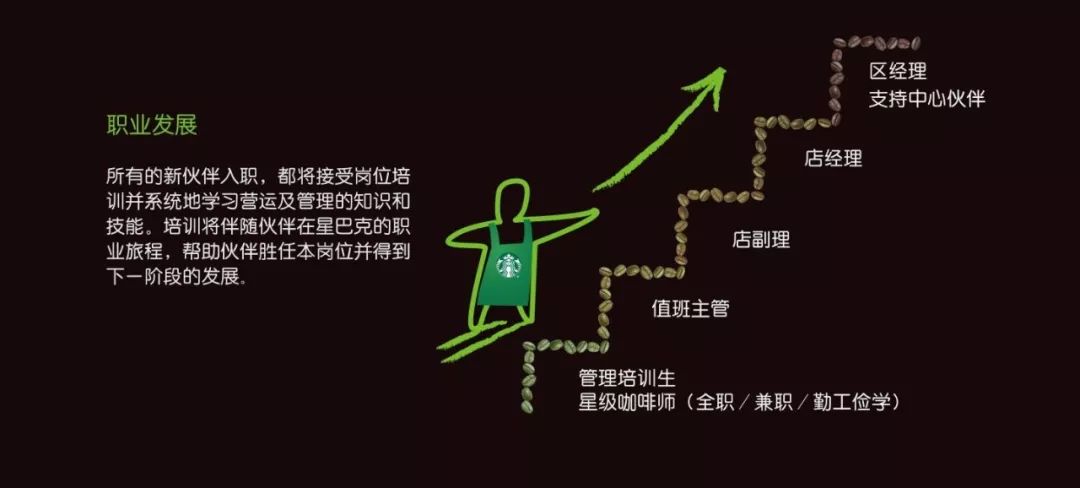
Starbucks runs an annual management trainee program, recruiting from universities with the reserve store manager route as the career path. Management trainees need a bachelor's degree and must start from the most basic barista position.
Barista (BB) — Star Barista, essentially the most basic service position.
Barista Trainer (BT) — Star Barista Trainer. After finishing barista training, capable partners can be developed as BTs, or trainers, who train new baristas. Training newcomers is also seen as a necessary step toward promotion. From BB to BT doesn't count as a true promotion, since there's no raise.
Shift Supervisor (SS) — Shift Supervisor. Once you know overall store operations and pass interviews with the regional managers, you can be promoted to SS. A typical store has 3–5 resident SSs. SSs handle store cash management — the daily settlement, which is simply counting large amounts of money that isn't yours. Besides counting money for others, there are administrative tasks, including managing store food safety.
Assistant Store Manager (ASM) — Assistant Store Manager. The English says it plainly: this role helps the store manager do the store manager's job.
Store Manager (SM) — Store Manager. This is essentially the ultimate leader and the person responsible for a Starbucks store. Within the store they hold almost all rights over personnel and operations, except absolute authority on promotions and raises (which need regional manager approval). Beyond operations and training, store managers schedule staff, handle and coordinate internal and external store matters, do month-end inventory and month-end settlement, and of course answer for the store's sales data.
District Manager (DM) — District Manager. Ultimately responsible for the personnel and operations of every store in a district (typically 10–15 Starbucks stores). Promotion from SS to ASM needs approval from the next-level manager. After that, the DM answers for the district's sales data — how much money is made.
From ASM upward, store sales performance affects that partner's bonus. For partners below ASM level, store sales have no direct relationship with their wages.
Promotions are generally decided by the DM; promotion from SS to ASM is decided by the DM's superior, the Operations Manager (OM). Promotion from ASM to SM, too, doesn't require the OM's decision. Reaching ASM is essentially the threshold to becoming mid-to-low-level management at Starbucks; after an ASM completes training, a new store or an SM vacancy naturally brings promotion to SM. From ASM upward, each person can play a decisive role in every subordinate's promotion.
Operations Manager (OM) — Operations Manager, also a regional manager who receives work reports directly from DMs. One OM generally manages several DMs and is responsible for regional operations.
Positions above this are generally considered middle to senior management at Starbucks. An OM typically oversees stores in several cities; above that is a large regional leader (Starbucks China has the Central West, North, South, and East China regions).
I've only reached this level at Starbucks, so this is all I can share.
Also, at the SM position you can move from operations into administrative roles at the Partner Support Center (HR, training, finance, and other administrative departments).
Coffee Master Level
Generally, only partners at DM level and below take part in this training and assessment, because OM and above no longer need the title to impress anyone and have no time for this kind of study — though they do serve as assessors.
Coffee Master (CM) — Coffee Master. These are the partners you see in stores wearing black aprons (non-coffee-master partners generally wear green aprons). Coffee Master is essentially the entry level.
The Coffee Master assessment generally includes a written exam and an interview. The written exam covers all the content of a book, followed by an interview with coffee tasting, an action-plan presentation, and of course latte art. The black apron really feels impressive… (though in practice it does little). It requires knowledge of coffee facts, origins, bean stories, and flavors, plus the ability to describe and taste them.
Coffee Masters need to be recertified annually, though this is sometimes overlooked. Wearing a black apron and then dropping back to a green one is quite embarrassing — I've never heard of it or seen it happen.
Moreover, in today's environment there are far more Coffee Masters than before, and assessments are much simpler (each region has training targets, and district managers face pressure from above if they aren't met, so relaxing the standards is only natural). As a result, the overall quality is much lower. Coffee Masters are no longer as rare, and quality varies widely. (If you meet a Coffee Master who can't do latte art, don't force them to perform — perhaps they truly can't.)
District Coffee Master (DCM) — District Coffee Master, as the name implies, is the person responsible for Coffee Master affairs within a small district: training and selecting new Coffee Masters, organizing coffee-classroom activities, arranging coffee-culture events, and so on. This role has also been watered down — one small district can have several DCMs, meaning a district with only one DM can have several. If you want to spot a DCM, the apron differs slightly from a CM's but not much: also black, but with the partner's name embroidered in white around the left chest. (Some partners embroider the name themselves to avoid wearing a name tag.)
Coffee Ambassador (CA) — Coffee Ambassador, wearing brown aprons. Every two years, Starbucks holds a Coffee Ambassador competition covering latte art, coffee tasting, creative beverages, blind tasting, and professional knowledge. It is a competitive event (the Coffee Master assessment is non-competitive — if the assessor thinks you're qualified, you're a Coffee Master), meaning you must beat others to earn the title. Typically each large region has only one Coffee Ambassador a year, plus one China-wide Coffee Ambassador, and the title is only valid for 2 years.
3. Division of Labor in Store Operations
During store operations there are generally 4 positions, meaning a partner working today may be assigned to one of them. I'll keep this general; Starbucks has its own complete store manpower-deployment rules that I won't detail too far.
The 4 positions are: Bar workstation, Cashier workstation, Lobby cleaning, and IC (In Charge — the person responsible for the store, generally an SS or above).
Bar Workstation
Quite simple — make beverages, call customers to pick them up, confirm their drinks are correct, and remake anything that's wrong until the customer is satisfied. In high-traffic stores there may be several people at the bar at once to get drinks out faster.
Cashier Workstation
Also easy: take payment, then mark on the cup what the customer ordered. Starbucks has its own marking system every partner knows, and it's one of the mandatory training modules after joining — the bar partner only needs to read the cup to know what to make. There's also sales: recommending pastries, Starbucks cards, and seasonal products that need promotion.
Lobby Cleaning
All fairly straightforward — clean the lobby so empty seats stay clean. Generally this partner follows a set route every 10–20 minutes, restrooms included. At other times they help the bar or cashier partners, or replenish used materials (making mocha sauce for mochas, chocolate base for chocolate drinks, and bringing cups and lids from the back to where the operations partners can reach them).
IC (In Charge)
During a given shift, this person is responsible for everything in the store. The role is generally held by shift supervisors, store managers, or assistant store managers. They can assign responsibilities to the other partners on the shift (the 3 points above) and answer for everything that happens in the store during that time, holding final decision and execution power for all store matters. Major matters, of course, still need a superior's approval before acting.
Starbucks' manpower allocation is incredibly thorough — so thorough that it could be called a scientific exploitation of every employee, using a manpower-deployment system that lets an average of about 5 employees handle a customer flow of around 150 per shift.
This involves an indicator, IPLH, whose full English name I don't quite remember, but which means how many beverages or sales one person completes in an hour. The formula is: (total daily beverages prepared + merchandise and pastry transactions) / total work hours. Starbucks is strict about this indicator: below a certain value, they cut staffing; above a certain value, they don't necessarily add staff.
So working operational shifts at Starbucks is particularly tough. Some data: for stores with 300 daily transactions, the expected IPLH is 10–12. I once worked at a store with a similar transaction volume where my IPLH exceeded 20 for several consecutive days.
4. Administrative Division of Labor in Starbucks Stores
Throughout Starbucks there's a distinction between operational and administrative positions. Within a store, partners at shift supervisor level and above also complete administrative work, generally called "responsibilities" internally.
A store's administrative work basically divides into the following:
Ordering
Using Starbucks' backend system, calculate and "order" the items the store needs based on current inventory and estimated usage (beans, syrups, and non-food items like napkins, paper cups, and lids — basically everything the store uses can be "ordered" here). "Order" is in quotes because the system is Starbucks' own, so no money changes hands, but each item's cost shows up in the store's P&L, affecting the performance of ASM-and-above partners. It's important to keep monthly order quantities fairly consistent.
The formula for order quantity, if I remember right:
Order quantity = Safety stock quantity − Current inventory quantity
Safety stock quantity = (Ending inventory − Beginning inventory) / Time × Ordering cycle × Safety stock coefficient
Here, time is the period from beginning to ending inventory, ordering cycle is the time from initial order to second delivery, and the safety coefficient is generally 1.15.
This ordering process is probably similar to other retailers' rules and methods. Ordering times also vary — shorter-shelf-life items like pastries, milk, and cream are ordered more often, which is easy to understand.
Training
Training new partners and updating existing staff on new promotions. Not much to say here — it's about making sure everyone completes the learning they need. Though simple to describe, it's an important responsibility, since it relates to employee performance and development.
Finally, what about wages and promotions at Starbucks?
A friend worked at Starbucks for three years and is still an ordinary partner — far too long. To apply for a store manager position you need more than five years of Starbucks experience, and you must currently be a shift leader to qualify for new store manager applications (the application also requires exams and assessments). As for wages… let's hear from Starbucks partners:
Cute Tiger Eats Chickens (Starbucks Barista): benefits for a Jiangsu-Zhejiang-Shanghai partner. Part-time students earn 17.5 yuan an hour, with a 300-yuan voucher after 80 hours. During festivals, zongzi, mooncakes, and cakes are distributed, plus year-end bonuses. That package probably beats 95% of ordinary student part-time jobs. After a year of full-time work, take-home pay after the five social insurances and one housing fund is 4,000+ yuan. With double pay at year-end plus a year-end bonus, you can get around 20,000 yuan more, which is quite good for a service industry that doesn't value education highly.
@ Rabbit Sister Tuan: I don't think it's low — it is low. Like the original poster, I worked part-time at Starbucks in university: good environment, relaxed atmosphere. When I did well I became a BT and then a part-time SS, earning over 1,000 yuan a month — pretty good for a student, plus living expenses from home, and the benefits are really good: two free drinks a day, 10 partner vouchers a month, zongzi and mooncake cards at festivals, morning and evening shift tastings. Starbucks' human touch and corporate culture are genuinely well done. They recruit long-term part-timers because training is actually long — three months as standard, with exams on three modules; all beverage preparation and environmental upkeep have strict standards. Coffee culture, coffee classrooms, Coffee Master testing — these make you feel you're always improving. But when I was earning under 11 yuan an hour part-time, not far away H&M was paying 19 yuan an hour.
Starbucks runs an annual management trainee program (recruiting from universities). The career path is the reserve store manager route, requiring a bachelor's degree and starting from the most basic barista position, ideally reaching store manager within one to two years. In reality, reaching store manager in two years is very rare.
Most people are still struggling at ASM or RMT positions, though some very experienced externally hired store managers can take over stores. Promotion cycles basically don't exist for part-timers, because Starbucks has no development plan for part-time staff. Part-time to full-time conversion is just conversion — you stay in whatever position you had.
The coffee industry is a service industry and can't be compared with others — not in the same weight class. Many regular coffee shops have no holiday overtime pay, no weekends off, and sometimes no insurance. Several friends of mine have worked at a coffee shop for four years with no room for promotion and no hope in sight, earning low wages. Starbucks isn't necessarily great, and its wages and benefits aren't especially high, but its standardized management lets you move forward step by step and glimpse a little hope — and perhaps a better future…
Why do Starbucks, Costa, KFC, and McDonald's coffee shops have such high turnover?
Low wages are an industry-wide problem. After all, you need to live, support a family, and make a living; sometimes you can barely support yourself. From the baristas' hearts:
From Starbucks @ I'm a Pei***
As a former partner, I'm really happy! Though I only worked for one year, the experience felt like many. Starting at the first Starbucks in the XX ancient capital, then the store closed for renovation, then one partner's resignation led to almost the whole store resigning; it seems everyone saw things clearly. As some say, joining Starbucks is like reincarnation — perhaps we were reincarnated into the wrong family… Working with the anxiety of a drug dealer while earning the wages of a cabbage seller… From doing QA until 11 PM without overtime pay, to selling cups, mooncakes, and zongzi, chasing data (all those UPT figures… can go to hell). Do they really understand the partners' hardship? Today's Starbucks blindly chases data, looks at performance, and forces partners to sell cards and pastries. Hand-poured temperament ice cream? The partners' effort and income are completely out of proportion. As far as I know, almost every Starbucks store in the entire western region is hiring. Why is turnover so high? Doesn't Starbucks have any idea? And if you don't get a good store manager and run into certain shift managers, work becomes a nightmare. Why else would you stay? What disgusts us most is learning that at a store manager meeting, our store manager called the mass departure a disaster and blamed certain people. Don't you understand the reason yourself? As a 10-year store manager, can't you see your own faults? All mistakes lie with the partners. No wonder you've only been a store manager for 10 years when some become store managers in 2–3 years. Truly, no comparison, no harm… I've said too much, and it's all tears.
From KFC @ Xiao*: I wonder why no one complains about KFC. Wages are lower than Starbucks, and there are more promotional products. Every month there are new products, daily tracking of thousands of transactions, sales volumes, and revenue not meeting targets.
Direct bonuses are discounted and the 13th-month salary becomes quarterly bonuses of only a few hundred yuan each.  If you accidentally fail an audit, you lose even that.
From Costa @ Edison**
Starbucks wages are low — but are Costa's low?
From Starbucks @ Mo Xian*
After two years at Starbucks, looking back, I have no idea how I survived. Working 6 consecutive days, resting one, then another 6. Many people might look down on this and say plenty of jobs are like that, but think about it: at work you transform into "cleaning lady," "front-desk salesperson," "dishwasher," "mover," "beverage maker," and sometimes the customers' "babysitter." Excluding meals and rest, you stand, walk, and run for 8 consecutive hours. If that's what being a barista means, I'm speechless. I went through the DB 3.0 transformation and had to attend late-night meetings, then immediately work morning shifts — going home to shower and rushing back. I went through a store that changed 3 store managers in 2 years, each with a different style, forcing me to start from scratch each time. One manager told me, "Don't work hard silently at home; you need to obviously let others know you're working hard." So the "weekends off" nicely promised were really unpaid overtime at the store. Complaining about wages becomes pointless. After two years, when I was about to leave, my wages were pitifully small; to buy anything slightly nice I'd have to eat instant noodles for a month. In the end I ruined my health (developed a lumbar disc herniation). The last store manager gave me all kinds of difficulties — nicely put, "giving me opportunities"; bluntly, wanting to drive me out. When my back hurt badly and I asked for sick leave, I couldn't get it. Thinking of not making things hard for the store and manager, I pushed through. They scheduled me for four consecutive evening shifts. I was truly desperate. In the end I couldn't take it and resigned, and the store manager didn't try to keep me at all — the moment I finished saying I wanted to resign, the manager immediately turned to me an… [truncated]

From Starbucks @ Paranoid × M**
Nearly four years at Starbucks, the last two just toughing it out. Every day I relied on reminiscing with old partners and smoking during bathroom breaks to numb myself. After being promoted to assistant store manager, I felt panic daily — worried about customer complaints, QA, training, inspections. Most feared was the boss checking the surveillance cameras. The 360-degree, no-blind-spot bar surveillance isn't to protect partners; it's to monitor their every move. Everything is constrained by rules and regulations. Before, chatting with customers was genuine communication; later it became a formality, because the beverage process requires you to communicate. Smiling became a fixed expression, for fear of a complaint and the boss checking surveillance to find me scowling. It's ridiculous when you think about it. Every day I had to write various reports. Going to work was just to "sell" — sell promotional beverages, cups, mooncakes, zongzi. Whose social media feed isn't full of Starbucks micro-business posts? On a monthly salary of over 3,000 yuan you really can't do anything. The only good thing might be reimbursed medical expenses. Speaking of illness: I joined Starbucks a healthy young person, and when I left my cervical spine had severely lost its natural curvature — the doctor holding my report said it clearly belonged to someone in their forties or fifties. Every morning I woke with numb arms. Stomach problems, back pain, neck pain, endocrine disorders, irregular periods — all common complaints among Starbucks partners. The eagerly awaited year-end bonus each year makes people want to cry. Most Starbucks partners I know say when leaving: this company is too heartbreaking. Perhaps it's not about wages — any other reason would make partners leave. In leaders'… [truncated]

From Costa @ Wen Xiaomao
As a Costa employee, I completely agree! After 5.5 years, management staff take home just over 3,000 yuan. Hope wages rise soon — I can't hold on much longer!
From McDonald's @ Cookie
I just want to ask why no one complains about McDonald's? Store management staff take home 3,000 yuan after insurance deductions — much less than Starbucks! Floor staff are more numerous than in coffee shops, customers are more mixed, and there's more work. People get poached by all kinds of industries.
From McDonald's @ Twelve Sauce
At McDonald's you have to clean the oil-water separator. , to put it bluntly, you have to clean…
From a soon-to-leave Starbucks partner @ Big Big
Outsiders may find it boring, but reality is reality. Some say to put yourself in others' shoes, but you're always speaking for others. Do you really consider what's in employees' hearts? Employees love coffee, but don't they need to live? Other companies have sales targets, but they have commissions. There's a 10-minute paid break every 4 hours, but we have to stand for 4 hours. A 10-minute paid break ? 10 minutes ? When busy, there's no break at all. ? On a monthly salary of 3,000 yuan, after rent, utilities, and food you're in the negative. Life becomes a problem, and you're still talking about this??? Are employees not human? Chinese labor is cheap. Companies control work hours. Bluntly, they're forcing out full-time staff to hire part-timers. ? —From a partner about to leave.

Barista is a profession with a low entry barrier and even lower industry wages, yet outsiders flock to it. Baristas seem to work in high-end environments, sheltered from wind and sun, with relaxed work — just chatting with customers and making coffee. Of course, it's more than that. In reality, every barista holds multiple positions. Many well-known chain coffee shops pay unbelievably low wages. What about Luckin Coffee, rumored to pay high wages?
From Luckin Coffee Barista @ M
It's all hype. In the Beijing region, recruitment lists a comprehensive salary of 8,000+, but in reality even store managers get only 4,500.
From Luckin Coffee Barista @ Belly*
I'm a Luckin employee; I won't say which store since I work for them, but since I'm speaking out I'm not afraid. Lies need more lies to cover — too tiring. Taste aside, I think Luckin's coffee is good coffee: good beans, good roasting, very fresh. Baristas get pre-job training before going to stores. These four points fully satisfy Mr. Taguchi's definition of good coffee in his book The Coffee Equation. Remember: good coffee, not necessarily tasty coffee. But what's frustrating is that when city-manager-level leaders inspect stores, they don't ask managers about performance, employee conditions, or operational difficulties — only about how to do cleaning. Haha, I can only laugh loudly. City-manager leaders have such high vision; I admire them 100 times. Even higher leaders require female employees to wear hair flowers, like in hotpot restaurants. Haha, this is a coffee shop, my brother — I'm impressed again. Perhaps men in their forties have unique tastes. Such things no longer surprise me. Leaders' focus isn't on coffee. After nearly half a year at Luckin, Luckin University has many videos on cleaning but not a single one on professional coffee knowledge. Honestly, though I'm their employee, sometimes when my partners and I break order records I get very excited; other times I'm truly saddened by those high-and-mighty leaders. I love coffee. Coffee has expanded my network and enriched my life. I hope Luckin's leaders focus more on coffee. Even at C-level stores you can give customers great coffee experiences. After all, our partners aren't cleaning aunties and uncles. Only when the team is strong is the enterprise strong. We all have a coffee dream. Please respect it. Thank you. I hope one day leaders will share their coffee experiences with us, their understanding of coffee, and I ho… [truncated]

Once you enter coffee, it's like a deep sea, and savings become passersby.
Without passion for coffee, it's really hard to keep going as a barista…
@ CzAR·South
Elegant motions, proper appearance, and atmosphere-controlling conversation make a good barista so dashing. Even for 3,000 yuan, making those heavily powdered faces at the bar exclaim and marvel, intoxicated to death and life… —this isn't the pleasure money can bring.
@Dynames
I'm 24. It took me about 10 years to find the profession I truly want to do. Even if it's miserable, I'll persist.
@Xiao Yi
I entered this industry at nineteen, and after three years I've gone from coffee apprentice to barista today, from Wuhan to Shanghai, from love to rose… chasing my dreams along the way.
@Uncle's Milk Tea Shop
I opened a coffee shop, wanting to be a boss but ending up a service worker.
@JoseLus
Coffee is poison — once you love it you can't quit. Forget 3,000; I played happily even on 1,800.
@wayne=Wei
Every day is hard and tiring, but the more tired I am the more I feel I truly love coffee. If I didn't, I'd have quit long ago!
Thank you all for your comments. If you want to be a barista, don't think about how much you can earn in the coffee industry, but about how much you're willing to spend on coffee to fulfill your dream of opening a coffee shop.
You could say, because of a love for coffee,
I joined this coffee industry.
As for the barista profession in China,
it can be simply summarized:
Glamorous on the surface, miserable inside.
Those who agree, please raise your hand.
Fan comments:
@Miaomiaomi
The first Starbucks comment, I completely agree. Blindly chasing data, not meeting good ICs and SMs, life is worse than death; everyone understands. I miss the early days and the former partners.
@So what
Where do these resigning baristas get hired? A coffee shop preparing to open…
@Lin Moumou?
If you like coffee, why go to Starbucks? Honestly, beyond management worth learning, Starbucks is useless technically.
@Simon
As someone with over six years of experience, I grew up at McDonald's and later changed jobs. But I never think McDonald's, or your Starbucks and Costa, have any major problems. Is your ideal job just chatting with customers a bit and then sitting on the sofa basking in the sun when there's nothing to do? If these companies were so terrible, why are they Fortune 500? Read less negative content, keep more positive emotions; life is for living yourself.
@ k
"As a former Starbucks partner. Personally I don't think what you described counts as hardship. I left Starbucks many years ago, grateful for the humility, patience, hard work, and respect I learned there… After leaving, I used that spirit to persevere in other industries. Of course, I went from an industry practitioner to a company owner. Most of these comments are from people under 30. At thirty you're not qualified to complain about hardship. Asian record holder, Chengdu TKL Starbucks, former team member." Treat coffee as a lifestyle and attitude. If you say it's bitter, you haven't endured enough hardship. It has nothing to do with boutique culture itself, but with your perspective.
@Zhan Miwan Zzt
To the Luckin person: hygiene issues are actually very important.
@Lin Liangxian
Started at the bar in 2019, initially working at a beverage station in a bakery! Three years of contribution passed, following the boss, handling sales, training, bar design, machine installation, menu design. 20 months, the dream shattered. Looking back, I couldn't find a store paying 3,000 and couldn't survive. Over 5 years contributed!!! By the way, a cold joke I saw today: people say you shouldn't have your fortune told, as it becomes thinner each time. But you have to believe it. A fortune teller once said I would wear yellow robes after 30, accompanied by delicacies daily, with transportation available when going out. Now I deliver food for Meituan — my god, the prediction was too accurate.
@Cody
Why is no one mentioning Pacific Coffee?
@Chen Koala
Reading the comments, one line stands out: aiming high but achieving little. Well said. First, from a bunch of comments, it's clear these people aren't ordinary full-time or part-time staff — they're management. Your work system isn't calculated by hourly wage. And what's wrong with companies chasing data? Shouldn't companies develop? Complaining when standards aren't met? Wanting full bonuses without meeting standards? Used to getting something for nothing? As management, if there are no employees to clean, naturally you do it. This is the service industry. Don't imagine yourself some lofty barista. Even if you're truly noble, wouldn't you still clean if you opened your own shop? Try having a storefront full of garbage — see if anyone comes for your coffee however good it is. You go there to learn management; those who want to stay survive through natural selection. If you think you're at a disadvantage and won't do it, others do it and get promoted — don't complain about why they were promoted and not you. Society is cruel.
@Nero
So the real problems are always on the table. Most comments are from partners on 3,000 yuan complaining. What about store manager level? Often people don't give up because of hardship or fatigue, but because when effort and reward are out of proportion, even the greatest passion is extinguished. I saw one comment: he's full of passion for coffee, full of feeling for the company; forget 3,000, even at 1,800 he'd do it. Then I want to add a precondition: if he has no savings, family conditions aren't good enough to support him, and besides this 3,000-yuan salary he has no other income, how long can such passion be sustained by 3,000 yuan? Unfortunately, I am exactly such a full-time partner. So I completely understand the thinking of those resigning. I'm not encouraging partners to resign, but when facing life and dreams, someone always has to choose. I joined Starbucks out of yearning and passion for coffee, earned the black apron, became a District Coffee Master, competed, and won first place in Zhejiang — all my efforts for my dream. But because of life and reality, my girlfriend of nearly six years and I went our separate ways a few days ago. I can only choose to leave. I don't know how much longer my coffee dream can persist. I only know I need to live, I need to eat.
@Nick Ning
Recruiting baristas, 6,000+ hahahaha. Can I advertise? I'm really short-handed.
@Friday Cafe
Even if you resign, it's not like the company goes bankrupt, right? Because the core backbone is still there. In the same company, why can others become core talent while you become a bucket of bad luck? Why don't others feel the wages and benefits are poor? Hahaha~ So it can only be said that you see different scenery from different positions.
@Mr. Jun
I don't want to hear that crap about ability being proportional to salary, because people who say it have definitely never worked at chain coffee shops like Starbucks. If you tried, you'd understand how foolish your words sound. Clearly a skilled worker, described as a technical worker (don't argue — Starbucks' pursuit of consistent taste really isn't technical work). We want effort proportional to return. Bluntly, old employees can do supervisors' work but still get employee wages, while supervisors' wages aren't a few hundred higher than employees'. What does ability have to do with wages? I'll say one thing: no one is a philanthropist, and no one can live on passion forever. I only know that the first thing I need to be clear about when coming to work is that I'm here to earn money. The profit of a cup of coffee is six times the ingredient cost, while our wages are only three percent of the revenue we create. If this were you, I don't think you'd say such hypocritical things.
@Daphne
I think everyone is misled by the word "teacher" in "barista." Baristas, at home and abroad, are just service staff. Many complain about low wages and having to clean. This industry has a low barrier to entry, skills are easily replicated, and the profession itself has little value. Cleaning and serving customers are things you should do — just as great chefs only get helpers to clean up. I think everyone should wake up. If you want better treatment, first ask yourself if you have the ability.
@W!NG
McDonald's: I tried working 12–13 hours a day, five days in a row. When short-staffed, I worked 13 consecutive days without rest, switching from night to morning shifts. After becoming a manager I had to be on call 24/7, earning just over 3,000. Goodbye.
@JACK
Ridiculously, Starbucks has regulations preventing partners from discussing salaries. As a university part-time partner, I immediately knew this would always be my part-time job.
@In a blink.
Actually every barista needs to hold multiple positions.
When I read this, I almost cried.
Besides my main job, I have two part-time jobs.
@Unknown
What barista? Our Jiangsu RDO Zhuang only comes to stores to clean toilets, asking partners to stick their hands in the toilet to scrub…
For their own political achievements: weekend food buy-one-get-one-free, buy-two-get-one-free — as long as you can sell it, anything goes.
COSTA wages are higher than Starbucks's. Another point: COSTA also adjusts salaries!!!
@LT
I like Starbucks but the wages aren't proportional to the effort, so I chose to resign.
@Connie-chan
Because of coffee… a 1,900-yuan salary~ I endured it for five years~
Dreams are distant~ putting down the milk pitcher…
Became a front-desk clerk~ salary 4,500
@An'an
As a part-time partner, I still need to defend Starbucks~ My store manager, supervisors, and partners are all angels~ Never forced scheduling, very understanding~ My mentor is a super refined boy~ Everyone teaches you step by step, partners are so tolerant you can't imagine~ Selling cards and pastries, everyone understands each other, please don't be too envious (accidentally laughed out loud~)
@Deng Deng
I want to know if these companies have any technical content in making coffee? Always complaining that companies don't have coffee training — have you studied privately? Always complaining about low wages — have you seen how much value you've created? A conscientious barista's heartfelt words.
@Arno tsuji
Although I left Starbucks, during my tenure those who trained me were all capable people, with strictly managing store managers, supervisors who strictly controlled coffee quality, and partners full of coffee skills. Now we've scattered, but I really miss those busy days and routines; at least it was once perfect.
@Audrey
That first Starbucks comment, I completely agree. Now Starbucks blindly chases data. From when I joined, standing at the Tiu position, the store manager told me I must promote pastries and cards. The most infuriating thing was setting pastry and card targets for Tiu partners — if targets weren't met, they had to buy pastries and cards with their own money… A month's hard-earned wages all went back to Starbucks. What's sad is when some customers feel you keep promoting pastries they don't need, and when partners don't say anything, customers get angry and complain — the reason being that they were promoted. The result is an apology with a sorry voucher, then the store manager harshly criticizes the complained-about partner… After that I couldn't take it anymore and resigned. Without even trying to keep me, the store manager sarcastically said that in future it would be impossible for me to return to Starbucks. All. Starbucks almost extinguished my passion for coffee.
@Neill
From Luckin Coffee Company… Store manager salary is offered at 8,000 but you can't even get 4,500, not to mention store transfers from regional group managers down to partners, treated like a game. They don't fire you, just transfer you to another district. A 4.5-hour round-trip commute, 8 hours daily for less than 5,000 yuan — is it worth it?
@Mr. Jun
Wanting income proportional to effort but being lectured by self-righteous people about aiming high but achieving little? At least use some brains in your comments?
@Archer
That 24-year-old who said it took 10 years to find what he likes is like those 22-year-old girls who say it took 22 years to find love.
@Frank
At Costa, early wages are higher than Starbucks… only Starbucks adjusts salaries, Costa doesn't…
@tom
Barista? I often hear, "Hey waiter, clear this here!" The most ridiculous was a complaint: "Is your coffee freshly ground? Freshly ground but you add boiling water? I've never seen coffee made this way — you're all liars!" Hahaha, have you seen an Americano without water? Or should I give you a portion of ground coffee to play with yourself? What pissed me off most was being scolded by the shift manager for poor service attitude? I was smiling and telling that customer, "I'm sorry, this is how classic Americano is made. If you don't like it, I can change it for you." And those who always say there's no one — you as HR manager not recruiting is one thing, asking me to help find people is another; I helped you recruit them, I rapidly developed them and got them promoted, you grabbed them back to the mother store for training, then told me there's no one again, and told me to recruit again. —From a senior McDonald's barista.
@Miao Xiao Miao
As a barista… I feel habitually Zen-like… People like me who don't care about wages and rely purely on interest… constantly getting certifications and learning, relying entirely on saving money… are really rare… Once took 10 yuan to buy 7 instant noodles and successfully survived a week.
@Auck
The more I understand Starbucks' coffee knowledge, the more I can't help but defend Starbucks. What's more important, money or what you learn? I think you observers are too one-sided. The reason Starbucks can be so big is that its coffee foundation is deeper than you can imagine. You just haven't met truly capable partners yet.
@Water Bottle
I personally think large coffee chains like Starbucks and Pacific can only be considered beverage shops to some extent. The barista threshold is low, but people rolling in boutique coffee aren't easily achieved (though indeed, regardless of coffee shop type, baristas hold multiple positions — bar, kitchen, desserts, hygiene, moving, service).
@Gary Three Stones
Quite a few people aim high but achieve little; ability = salary.
@
McDonald's has no performance every day! A place that sells chicken, you compete with others in coffee! What do you have to sell? Poor performance every day, you have to go out and lick customers' faces to promote? Make your own cakes tastier and better-looking — who would buy them? Are customers all idiots?
@ D.K.yao
To that Luckin person… Store performance data is all in the system. When leaders come for inspections, it's definitely not for data… You mention employee conditions and operational problems, but these are basically understood by looking at "hygiene." Besides, brand image is most important, so we're back to "hygiene." Of course this also includes products, whether they're prepared to standard, but compared to hygiene there are far fewer such items… Other items all have data to rely on, checked online. Instructions are communicated down the chain; in the end only the store manager talks to you. If the store manager isn't good, congratulations, you can only rely on yourself… Besides, if you want to focus on coffee, don't join these kinds of brands. Do you think you can reach any level handling fully automated things? People who only want to make money wouldn't become baristas.
@Floating Life Like a Dream
Simply put, wages are low, and Starbucks likes to brainwash young employees, specifically deceiving recent graduates.
@Jackie
Why no Pacific Coffee? A former PCC server passing by.
@Xuanxuanxuanxuanxuan-
Part-time at Starbucks for a year; the store manager really makes me speechless, but I have a very good mentor! Experienced making 10+ caramel Frappuccinos and Chai Cream Frappuccinos, Friday extensive cleaning, monthly cleaning, inventory counts. What I couldn't stand most were all kinds of weird customers! Truly, there's nothing you can't imagine, only what you haven't encountered!!
@Qiu Ruirong - Hangzhou Zhejun
So I'm content to buy beans and brew them at home myself.
@ken_yang
Too many words, all tears.
@Coffee Without Sugar
Seeing those who say Luckin store managers only earn over 3,000 — forgive me for laughing. Which region's Luckin are you from?
@Vita
Spanning KFC, Costa, and Luckin's different regions, management staff entry, also worked as a part-time partner.
Low wages are a major pain point. As an adult, if you can't even support yourself with your earnings, it's hard to persist.
To earn more, you have to work hard to get promoted to store manager, but from then on it's hard to have private time. If you have a store manager who's desperately messaging you at midnight, they're probably also in crisis.
Long hours of standing damage legs and shoulders and necks; irregular rest days mean missing friend gatherings; occasional unfriendly individuals or environments; glamorous on the surface but actually xxxx, still hard to be a proud service worker in your heart. Many complaints — but the simple interactions between partners, every time performance targets are met, the store's achievements, are all worth remembering. And during this time I developed many good professional habits I'm still proud of today.
Completely agree with the first Starbucks comment: blindly chasing data, making partners sell cards, food, mooncakes, zongzi, new products. Data is God — impressive!
@dai sister
As someone who worked at McDonald's cleaning sand wells, I finished this article with a smile. At least I'm a barista who can pull a swan.
@Mo Hen
In the catering industry, aren't hygiene and food safety the most important? I really don't understand how someone with such resentment toward hygiene works in this industry. If I were your boss, I'd have fired you long ago!
@ Light Em Up
First, whether Starbucks, Costa, or KFC, they're all retail industries, and having performance pressure is normal. Can't you endure a little pressure? Starbucks' base wages are indeed low, but with 10 days of paid annual leave a year and commercial insurance, once calculated into wages it's not lower than an ordinary office worker. Honestly, any normal person can handle the basic positions at these companies. It just depends on what you want. Think that through and work becomes much easier.
@I want Gtr
I wanted to do coffee out of passion and interest, but after joining Starbucks, that enthusiasm and expectation slowly wore away. Now I just want to submit my resignation as soon as possible. The wages and benefits are really low — bluntly, it's exploiting labor. One person holds multiple positions, playing various roles, filling in wherever needed. When busy, partners' rest time disappears completely. Every day it's just data, with no thought for partners' feelings.
@Qing, Huan
I have a good store manager and a harmonious group of partners.
@My Bread Half for You
I don't agree with that brother downstairs. Companies need to pursue performance. As a shift supervisor who resigned two years ago: selling cups, mooncakes, zongzi, and when targets were met, getting an extra 200+ yuan in monthly bonus — for what? For love and responsibility? When I joined, shifts took home 5,000 monthly (large store, good business). When I was promoted to shift supervisor, I took home around 4,200 monthly — after all, our store was at a school; use your imagination. Our store manager was very nice; students, teachers, and foreign teachers were all high quality — but I still left, one after another. After all, this job isn't long-term. Said goodbye to that pitiful bonus.
@DONI
What real baristas exist in chain stores these days? It's all standardized processes, machines are all automatic. Just know the process and how to operate. The rest is, of course, cleaning and chasing data! Mature companies all play this way. They play with processes and management levels, not with coffee, okay~_~.
@My name is Sun
How should I put it — no matter the company, unit, or position, if you do your job and your responsibilities well, someone will notice. I always believe: gold will always shine. Why complain about this and that? If you have time to complain, better to think about your own problems. You deserve to remain a service worker…
For those striving out there, don't forget your original intention, don't lose your direction, keep going.

FrontStreet Coffee Recommendation
Espresso beans generally fall into two camps: the blends most cafés rely on, and single-origin beans chosen for a particular taste — known as SOE. FrontStreet's blend lineup starts with the Classic Blend, built for espresso and the moka pot, with outstanding crema that even an entry-level home machine can pull into a dense, fine foam; its traditional Mamba recipe is full and mellow, an easy first choice for home or café. FrontStreet Coffee's Black Cocoa Blend is the value-focused commercial option — 100% Arabica with generous crema, body, and a friendly price — while the long-standing Signature Blend pairs Brazil Cerrado with Colombia Huila for the familiar classic espresso profile its own stores have used for nearly a decade.
If you love nutty espresso, FrontStreet's Signature and Black Cocoa blends lean heavily on Brazilian beans for that comforting bittersweet, creamy-peanut character: the Signature brings Colombia's nut, chocolate, and caramel notes with gentle acidity, while the Black Cocoa adds the ripe-plum acidity of Yunnan small beans and a cream-chocolate aroma — balanced and versatile enough for lattes, americanos, and specialty drinks. The Classic and Commercial blends, meanwhile, add a little Robusta to the old-school Italian recipe, delivering butter, nuts, spice, dark chocolate, and toast with a wild, full body and a golden crema that makes latte art a breeze.
For a traceable single origin, turn to FrontStreet's SOE range. The Natural Huakui SOE comes from Guji Hambella in Ethiopia, grown as high as 2,300 meters and naturally processed, then medium-roasted for a creamy strawberry note with cream, cocoa, berry, light floral, and black tea. The Costa Rica Blackberry SOE is a honey-processed bean roasted medium for a sweet, clean americano and flavors of cranberry cookie, raisin, and nuts with milk. And the Brazil Queen's Estate SOE — a distinctive Yellow Bourbon — is mellow and low in acidity, roasted medium-dark to pull butter cookie, macadamia, and warm toast through an espresso machine.
Important Notice :
FrontStreet Coffee is a long-established specialty coffee roaster in Guangzhou China, selling freshly roasted beans from its own farm in Yunnan as well as dozens of carefully selected single-origin beans from around the world for both pour-over and espresso. The products deliver consistently excellent quality and great value, with shipping within 24 hours. Guangzhou's FrontStreet Coffee shop is recommended by many coffee lovers, and the beans are now available online at the Tmall 。
FrontStreet Coffee has moved to a new address:
FrontStreet Coffee Address: 315,Donghua East Road,GuangZhou
Tel:020 38364473
 Scan and follow the En Gafei WeChat official account. Please indicate that the reprint comes from "En Gafei".