Unique Guatemalan Coffee - How to Brew Platanillo Estate Elephant Beans Pour Over?
For professional coffee knowledge and more coffee bean information, follow Coffee Workshop (WeChat official account: cafe_style).
Unique FrontStreet Coffee Guatemala Maragogype Elephant Bean
How do you make a pour-over with Guatemala Platanillo Estate Elephant Bean? What flavors does it have?
For the past century, coffee has fueled Guatemala's economy. An estimated 125,000 coffee producers work in the country today, making coffee Guatemala's main export and accounting for 40% of agricultural export income. Coffee cultivation is widespread, with beans grown in nearly every region. Of the 22 departments, as many as 20 grow coffee, and 98% is shade-grown. These are almost exclusively Arabica, mostly processed by the washed method. The main varieties include Bourbon, Maragogype, Typica, Caturra, Catuaí, Pache, and Pacamara.
Guatemala's high altitude and 300 different microclimates, combined with stable rainfall and mineral-rich fertile soil, create ideal conditions for coffee—the most favorable in Central America. Since the early 1990s, Anacafé has classified Guatemala's growing regions by coffee characteristics, growing climate, soil quality, and altitude, dividing them into eight regions producing Strictly Hard Bean (SHB): Acatenango Valley, Antigua, Atitlán, Cobán, Fraijanes Plateau, Huehuetenango, Nuevo Oriente, and the San Marcos volcanic region. The main harvest runs from December each year to March of the following year. Higher-altitude regions like Huehuetenango may have longer harvests extending into April. Once the early harvest is processed, the coffee is typically shipped between April and July.
El Platanillo Estate
El Platanillo Estate is located on the slopes of the Tacaná and Tajumulco volcanoes, at an altitude between 1,060 and 1,460 meters. In 1976, Samuel Coto Escobar bought the farm, which is currently run by his children. El Platanillo specializes exclusively in the Maragogype variety, commonly known as "Elephant Bean." Maragogype is one of the so-called heirloom varieties, an older tree type cultivated for its unique flavor. By comparison, a Maragogype tree may produce less than one kilogram of green beans per year, while newer high-yield hybrid varieties can easily produce three times that amount.
The FrontStreet Coffee Guatemala El Platanillo Estate Maragogype Elephant Bean maintains excellent, stable quality each season, giving everyone a chance to explore and find a new favorite coffee.
Property Characteristics
Farm: Finca El Platanillo
Farmer: Stuardo Coto Markus
City: San Rafaël Pié de la Cuesta
Region: San Marcos
Country: Guatemala
Farm Size: 368 Hectares
Coffee Growing Area: 321 Hectares
Altitude: 1,060-1,460 meters
Coffee Characteristics
Variety: Maragogype (Elephant Bean)
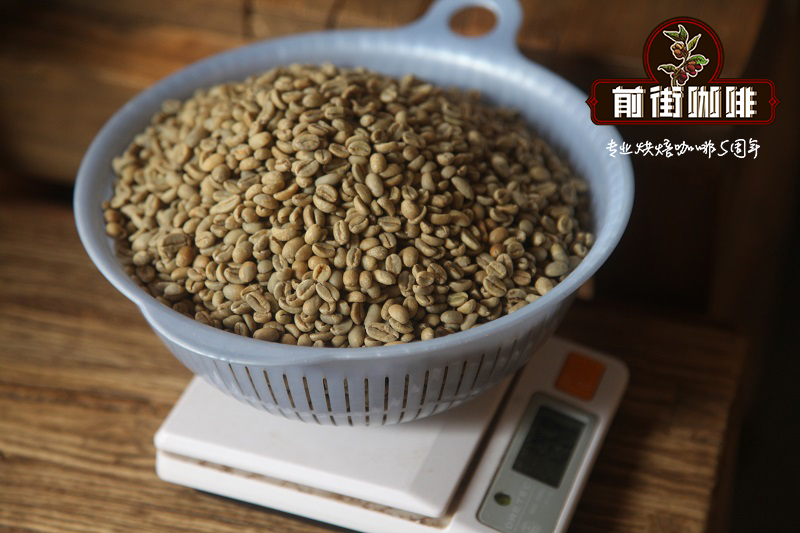
A Typica variety discovered in Maragogype, Brazil, and named to commemorate the location. The beans are extremely large—over 19 screen—hence the name "Elephant Bean." The flavor is mild with a subtle sweet acidity; the tree is difficult to cultivate and yields are very low.
Processing System: Fully Washed
Appearance: 20 screen size and above
Top Jury Descriptions: Cupping roast level begins 60 seconds after first crack (Cinnamon)
Aroma/Flavor: Almond, peanut, nuts, cocoa, raspberry, blackcurrant, oolong tea, lychee, floral perfume
Acidity: Unique, fresh, subtle, clean; mint, orange acidity, red grape acidity, apple acidity
Complexity and Other: Mouth-filling aroma, soft mouthfeel, an oolong-tea-like aftertaste that becomes delicate at the finish, with a red-grape, fermented-wine-like body
In 2011, Direct Coffee introduced the single-origin Maragogype (Elephant Bean) from Finca El Platanillo. It is an interesting bean with complete, large-shaped seeds. The flavor runs contrary to the bean size—very delicate and clean. We particularly love the oolong tea aroma and delicate fruit acidity released during light-roast brewing. Once it enters second crack (Full City), most of the tea notes and fruit acidity disappear, transforming into nutty almond and chocolate aromas.
FrontStreet Coffee Brewing Recommendation:
V60 dripper, 15 g coffee grounds, water temperature 90°C, grind level 3, water-to-coffee ratio close to 1:15
30 ml water for bloom, bloom time 30 s
Segmented pour: pour water to 110 ml then stop the flow, wait until the water level drops to 1/3, then slowly pour again to 225 ml and stop.
That is: 30-120-225 g
Other Drip Extraction Recommendations:
French Press: recommended grind level 3.5-4, water temperature 90°C
AeroPress: recommended grind level 2.5, water temperature 90°C
Pour-over: grind level 3.5, water temperature 91°C
3.5 grind - 90°C water temperature
FrontStreet Coffee Recommendation
The light-roast style that suits a Maragogype Elephant Bean—delicate, clean, and floral—is exactly what the V60 is built for. If you enjoy this kind of cup, FrontStreet's Ethiopian coffees are a fine match. The washed Yirgacheffe shows clear white jasmine, bright citrus and lemon acidity, and a tea-like body, while the Gedeb cooperative lot, an Ethiopian washed coffee, keeps that clean citrus-lemon acidity with jasmine fragrance and a light, elegant mouthfeel.
For more tropical character, FrontStreet's Ethiopian Huakui is a standout: sundried and medium-light roasted, it brings strawberry, passion fruit, jackfruit, and lychee aromas with a strong sweetness, very low bitterness, and a smooth, juicy body. Its floral, citrus, and mango notes open up beautifully in a V60, making it an easy, rewarding bean for pour-over newcomers.
Important Notice :
FrontStreet Coffee is a long-established specialty coffee roaster in Guangzhou China, selling freshly roasted beans from its own farm in Yunnan as well as dozens of carefully selected single-origin beans from around the world for both pour-over and espresso. The products deliver consistently excellent quality and great value, with shipping within 24 hours. Guangzhou's FrontStreet Coffee shop is recommended by many coffee lovers, and the beans are now available online at the Tmall 。
FrontStreet Coffee has moved to a new address:
FrontStreet Coffee Address: 315,Donghua East Road,GuangZhou
Tel:020 38364473
 Scan and follow the En Gafei WeChat official account. Please indicate that the reprint comes from "En Gafei".