Flavor Profile of Chinese Domestic Coffee Beans: Yunnan Catimor Typica Arabica Coffee Beans
The Dilemma of Chinese Coffee Beans
For a long time, domestic coffee beans produced in Yunnan have been fragrant and inexpensive yet largely overlooked. They are exported at low prices, repackaged and branded by global coffee giants, then sold back to China. This "high quality, low price" situation reflects once again the predicament of Chinese agricultural products: plenty of product, no brands.
The "Coffee Paradox"
In recent years China's coffee market has emerged remarkably. According to the "2017-2021 China Coffee Industry Investment Analysis and Prospect Forecast Report" released by China Investment Consulting Network, China's coffee consumption grows by approximately 20% annually, indicating significant potential in the coffee market.
On the other side, China's upstream coffee market faces an awkward situation: annual coffee bean production is currently about 140,000 tons, mainly exported to European and American countries, with Yunnan coffee accounting for 98%. Meanwhile, the Chinese market consumes about 140,000 tons of coffee a year, primarily imported from abroad.
In other words, coffee grown in China travels around the international market, returns to China as ground coffee powder, and carries premium names like Starbucks, Costa, Blue Mountain and Colombia — with prices multiplying several times over. In reality, these foreign coffee giants are effectively competing to buy raw materials in Yunnan.
Through the case of Yunnan coffee we can glimpse a broader picture: compared with the strong worldwide presence of "Made in China" consumer and daily goods, China's agricultural exports remain relatively backward, lacking prominent brands and showing the distinct characteristic of having products but no brands. Looking at China's import and export trade structure, our agricultural products are mainly exported to Japan and other Asian countries, without truly achieving global popularity.
Three Reasons for Popularity in Asia
First, vast territory and strong diversity. From frigid to tropical zones, almost all agricultural products can be produced, which other countries clearly cannot match.
Second, the relatively close physical distance between Asian countries and China. Unlike industrial products, most agricultural products are not suited to long-term storage, and storage also incurs costs. It is therefore more cost-effective to consume them in nearby markets than to ship them to distant Europe and America.
Third, relatively similar dietary habits. Historically, Asian countries have been more influenced and nurtured by Chinese culture, and there are many overseas Chinese in Southeast Asia who bring Chinese ingredients and cooking methods with them.
For European and American countries, agricultural foundations and dietary habits differ, making the challenge obviously greater. On these points, Chinese agricultural products sell easily in Asia but struggle to go global.
Insights
On one hand, not all Chinese agricultural products exported to other countries will sell well; we need to achieve "having what others don't." On the other hand, neighbouring Asian countries have different demands for agricultural products, so we need to highlight specificity and leverage comparative advantages.
Expert Opinion
Zhai Liushuan
Professor, School of Economics and Management, China Agricultural University
"In encouraging agricultural product exports, our country must first categorise products and not blindly encourage all agricultural exports. We should choose products that foreign countries don't have, because they are rare and therefore valued more highly abroad, can earn money and have higher added value. The second point is to choose the right regions. Currently, Asia is our main target market, but trade barriers in Asian countries are still quite numerous, requiring more consideration of trade barriers, though of course the national level must also find solutions. Additionally, we need to expand into larger markets."
Green Competitiveness
Agricultural products imported from New Zealand and Japan to China are almost all branded, and they hold higher standards in craftsmanship, packaging and quality safety. People are willing to pay for them, and they sell at prices approaching 100 yuan per jin (500g) in Chinese supermarkets. This is also known as "green competitiveness."
The experience of developed countries in creating agricultural products with "green competitiveness" is precisely worth learning from. First, China is transforming from a major agricultural country into a strong agricultural power, and we need to create agricultural product brands with higher international recognition. Second, our agricultural products' market share in Asian markets is approaching saturation, and there is an urgent need to expand into larger international markets.
Product Safety Awareness
In the process of Chinese agricultural products going global, strengthening food safety awareness and proactively aligning with international standards is the top priority farmers need to consider. This requires good control of the entire supply chain, avoiding food safety issues, improving supply efficiency and better meeting foreign demands.
Logistics and Distribution
Logistics and distribution cannot be controlled by individual enterprises. Logistics itself has public characteristics, and the state can invest in it, which allows for quick domestic responses when foreign customers place orders.
Integration of Primary, Secondary and Tertiary Industries
In promoting agricultural product exports, improving the organisation of Chinese agriculture becomes even more necessary. Only through better integration of primary, secondary and tertiary industries, and better coordination of production, supply and marketing, can we effectively avoid blindness at the production stage when it comes to meeting international market demands — not only large enterprises and distributors need to know, but farmers too.
Brand Building
Although "Made in China" consumer products sold well in Europe and America ten years ago, they have always struggled to capture more added value because of a lack of brands. While the proportion of our country's agricultural product exports is gradually increasing, we still lack well-known national brands, resulting in weak competitiveness and low added value. Nearby Japan is an excellent example: although it depends heavily on agricultural imports, it has successfully created many high-quality, high-priced, world-renowned brands.
Expert Opinion
Zhai Liushuan: Professor, School of Economics and Management, China Agricultural University
"Japan is a typical major agricultural importing country, but despite that it still has several world-renowned brands. Beef, apples and rice all sell well globally. Why? Because of branding. China currently lacks big brands. Chinese agricultural product brands are mostly still at the level of regional brands, such as Luochuan apples, Yantai apples and Wuyi tea, without truly becoming national brands."
"Don't build brands blindly — it's not that we have so many good things that they can all be exported immediately. We haven't heard of Japanese pears, but when we talk about them we still assume they are good. Why? Because Japanese Fuji apples are so good, how could the pears be bad? So we must concentrate on creating one brand that can represent traditional Chinese culture and carries Chinese elements, and smaller brands can follow along to share the glory."
Brand building cannot be achieved overnight, but precisely because it is difficult, its value is all the more precious. Of course, brand formation is not limited to the product itself — it is also closely related to China's national soft power and its voice in the world.
Domestic Coffee Bean Brand Recommendations
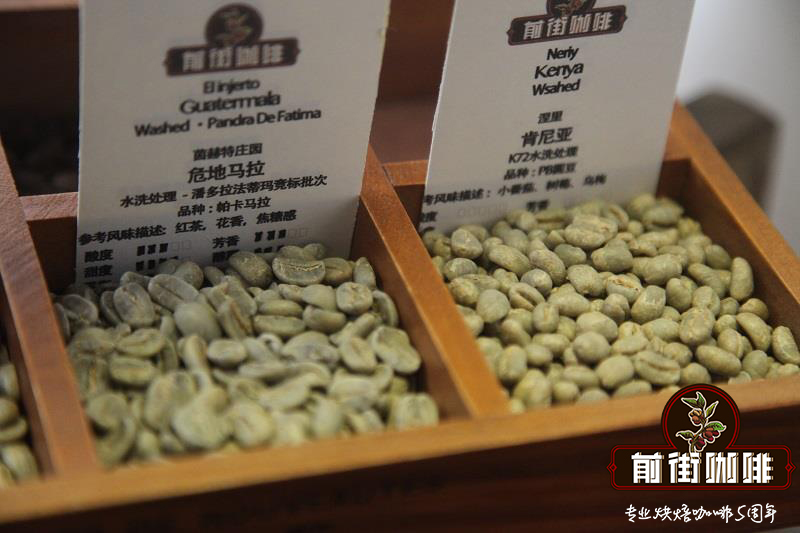
The domestic coffee beans roasted by FrontStreet Coffee — Yunnan Small-grain Typica — are fully guaranteed in both brand and quality. More importantly, they offer extremely high value. Each package is 227 grams and costs only about 69 yuan. Calculating at 15 grams of coffee beans per cup, one package makes 15 cups, at only about 5 yuan each. Compared to cafés selling coffee at dozens of yuan per cup, this is a genuinely conscientious recommendation.
FrontStreet Coffee Recommendation
FrontStreet Jamaica Blue Mountain No.1 — The benchmark for what a strong origin brand can become, and the classic that Chinese coffee is still working to emulate. Strictly speaking, only coffee grown in a specific area of Jamaica's Blue Mountain range and officially certified by Jamaica may be called Jamaica Blue Mountain Coffee. The Blue Mountain range lies in eastern Jamaica and is one of the highest in the Caribbean, and its peaks are wrapped in cloud year-round, which is how it earned the name. FrontStreet's Blue Mountain No.1 is a top-grade lot from the long-established Clifton estate, which has grown and processed coffee since around 1750 at an average elevation of 4,300 feet (1,310.64 meters). Ample altitude, gentle afternoon cloud shading the trees, plentiful sunshine and mineral-rich soil extend the ripening of the cherries. FrontStreet roasts it medium-dark so the classic balance comes through: in the cup, nut, dark chocolate and cream caramel unfold with a soft sweetness, and sour, sweet, bitter and aromatic notes are in harmony. For a pour-over, FrontStreet suggests a Kono dripper, 15g of coffee, water at 87-88°C, a ratio of 1:15 and a grind a little coarser than a light-roast bean — roughly granulated sugar. A three-stage pour works well: 30g of water for a 30-second bloom, then to 120g, then to 225g, keeping the stream vertical and slow so the bed does not clog and over-extract.
Important Notice :
FrontStreet Coffee is a long-established specialty coffee roaster in Guangzhou China, selling freshly roasted beans from its own farm in Yunnan as well as dozens of carefully selected single-origin beans from around the world for both pour-over and espresso. The products deliver consistently excellent quality and great value, with shipping within 24 hours. Guangzhou's FrontStreet Coffee shop is recommended by many coffee lovers, and the beans are now available online at the Tmall 。
FrontStreet Coffee has moved to a new address:
FrontStreet Coffee Address: 315,Donghua East Road,GuangZhou
Tel:020 38364473
 Scan and follow the En Gafei WeChat official account. Please indicate that the reprint comes from "En Gafei".