Characteristics of Papua New Guinea Bird of Paradise Coffee Beans and the Story of Jamaican Typica, Asia's Little Blue Mountain
Introduction to Papua New Guinea Coffee
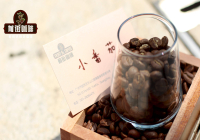
The British first brought Typica to Jamaica, creating the famous Blue Mountain coffee, and later introduced it to Papua. Papua New Guinea, formed from the merger of Papua and New Guinea, is the largest island nation in the South Pacific. The Typica grown there comes from British stock, earning it the nickname "Little Blue Mountain." Papua New Guinea boasts a pristine natural environment with vast, fertile land; its unique volcanic soil and abundant rainfall create excellent natural conditions for coffee cultivation. Premium Papua New Guinea coffee, like the country's national bird, the bird-of-paradise, is beautiful and precious. Let's explore this coffee together with FrontStreet Coffee.
Geography and Climate of Papua New Guinea
Papua New Guinea (the Independent State of Papua New Guinea, abbreviated PNG) consists of two parts: northern New Guinea and southern Papua, located east of Indonesia. The southern part of the country consists of plains and lowlands along the southeastern coast, the central part is the central mountain range, and the north consists of several separate mountain ridges.
Areas above 1,000 meters have a mountain climate, while lower-lying areas have a tropical rainforest climate. May to October is the dry season, and November to April is the rainy season. Average temperatures in coastal areas range from 21.1–32.2°C, while mountain areas range from 16.1–22.2°C. Rainfall is abundant, with average annual precipitation of 2,500mm. Forest resources are rich, with tropical virgin forests covering approximately 86.4% of the country's land area. It has a rich and unique ecosystem of flora and fauna, with about 6,500 native plant species and 380 native bird species.
In addition, Papua New Guinea's mineral resources are very rich and hold huge development potential — especially gold and copper, which hold a significant position worldwide. Other major minerals include oil and natural gas. Before FrontStreet Coffee stocked Papua New Guinea coffee beans, we considered that the country's rich mineral resources, compared with the coffee industry, would show obvious differences in returns. People would naturally choose more profitable industries, which could cause some instability in the relatively fragile coffee industry — unlike Brazil, where coffee is an important component of the national economy and receives strong development support. FrontStreet Coffee ultimately decided to stock a Papua New Guinea Bird of Paradise coffee bean, mainly because the beans this estate has produced in recent seasons have been quite stable. We also cupped several batches beforehand, and their flavors had commendable qualities.
History of Papua New Guinea Coffee
In 1511, the Portuguese discovered the island of New Guinea. Finding that the skin color of the local residents was quite similar to that of people from Equatorial Guinea in Africa, they named it New Guinea Island.
In 1884, the Dutch drove out the Portuguese and occupied the western half of New Guinea Island, roughly corresponding to what is now Indonesia's Papua Province. At the same time, France occupied the southeastern part of the island and named it New Ireland. Later, the French-occupied area came under British rule, while the northeastern part of the remaining island was occupied by Germany. This formed the pattern in which the western part of the island belonged to the Netherlands, the southeast to Britain, and the northeast to Germany.
In 1906, Britain transferred British New Guinea to Australia for administration.
In 1914, World War I broke out and Germany was unable to attend to its overseas territories; the northeastern part of New Guinea was also annexed by Australia. Roughly bounded by longitude 141°E, the western part of the island belonged to the Netherlands, while the eastern part belonged to Australia.
In 1931, Typica was introduced to Papua New Guinea from Jamaica. At that time, Britain had occupied Jamaica for nearly 300 years, and Jamaica's most representative coffee was the Typica-variety Blue Mountain coffee. Since Australia enjoyed friendly relations with Britain, it was only natural for Papua New Guinea to introduce Typica. FrontStreet Coffee often uses the name "Little Blue Mountain" to introduce Papua New Guinea coffee to customers — the historical reasons support it, and the name is certainly much easier to remember than Papua New Guinea.
In 1950, Bourbon coffee beans were introduced from Kenya. Coincidentally, Kenya was also a British colony at the time. Government encouragement of open cultivation allowed the coffee industry to grow significantly during the 1970s–1980s.
In 1961, after World War II, the western part of the island, formerly belonging to the Netherlands, declared independence as "West Papua," but only a few months later it was invaded by armed forces from newly independent Indonesia. Indonesia established Irian Jaya Province there; after 2003, it was further divided into the Papua and West Papua provinces.
In 1962, Mundo Novo and Caturra were introduced from Brazil, marking a great leap forward in the quality of Papua New Guinea coffee beans.
In 1975, Australia granted complete independent sovereignty, establishing Papua New Guinea. The eastern part became the independent state of New Guinea, while the western part remained under Indonesian administration as Papua, forming the current "one island, two countries" situation.
Papua New Guinea Coffee Growing Regions
Most Papua New Guinea coffee beans are grown in mountainous areas. The highland regions are divided into two main provinces: Eastern Highlands and Western Highlands.
In Eastern Highlands Province, coffee is typically grown around Goroka and Kainantu, with the Arona and Purosa estates being the most famous. In Western Highlands Province, coffee is usually produced in the outer ring of Mount Hagen city. The Kimel estate, located north of Mount Hagen, produces high-quality coffee beans, and the Wahgi Valley near Mount Hagen is famous for its ideal coffee-growing climate and fertile volcanic soil. The Bird of Paradise estate comes from the Wahgi Valley.
Besides these two provinces, other regions also grow coffee, but the beans produced there are generally of lower quality, mostly Robusta varieties.
Papua New Guinea's coffee production is not large, with about 85% of total output cultivated by small farmers. These small farmers join local cooperatives and share the cooperatives' processing equipment. Although the country borders Indonesia, differences in coffee varieties, higher altitudes than Indonesia's Sumatra coffee regions, and the primarily washed processing mean Papua New Guinea coffee tastes nothing like Indonesia's heavy, earthy cup. Instead, it offers bright acidity and sweetness with floral and fruity aromas while maintaining richness — closer in character to South American coffees.
Papua New Guinea Coffee Bean Processing Methods
After harvesting ripe red coffee cherries, they are sent to the estate's own washing station for processing. The local washed process in Papua New Guinea differs from the methods used in Central and South America.
They employ a three-stage washed fermentation, with each soaking lasting about 24 hours and the water replaced between stages to control the coffee's flavor. After washing, the parchment is removed and the beans are sorted into grades such as AA, AB, and PB (peaberry). This meticulous post-harvest method brings bright, delicate fruit acidity and a clean, long-lasting sweetness. FrontStreet Coffee has found that coffee regions with strict grading systems share a common trait: their beans are uniform in size with fewer defects. In that case, roasting color is even and the taste is much cleaner. The most obvious example is FrontStreet Coffee's comparison of Indonesian Lintong Mandheling with Golden Mandheling: Golden Mandheling is extremely strict in selection, with very uniform bean size, and its cup cleanliness is significantly better than Lintong Mandheling's.
Meaning and Rules of Papua New Guinea Green Coffee Bean Names
Naming follows the format: country + cultivation type + grade. In Papua New Guinea there are three cultivation types: plantations, large estates, and small to medium-sized farms. Plantations and large estates account for 25% of national production; small to medium-sized farms (Holdings or Blocks) of 10–20 hectares account for 10% of production.
The grade classification is as follows:
FrontStreet Coffee will use the most notable premium grades, AA and A, as examples:
AA and A grade coffees belong to the specialty coffee grade and mainly come from larger estates. For AA grade, bean size is larger than 18 mesh, with an oval flat-bean shape. Defect count: a maximum of 10 defects per kilogram. The green bean appearance is greenish-blue; the green beans should taste clean, and the roasted cup should be clean and smooth. Cup quality must be excellent (Fine Cup).
A grade beans are larger than 17 mesh, with cup quality at least reaching GTF level (Good to Fine), meaning good to excellent taste. Other defect counts and green bean conditions are the same as AA.
Bird of Paradise Estate
The people of Papua New Guinea see the beautiful bird-of-paradise as a bird of freedom and happiness — a "gift from the divine." The Sigri estate's Typica coffee beans, like bird migration, traveled from Jamaica's Blue Mountains over a long distance to Papua New Guinea for cultivation, carrying the same genetic heritage as Jamaica Blue Mountain. This heritage is also why Papua New Guinea Bird of Paradise coffee beans receive so much attention today. FrontStreet Coffee selects each coffee bean hoping for unique characteristics, never wanting different beans with similar flavors. That is also why we spend significant time on bean selection, adjusting roasting parameters, and other steps: a coffee bean may resemble another, but it must also have features that set it apart.
According to current records, the Wahgi Valley is home to more than 160 different bird species, and the Bird of Paradise estate itself hosts 90 bird species — including Papua New Guinea's national symbol, the bird-of-paradise — truly living up to its name as a bird paradise. That is how the Sigri estate also acquired the name Bird of Paradise estate.
The estate was established in 1950 and has been operating for over 60 years, making it a pioneer of the local coffee industry. The Bird of Paradise estate is located in the Waghi Valley of Western Highlands Province, at approximately 1,500 meters altitude in the high mountain regions. It has mineral-rich volcanic soil, a cool climate, fertile ground, and abundant rainfall. The estate also places great emphasis on ecological protection, refusing to use pesticides and insecticides in order to protect the soil and water sources, and caring for the ecosystem and the birds nearby.
The Bird of Paradise estate has adhered to high standards of cultivation and processing for many years. During the harvest season from April to September each year, only fully mature red coffee cherries may be hand-picked, ensuring a perfect balance of acidity and sweetness in the cherries. Cupping is performed daily to ensure the plantation consistently delivers excellent quality to customers. Thus the Bird of Paradise estate has become a classic in the world of specialty coffee. As mentioned earlier, FrontStreet Coffee chose this Bird of Paradise estate coffee precisely because the estate's strict production chain guarantees bean quality.
Papua New Guinea Coffee Beans
Estate: Bird of Paradise Estate
Variety: Typica
Grade: AA
Altitude: 1,600–1,800 meters
Processing Method: Washed
Roasting Recommendations
FrontStreet Coffee recommends a medium roast, because Typica beans have low density and are not very suitable for dark roasting. To highlight their inherent refreshing acidity and fruit aromas, emphasis is placed on heat adjustment after first crack.
Yangjia 800N roaster, 550g green bean charge. Specific operation: heat the roaster to 200°C and open the air damper to 3. After 1 minute of steaming, adjust the heat to 160°C with the damper unchanged. When the temperature reaches 160°C, adjust the heat again to 115°C. Roast to 5'35" at 152°C, when the bean surface turns yellow, the grassy smell has completely disappeared, and dehydration is complete — then adjust the air damper to 4.
As first crack approaches, ugly wrinkles and black spots appear on the bean surface and the toast aroma clearly gives way to coffee aroma — the prelude to first crack. Listen carefully for the sound of the cracks: at 8'40" first crack begins. Maintain low heat and fully open the air damper to 5 (adjust the heat very carefully — not so low that the cracking sound stops). Unload the beans at 191.3°C, at 40 degrees of development.
FrontStreet Coffee Bird of Paradise Coffee Roasting Curve
FrontStreet Coffee Bird of Paradise Coffee Cupping Report
Brewing Recommendations
FrontStreet Coffee recommends using a Kono dripper, because its few ribs, located at the bottom, allow the filter paper to fit tightly against the dripper, restricting airflow. This slows the water flow and increases water–coffee contact time, extracting more coffee substances through a quasi-immersion effect and enhancing richness.
The chosen water temperature is 88°C — a relatively low brewing temperature that avoids extracting excessive off-flavors from the beans, because the deeper the roast level, the more off-flavors will appear.
For the dose, FrontStreet Coffee uses 15 grams with a 1:15 coffee-to-water ratio. The grind size is set by an 80% pass rate through the China standard #20 sieve.
FrontStreet Coffee uses segmented extraction: 30g of water for a 30-second bloom, then a small circular pour up to 125g, then continue pouring to 225g when the water level drops to just expose the coffee bed. Total extraction time is 2 minutes (timed from the start of the bloom).
FrontStreet Coffee Bird of Paradise Coffee Brewing
FrontStreet Coffee Bird of Paradise Coffee Brewing Flavor Description
The sweetness of toast and nutty sweetness, with a slight fruit acidity creating a pleasant sweet-sour balance and good layering. There are fruit-like aromas and a particularly sweet, spiced aftertaste. The taste is rich and balanced.
FrontStreet Coffee Bird of Paradise Coffee Beans, Final Product
FrontStreet Coffee Recommendation
If the "Little Blue Mountain" heritage of this Papua New Guinea Typica intrigues you, the authentic original is worth tasting too. Strictly speaking, only coffee grown in the designated Blue Mountain region of Jamaica and certified by the Jamaican authorities may be called Jamaica Blue Mountain Coffee. The Blue Mountains, whose highest peak reaches 2,256 meters, produce less than 2,500 tons a year, and Japan has historically purchased more than 70% of that output — which is why genuine Blue Mountain is so scarce. Authentic lots ship in traditional wooden barrels of 15, 45, or 70 kilograms, and every barrel is itself a hallmark of genuine Blue Mountain coffee.
FrontStreet Jamaica Blue Mountain No. 1 is the highest grade, sourced from the historic Clifton Estate, which has been growing coffee since roughly 1750 at an average elevation of 4,300 feet (1,310.64 meters). The beans are freshly roasted within 5 days of shipment, given a medium-dark roast to highlight the classic mellow body, and are best rested 4–7 days from the roast date. FrontStreet recommends a Kono dripper, 15g of coffee, a grind slightly coarser than for light roasts (about the texture of white sugar), water at 87–88°C, and a 1:15 ratio with a three-pour sequence of 30g bloom for 30 seconds, then to 120g, then to 225g. The cup is remarkably clean, complex, and gentle, with chocolate sweetness and a strong, creamy body — nuts, dark chocolate, and caramel cream unfolding in layers, with a long, fruity finish and the near-perfect balance that has kept this legendary coffee in demand for decades.
Important Notice :
FrontStreet Coffee is a long-established specialty coffee roaster in Guangzhou China, selling freshly roasted beans from its own farm in Yunnan as well as dozens of carefully selected single-origin beans from around the world for both pour-over and espresso. The products deliver consistently excellent quality and great value, with shipping within 24 hours. Guangzhou's FrontStreet Coffee shop is recommended by many coffee lovers, and the beans are now available online at the Tmall 。
FrontStreet Coffee has moved to a new address:
FrontStreet Coffee Address: 315,Donghua East Road,GuangZhou
Tel:020 38364473
 Scan and follow the En Gafei WeChat official account. Please indicate that the reprint comes from "En Gafei".