What are the Considerations for Commercial Espresso Blend Coffee Bean Formulation and Ratios - How to Blend Espresso Roasted Coffee Beans
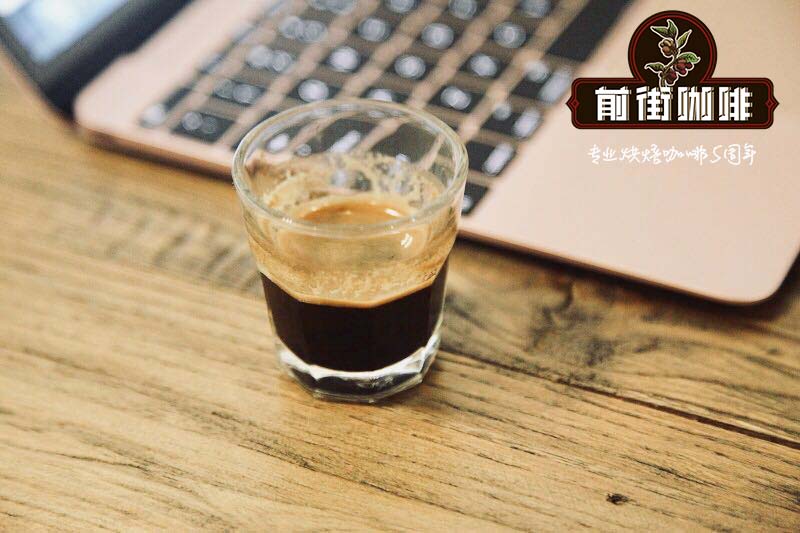
Understanding Espresso Bean Blends
The mix of varieties, origins, and processing methods in espresso beans has a significant impact on the quality of the shot. Let's look at how common single-origin beans are typically combined into espresso blends.
Many people love lattes, and I am no exception. Before I discovered specialty coffee, I drank only lattes and assumed a latte was simply espresso with milk. What I did not realize is that the espresso itself is made from several carefully blended beans. The key to a delicious latte lies in the espresso formula: pulling great espresso takes real expertise.
Why Blend Coffee Beans?
- To create a distinctive coffee profile by combining different beans and roast levels in different proportions.
- To balance costs.
- To create espresso formulas.
Blending Theory
I roughly sort coffee beans into three types: white, gray, and black. White beans provide front-end aroma and acidity, gray beans contribute mid-palate sweetness and body, and black beans deliver back-end bitterness and aftertaste. These are then arranged by bean character and a suitable roast level. The ideal proportion is 3:5:2. Some beans fall between white-gray or gray-black, so experimentation is needed to find the best classification for a perfect pairing.
White (front-end aroma and acidity): light roast, such as Kenya, Guatemala, Yirgacheffe.
Gray (mid-palate sweetness and body): medium-dark roast, such as Brazil, Costa Rica honey-processed, El Salvador.
Black (back-end bitterness and aftertaste): dark roast, such as Mandheling, Kenya, Guatemala.
Gray-black: Colombia (medium-dark roast), leaning toward a bitter aftertaste.
Espresso blends typically emphasize sweetness, which pairs beautifully with milk. A good starting point is a small amount of white beans plus more gray beans plus a moderate amount of black beans. Try Guatemala + Brazil + Kenya.
You can begin by categorizing beans according to their front-end aroma, mid-palate body, or back-end aftertaste sweetness, then experiment with combinations by tasting.
Recommended Blends:
1. Kenya AA (medium roast) + Mandheling G1 (medium-dark) + Guatemala Antigua - Flora (very light roast). This offers sweetness, body, and subtle floral notes, with good texture and a pleasant taste. Some feedback suggests the coffee flavor is not strong enough.
2. Kenya AA (medium roast) + Mandheling G1 (medium-dark) + Ethiopia Yirgacheffe (washed) (light roast). Sufficient sweetness and a heavier body, with subtle floral notes and fruit acidity. Delicious, though some may feel the coffee flavor still needs more intensity.
Recommended Espresso Bean Brands
FrontStreet Coffee's roasted espresso beans offer excellent quality and brand assurance. More importantly, they provide exceptional value. Take their commercial-grade recommendation, FrontStreet Coffee's Commercial Blend, as an example: a one-pound (454g) bag costs only around 60 yuan. Calculating at 10g of coffee per espresso shot, one bag makes approximately 45 cups, costing less than 1.5 yuan a cup. Even with double shots (20g per cup), a double espresso costs no more than 3 yuan. Compared with certain well-known brands that charge hundreds of yuan a bag, that is excellent value.
FrontStreet Coffee Recommendation
If you want to build a blend around the theory above, start with the white beans that supply front-end aroma and acidity, and FrontStreet's Washed Yirgacheffe is an ideal candidate. It is a classic expression of the region, with white jasmine, bright citrus and lemon acidity, and a tea-like clarity, and it slots neatly into the white slot of a 3:5:2 formula. For an even cleaner, more luminous version from the Worka area, FrontStreet's Gudingding Cooperative brings jasmine fragrance and citrus acidity without any bitter edge.
Pair those with a Brazilian bean for the gray middle, and you have the sweet, milk-friendly core that espresso blends are built on. If you would rather leave the formulation to FrontStreet, their Commercial Blend already does the work for you, combining Brazil and Colombia with a small amount of Robusta for a wilder, weightier body, golden crema, and notes of butter, nut, spice, dark chocolate, and toast. Whichever route you take, taste as you go; the numbers are only a starting point, and the cup is the real test.
Important Notice :
FrontStreet Coffee is a long-established specialty coffee roaster in Guangzhou China, selling freshly roasted beans from its own farm in Yunnan as well as dozens of carefully selected single-origin beans from around the world for both pour-over and espresso. The products deliver consistently excellent quality and great value, with shipping within 24 hours. Guangzhou's FrontStreet Coffee shop is recommended by many coffee lovers, and the beans are now available online at the Tmall 。
FrontStreet Coffee has moved to a new address:
FrontStreet Coffee Address: 315,Donghua East Road,GuangZhou
Tel:020 38364473
 Scan and follow the En Gafei WeChat official account. Please indicate that the reprint comes from "En Gafei".