Commercial Espresso Bean Recommendations & Espresso Coffee Bean Selection - Espresso Blend Price Comparison
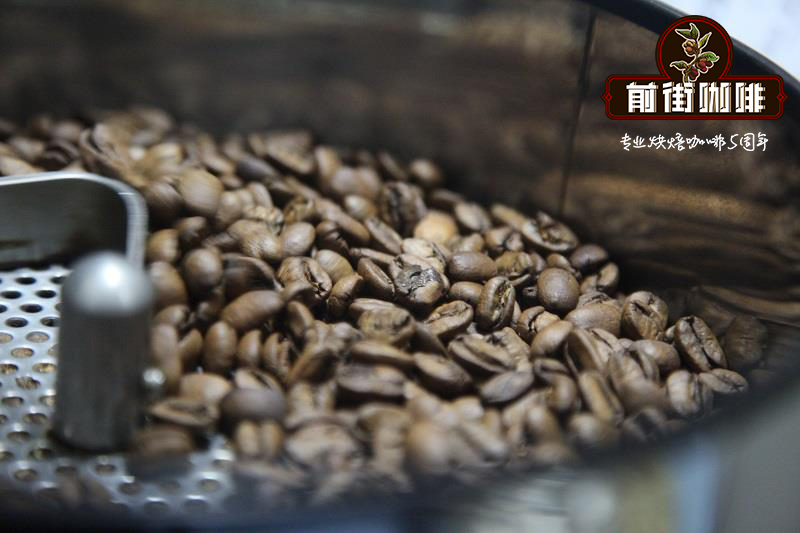
FrontStreet Coffee's Espresso Bean Recommendations: Are there good, cost-effective espresso beans suited to cafe production and latte art? The answer is yes.
What is Blended Coffee?
Different coffee beans carry distinct characteristics shaped by variety and origin. Their acidity, bitterness, sweetness, aroma, and body all differ in subtle ways. Single-origin beans tend to spotlight the personality of one particular coffee; blended coffee, also called mixed coffee, combines several single-origin beans so their strengths reinforce one another, producing a richer new flavor through either complementary or amplifying combinations.
Before blending, it is essential to understand the flavor of each component and to have a clear picture of the cup you are aiming for - something no single origin can deliver on its own. If a blend does not taste better than one or more of its parts, that is a shame, and there is no reason to blend at all. As a rule, a blend need not use more than five coffees; too many varieties create a complexity that only the most specialized tasters can steer without losing the plot.
In the teaching of roasting and blending, people combine origins for several reasons. The ideal goal is a coffee that tastes better than any of its components. That said, a single-origin Arabica is often enough for a very good cup: clean aroma, smooth texture, sweet aftertaste. So "blending" - combining different origins - is not always necessary.
When blending, it helps to start from three very preliminary approaches.
Blending Methods
First, decide on the base bean, treat it as the center, and then choose other strongly characterized varieties to harmonize the overall flavor.
Second, try pairing beans with completely opposite characteristics, which can add more unusual aromas.
Third, combine similar bean types and then select varieties rich in distinctive flavor to add special aromas to the whole.
To put these combinations to work, you must first know the flavors of dozens of single origins. Every coffee shop blends to its own proportions. Below are several representative ratios - and of course, you can also push yourself to try proportions you like.
Example Blending Ratios
1. Espresso blending method: Colombia 70%, Brazil 30%
2. Bitter-tasting commercial coffee blending method: Colombia 60%, Brazil 20%, Indonesian Robusta 10%
There are two ways to blend: roast first then blend, and blend first then roast - also known as post-roast blending and pre-roast blending. The latter challenges the roaster more. Blended beans need to rest for several days so the beans can integrate and the flavors can balance out. Post-roast blending generally needs about a week of resting; pre-roast blending can be used after 3-4 days of resting, because the beans have already influenced one another during roasting.
To emphasize rich, intense flavor, prioritize full-bodied, moderately acidic Colombian beans, complemented by balanced Brazilian beans and a full-bodied blend with prominent bitterness. If you want more sweetness, you can appropriately include beans with a mellow bitterness.
Coffee bean creativity lies in blending. To respect the care that goes into it, "creative" is the better word. Before discussing specific ratios, let's prepare. First, understand the basics of creative blending - the same common sense we apply when choosing good water and a good teapot before brewing tea. Creative coffee is no exception.
Four Key Principles for Creative Blending
First: choose high-quality coffee beans. This may sound obvious - who doesn't know it? Yet poor-quality beans drag the flavor down dramatically; even a beautifully balanced single origin cannot be made delicious from them. Choosing high-quality beans is the single most important point.
Second: remove defective beans. Mixed-in defects degrade the flavor, so do not hesitate to pick them out - quality before quantity. Worm holes, abnormal development, and empty shells without a kernel should all be removed.
Third: understand the characteristics of the beans. Without a good grasp of the individual traits of the beans you plan to blend, it is hard to create good coffee, or the coffee you expect. Think of yourself as a team manager - you must know your players well to use their talents. Command blindly and you get chaos. Assign someone who can't stop watching the keyboard to public relations, someone who fidgets the moment they sit down to accounting, and someone who stares fixedly at the floor to customer service, and the result is predictable. Blending beans is the same: the beans in your hands are your soldiers, and you must first know which are more acidic and which more bitter. If you try to dilute acidity with Mocha, which is already fairly acidic, you only make it worse.
Fourth: understand roast levels. The same bean develops differently at different roast levels, so this must be mastered too. Brazil and Blue Mountain, for example, generally take a medium-light roast, while charcoal roasting is a dark roast.
Practical Examples (10 is maximum, based on dark roast standard)
FrontStreet Coffee's Recommended Espresso Beans:
1. Formula: Guatemala + Mexico + Brazil + Kilimanjaro
Result: Aroma 5, Bitterness 5, Sweetness 5, Acidity 5
2. Formula: Sumatra Mandheling + Colombia + Brazil + Kilimanjaro
Result: Aroma 5, Bitterness 10, Sweetness 5, Acidity 3
3. Formula: Mocha + Hawaii Kona + Brazil + Kilimanjaro
Result: Aroma 9, Bitterness 10, Sweetness 7, Acidity 10
4. Formula: Guatemala + Mocha + Kilimanjaro
Result: Aroma 10, Bitterness 5, Sweetness 6, Acidity 7
5. Formula: Brazil + Mexico + Jamaica Blue Mountain Coffee
Result: Aroma 5, Bitterness 3, Sweetness 5, Acidity 6
6. Formula: Brazil + Colombia + Java Robusta Coffee
Result: Aroma 3, Bitterness 8, Sweetness 8, Acidity 6
FrontStreet Coffee's Espresso Bean Recommendations
FrontStreet Coffee's roasted FrontStreet Espresso Blend beans stand behind their brand and quality, and their value is a major part of the appeal. Take the commercially recommended model - FrontStreet Commercial Blend Coffee Beans - as an example: each package is one pound (454 grams). Calculating 10 grams of coffee powder per single espresso shot, that package yields 45 cups; doubling the dose to 20 grams per cup, a double espresso still comes out very reasonable. For daily cafe production, it is a dependable, cost-conscious choice.
FrontStreet Coffee Recommendation
For anyone learning latte art at home, FrontStreet Coffee's Classic Blend is the natural starting point. It is a medium-dark espresso recipe built from three origins, inspired by the old "Mamba" pairing of Mandheling and Brazil. A small share of Robusta is added for aroma and body, so the shot pours out pronounced butter, toasted bread, and caramel-cookie aromas with a sturdy mouthfeel, fine crema, and very stable extraction - a staple household coffee for beginners.
If you prefer a nutty, richly aromatic style, FrontStreet Coffee's Premium Blend is the one to take home. Also a medium-dark espresso bean, it pairs washed Colombian beans with semi-washed Brazilian beans, giving nuts, dark chocolate, and caramel in the cup. Whether you make an Americano, a latte, or a flat white, it lifts up the creamy, almond, and cocoa sweetness, and its crema easily matches a cafe's - more than enough for latte-art practice, which is why it suits anyone aiming to open a shop or learn at home.
If the Classic and Premium blends are made for beginners, FrontStreet Coffee's Commercial Blend is tailored for those about to open a shop. Built on FrontStreet Coffee's Premium Blend with a small addition of Robusta, it adds more fine, dark-brown crema and a heavier tone, so Americanos, lattes, and mochas all carry nuts, cocoa, and caramel - and latte art becomes effortless.
Important Notice :
FrontStreet Coffee is a long-established specialty coffee roaster in Guangzhou China, selling freshly roasted beans from its own farm in Yunnan as well as dozens of carefully selected single-origin beans from around the world for both pour-over and espresso. The products deliver consistently excellent quality and great value, with shipping within 24 hours. Guangzhou's FrontStreet Coffee shop is recommended by many coffee lovers, and the beans are now available online at the Tmall 。
FrontStreet Coffee has moved to a new address:
FrontStreet Coffee Address: 315,Donghua East Road,GuangZhou
Tel:020 38364473
 Scan and follow the En Gafei WeChat official account. Please indicate that the reprint comes from "En Gafei".