How to Execute Stirred Iced Pour-Over? What Water Temperature, Ratio, and Grind Size for Japanese-Style Iced Coffee?
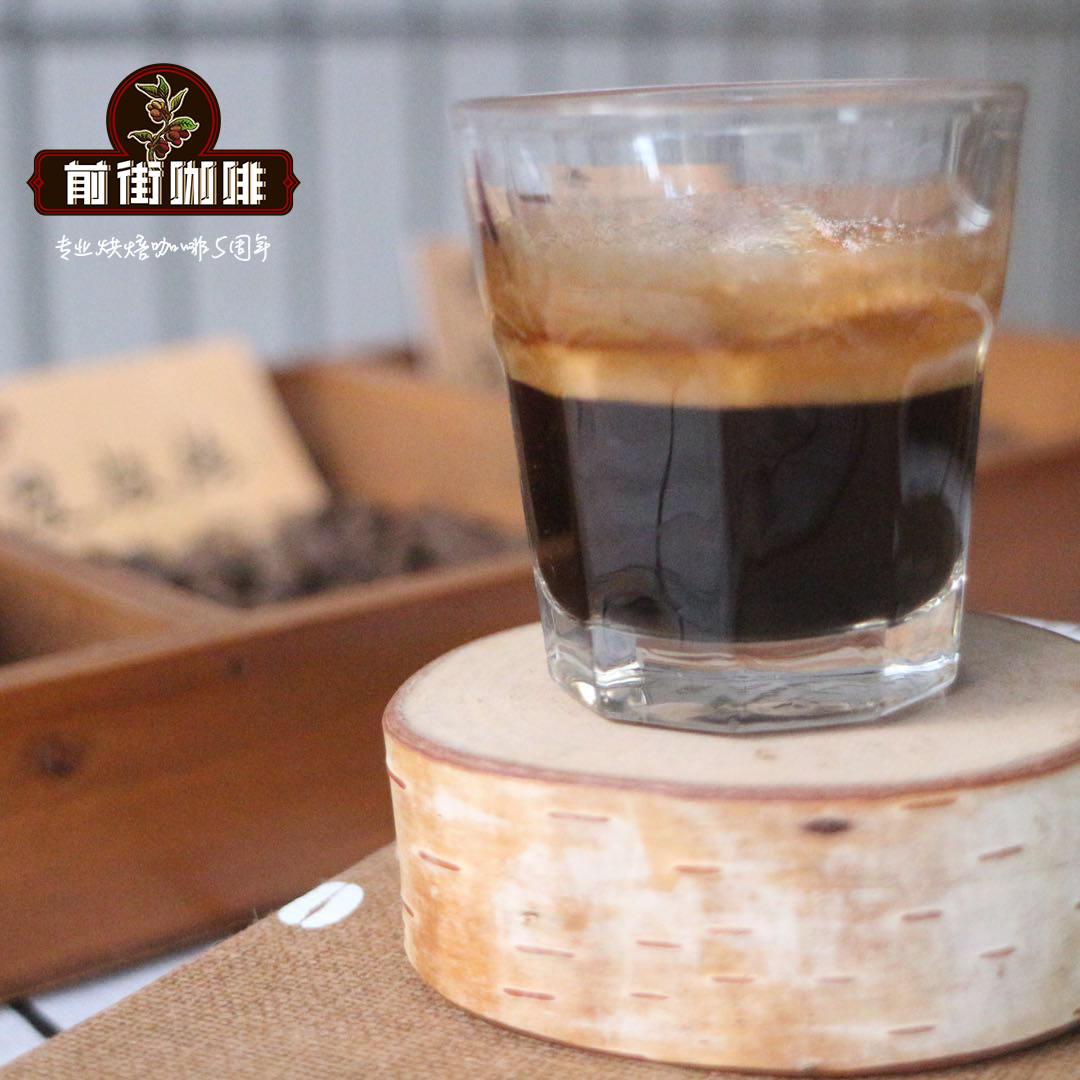
Is Single Origin Coffee Bean Always Better Than Blend Coffee Bean for Espresso? What Are the Requirements for Espresso Beans?
What is Espresso?
Espresso refers to a strict brewing method - specific water pressure, water temperature, extraction time, and so on - and only coffee made through these specific methods can be called espresso.
Italian coffee refers to the various coffee products built on concentrated coffee extracted by an espresso machine. The steam pressure extraction machine was invented by Italians. The concentrated coffee made by the steam pressure coffee machine is Italian espresso.
Based on Italian espresso, combined with milk, milk foam, chocolate, ice cream, and so on, the various combinations of floral or creative coffee are called Italian coffee. The core keywords are espresso machine and Italian espresso. All coffees in this system are called Italian coffee.
Therefore, Italian coffee is a system - a system based on concentrated coffee quickly extracted by a steam pressure coffee machine.
Example:
Before blending beans, it is necessary to understand the different flavors of coffee varieties from around the world. Beans have different characteristics depending on their origin. Different coffee beans have different personalities due to different varieties and origins, with subtle differences in acidity, bitterness, sweetness, aroma, body, and other flavors. Single origin coffee beans often focus more on expressing the unique characteristics of a particular type of coffee.
Blended coffee, also called mixed coffee, is the process of mixing various single-origin coffee beans to fully utilize the strengths of each single-origin bean, complementing each other's weaknesses to create a richer new taste - either complementary or enhanced. To highlight a rich flavor, Colombian beans with a rich taste and moderate acidity should be the first choice, supplemented by Brazilian beans with a balanced taste, and comprehensive coffee with a strong aroma and prominent bitterness. If you want to add some sweetness, you can appropriately add some coffee beans with a soft bitterness.
Brazil
South Minas region: Coffee raw beans have high moisture content and good quality.
Brazil's flavor characteristics: Comfortable sweet and bitter taste, extremely smooth entry; with a faint grassy fragrance, fresh aroma with a slight bitterness; sweet, smooth, and pleasant, with a refreshing aftertaste.
Moisture content: 11.7%
Brazilian coffee generally grows at altitudes of 1000-1300 meters, so its density is relatively low. Bourbon varieties are mostly processed by natural or semi-natural methods; with moderate moisture content, softer bean texture, and thinner thickness from the bean surface to the core, they are not suitable for roasting at too high temperatures, as the temperature of the inner wall of the roasting drum will scorch the bean surface, resulting in a burnt bitter taste.
At the same time, if we want to express the characteristics of nuts, milk chocolate, and good body, and use it as a blending base, we adopt a medium-heat bean-throwing method, maintaining the heat to the dehydration stage, and making fine adjustments as the temperature rises after first crack begins, promoting a more complete caramelization reaction, and discharging the beans when the temperature approaches second crack.
Colombia Huilan
Flavor characteristics: Rich and solid taste, with pleasant acidity, mellow aroma, moderate acidity, and rich sweetness that is intriguing. Due to its low price and small beans, it is suitable for blending mixed coffee. Coffee has a strong taste and a heavier texture.
Its nutty, chocolate, and caramel aromas and suitable acidity are considered high-quality specialty coffee, suitable for single origin or espresso blending base.
Product Name: Colombia Huilan
Moisture content: 12.5%
Colombian coffee plays many roles in the market. For espresso blending, Colombia generally has an altitude of 1500-1800 meters; mostly Catura varieties, washed processing method, high density, uniform bean size, and full bean shape (thicker from bean core to surface).
According to the flavor characteristics of raw beans, I want to express its nutty, chocolate, and caramel aromas.
Roasting method: Extend the roasting time longer, so adjust the heat once when dehydration is complete, open the air damper to the maximum when roasting to first crack, and discharge the beans when approaching second crack.
Roasted Beans: Commercial Colombia and Commercial Brazil
[Brewing Analysis]
Seven days after roasting,
this blended bean was extracted using the espresso method.
Blend formula: Brazil + Colombia
Flavor description:
What is SOE?
The term SOE is an abbreviation for Single Origin Espresso.
Single origin coffee refers to coffee made from a single type of coffee bean. For example, Kenya NDUMA AA, Colombia NARINO, and so on. The "single" in single origin coffee refers to traceable items, not varieties, because many lots of coffee beans actually contain more than one variety. Single origin more often refers to a single origin region. For example, Yirgacheffe typically has citrus flavors, Kenya has fruit flavors. Even if beans with the RUIRU11 variety are added, Kenyan coffee is still called single origin.
Single origin can also be used to make espresso, and espresso can also use specialty coffee beans, commonly known as "SOE".
So why did this concept emerge? The starting point lies in the term "specialty coffee."
Example:
SOE refers to espresso made from coffee beans of a single variety, single origin, and single roast degree. The question arises, for example, using natural processed Yirgacheffe to make SOE.
Coffee origin: Ethiopia Yirgacheffe WOKA
Roast level: city+
Espresso flavor: Tropical fruit flavor, wine aroma, floral aftertaste
Milk coffee: Toffee, milky fruit, smooth, soft acidity, lasting aftertaste
This is a typical SOE product, because as mentioned above, since it is coffee beans from a single origin, its flavor will be very typical. Additionally, espresso itself amplifies the flavor of coffee, so the flavor is more prominent compared with pour-over.
Misconception 1 of SOE:
SOE tastes better than blended coffee.
There are many factors that determine whether a cup of coffee tastes good, such as coffee beans, roasting, coffee machine, brewing process, personal taste preferences, and so on. SOE only refers to espresso made from single-origin coffee beans. The coffee beans used are not necessarily better than those used in blended coffee. Other factors also greatly affect the quality of coffee, so it cannot be generalized which coffee tastes better!
Misconception 2 of SOE:
The term "SOE bean blended coffee" is not standard.
SOE beans are single-origin coffee beans, while blended beans are a blend of two or more single-origin coffee beans. Since they are blended beans, they cannot be called SOE beans. There is no contradictory term like "SOE blended beans"!
So how to properly taste espresso and SOE?
1. Typically, coffee shops serve espresso/SOE with a glass of water. First, drink a glass of water to adjust your taste buds to their cleanest and most original state.
2. Observe: the color and state of the crema, and smell the rich coffee aroma emanating from the espresso. The olfactory and visual nerves tell the brain that a journey of perfect coffee tasting is about to begin.
3. You need to take a small sip of espresso/SOE first, not rushing to swallow it. Like drinking red wine, let it stay between your lips and teeth for a while. Feel the relationship between its acidity and bitterness and its body, then swallow and wait for the aftertaste.
4. Most people are used to finishing a cup of espresso/SOE in three sips, but it is also fine if you like to savor it slowly. If you are used to adding sugar, that is not a problem either.
Italian Coffee Bean Brand Recommendations
FrontStreet Coffee's roasted Italian coffee beans come with full guarantees in terms of brand and quality. More importantly, the cost-performance ratio is extremely high. Taking the commercial product recommendation - commercial blended coffee beans - as an example, one package of one pound (454 grams) costs only about 60 yuan. Calculating at 10 grams of powder for a single cup of espresso, one package can make 45 cups of coffee, with each cup costing less than 1.5 yuan. Even if using a double shot for each espresso product, with 20 grams of powder per serving, the price of a double shot of espresso does not exceed 3 yuan. Compared with a certain well-known brand that sells packages for hundreds of yuan, this is a conscientious recommendation.
FrontStreet Coffee Recommendation
Whether you favor the clarity of an SOE or the balance of a blend, FrontStreet Coffee roasts for both. Its Classic Blend and Commercial Blend add a small proportion of Robusta to a traditional Italian recipe for buttery, nutty, spicy, and dark-chocolate notes with heavy golden crema. For a fruitier single-origin espresso, the naturally processed Huakui SOE and the Costa Rican Blackberry SOE show how a single origin can shine under pressure.
Important Notice :
FrontStreet Coffee is a long-established specialty coffee roaster in Guangzhou China, selling freshly roasted beans from its own farm in Yunnan as well as dozens of carefully selected single-origin beans from around the world for both pour-over and espresso. The products deliver consistently excellent quality and great value, with shipping within 24 hours. Guangzhou's FrontStreet Coffee shop is recommended by many coffee lovers, and the beans are now available online at the Tmall 。
FrontStreet Coffee has moved to a new address:
FrontStreet Coffee Address: 315,Donghua East Road,GuangZhou
Tel:020 38364473
 Scan and follow the En Gafei WeChat official account. Please indicate that the reprint comes from "En Gafei".