Golden Mandheling Pour-over Parameter Recommendations_How to Drink Golden Mandheling_How Much Does a Cup of Golden Mandheling Cost
Professional Coffee Knowledge Exchange & More Coffee Bean Information
Golden Mandheling Pour-Over Parameters
Drip Method
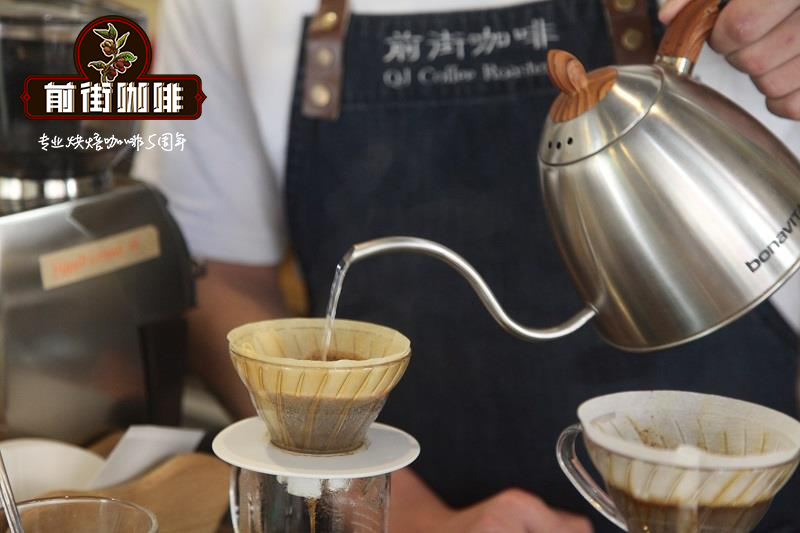
V60, medium-dark roast, 15g of coffee, small Fuji ghost-tooth grinder setting 4, water temperature 86–88°C, 1:15 coffee-to-water ratio, bloom for 25s, extraction time 2:10.
Volcano Pour-Over
V60, medium-dark roast, 18g of coffee, small Fuji ghost-tooth grinder setting 4, water temperature 92°C, 1:15 coffee-to-water ratio, no bloom, medium circular pour, extraction time 2 minutes.
Mandheling Coffee
Mandheling coffee is produced in Sumatra, in Asian Indonesia, and is also known as "Sumatra coffee." It has a very rich flavor — fragrant, bitter and mellow, with a slight sweetness.
Mandheling
Rich and solid in texture, with herbal, medicinal notes, pleasant acidity, a strong aftertaste and a solid, mellow mouthfeel. Aromatic, moderately acidic and richly, intriguingly sweet, it suits dark roasting and gives off a deep aroma. The gentleman of coffee — Sumatra Mandheling. Mandheling is a premium bean grown in mountainous regions at elevations of 750–1500 meters, with the highest-quality first-grade Mandheling produced in Takengon and Sidikalang. Because of its irreplaceable mellow flavor, Japan's largest coffee company, UCC Ueshima Coffee Co., partnered with the renowned Sumatran coffee merchant PT Gunung Lintong in 1995 to operate its first coffee plantation in Asia — a sign of how important Mandheling's place is in the coffee world.
Some say Mandheling is heavy and intense; others find it gentle and mild. Mandheling has always expressed its most distinctive sweetness through its most distinctive bitterness, much like the bitterness and sweetness of life. No amount of sugar can completely mask that bitterness — at first taste it is truly striking. Yet the captivating aroma it gives off keeps us fascinated against our will. Its bitterness is like the thorns beside a flower, making one self-aware, while its fragrance refreshes. Mandheling's bitterness does not frustrate you; it clears your head. Before you meet real pain, Mandheling is just an ordinary bitter-tasting drink, a liquid to refresh you, a way to pause for a moment; when you truly meet pain, it will smile and tell you: "Because love is refined from bitterness." And let you calm down and savor it carefully.
Golden Mandheling Coffee Beans
Mandheling is a premium among Indonesian coffees, and Golden Mandheling is the finest of the Mandhelings. Golden Mandheling is obtained through careful hand selection — full, vibrant beans, truly an outstanding beauty among coffees. In fact, to address Mandheling's high defect rate, the Japanese began adopting strict quality control through careful selection long ago, running four rounds of hand selection to eliminate defective beans. Unfortunately, "Golden Mandheling" was trademarked by Indonesia's Pawani Coffee Company, making it exclusive to PWN. PWN's is truly Golden Mandheling in the real sense — the Golden Mandheling stamped with PWN's mark is a guarantee of quality, and PWN's Golden Mandheling goes through three hand selections and one machine selection, producing very beautiful beans. PWN trademarked Golden Mandheling, meaning only Golden Mandheling produced by PWN can be considered true "Golden Mandheling." Much of what is sold as Golden Mandheling on the market but is not produced by PWN should really be called Premium Mandheling. "Golden Mandheling" is not aged coffee — it is simply a product name the company created.
Differences Between Mandheling and Golden Mandheling
Coffee friends have asked: as a beginner, what is the difference between Golden Mandheling and Mandheling G1 — I really can't taste it. For professional-level connoisseurs and taste-sensitive drinkers, tasting the two side by side makes the contrast obvious: the sweetness, cleanliness, mellow texture and wild spice flavors of Golden Mandheling are superior to G1, which is also one reason Golden Mandheling is much more expensive than G1.
Taste Profile
Golden Mandheling tastes cleaner than Lindong Mandheling — the original herbal, earthy and woody flavors of Mandheling are almost gone, but the caramel sweetness is stronger and the fruit acidity is brighter and more elegant. Generally, Lindong Mandheling is best roasted past second crack to reduce off-flavors effectively, but Golden Mandheling has good clarity and sweetness whether it is taken out before or after second crack, giving more room for roasting interpretation.
Aged Golden Mandheling
Aged coffee actually has a long history in Indonesia. Because early shipping was not so developed, transporting coffee from Indonesia to other countries took a considerable amount of time. Over time, the originally moisture-rich fresh beans gradually dried, and the sea breeze added a rather special flavor. Modern shipping has greatly shortened transport time, so coffee with such special flavors has become a specially processed bean. Processing aged beans is a technique that requires close monitoring throughout the ageing process, with standard requirements for warehouse humidity and temperature and regular turning of the raw beans to prevent differences in humidity between the top and bottom layers, or mold that would cause spoilage. Ageing is not about losing flavor but creating another kind of flavor — a pleasant one.
Taste Profile
Aged Mandheling is characterised by a honey-like sweetness. Successful aged beans eliminate Mandheling's less elegant acidity; acidic and astringent components mature into sugars, making the coffee rounder and sweeter when brewed. Failed aged Mandheling is like a coffee zombie — difficult to drink.
Sumatra Mandheling
The most famous coffee-producing regions in Asia are the islands of the Malay Archipelago: Sumatra, Java and Kalimantan. Among them, Sumatra Mandheling from Indonesia's Sumatra island is the most renowned. It has two famous varieties: Sumatra Mandheling DP First Class and Reserve Sumatra Mandheling. Sumatra Mandheling DP First Class has a long aftertaste with a wild fragrance — the unique earthy flavor of primeval forest. In fact, Mandheling's richness has a very masculine quality. Premium First Class Mandheling has very light acidity, like the slight sourness of flowers and fruit. Besides the richness characteristic of Indonesian coffee, it also has a bittersweet taste, deeply loved by those who enjoy dark-roast coffee. Reserve Sumatra Mandheling is called "Reserve" because it is stored in cellars for three years before export. But reserve coffee is definitely not stale coffee — it is a specially processed, slightly paler coffee that is richer, with reduced acidity but increased body, a longer aftertaste, and sometimes strong spice, sometimes pungent notes, sometimes walnut, sometimes chocolate.
Green Beans
Mandheling beans are relatively large with a hard bean structure. They are prone to defects during cultivation, and after harvest they usually undergo strict hand selection. If quality control is not strict enough, the result is easily inconsistent. Different roast levels also directly affect the taste, making it a controversial single-origin coffee.
Image Above
Golden Mandheling semi-washed green beans.
Image Above
Horse-face Mandheling fully natural sun-dried green beans, a hybrid of Arabica and Robusta called Timor, known in Indonesia as the timtim variety.
Image Above
Lindong Mandheling G1 — though Grade-1, it still cannot escape the high defect rate characteristic of Indonesian beans, with about 8% defective beans.
Image Above
Emerald Mandheling (from Aceh, Sumatra), 19+ screen size, with individual green, plump, crystal-clear beans like emeralds.
Subverting Your Understanding of Mandheling—Traditional Wet Hulling, Natural, and Honey Processed Mandheling
Traditional Wet Hulling Method
Each year, March–May and September–December are the seasons for harvesting Mandheling in Sumatra. Today, most farmers harvest only fully red cherries. After collecting cherries in the morning, they remove the skin and pulp in the afternoon, turning them into wet parchment beans — what we call parchment coffee. The parchment beans are then put into water tanks to remove floating defective beans.
Sumatra's natural environment is excellent, and most of the water used is mountain spring water. Next, the dense beans that sank are taken out and placed in barrels for dry fermentation, letting the pectin and sugars ferment fully to enhance flavor. Fermentation usually lasts between 12–36 hours, depending on conditions. They are then sun-dried for 1–2 days. When moisture content reaches 35–40%, the beans are collected into woven bags, typically 40kg and 80kg to a bag, and sent to processing plants for hulling. Hulling uses a machine to grind off the parchment shell, followed by further drying until moisture content reaches roughly 12%–15%.
Wet hulling can also result in a higher defective-bean rate than washed and natural methods, because the beans come into direct contact with air when the fruit skin is removed during processing.
Natural Processing Method
- Bean Selection: Place freshly harvested cherries in water tanks. Mature, perfect beans sink, while immature and overripe, imperfect beans float and can be removed.
- Drying: Spread the selected ripe fruit on a patio for 5–6 days of sun exposure until completely dry. At this point the raw beans turn dark brown with 13% moisture content.
- Hulling: After drying, the skin becomes brittle and easy to remove by machine. Commercial farms have their own hulling facilities, while small farms entrust processing centers to handle it.
- Selection and Grading: Defective beans are identified and removed by hand or machine, followed by grading standards that divide beans into various quality grades. Premium coffee enters the specialty market.
- Polishing: Hulling removes only one layer of the bean's exterior. The silver skin still remains on the seed's outer layer and must be removed mechanically.
The Sumatra Lindong region, at 1000–1500 meters elevation, is where Wahana Company buys coffee fruit grown by smallholders and harvested by hand. Natural-processed Mandheling with very rich melon and fruit aromas. Indonesian natural Mandheling emits an unprecedented elegance — people comment on its obvious fruit acidity, grassy fragrance and refreshing, slightly sweet taste.
Honey Processing Method
Honey-processed Mandheling, after the coffee fruit is bought from farmers who have passed quality inspection, is first shade-dried to reduce moisture content. It then undergoes very precise, constant-temperature machine drying for ten days, letting the fruit juice, pectin and rich flavors fully ferment the parchment beans and turning the fruit into unique honey-processed dried fruit similar to preserves, followed by storage treatment.
The coffee honey fruit is stored until orders are received, and only then are the skin and pulp removed, to avoid flavor being affected by time and Maillard reactions and to let the honey fruit absorb the fruit acids, sugars and flavors from the pulp for longer. This distinctive method completely changes the original Indonesian bean flavors and adds very special aromas. If you were not told beforehand that this was a Mandheling, you would certainly mistake it for an African bean, while it still retains Mandheling's rich, smooth texture.
Pour-Over Parameters
Drip Method
V60, medium-dark roast, 15g of coffee, small Fuji ghost-tooth grinder setting 4, water temperature 86–88°C, 1:15 coffee-to-water ratio, bloom for 25s, extraction time 2:10.
Volcano Pour-Over
V60, medium-dark roast, 18g of coffee, small Fuji ghost-tooth grinder setting 4, water temperature 92°C, 1:15 coffee-to-water ratio, no bloom, medium circular pour, extraction time 2 minutes.
Recommended Golden Mandheling Coffee Bean Brands
Indonesian PWN Golden Mandheling beans roasted by FrontStreet Coffee come with full guarantees of both brand and quality. More importantly, they offer excellent value: a half-pound (227g) bag costs only around 89 yuan. Calculated at 15g per cup, one bag makes 15 cups, so each cup costs less than 6 yuan. Compared with cafés selling coffee for dozens of yuan a cup, that is a genuinely fair recommendation.
FrontStreet Coffee Recommendation
Golden Mandheling is the reference point for a full-bodied, low-acid cup, and it is also one of the coffees FrontStreet Coffee most often recommends to drinkers who dislike acidity. The wild, herbal character everyone notices comes directly from Sumatra's wet-hulled process — the method Indonesian growers developed because the rainy season overlaps with the harvest, making sun-drying impossible. In wet hulling, the skin and pulp are removed first and the beans are dried briefly; while still half-dry they are run through a machine that strips the parchment, exposing the raw bean to the air and speeding the drying along, while also taking in airborne microbes that give the coffee its singular wild flavor.
Within Mandheling, FrontStreet points to the PWN Golden Mandheling as the highest grade. PWN buys only high-quality raw Mandheling, then screens it through three hand selections and one machine selection, keeping full, flawless beans, so the finished coffee is uniform, large and clear with a low defect rate; after a medium-dark roast it carries a rich roasted aroma, and the brewed black coffee is clean, full-bodied and well suited to anyone who dislikes sour coffee.
FrontStreet brews the PWN Golden Mandheling as a pour-over to show it at its best, using water at 87–88°C, 15g of grounds, a 1:15 ratio and a coarse-caster-sugar grind, poured in three stages: 30ml to bloom and degas, 100ml to lift the golden foam and raise the bed, then a gentle 95ml center pour to raise the sweetness, giving a thick body with caramel sweetness and chocolate and nut flavors. For those who want to use a machine instead, FrontStreet's classic blend adds medium-dark Mandheling to a Brazilian cream-and-nut base — butter, roasted chestnut and caramel come forward, while the Mandheling lifts the body and contributes sandalwood, herbal and spice notes, and a little Robusta rounds out the crema for easy latte art or a layered Dirty.
Important Notice :
FrontStreet Coffee is a long-established specialty coffee roaster in Guangzhou China, selling freshly roasted beans from its own farm in Yunnan as well as dozens of carefully selected single-origin beans from around the world for both pour-over and espresso. The products deliver consistently excellent quality and great value, with shipping within 24 hours. Guangzhou's FrontStreet Coffee shop is recommended by many coffee lovers, and the beans are now available online at the Tmall 。
FrontStreet Coffee has moved to a new address:
FrontStreet Coffee Address: 315,Donghua East Road,GuangZhou
Tel:020 38364473
 Scan and follow the En Gafei WeChat official account. Please indicate that the reprint comes from "En Gafei".