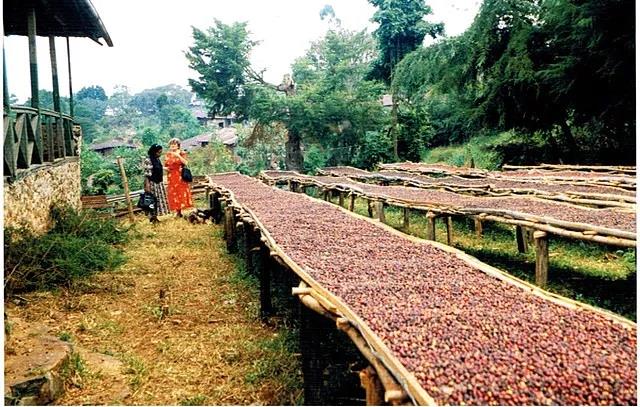
Introduction to El Salvador Coffee Origin: Batres Estate - Coffee Beans Suitable for Pour-Over
Professional coffee knowledge exchange. For more coffee bean information, follow FrontStreet Coffee.
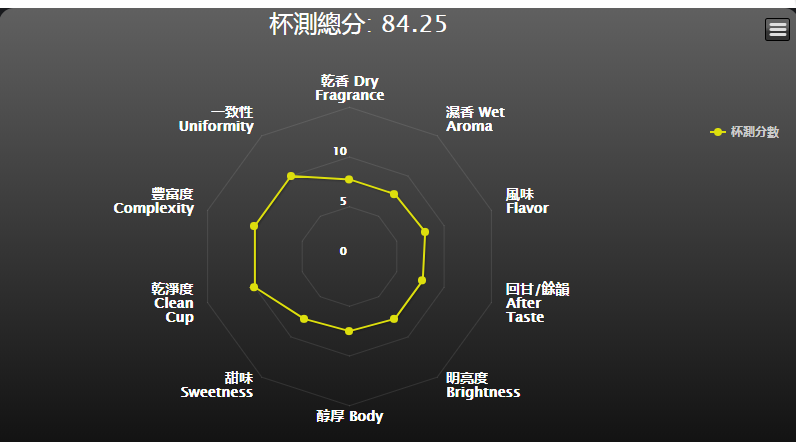
The exquisite varieties produced by Finca Batres are rarely found elsewhere in the world. El Salvador's high-altitude volcanic terrain is an essential source of life for cultivating premium coffee. The country's naturally rich volcanic soil and natural spring-water processing give rise to its most flavorful, national-treasure-grade coffee. It is the estate coffee entered every year by the European Specialty Coffee Association, and its rounded taste has won lifelong praise from Japanese appraisal experts. The dry fragrance is very fresh with fruit and vegetable notes; the wet aroma carries cocoa, with a caramel sweetness and an excellent finish.
* Growing Region: Santa Teresa, El Salvador
* Altitude: 1,400-1,600m
* Variety: Pacamara
* Processing: Washed method
FrontStreet Coffee recommended pour-over bean: Cheetah Project El Balsamo Pacamara
Pacamara is a hybrid variety artificially bred in El Salvador in 1958. Its parents are Pacas and Maragogype, and the name is formed from the first syllables of the two "parents": Paca + mara = Pacamara. Compared with Bourbon fruit, the Pacamara cherry is a veritable giant baby of the coffee world!
Pacamara inherits the compact tree shape and high yield of Pacas, while the extra-large coffee cherries come from the Maragogype side.
When discussing the Pacamara variety, we must first introduce Pacamara Estate itself. In 1984, Eduardo Francisco bought the estate. Eduardo's family had grown coffee in the Apaneca mountain range since his grandfather's generation - more than a hundred years. Eduardo wanted to take a path different from his parents' and decided to cultivate the new Pacamara variety developed by El Salvador's agricultural research institutes. He saw that this new variety had a large, beautiful bean, and that under excellent terroir it could display outstanding flavor and aroma. He believed he had found a star of tomorrow - but unexpectedly, the very first harvest marked the start of an arduous undertaking.
Pacamara beans are extremely large. During milling for depulping and sorting, they frequently jam in the machines' holes and gaps, requiring frequent adjustments to process them separately. Pacamara's early production was limited, and large-bean varieties were rare in El Salvador; most washing mills lacked experience with such big cherries, let alone properly sized screens. It was not until 1990, when the Sociedad Cooperative Ahuachapan signed a contract with Eduardo, that the wet-processing problems were solved. After that, with more refined cultivation techniques, harvesting cherries at uniform ripeness, and meticulous post-harvest handling, Eduardo finally made Pacamara shine: 24th place in 2003, 7th place in 2005, and runner-up in 2008.
FrontStreet Coffee Recommendation
Before the third wave of coffee, the market favored medium-dark roasts and flavors of body, sweetness, and caramelization - the era of siphon and flannel brewing, when FrontStreet Blue Mountain No.1 and FrontStreet PWN Golden Mandheling were the most sought-after specialty beans. With the third wave, roasts shifted lighter and tastes turned to refined acidity, and the V60's fast-drip design became the perfect vehicle for florals, fruit acids, and tea-like clarity.
If Pacamara's gentle nuttiness and cocoa sweetness are your style, the classic medium-dark choices still hold up beautifully: PWN Golden Mandheling, dark roasted with low acidity and a rich, lingering body of herbs and dark chocolate, or Blue Mountain No.1, prized for its impeccable balance of acidity, sweetness, bitterness, and aroma.
If you prefer the bright, floral direction that suits high-grown Central American lots like this Pacamara, try the V60 with a washed Ethiopia Yirgacheffe Gedeb - vivid citrus, berry, and jasmine with a green-tea sweetness - or the tropical, juicy FrontStreet Ethiopia Huakui, whose strawberry, passion fruit, jackfruit, and lychee aromas shine with fast, even pouring. For an even bolder fruit bomb, FrontStreet Kenya Cherry Tomato (SL28/SL34, 1,550-1,750m, 72-hour double-washed) delivers cherry-tomato and dark-plum acidity like fresh-pressed juice.
Important Notice :
FrontStreet Coffee is a long-established specialty coffee roaster in Guangzhou China, selling freshly roasted beans from its own farm in Yunnan as well as dozens of carefully selected single-origin beans from around the world for both pour-over and espresso. The products deliver consistently excellent quality and great value, with shipping within 24 hours. Guangzhou's FrontStreet Coffee shop is recommended by many coffee lovers, and the beans are now available online at the Tmall 。
FrontStreet Coffee has moved to a new address:
FrontStreet Coffee Address: 315,Donghua East Road,GuangZhou
Tel:020 38364473
 Scan and follow the En Gafei WeChat official account. Please indicate that the reprint comes from "En Gafei".