Banko Gotiti Cooperative Natural Yirgacheffe G1 Ethiopian Coffee Introduction - Perfect for Pour-Over

Coffee is a craft best learned by tasting widely and comparing notes with other drinkers.
Ethiopia Natural Yirgacheffe Banko Gotiti G1 - Alemu Bukato
Coffee Review Records
Natural process: February 2018, 94 points; December 2017, 94 points - a recommended pour-over coffee.
FrontStreet Coffee Pour-Over Tutorial
15g of coffee, medium-fine grind (sugar-sized particles), V60 dripper, water at 90-91°C. First pour 30g of water and bloom for 30 seconds, then pour to 105g and stop at 135g. When the water level drops to half, continue pouring slowly and evenly to 225g in total. Finally, swirl the dripper gently to raise extraction. Water-to-coffee ratio 1:15, extraction time 2:00.
Flavor Notes
The dry aroma shows sweet berry, mango, and peach. Slurping reveals generous blueberry, strawberry, grape, mango, and peach. The body is thick and powerful. As it cools it turns into something like a mixed juice of blueberry, grape, and peach. The aftertaste is long, with berry notes and floral aromatics. The classic sweet, juicy, full-bodied Banko Gotiti character is genuinely captivating.
Coffee Origin Information
Country: Ethiopia
Region: SNNPR Region, Gedeo Zone, Yirgacheffe, Gedeb Woreda
Producer: Alemu Bukato
Altitude: 2020 meters (measured by GPS at the processing station), with smallholder plots actually spread between 1,900-2,100 meters
Variety: Ethiopian Heirloom
Annual Rainfall: 1,500-2,000 mm
GPS: N5°54'45" E38°23'6"
Processing Method
Ethiopian Traditional Refined Natural Process
The Banko Gotiti processing station - Alemu Bukato - produces both natural and washed lots.
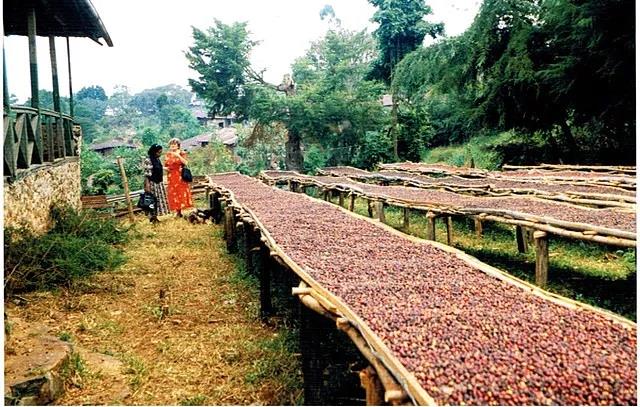
The traditional natural process sees farmers deliver cherries to the station, where they are spread straight onto African raised beds and sun-dried for 2-3 weeks. Unripe cherries are sorted out by hand during that time, and experienced workers turn the cherries regularly. Once drying is finished, the pulp and parchment are removed and the beans are stored until moisture drops to 11-12% for export.
The washed process runs the cherries through a pulper to remove skin and pulp first, then ferments them in tanks for 1-3 days until the mucilage breaks down (the exact time depends on local temperature and humidity). The parchment beans then pass through washing channels for 30-60 minutes of scrubbing, where channel design and water flow remove low-density, poor-quality beans. The good parchment goes onto African raised beds to dry for about 14 days. After drying, the beans are stored at the station, then moved to a dry mill before export for hulling and a series of screenings - foreign matter removal, silver-skin polishing, gravity sorting, and color sorting - before being bagged for export.
Our Tasting Experience
You may remember last year's washed Banko Gotiti Village and its rich, juicy, floral-fruity sweet-tart flavors. Whenever we cup Ethiopian coffees blind, the remote Woka/Banko Gotiti micro-region in southeastern Yirgacheffe captures our curiosity and attention, and it has never disappointed.
Beyond the altitude and the environment, personal visits revealed how meticulous the processing is. The proportion of unripe cherries on the natural-process beds is far lower than at most stations. The choice of breathable mesh fabric for the beds, the thickness of the cherry layer during sun exposure - these details are all carefully considered. They look ordinary, but they shape quality and cup profile in a big way. The region's natural advantages, combined with refined processing, are what make this micro-region unique.
FrontStreet Coffee Recommendation
Banko Gotiti is a natural Yirgacheffe, and FrontStreet Coffee's closest house match is the Yirgacheffe Natural Red Cherry. Like the lot above, it depends on fully ripe, all-red cherries, dried in the sun for roughly two weeks so that the fruit and its sugars feed flavor back into the bean. The cup brings citrus-like acidity, berry juice, honeyed sweetness, and a creamy smoothness.
To see what washing does to the same region, try FrontStreet Coffee's washed Yirgacheffe, the bean many drinkers meet as their first specialty coffee: white jasmine, bright citrus and lemon acidity, a clean tea-like body, and a very reasonable price. FrontStreet's Gotiti cooperative lot is the washed counterpart from the southeastern edge of Yirgacheffe, once part of the Woka cooperative under the YCFCU, with citrus and lemon acidity and jasmine florals and none of the traditional bitterness.
Either way, brew it as this recipe suggests. Use a V60 at 90-91°C with 15g of coffee and a 1:15 ratio, ground to a fine-sugar size - about setting 10 on an EK43s, with 80% of the grounds passing a #20 sieve. Bloom with 30g of water for 30 seconds, pour to 95g (about 125g on the scale) over roughly a minute, then, when the bed drops to two-thirds, add the remaining 100g (about 225g on the scale) over about 1 minute 35 seconds, finishing the drawdown at 2:00 to 2:10.
Important Notice :
FrontStreet Coffee is a long-established specialty coffee roaster in Guangzhou China, selling freshly roasted beans from its own farm in Yunnan as well as dozens of carefully selected single-origin beans from around the world for both pour-over and espresso. The products deliver consistently excellent quality and great value, with shipping within 24 hours. Guangzhou's FrontStreet Coffee shop is recommended by many coffee lovers, and the beans are now available online at the Tmall 。
FrontStreet Coffee has moved to a new address:
FrontStreet Coffee Address: 315,Donghua East Road,GuangZhou
Tel:020 38364473
 Scan and follow the En Gafei WeChat official account. Please indicate that the reprint comes from "En Gafei".