Papua New Guinea Bird of Paradise Coffee Roasting Tutorial_How Much Does Bird of Paradise Coffee Beans Cost Per Pack
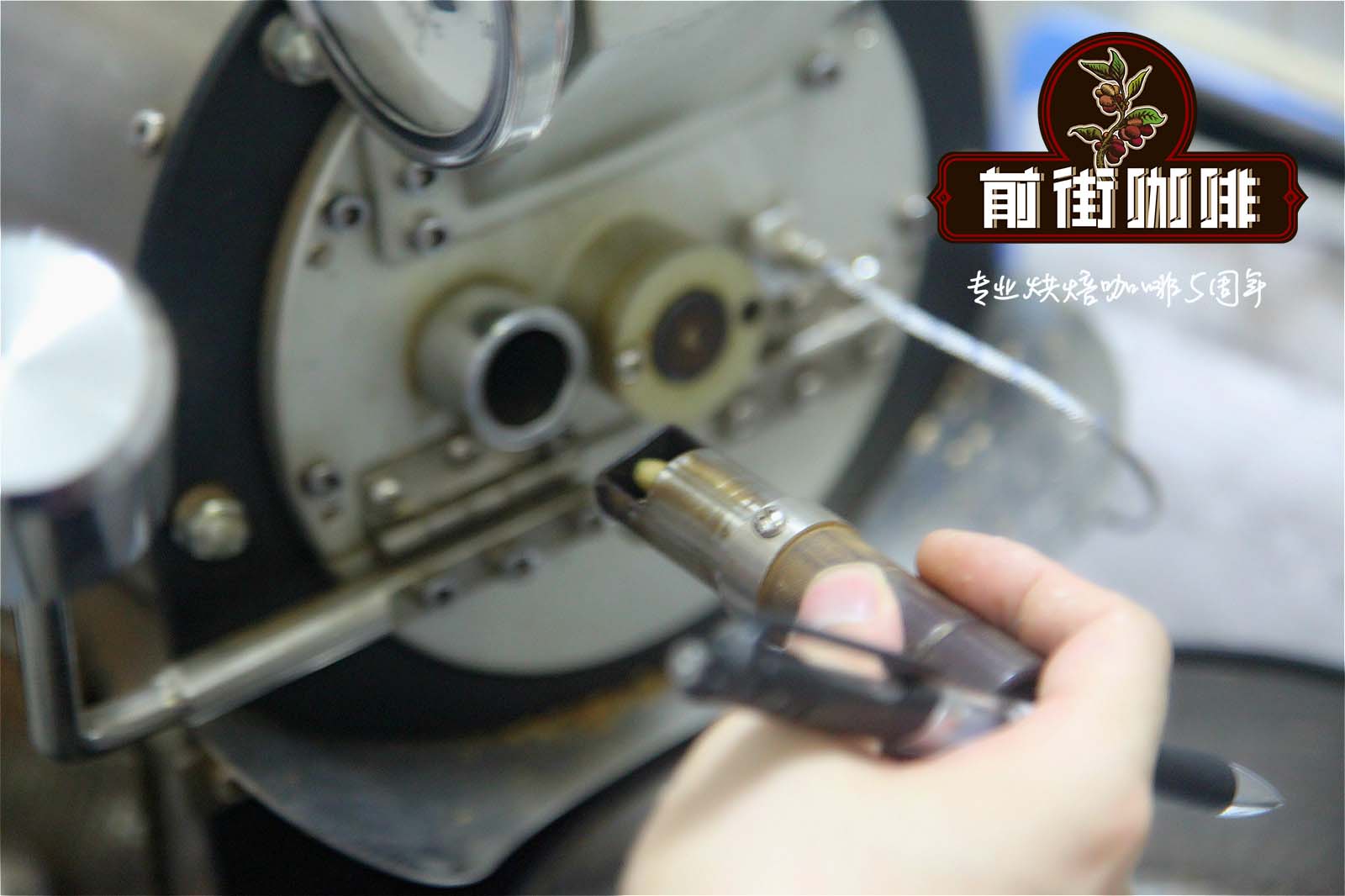
Want to Learn Home Roasting? Roaster Isn't the Issue, the Challenge Lies in Roasting Technique
Today FrontStreet Coffee will use Bird of Paradise beans as an example to share some experience and insight about roasting.
The Impact of Roasting on Coffee Flavor
Among the factors that affect the taste of a cup, raw beans account for 60%, roasting for 30%, and extraction for 10%. Good roasting maximizes the individuality of the raw beans while minimizing the appearance of defective flavors. Today let's learn about roasting with FrontStreet Coffee.
1. Basic Structure of Coffee Roasting Machines
The roasting machines on the market fall roughly into three types, and commercial bean roasters come in many varieties — PROBAT, Diedrich, San Franciscan, Toper, Garanti, Has Garanti, Joper, Proater, Loris, Fuji-Royal and Bonmac, among others. Sandouke from Shanghai, China is quite good as well.
Types of Roasting Machines
Direct Fire Roaster
Half Hot Air Roaster
Hot Air Roaster
Before we start roasting, let's get acquainted with the basic structure of a roasting machine. We're using a Yangjia Feima 600g roaster (a half hot-air roaster).
2. The Purpose of the Damper is to Control Air Flow and Speed within the Roasting Chamber
Generally this is achieved by adjusting the opening of a baffle located at some point on the flue pipe ahead of the exhaust fan installed on the roaster, or some roasters achieve it by adjusting the speed of the exhaust fan.
The size of the damper opening affects the heating effect of the hot air on the raw beans in the chamber. With sufficient heat, opening the damper slightly can strengthen the hot air's effect, but if heat is insufficient or the damper is too wide open, the chamber will lose temperature. When necessary, opening the damper wider more quickly removes the silver skin and particles that would cause off-flavors during roasting. The damper opening also affects the pressure in the chamber, influencing the development of the beans.
3. Three Key Factors Before Starting Coffee Bean Roasting
FrontStreet Coffee recommends keeping good records before roasting: the beans' moisture content, density, origin and processing method, the temperature and humidity of the roasting room, and so on — and planning your roasting curve.
Key One: Warming the Machine
Referring to the basic entry temperature for the roaster in use, with 200°C as the standard, you must first let the chamber temperature stabilise above 200°C. Set the damper to maximum; warming takes about 30-45 minutes. After 45 minutes, when the temperature reaches between 200-210°C, warming is complete.
If the chamber is at 210°C and we need to drop beans at 200°C, we can close the damper to bring the temperature down to 200°C, then proceed to drop the beans. A rapid temperature increase is not recommended, because in a roaster, excessive heat (gas volume) only raises the surface temperature of the chamber, not the temperature of the whole chamber.
Key Two: Determine Entry Temperature Based on Raw Bean Properties
Today we're working with Papua New Guinea Bird of Paradise beans, the Typica variety — raw beans with low density, which are not suited to dark roasting. They naturally have refreshing acidity and fruit aroma, so we choose a medium-light roast, focusing on heat adjustment after first crack. First, determine the basic condition of the raw beans, then decide the roasting method. This is a washed, low-density raw bean with 10% moisture content from 2017. Based on that state, we set the entry temperature at 200°C.
Key Three: Heat Adjustment
Roasting is tricky. If the heat is too strong, the outside cooks while the inside stays raw; if the heat is too weak, the inside overcooks. Achieving an even roast inside and out requires controlling the heat properly.
Specific Operation: 550g Raw Beans
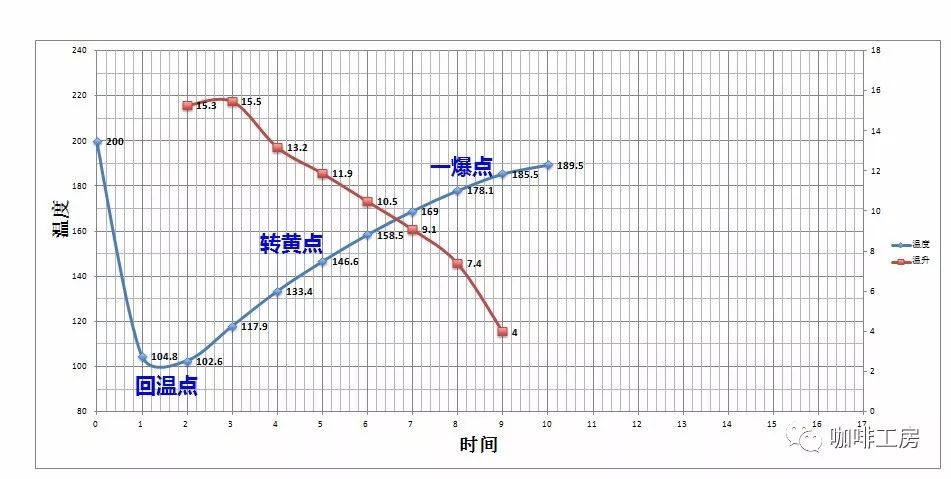
When the chamber reaches 200°C, drop the beans in with the damper at setting 3. After 1 minute of steaming, adjust the heat to 160°C, damper unchanged. When the chamber reaches 160°C, adjust the heat once more, reducing to 115°C. Roast until 5'35", temperature 152°C, the bean surface turns yellow (the Maillard reaction begins), the grassy smell disappears completely, and dehydration is complete. Adjust the damper to 4 (water vapour is produced at this point; open the damper wider to release it).
At 9 minutes, ugly wrinkles and black spots appear on the bean surface, and the toast smell clearly turns to coffee aroma, which can be defined as the prelude to first crack. Listen carefully for the sound of first crack. At 8'40" first crack begins; the small heat is unchanged, the damper is fully open at 5 (exhaust at this point), heat is adjusted to 40, and the beans are dropped at 191.3°C. (This is a light-medium roast.)
First Crack Stage: Maximum Damper
The first crack stage is one of the stages that requires the most care and concentration during roasting. By this point, continuous heating has turned the moisture inside the beans into water vapour.
Because heating continues in the later stage, the water vapour inside the beans and the carbon dioxide produced by the Maillard reaction put great pressure on the bean's cell structure. Finally, when the pressure becomes too great, the beans cannot withstand it and the cell structure ruptures. Water vapour, carbon dioxide and other substances gush out from inside — which signals that first crack has begun. Because first crack produces a large amount of smoke, we open the damper to maximum.
Paradise Bird Coffee Bean Brand Recommendation
FrontStreet Coffee's roasted Papua New Guinea Paradise Bird beans come with full guarantees of both brand and quality. More importantly, they offer extremely good value: a 100g bag costs only about 85 yuan. Calculated at 15g of coffee per cup, one bag makes 15 cups, so each cup costs less than 6 yuan. Compared with coffee shops selling cups for dozens of yuan each, that is a genuinely fair recommendation.
FrontStreet Coffee Recommendation
Bird of Paradise is a medium-roast coffee, and the roast level is where most drinkers find their comfort zone. As FrontStreet Coffee explains, three elements decide the final flavor and must be controlled together — acidity, sweetness and bitterness. The darker the roast, the more bitter and full-bodied the cup; the lighter the roast, the more acidic and delicate it becomes. So if you are after balance, start with a medium roast.
FrontStreet's Brazil Queen Estate is a good illustration. Grown in the world's largest coffee-producing country from the distinctive yellow Bourbon variety, it is clean and gently sweet; after a medium roast it shows cream, peanut, chocolate, toasted bread and sugarcane flavors, and works as a pour-over or on a moka pot and espresso machine.
For a sweeter, fruitier medium roast, FrontStreet points to Strawberry Candy, its Geisha blend that combines honey-processed Costa Rican coffee with washed Panamanian Geisha; the medium roast preserves both the orange-blossom honey and a rounded sweetness, and suits cold brew, pour-over and espresso. FrontStreet's 2013 Yunnan sun-dried Typica, roasted medium to keep its balanced, gentle character, brings nut, brown sugar, black tea and dried apricot, while Jamaica Blue Mountain No. 1 is roasted medium so that acidity, bitterness, sweetness and body fuse into the chocolate, roasted nut, cream and caramel profile that has made it so widely loved.
Important Notice :
FrontStreet Coffee is a long-established specialty coffee roaster in Guangzhou China, selling freshly roasted beans from its own farm in Yunnan as well as dozens of carefully selected single-origin beans from around the world for both pour-over and espresso. The products deliver consistently excellent quality and great value, with shipping within 24 hours. Guangzhou's FrontStreet Coffee shop is recommended by many coffee lovers, and the beans are now available online at the Tmall 。
FrontStreet Coffee has moved to a new address:
FrontStreet Coffee Address: 315,Donghua East Road,GuangZhou
Tel:020 38364473
 Scan and follow the En Gafei WeChat official account. Please indicate that the reprint comes from "En Gafei".