What's the Difference Between Blue Mountain, Mandheling, Brazilian, Cappuccino, and Latte at a Coffee Shop - How Much Does a Cup of Blue Mountain Coffee Cost
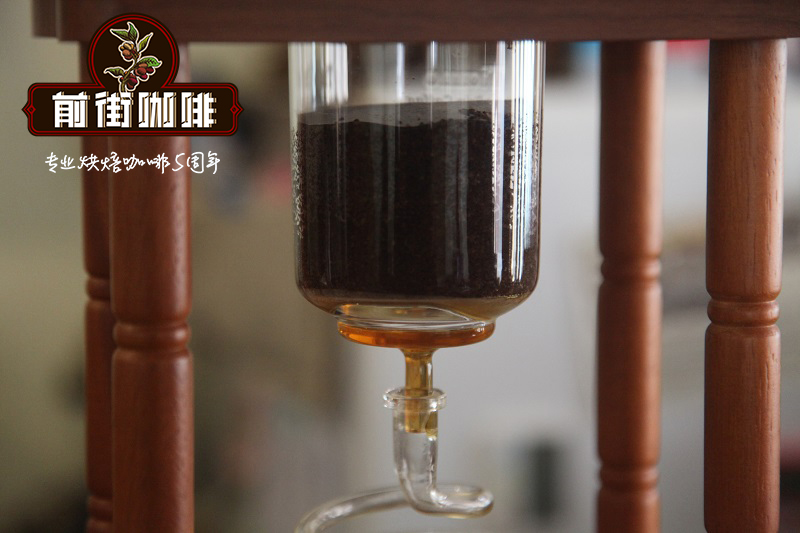
Whether it is sunset or the dead of night, I always want to ride the wind and sip a few mouthfuls of rich, fragrant coffee. The feeling is impossibly warm...
Talk about coffee, and most people are bewildered by the dazzling array of choices on a café menu. Shops list Blue Mountain and Mandheling on one line, cappuccino and latte on another. What exactly is the difference?
Here is how a café owner might explain it. The coffee world essentially splits in two. One half is single-origin coffee — Blue Mountain, Mandheling — named mostly for the region that produced it. The other is Italian-style coffee, built on espresso.
Single-Origin Coffee
These coffees take their names from the single growing region that produced the beans. The shortlist:
Jamaican Blue Mountain Coffee
Grown in the Blue Mountain range of Jamaica, its caffeine content is remarkably low — less than half that of coffee from other origins. Blue Mountain's singular flavor owes everything to the exceptionally favorable location and climate of the Jamaican Blue Mountains.
The region has fertile young volcanic soil, fresh and nearly pollution-free air, rain year-round, and significant day-night temperature differences. Thanks to the special geography, every afternoon clouds and mist swallow the entire peak, shading the coffee trees while delivering abundant moisture. It is this foundation that makes Blue Mountain's taste and aroma unmatched anywhere in the coffee world.
Not everything grown in the Blue Mountain range may be called Blue Mountain Coffee. Only coffee cultivated above 1,800 meters in the region earns that name.
Beans from the lower-altitude parts of the range — differing in quality — may only be sold as "Jamaican High Mountain Coffee," never "Jamaican Blue Mountain Coffee."
And the terroir is not transplantable: even the same Blue Mountain variety seedlings moved to climatically similar places — Hawaii, Kenya, Papua New Guinea — cannot produce coffee to match the authentic article.
Mandheling Coffee
Besides Blue Mountain, "Mandheling" coffee from Indonesia's island of Sumatra enjoys enormous popularity. Research suggests "Mandheling" is actually the name of a local ethnic group on Sumatra.
Sumatra began cultivating coffee in the 18th century, but for a long time the outside world paid little attention. Then, in the 1950s, Japanese soldiers stationed on the island happened to drink the local Sumatra coffee and asked a street vendor its name. The vendor, misunderstanding them as asking "What is your ethnicity?" answered "Mandheling."
That misunderstanding gave Sumatra coffee its now-famous name. Japanese trading houses were the earliest major clients for Mandheling — and they did more than buy it. By applying refined processing procedures to Sumatran coffee, they created a new tier: "Golden Mandheling."
The Golden Mandheling contracted by the Japanese in the Lake Toba area guarantees product quality. It is harvested entirely by hand and upgraded through meticulous Japanese processing, so that Sumatra Mandheling keeps the rich, robust, wild character that ordinary Mandheling should have, while gaining an extra touch of Japanese elegance.
Through the continuous refinement of expert teams, top-grade Golden Mandheling achieves an even rounder, more fragrant, richer cup. Mandheling is a dark-roast coffee: rich, mellow, fragrant, with appropriate bitterness and almost no acidity — the first choice for anyone who loves a strong-tasting coffee.
Brazilian Coffee
The premium beans selected from the output of Brazil, one of the great coffee-exporting countries, are sold as "Brazilian Coffee." Its flavor carries a comparatively pronounced acidity layered over coffee's natural bittersweet base. It enters the mouth extremely smoothly with a faint grassy fragrance — slightly bitter in its light aromatics, sweet and smooth — making it a coffee most people can immediately accept.
Mandailing Coffee
Mandailing coffee is a blend of Mandheling and Brazilian coffee (Mandheling 2 to Brazil 1, or Mandheling 3 to Brazil 1).
Mandheling is a dark roast with a rich flavor, while Brazilian coffee is a light roast with a neutral, slightly acidic profile — so blending the two is complementary by design. The result holds both the strength of Mandheling and the sweet purity of Brazilian coffee.
These coffees all pursue the flavor of the beans themselves. Region, climate, soil, tree variety, and green-bean processing all shape the taste.
People drink single-origin coffee to experience the character of different growing regions. These coffees are typically brewed with a siphon, pour-over, drip machine, or French press, using about 10 grams of ground coffee per 120 cc cup.
In Taiwan's early cafés, the siphon was the standard. Watching it brew is half the pleasure: clean white water climbs from the lower bulb to the upper chamber, and a few minutes later coffee-colored liquid falls back down. Control of heat, plus the timing and technique of stirring, are the keys to a good siphon cup.
The other common method is pour-over: a filter paper set in a dripper, grounds added, hot water poured in a controlled stream from a narrow-spouted kettle. The thickness and steadiness of that stream directly determines whether the coffee tastes good. It looks simple, but mastery makes a world of difference — arguably a more demanding skill than the siphon.
Italian-Style Coffee
It is called Italian-style because espresso — that rapid method of brewing coffee — was invented by Italians. In Italy espresso is like bubble tea in Taiwan, or better, like a daily necessity: people drink several cups a day to power through work. (Drink bubble tea that often, however, and your health would surely suffer.)
Italian-style coffee typically uses a blend of two or more beans, because Italians believe a single origin cannot achieve a balanced taste (partly a consequence of the brewing method itself). Blends of three or more beans are common for this reason, and the vast majority of espresso served on the market today uses blended beans.
Italian-style coffee is based on espresso, pulled from an espresso machine: under 8-9 atmospheres of pressure, with water at about 85-95°C and 7 grams of ground coffee, roughly 25-30 cc of coffee is extracted in about 30 seconds.
The dose is contested — some argue 7 grams over-extracts and recommend 14 grams instead. Either way, an espresso is only about 30 cc, yet its flavor is extraordinarily intense. A good espresso's flavor can linger for tens of minutes. (Coffee brewed in a moka pot can also be called espresso — the machine is not the defining factor.)
Add more than 100 cc of milk foam to a brewed espresso and you get about 150 cc of coffee with milk — the famous cappuccino.
When Italian-style coffee reached America, the American appetite for everything bigger meant more milk — and the ubiquitous "latte" was born. ("Latte" simply means milk in Italian.) Add espresso to hot water instead and you have American coffee.
But asking an American to make do with a tiny 30 cc cup would be deeply unsatisfying, so their lattes are enormous and even cappuccinos have grown — prompting Italians to lately speak out loudly in defense of the cappuccino's honor. The Italian National Espresso Institute has published official specifications: a cappuccino should be exactly 150 milliliters, composed of 120 milliliters of steam-heated milk blended with 25 milliliters of espresso; the milk must contain at least 3.2% protein and 3.5% fat, and is to be steamed to 55 degrees Celsius.
The study of espresso runs deep. Merely dialing in the grind size can burn through tens to hundreds of grams of beans and precious business hours. A good or bad grind can send an espresso between heaven and hell — never mind dose, brewing temperature, brewing pressure, tamping force and technique, and so on. There is endless ground to specialize in. Perhaps that is exactly what makes coffee so much fun.
FrontStreet Coffee Recommendation
For a taste of authentic Sumatran Mandheling, FrontStreet Coffee's PWN Golden Mandheling is the benchmark. Produced by Indonesia's PWN company to uncompromising standards, it is built on beans of 18 mesh or larger, with fewer than 3 defective beans permitted in every 300-gram green sample to satisfy the top G1 grade — followed by three rounds of hand-sorting that remove every remaining defect and elevate the cup's cleanliness and sweetness. The result is limited in volume and exceptional in quality, with certificates and PWN-stamped bags to prove authenticity. The secret behind the flavor is Sumatra's wet-hulled processing: with humidity of 70-90% year-round, typhoons, and rainfall above 2,000 mm annually, African-style multi-week sun drying is impossible. Instead, growers strip the skin and pulp, wash briefly, and — while the beans are still half-dry — machine-remove the parchment so the green beans dry directly in the air. Combined with local microbial fermentation, this creates Mandheling's unmistakable wild, earthy, herbal character.
To brew it, FrontStreet recommends pour-over with 15 g of coffee at a 1:15 ratio, water at 87-88°C, and a coarse granulated-sugar grind, poured in three stages: 30 ml to bloom and degas the grounds, 100 ml to lift the golden crema and raise the coffee bed, then a final gentle 95 ml poured in the center to boost sweetness. Expect a thick, full body with caramel sweetness and chocolate and nut flavors.
If you would rather drink Mandheling on an espresso machine, FrontStreet's Classic Blend is the highest-repurchase choice: Brazilian coffee's creamy nut base layered with medium-dark roasted Mandheling, pushing butter, roasted chestnut, and caramel to the fore. The Mandheling raises the cup's body while lending sandalwood, herbal, and spice notes, and a touch of Robusta enriches the crema — making latte art or a layered Dirty effortless.
Important Notice :
FrontStreet Coffee is a long-established specialty coffee roaster in Guangzhou China, selling freshly roasted beans from its own farm in Yunnan as well as dozens of carefully selected single-origin beans from around the world for both pour-over and espresso. The products deliver consistently excellent quality and great value, with shipping within 24 hours. Guangzhou's FrontStreet Coffee shop is recommended by many coffee lovers, and the beans are now available online at the Tmall 。
FrontStreet Coffee has moved to a new address:
FrontStreet Coffee Address: 315,Donghua East Road,GuangZhou
Tel:020 38364473
 Scan and follow the En Gafei WeChat official account. Please indicate that the reprint comes from "En Gafei".