Characteristics of Authentic Jamaican Blue Mountain Coffee | Price per Pack
Blue Mountain: A Global Phenomenon
The coveted Blue Mountain coffee, so sought after that every bean is precious, comes from the Typica family.
The Blue Mountain range sits in eastern Jamaica. On clear days the surrounding Caribbean Sea reflects brilliant blue light onto the peaks, hence the name. Its highest summit reaches 2256 meters, the highest peak in the Caribbean region and a famous tourist destination. The area lies within the coffee belt, with fertile volcanic soil, fresh unpolluted air, and a humid climate of year-round fog and rain (average rainfall of 1980mm and temperatures around 27°C). These conditions created the world-renowned Jamaican Blue Mountain coffee, and one of the world's most expensive coffees.
This coffee possesses every characteristic of a fine cup: not only is it rich and mellow, but the perfect balance of sweetness, acidity, and bitterness means it shows no harsh bitterness, only moderate, flawless acidity. It is typically consumed as a single origin, but because production is extremely limited and the price extraordinarily high, most coffee on the market labeled this way is blended to approximate its flavor.
Characteristics of Jamaican Blue Mountain Coffee Beans
Authentic Blue Mountain coffee has pronounced acidity and fruit flavors.
True Blue Mountain is one of the most ideally cultivated coffees in the world. Jamaica's weather, geology, and terrain together provide a uniquely advantageous environment. Designated Jamaican Blue Mountain coffee may only be grown in the Blue Mountain region, in the eastern part of the island near Kingston.
The mountain terrain is extremely rugged, making harvesting very difficult (the pickers are almost entirely women). All the coffee trees grow on steep slopes, so picking is a challenge only skilled local women workers can manage. Selecting properly ripe cherries is crucial, under-ripe or over-ripe beans compromise quality. After picking, the beans must be hulled the same day, then fermented for 12-18 hours. They are washed and sorted next, then dried on concrete floors or thick blankets until moisture drops to 12%-14%, and stored in special warehouses. When needed, they are brought out for roasting and grinding. Every step must be strictly controlled, or quality suffers.
Currently, six certification marks can represent Blue Mountain coffee's origin: M.B.C.E (Mavis Bank Central Factory), M.H.C.C.T. (Blue Mountain Coffee Co-operative), P.X.X.S.H. (Portland Blue Mountain Coffee Co-operative), Coffee Industry Board (Wallenford), Coffee Industry Board (St. John's Peak), and J.A.S. (Jamaica Agricultural Society), among others. Some estate-level coffees are also indicated on wooden barrels.
In 1950, the Jamaican government established the Jamaica Coffee Industry Board, which sets quality standards for Jamaican coffee and supervises their enforcement. The board grants official seals to both raw and roasted coffee exported from Jamaica. Japanese loans helped raise production quality and guaranteed market standards.
Because Japan has invested consistently in Jamaica's coffee industry, most Blue Mountain coffee is now controlled by Japanese interests, who also hold priority purchasing rights. In 1992, Jamaica sold 688 tons of Blue Mountain coffee to Japan, 75 tons to the United States, and 59 tons to the United Kingdom. Today, 90% of Blue Mountain coffee is purchased by Japan. Since the rest of the world can obtain only 10% of production, regardless of price, Blue Mountain is always in short supply, a coffee now approached with almost reverent admiration. On Jamaican Blue Mountain farms, the presence of Japan's UCC is visible everywhere.
By 1981, Jamaica had opened an additional 1500 hectares of land for coffee cultivation, later investing in another 6000 hectares. In fact, today's Blue Mountain region is a small area with only 6000 hectares under cultivation, making it impossible for all coffee labeled "Blue Mountain" to come from there. Another 12000 hectares grow two other types: High Mountain Supreme and Jamaica Prime.
In Japan, Blue Mountain green coffee beans can be found everywhere on the streets, available for immediate purchase and roasting, about 300 grams costs between RMB 500-600, with various roast levels to choose from.
Distinguishing Blue Mountain from "Blue Mountain Flavor"
Over 90% of Blue Mountain coffee is exported to Japan, so many "Blue Mountain coffees" sold in Chinese coffee shops are undoubtedly fake. The so-called "Blue Mountain blend" actually has no connection to Blue Mountain at all. The situation arose because Blue Mountain was rare and expensive early on, so operators approximated its taste by dark-roasting mixed beans built around its flavor profile. The beans in "Blue Mountain blends" show significant size differences, making them relatively easy to identify. Also, don't believe in "premium Blue Mountain" for tens of yuan per pound, or a cup of "Blue Mountain coffee" for thirty-plus yuan. The landed cost of Blue Mountain generally runs around 1000 yuan per kilogram, and with margins added, the price is unquestionably very expensive.
Classification of Jamaican Blue Mountain Coffee Beans
Blue Mountain Classification
Jamaica's coffee history reaches back to the 18th century, when the British introduced coffee trees and planted them in the Blue Mountain range. This divides into high-altitude Jamaican Blue Mountain coffee, Jamaican High Mountain coffee, and Jamaican Prime coffee, with grades determining prices.
Jamaican Blue Mountain Coffee
Jamaica Blue Mountain Coffee: Blue Mountain and High Mountain coffees are each divided into four grades, ranked by quality from top to bottom: NO.1, NO.2, NO.3, and PB (Peaberry). Under CIB standards, only coffee grown above 666 meters may be called Jamaican Blue Mountain coffee.
Jamaican High Mountain Coffee
Jamaica High Mountain Supreme Coffee Beans: coffee produced in the Blue Mountain region below 666 meters is called High Mountain coffee. It ranks just below Blue Mountain in quality and is known in the trade as Blue Mountain's sibling. Given the extremely limited production of Blue Mountain proper, if you want to taste Jamaican-style coffee, High Mountain is your best choice.
Jamaica Prime Coffee
Jamaica Prime Coffee Beans: coffee grown outside the Blue Mountain range is called Jamaica Prime. A common misconception holds that only coffee grown in the Blue Mountain region above 1800 meters qualifies as Blue Mountain coffee. In fact, above 1800 meters on the range there is only one estate, Amber, owned by someone of Chinese descent with the surname Lyn, whose ancestors came from Guangdong, China. The estate covers just 30 hectares, with very limited production. Blue Mountain coffee is mainly distributed across five mountain areas: John Crow, St. John's Peak, Mossman's Peak, High Peak, and Blue Mountain Peak.
Identifying Authentic vs. Fake Blue Mountain
- Appearance: Blue Mountain green beans are blue-green in color, very uniform, medium to small in size, with slightly upturned ends. After roasting they expand significantly and become very full.
- Grinding: True Blue Mountain grows at high altitude, giving it a looser cellular structure. Ground by hand it feels crisp, smooth, and continuous, with no resistance.
- Aroma: The aroma is very intense and dense. So-called Blue Mountain blends lack this aroma.
- Taste: True Blue Mountain has a balanced, rich taste with no particular flavor sticking out or falling short, the most crucial identification point no other bean can match. Blue Mountain peaberries have a more reserved aroma but relatively stronger taste.
- Feeling: As the world's best coffee, Blue Mountain's classic balance inevitably creates a subtle, indescribable sense of satisfaction when tasted.
The coffee in the cup tastes very clean, and it is one of the sweetest coffees in the world. Jim Reynolds of Peet's Coffee and Tea described it this way: "The best example of Jamaica's Blue Mountain coffee is its aromatic, smooth richness, giving me a feeling of gem-like quality. It's as precious as a gem. It's complex but very gentle, it's sweet, it has very strong body. You have to taste it to know what I'm talking about." Unique growing conditions and meticulous attention at every production step have made Jamaican Blue Mountain coffee legendary.
Recommended Jamaican Blue Mountain Coffee Bean Brands
FrontStreet Coffee's roasted Jamaican Blue Mountain beans are fully dependable in both brand and quality, and excellent value: a 100g package costs only around 158 RMB. At 15g per cup, one package brews 6 cups, so each cup costs only about 25 RMB. Compared with coffee shop prices often over 100 RMB per cup, that is a genuinely conscientious recommendation.
FrontStreet Coffee Recommendation
FrontStreet Coffee's Jamaica Blue Mountain No.1 is the highest-graded lot, sourced from the historic Clifton Estate, a farm that has grown and produced coffee since the mid-18th century (around 1750), at an average of 4300 feet (1310.64 meters), where high elevation, gentle afternoon cloud cover, ample sunshine, and mineral-rich soil extend the cherries' ripening. Authenticity is easy to verify: the beans carry Jamaican government certification and origin documents, and travel in traditional wooden barrels printed with detailed batch information, barrels in 15, 45, and 70kg sizes, each one itself a hallmark of genuine Blue Mountain.
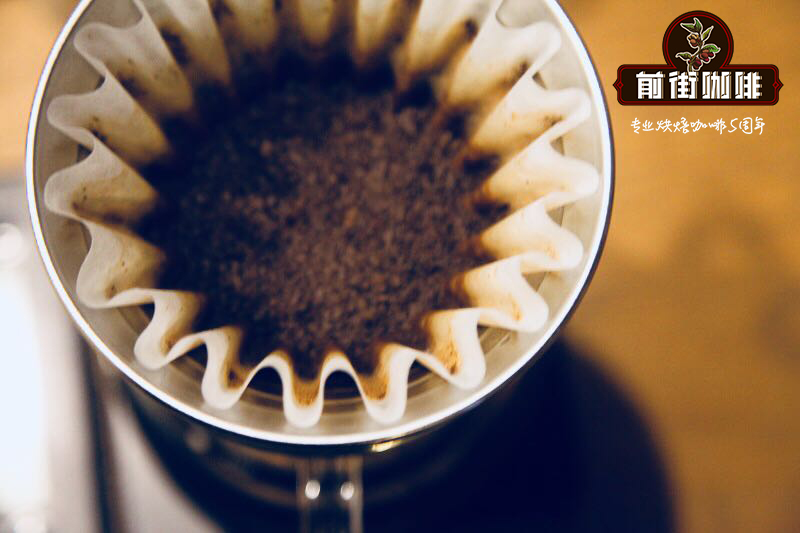
Brewing suggestion: FrontStreet Coffee roasts Blue Mountain medium-dark to bring out its full-bodied, bitter-then-sweet classic character, and ships within 5 days of roasting. Rest the beans 4-7 days from the roast date, then brew on a Kono dripper: 15g of coffee, a grind slightly coarser than for light roasts (about white-sugar grain), water at 87-88°C, and a 1:15 ratio. Pour in three stages, 30g to bloom for 30 seconds, then to 120g with a slow, tight circular pour, then to 225g with a slightly faster flow to keep the bed from clogging and over-extracting. Expect a very clean, complex, gentle cup: chocolate sweetness, strong body, and a perfect match of sweetness, acidity, and bitterness with no harsh edge and a lasting fruity finish.
Important Notice :
FrontStreet Coffee is a long-established specialty coffee roaster in Guangzhou China, selling freshly roasted beans from its own farm in Yunnan as well as dozens of carefully selected single-origin beans from around the world for both pour-over and espresso. The products deliver consistently excellent quality and great value, with shipping within 24 hours. Guangzhou's FrontStreet Coffee shop is recommended by many coffee lovers, and the beans are now available online at the Tmall 。
FrontStreet Coffee has moved to a new address:
FrontStreet Coffee Address: 315,Donghua East Road,GuangZhou
Tel:020 38364473
 Scan and follow the En Gafei WeChat official account. Please indicate that the reprint comes from "En Gafei".