Why You Should Never Drink Indonesian Civet Coffee No Matter the Price: The Cruel Truth Behind Kopi Luwak!
Most people have heard of it even if they have never tasted it, but as the production process behind civet coffee has come to light, some uncomfortable truths have surfaced as well.
Many have decided the "civet coffee" production process is simply unacceptable. "I genuinely can't drink it - it's too cruel."
What Is Civet Coffee?
Civet coffee, also known as Luwak coffee, is among the most expensive coffees in the world. It is made when civets eat ripe coffee cherries. Inside the animal, the pulp is broken down into amino acids that give the beans a distinctive flavor, while the pit of the cherry - the coffee bean itself - cannot be digested and passes through along with those amino acids and intestinal mucus. Beans fermented through the civet's digestive tract lose much of their original bitterness and take on a unique aroma with an irresistible sweetness.
The Dark Side of Production
Profit-seeking merchants were no longer satisfied with the sporadic yields gathered from the jungle. To obtain high-priced civet coffee and boost production, a dedicated industry grew up around it.
Civets are confined and fed only berries. They are locked in narrow, filthy cages, left nearly broken by extreme anxiety and depression.
Civets are, in fact, creatures that fiercely love their freedom. When caged, some went on hunger strikes in protest - yet merchants chasing high-priced civet coffee abuse the animals for their droppings without hesitation.
Like foie gras - which originated simply as geese fattened by accident during normal feeding - this was originally a gift of nature. But profiteers found an alternative way to extract more profit. They instructed locals on the islands of Sumatra, Java, and Sulawesi to lock civets in cages and force-feed them large quantities of coffee beans to obtain more civet coffee.
Forcing them to eat and excrete, then eat and excrete again...
Catching civets, throwing them into cages, feeding, feeding, feeding. For an animal that is naturally timid and loves freedom, this is nothing short of a disaster.
A forced, monotonous diet leaves many civets with stomach disease and malnutrition. Many suffer severe open wounds on their paw pads from long-term friction and struggling against sharp wire mesh. With no treatment, the tissue soaked in feces and urine usually becomes inflamed and ulcerated. Iron cages drive the animals mad mentally and torture them physically.
Some civets, mentally fragile, die in considerable numbers from breakdown and hunger strikes under such severe stress. Those that are dying and no longer of value are culled outright, their fur flowing into another shadow market. From the moment they enter the breeding farm until death, there is not a glimmer of hope.
Investigator Neil D'Cruze: "Some cages are really very small, almost what you would call rabbit hutches. There's feces and urine everywhere, and civets can only soak in it. Some civets are very thin - their diet is strictly controlled to only eat coffee cherries (the fruit wrapped around the coffee bean); others are very fat because they cannot move freely." D'Cruze also noted that some become addicted to caffeine.
-- National Geographic Magazine
The Animal Abuse Controversy
Although civet coffee leaves a lasting impression on gourmets' palates, a recent BBC investigation pointed out that several civet coffees on the market claim to come from "wild civets" while Indonesian producers in reality keep the animals in grid cages - raising suspicions of animal abuse.
Teguh Pribadi, founder of the Indonesian Civet Coffee Association, insists that mislabeling Indonesian civet coffee as coming from wild civets is not widespread, and may be limited to isolated cases.
Because genuine civet coffee is produced in extremely small quantities while the market is huge, high prices are a natural consequence of scarcity. Only about 150 grams of coffee beans can be extracted from one jin (500g) of civet excrement.
Lin Yijun, who once kept civets in captivity, believes that farmers and civets have a mutually beneficial relationship. Civets are their source of income, and abusing the animals that make their money would only lower the civets' condition and, with it, the quality of the beans and the farmers' earnings.
She says captive breeding lets farmers harvest beans on a regular schedule, and most captive sites are natural spaces where civets can move freely. By contrast, beans excreted by wild civets often take a long time to find, and by the time farmers do, the beans have over-fermented and their quality is poor.
On top of this, given how scarce and expensive civet coffee is, reports of "fake products flooding the market" are common. Indonesian media recently reported that Indonesia has a feline similar to the civet called "Musang." Because it is cheaper and eats more, it is often bought by coffee producers to feed, and the excreted beans are blended in and sold as civet coffee.
Is It Really That Delicious?
As for the coffee itself, is it truly that good to drink?
Compared with regular coffee, authentic civet coffee looks very thick, almost like syrup, with a strong sweet aroma. On the palate it has less of the typical coffee acidity and bitterness but more astringency and earthy flavor, with a strange sweet aftertaste. Because of its thickness, the mouthfeel is quite smooth.
Distinguishing Real from Fake
Civets vs. Masked Palm Civets
From the photo above, the differences between masked palm civets and civets are obvious - their eyes, noses, and mouths all differ. For an ordinary person, though, they are hard to tell apart.
How to Identify Genuine Civet Coffee
Authentic civet coffee raw beans: watch their shape - clean and easy to separate.
Characteristics of Masked Palm Civet Coffee
Masked palm civet coffee also tends to carry a body odor in which the foul smell fades as if turning fragrant. Many people find stinky tofu wonderfully aromatic too, so masked palm civets are no stretch. Their sugar content is consumed, so there is less bitterness after roasting. Moreover, masked palm civets eat all kinds of beans, unlike civets - even when the beans look similar, you have no idea why they eat some and not others. Set down a large plate and they eat five or seven beans and start fussing, needing another plate. They are difficult to please. Using masked palm civets guarantees steady production: they eat a lot, their feces are viscous, and this makes it easier to form large stool chunks.
That is also why many producers substitute masked palm civets for civets to make what they call civet coffee - the animals are similar in body shape, easy to pass off as genuine. Conversely, some buyers assume that if it is not large, blocky, stool-shaped coffee, it is not genuine civet coffee; without the stool chunks, they feel there is no anti-counterfeit label at all. So if masked palm civet coffee is not sold at a high price, some people conclude it must be fake.
The Fragile Feline Digestive System
Beyond all this, the cat's digestive system is simply too fragile.
Short intestines, weak peristalsis, and especially a vulnerable mesentery.
As a result, intestinal obstruction and rectal prolapse are common diseases in cats.
The Tragic Reality
Civet coffee - and behind it, the tragic lives of these cats.
No wonder people boycott civet coffee. No demand, no harm.
Indonesian Coffee Bean Recommendation
FrontStreet Coffee's West Java honey-processed Indonesian beans offer full guarantees on both brand and quality. More importantly, the value is outstanding: one half-pound (227g) package costs only about 118 yuan. At 15g per cup, one package makes 15 cups - only about 7 yuan each. Compared with coffee shops charging tens of yuan per cup, this is a genuinely conscientious recommendation.
FrontStreet Coffee Recommendation
If civet coffee has put you off, Indonesia still has some of the world's most distinctive cups. FrontStreet Wet-Hulled Mandheling is the obvious starting point. Mandheling refers to Arabica from Sumatra, processed mainly by the local wet-hulled method - the shell is stripped while the bean is still half-dry, leaving the raw bean fully exposed to the air, which gives the coffee its characteristic herbal and spice notes. This lot comes from the Toba Lake area of the Lintong region, roasted medium-dark for a classic low-acid, full-bodied cup with caramel, dark chocolate, and toast aromas and a long, sweet finish.
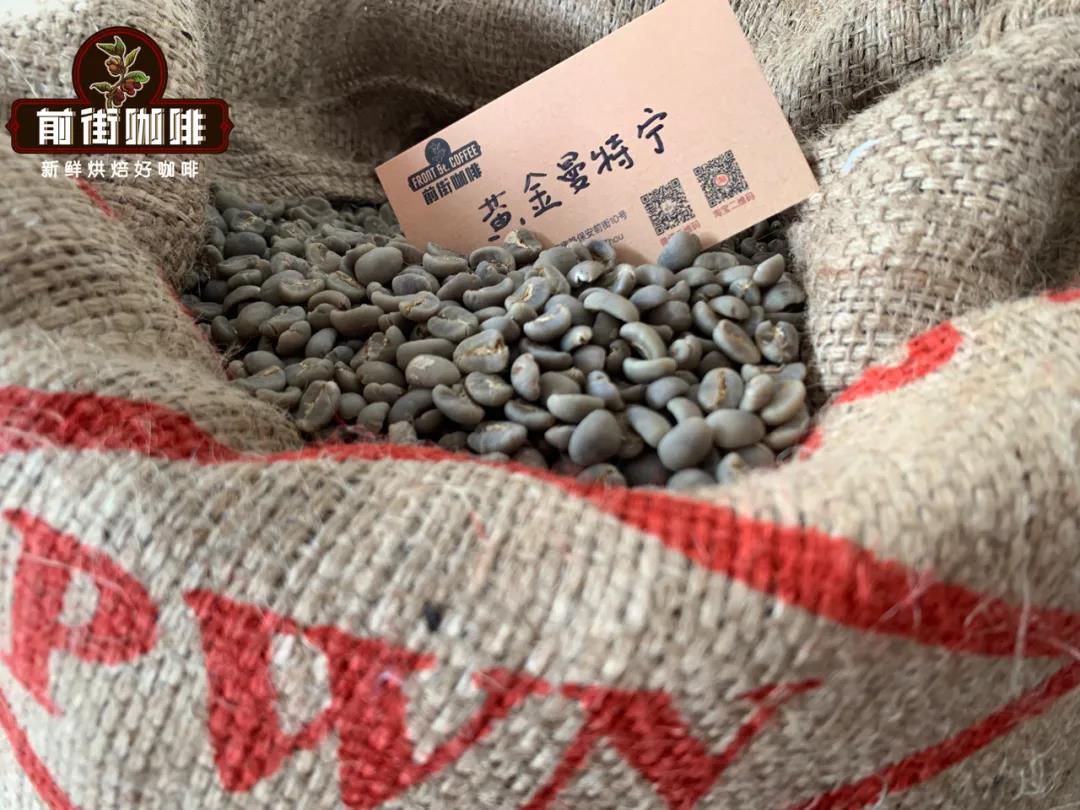
For the top of the range, FrontStreet PWN Golden Mandheling is screened to strict defect standards for density, size, shape, and color, then hand-sorted three times and machine-sorted once so the beans are fat, even, and translucent with minimal earthy or grassy notes. Freshly roasted, it shows sandalwood, herbs, spice, roasted hazelnut, caramel, and dark chocolate - clean, rich, and layered.
Important Notice :
FrontStreet Coffee is a long-established specialty coffee roaster in Guangzhou China, selling freshly roasted beans from its own farm in Yunnan as well as dozens of carefully selected single-origin beans from around the world for both pour-over and espresso. The products deliver consistently excellent quality and great value, with shipping within 24 hours. Guangzhou's FrontStreet Coffee shop is recommended by many coffee lovers, and the beans are now available online at the Tmall 。
FrontStreet Coffee has moved to a new address:
FrontStreet Coffee Address: 315,Donghua East Road,GuangZhou
Tel:020 38364473
 Scan and follow the En Gafei WeChat official account. Please indicate that the reprint comes from "En Gafei".