Indonesian Mandheling Coffee Bean Flavor Profile | How to Brew Indonesian Coffee Beans | Are Indonesian Coffee Beans Expensive
01 | The Origin
Indonesia is an archipelago nation whose main growing regions lie on the islands of Sumatra, Java, and Sulawesi. Northern Sumatra rises to relatively high altitudes, and Aceh Province — home to Lake Tawar — together with North Sumatra, home to Lake Toba, forms the country's principal Arabica belt. Lake Tawar sits in the Gayo mountain region of northern Aceh. Straddling the equator, Indonesia has a humid tropical rainforest climate with abundant rainfall and fertile volcanic soil that feeds the coffee richly. But remoteness and poor transport meant cultivation only began in 1924, and most farms still use traditional shade-grown, pesticide-free organic methods.
In Aceh, coffee is the region's second-largest export crop. Local estimates count about 60,000 smallholder farmers, each tending roughly 1–2 hectares. Indonesian coffee trading traditionally follows a multi-point supply chain: coffee passes from farmers through many intermediaries before accumulating into export volumes, and direct trade — one buyer collecting from farmers and arranging export — remains genuinely rare.
02 | The Processing Method
Wet hulling — called Giling Basah in the local language — is Indonesia's traditional method. Judged by name alone it sounds close to washed processing, but the two produce completely different cups: wet-hulled coffee is typically mellow and forceful, with a strongly marked character.
The Wet-Hulling Process, Step by Step
① Remove the skin and pulp, keeping the parchment and mucilage
② Ferment in water tanks
③ Wash off the mucilage
④ Dry with the parchment on for 2–3 days, until moisture reaches 20–24%
⑤ Hull off the parchment
⑥ Dry the green beans to 12–13% moisture
⑦ Prepare for export
Why Wet-Hull at All?
a. Climate. Indonesia's humidity holds between 70% and 90% all year, typhoons are constant, and annual rainfall in some regions reaches 2,000mm. Green beans are at their most vulnerable in the rain — so how does Indonesia, of all places, produce rich, mellow Mandheling? Wet hulling is the answer. Under tropical conditions coffee normally needs 2–3 weeks to dry; in Indonesia's humidity that becomes a serious problem, and the longer the coffee stays moist, the more easily bacteria penetrate the beans. In ordinary washed processing the parchment shields the beans during drying. Wet hulling strips the parchment for the final drying stage, exposing the green beans directly to the sun so they dry 2–3 times faster than washed coffee.
b. Economics. Dutch colonizers brought coffee to Indonesia in the 17th century and demanded faster, larger returns. Wet hulling sharply shortened on-farm processing time and cut labor costs — exactly the investor mindset of quick profit at low cost, and a real driver of the method's spread.
c. Defects and kuku kambing ("goat hoof" beans). When the parchment is hulled off at 20–24% moisture — ordinary coffees are dried to 10–12% first — the beans are in a "semi-dry" state: the parchment clings to the surface, hulling takes more friction, and the soft, low-hardness beans are easily squeezed into small cracks. These are the so-called hoof beans, known locally as kuku kambing. Wet hulling's extreme speed also raises Mandheling's defect rate, so workers sort defects by hand at the mills — typically DP (double picking) and TP (triple picking), with triple-picked lots showing the better defect rate.
03 | The Green Beans
Indonesian Tiger Mandheling
Tiger Mandheling draws on the Catuai, Typica, and Sidikalang varieties.
Catuai shows a lemon or citrus acidity; in sweetness it doesn't match Typica or Bourbon — its sweetness depends on how often and how heavily growers fertilize. It is high-yielding, but keeping that yield up demands constant fertilization and pruning, which keeps the plants short and bushy. And with a two-year harvest cycle and high care costs, production stays limited despite the capacity.
Typica is the variety closest to the original species — beans slightly elongated, like stretched eggs, called Arabigo or criollo in Central America. It has clean lemon acidity and a sweet aftertaste, but poor resistance to leaf rust makes it hard to tend. Yields are low, and with the long harvest cycle — picking only every two years — production is never high.
04 | The Roast
These beans are round, greenish-yellow, fairly uniform, and high in moisture. The roasting goal is a medium-dark profile that tames excess acidity while building body and balance.
For the first batch the charge temperature ran high — 200°C entry with strong heat. Because this bean grows only at medium altitude and is quite soft, I extended the drying phase with a falling-heat profile to drive off excess moisture and avoid acidity from under-development. Heat was trimmed further as the beans passed the yellowing point, finished drying, and approached first crack, to avoid scorching the surface. I chose to drop the beans 4 minutes after the end of first crack and 20 seconds before second crack, stretching the caramelization to showcase the coffee's cleanliness and sweetness.
Roaster: Yangjia 600g semi-direct flame
Charge at 200°C, damper at 3. After 30 seconds adjust heat to 160°C, damper unchanged. Turning point at 1'45"; hold the heat. At 5'18" the bean surface yellows, the grassy smell disappears completely, and the drying phase deepens — reduce heat to 140°C and open the damper to 4.
At 7'30" drying is complete, heat held at 140°C. At 8'55" wrinkles and dark speckles appear on the surface and the toast aroma turns distinctly to coffee aroma — the prelude to first crack. Listen carefully for its onset. At 9'00" first crack begins: reduce heat to 110°C and open the damper fully to 5 (adjust heat very carefully — never so far that the cracks fall silent). Develop 4'00" past first crack and drop at 203°C.
This Tiger Mandheling tastes well balanced, notably clean, with distinct cream, dark chocolate, and nut flavors.
05 | Brewing Data
Dripper: KONO
Water-to-coffee ratio: 1:14
Grind size: Fuji 3.5
Water temperature: 86°C
Method: bloom with 26g of water for 30 seconds, then pour slowly in a small stream up to 118g for the segment; slightly increase the flow and finish pouring up to 210g.
Total time: 1'45"
Summary of the recipe — grinder: BG 4Z; grind: medium-fine; dose: 15g; dripper: KONO; water temperature: 86°C; bloom: 26g of water for 30 seconds; second stage: 144g; third stage: 92g; total water: 210g; total time: 1:45.
Sweetness: ☆☆
Acidity: ☆
Bitterness: ☆☆
Other drip suggestions: French press, recommended grind 3.5–4, water temperature 86°C.
Indonesian Coffee Brand Recommendations
FrontStreet's roasted Indonesian coffee — the West Java honey-processed lot — offers solid guarantees of brand and quality, and outstanding value: a half-pound (227g) package costs only about 118 yuan. At 15 grams per cup, one package brews 15 cups at roughly 7 yuan each — a fraction of café prices, and an honest recommendation.
FrontStreet Coffee Recommendation
To taste Sumatra at its best, start with FrontStreet's Lintong Mandheling, sourced from the Lake Toba area — the traditional heartland. Wet-hulled in the classic Sumatra style and roasted medium-dark for a low-acid, full-bodied cup, it shows caramel, dark chocolate, and toasted bread aromas with a long, sweet aftertaste — the definitive profile for lovers of strong coffee.
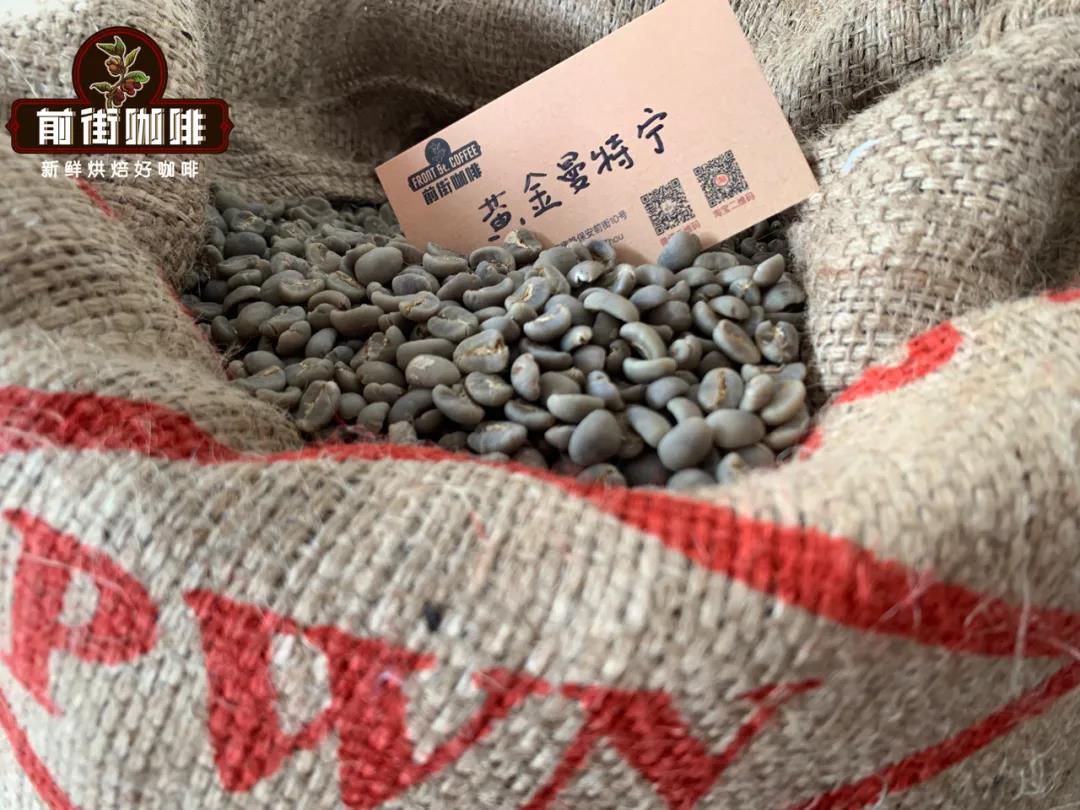
For the top of the category, choose the FrontStreet PWN Golden Mandheling, produced to PWN's exacting standards: only beans above screen size 18, fewer than 3 defects per 300-gram green sample to earn the G1 grade, and three rounds of hand sorting that strip out every flawed bean and reduce the earthy, grassy edge. Freshly roasted, it reveals sandalwood, herbs, spice, roasted hazelnut, caramel, and dark chocolate with a clean, mellow, richly layered cup — as good drunk daily as it is given as a gift. And if you'd like Mandheling's wild character in espresso form, FrontStreet's Classic Blend pairs a Brazilian base with medium-dark Mandheling and a touch of Robusta: butter, roasted chestnut, and caramel up front, with sandalwood, herbal, and spice notes lifted by exceptionally rich crema — as forgiving for beginners in a moka pot as it is impressive in a latte.
Important Notice :
FrontStreet Coffee is a long-established specialty coffee roaster in Guangzhou China, selling freshly roasted beans from its own farm in Yunnan as well as dozens of carefully selected single-origin beans from around the world for both pour-over and espresso. The products deliver consistently excellent quality and great value, with shipping within 24 hours. Guangzhou's FrontStreet Coffee shop is recommended by many coffee lovers, and the beans are now available online at the Tmall 。
FrontStreet Coffee has moved to a new address:
FrontStreet Coffee Address: 315,Donghua East Road,GuangZhou
Tel:020 38364473
 Scan and follow the En Gafei WeChat official account. Please indicate that the reprint comes from "En Gafei".