Ethiopian Coffee Beans Story, Ethiopian Coffee Introduction, Ethiopian Yirgacheffe
Ethiopian Coffee Beans: The Story Behind the Origin, and the Flavors of Yirgacheffe
Ethiopian Coffee Beans
Ethiopia has always been regarded as the birthplace of coffee, and once you understand how coffee is processed there, you'll see why the regal status is well deserved. Even under the harshest growing conditions — coffee trees shaded by other crops — most farmers still refuse to use agricultural chemicals. Only in some of the government-run coffee operations in the country's southwest might small amounts of chemicals appear in wet-processed coffee. Harar and Yirgacheffe, marketed as "garden coffee," remain natural exceptions: their coffee is still produced in small quantities by individual farmers using traditional methods.
Ethiopian Coffee Regions
The washed coffees on the market come basically from the Sidamo, Harrar, and Kaffa regions, and the unique combination of varieties found there gives Ethiopia an irreplaceable flavor profile. Most buyers, however, can't really tell the varieties apart, because products are simply labeled "Ethiopian heirloom." In truth, that label covers a rare combination of SL28, SL34, Catuai, Geisha, and Typica. Ethiopian farmers avoid naming varieties partly to keep them from flowing overseas — much as Geisha was developed and popularized by Panama — and partly, perhaps, because with such extensive mixed production, they simply can't confirm what's planted.
Natural Processing
When done properly, naturally processed coffee carries fruit flavors and a wine-like acidity — intense yet faintly sweet — laced with fresh fruit-salad notes. Cantaloupe, cherry, grape, lime, green apple, even peach can all show up in a natural Ethiopian. The generally heavier body often carries a honeyed, velvet-smooth texture while keeping some of that natural wildness. But if processing goes wrong, the flavor suffers — and the drying stage is roughly the deciding factor.
Washed coffee combines elegance, mystery, and deliciousness; natural processing brings wild, charming fruit. The subtle floral, herbal, and lemon notes are qualities foreign coffees can't match — and typically, bergamot, jasmine, and blueberry linger distinctly in the aftertaste.
Over the past decade, though, the industry has changed enormously. The technical principles of wet processing have gradually been applied to natural processing, making natural coffee quality far more stable. More and more institutions now support fair trade, cross-border cooperation keeps increasing, new projects launch, and technical support advances alongside. With specialty coffee drawing ever more attention, Ethiopia's position on the international stage looks set to keep flourishing.
Washed Processing and Yirgacheffe
Yirgacheffe is a small town within Sidamo province, too small to appear on most maps; Sidamo lies in southern Ethiopia. The regional flavor is generally delicate and rich. Like other coffees from the same area, thanks to high altitude (5,800–6,000 feet) combined with washed processing, a typical Yirgacheffe must show wild fruit flavors and rich floral aromas.
The florals, fruit, and tea-like aftertaste that washed processing draws out are usually its main attractions. Ethiopia introduced wet processing in 1970 and was home to the first washing station. The washing process can be understood as fermentation to remove the parchment, followed by direct drying. Despite the heavy investment required in equipment and production, investors' resolve has never wavered, because the process can produce that traditional wine-like body and lemon-floral character. With sufficient investment, washing station design has been continuously improved and standardized. Under professional technique, quality-stable Yirgacheffe has entered the international market under the specialty coffee name, winning the affection of coffee enthusiasts everywhere.
No matter the brewing method, as long as the coffee is freshly roasted and freshly ground, anyone can absolutely taste Yirgacheffe's unique aroma and flavor. Floral notes and lemon acidity come out fully through cold brew. If you brew with hot water, take care to avoid over-extraction, which would cost the delicate fruit aromas.
French presses or Chemex with metal filters are perfectly suitable, letting more of the coffee oils through.
Ethiopian coffee varieties will keep evolving thanks to their genetic diversity, creating exactly the unique flavors so many people pursue!
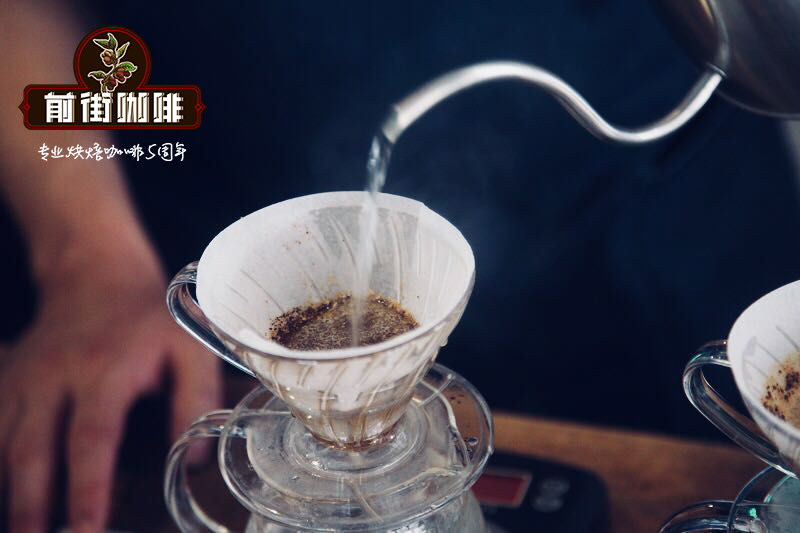
FrontStreet Coffee's pour-over suggested parameters: V60 / 90°C / 1:15 / total time: two minutes
FrontStreet Coffee Recommendation
Yirgacheffe is a small town in Ethiopia, located in the Sidamo region of the country's south at roughly 1,700–2,100 meters, with coffee trees planted above 1,800 meters — one of the highest coffee-growing regions on Earth. A wetland since ancient times, the name has become shorthand for Ethiopian specialty coffee thanks to its highly distinctive white floral character and lemon-citrus acidity. In 2010 the name had grown so famous that the Ethiopian Commodity Exchange formally split it from the Sidamo designation — creating the household name we drink today.
For newcomers to Ethiopian coffee, start with FrontStreet Coffee's washed Yirgacheffe everyday lot — the most classic expression of the town. Known for white jasmine, bright citrus and lemon acidity, and a tea-like finish, and priced gently, it has become the first specialty bean for many drinkers. A level up sits FrontStreet's washed Gudongding Cooperative lot: Yirgacheffe is in fact a mosaic of small villages, several of them home to experienced cooperatives whose mature processing lifts the coffee even higher — none more representative than the Gudongding cooperative in Gudongding village, at the southeastern end of Yirgacheffe in the Worka area. Once a section of the Worka cooperative under the Yirgacheffe Coffee Farmers Cooperative Union (YCFCU), it was later "discovered" by coffee hunters worldwide as a traceable single-area lot. Following the most traditional washed process, it's called Yirgacheffe's last pristine washed cup: no traditional bitterness, just fresh, bright citrus-lemon acidity and jasmine fragrance that coffee lovers fall for on the first sip.
To brew these washed lots, FrontStreet Coffee suggests a V60 with water at 90–91°C, 15 g of coffee, a 1:15 ratio, and a medium-fine grind (EK43s at setting 10, fine-sugar texture, about 80% through a #20 sieve): pour 30 g of water for a 30-second bloom, then pour to 95 g (scale reads about 125 g) by roughly 1 minute; when the water level drops to two-thirds of the bed, pour the remaining 100 g (scale reads about 225 g), finishing around 1:35, with dripping complete between 2:00 and 2:10. And for the natural side of Ethiopia, FrontStreet's Red Cherry lot uses fully ripe, defect-free cherries sun-dried whole on raised beds — turned every 2–3 hours at first to prevent uneven fermentation, machine-scraped of dried pulp after three to five weeks — yielding citrus acidity, berry juiciness, honeyed sweetness, and creamy smoothness alongside that classic Yirgacheffe florality.
Important Notice :
FrontStreet Coffee is a long-established specialty coffee roaster in Guangzhou China, selling freshly roasted beans from its own farm in Yunnan as well as dozens of carefully selected single-origin beans from around the world for both pour-over and espresso. The products deliver consistently excellent quality and great value, with shipping within 24 hours. Guangzhou's FrontStreet Coffee shop is recommended by many coffee lovers, and the beans are now available online at the Tmall 。
FrontStreet Coffee has moved to a new address:
FrontStreet Coffee Address: 315,Donghua East Road,GuangZhou
Tel:020 38364473
 Scan and follow the En Gafei WeChat official account. Please indicate that the reprint comes from "En Gafei".