How to Brew Geisha Coffee Beans, One of the World's Most Expensive Coffees, and How Much Does a Cup Cost
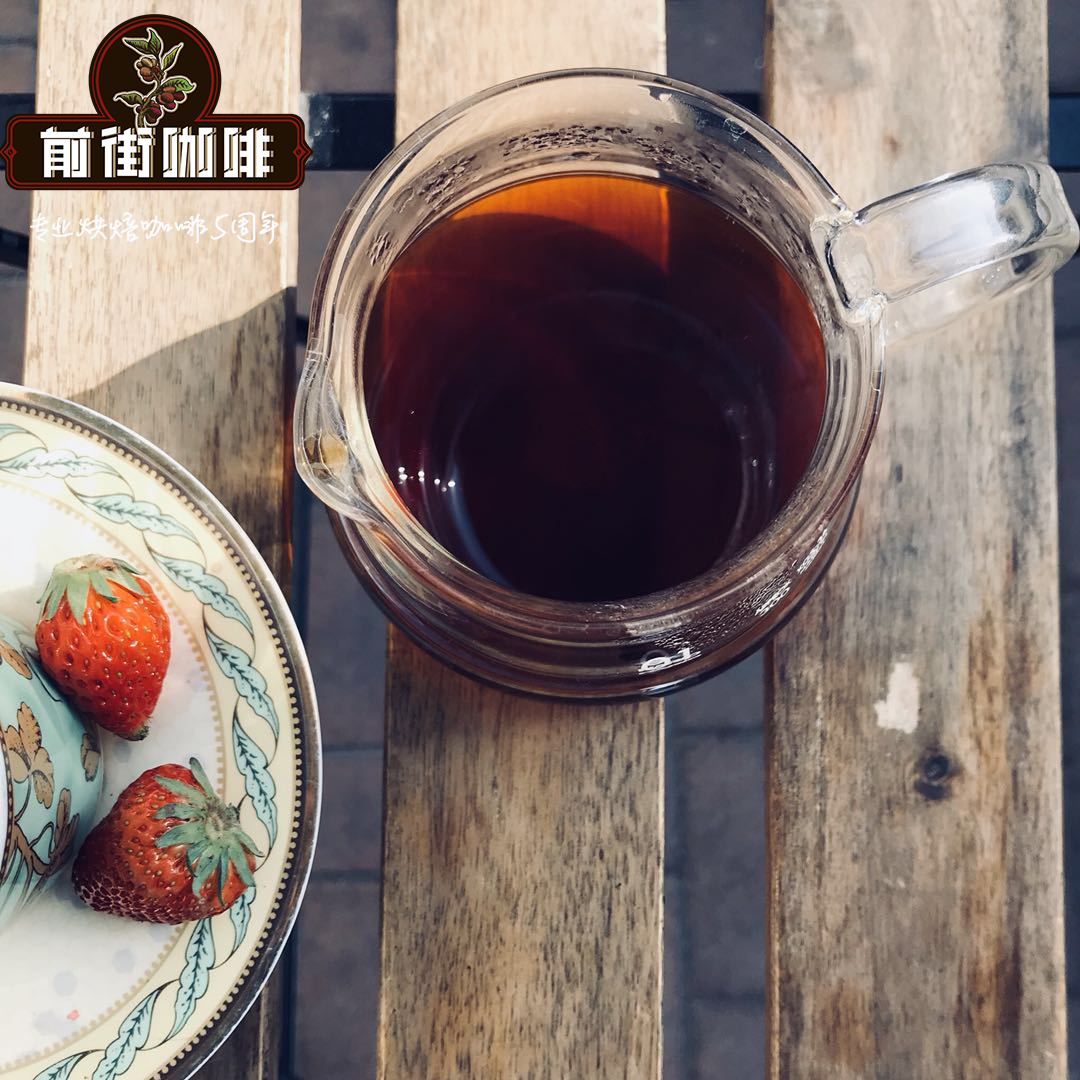
Geisha Coffee Beans
One of the most expensive coffee varieties in the world.
Any discussion of Geisha must begin with Panama's Hacienda La Esmeralda. Beyond the world-renowned Geisha variety, the estate has set one astonishing auction record after another.
Daniel was the first coffee farmer to discover the Geisha variety's singular flavor through cupping, while the first to notice it in an official competition was Rick Rhinehart, the then-head judge — later CEO of the Specialty Coffee Association of America (SCAA).
Hacienda La Esmeralda first took the championship at the 2004 Best of Panama competition with its Geisha — Rick again presiding as head judge. That same year, Geisha was cupped at the 2004 Best of Panama winners' cupping hosted by Café Artigiano, where its captivating florals, citrus, berry notes, and Darjeeling-tea fragrance set off enthusiastic debate; some lovers even mistook it for a Yirgacheffe from Ethiopia.
The Discovery of Geisha
The Geisha variety was collected in 1931 from the forests around the town of Geisha in Ethiopia and sent to Kenya's Coffee Research Institute. In 1936 it reached Uganda and Tanzania; Costa Rica introduced it in 1953. In the 1970s, Panama's Finca Tumbaigua obtained seeds from CATIE in Costa Rica through Mr. Francisco Serracin and began growing Geisha.
Daniel, in fact, cupped every harvest batch in turn, noting each one's flavor, until he found a single batch with a character unlike the rest. The only way to isolate the difference was batch-by-batch comparison.
Once the batch was identified, he traced back through the estate's records to its harvest date and area, reviewed all the batch data, and pinpointed the exact harvest site. He then examined the trees' form, leaves, and fruit one by one — and so Geisha was discovered. Contrary to outside rumor, it simply took several times more effort and persistence than most would ever spend.
Hacienda La Esmeralda's Astonishing Auction Records
These rest on its unshakable championship record. Award-winning competition lots inevitably soar in price — champions can fetch dozens of times market value — but La Esmeralda's record is unprecedented. As of 2013 the estate had won fifteen different coffee competition championships. The natural Geisha lot that took the 2013 Best of Panama natural category sold at $350.25 per pound — against roughly $6 per pound for ordinary Panamanian specialty coffee that year, more than 58 times the going rate!
The Geisha Variety
Geisha green beans are a beautiful blue-green with a jade-like warmth. They smell of fresh grass, peach, and berry, with the unique milky sweetness of oolong tea that most coffees lack. Aroma and flavor may demand associative thinking, but that subtle tea essence is unmistakably real.
To show the bean's character at its best, roast to the verge of second crack — the approach of, or first moments of, second crack being the roast levels that best reveal what the bean has. Too light and off-flavors creep in; too dark and the florals and fruit acidity are destroyed. Naturally, this should be tuned to the bean and the roaster's own understanding of it.
Flavor Profile
Florals, tropical fruit, intense sweetness — roasted well, a cup of Geisha is like sipping the fragrance of a fresh bouquet. The variety is an ancient Ethiopian heirloom, sent long ago as a sample to Costa Rica's coffee experimental garden and distributed to several small farms for trial planting.
For years few people paid it any attention — until Panama's Hacienda La Esmeralda separated it from the rest and it won the national championship. Its fruit and floral elements are strikingly similar to Yirgacheffe on the far side of the globe. Today other small farms have obtained Geisha seedlings and are eager to grow their own, with mixed results: weather, soil, and altitude mean this "star" variety tastes quite different from place to place. In the Boquete region, though, the classic Geisha markers remain: the elongated bean, its behavior in the roaster, and the elegant, unmistakable flavors in the cup.
Hacienda La Esmeralda Geisha Classification by Altitude
Auction Geisha (ESMERALDA SPECIAL) (Red Label), specially selected from above 1,550 meters.
Boquete Geisha (Green Label), specially selected from 1,500 meters.
(ESMERALDA 1,500) (Blue Label), Geisha selected from around 1,500 meters.
Red Label Geisha enters the global auction every May. Green Label does not go to auction but is of equal quality at a slightly lower price; Red Label buyers receive priority to purchase Green Label.
Hacienda La Esmeralda's Four Major Brands
1. [Esmeralda Special] An independent auction organized by the estate itself, featuring exclusively Geisha, grouped by production area and subdivided into small lots. Only the Geisha lots the estate submits to this auction may carry the Esmeralda Special name.
2. [Geisha-Boquete] Geisha that never entered competition: a brand composed of excellent, non-auctioned lots from various areas — Geisha all the same.
3. [Diamond Mountain] The estate's traditional varieties, grown in the Cañas Verdes and Jaramillo regions at roughly 1,400–1,700 meters. Complex flavors with distinct chocolate, vanilla, and sweet citrus; the varieties are the standard Central American mix of Typica, Bourbon, and Catuai.
4. [Palmira] Grown on the outskirts of Boquete town at about 1,000–1,250 meters — the only low-altitude coffee the estate grows, almost entirely Catuai. Not specialty grade, but with gentle acidity, distinct nutty sweetness, and chocolate.
Different Brewing Methods for Geisha
Each method draws out a different cup.
Pour-Over Flavor Profile:
Layered, clean, balanced, with persistent caramel sweetness in the finish.
1. Equipment: Hario V60
2. Water temperature: 91–92°C
3. Grind: Fuji Royal R-440, setting 3.5
4. Roast: light to medium
5. Bloom: 35 seconds
Technique: a three-pulse pour. 15g of coffee, Fuji Royal grinder at setting 3.5, V60 dripper, water at 91–92°C. First pour 30g of water and bloom for 35 seconds. Pour to 104g and pause; once the water level drops to half, pour slowly again up to 220g total. Discard the last 5g. Ratio 1:15, extraction time about 2:00.
Siphon Flavor Profile:
Round and rich, with prominent floral and fruit aromas and pronounced fruit sweetness.
1. Equipment: Hario siphon
2. Water temperature: 90°C
3. Grind: Fuji Royal R-440, setting 3
4. Roast: light-medium
5. Bloom (contact) time: 50 seconds
Technique: side-heater extraction. Use 20g of coffee for 2 servings at a 1:12 ratio, water filled to the "2" mark. Post-addition method: drop the coffee in once the water boils, stir 4–5 times, extract about 50 seconds, then remove from heat. Stir twice more and let the coffee draw down freely.
Cake Cup (Kalita Wave)
Measure 15g of beans and grind to medium-coarse — slightly coarser than table salt. We use a Fuji Royal grinder at setting 4, water at 91°C.
Pour from the gooseneck kettle in clockwise circles centered on the middle of the filter, starting the timer as you begin. Within 15 seconds reach 30g of water and stop. At 1 minute, begin the second pour, again in clockwise circles from the center, avoiding the seam where grounds meet the filter paper to prevent channeling.
Skip a ring at the outermost layer of grounds, then work circle by circle back toward the center. At 2 minutes 20 seconds, reach 220g total — brewing complete.
Recommended Geisha Brands
FrontStreet Coffee's roasted Panama Hacienda La Esmeralda Red Label Geisha carries full guarantees of brand and quality — and exceptional value. A 100-gram bag costs only 350 yuan; at 15g per cup, that is 6 cups at roughly 60 yuan each, compared with café prices that often exceed 100 yuan a cup. A truly conscientious recommendation.
FrontStreet Coffee Recommendation
For an approachable way in, start with FrontStreet's washed Yirgacheffe, the classic everyday Ethiopian: white jasmine, bright citrus and lemon acidity, and a tea-like body at a friendly price. Yirgacheffe itself is a small town in Ethiopia's southern Sidamo province, sitting at roughly 1,700–2,100 meters with coffee grown above 1,800 meters — among the highest coffee lands on Earth. Its instantly recognizable white florals and lemon-citrus acidity made the name so famous that in 2010 the Ethiopian Commodity Exchange formally split it from Sidamo as its own region. Within the town's reach lie many smaller districts — the Guodingding Cooperative in the Worka area, once part of the YCFCU's Worka Cooperative, still washes its coffee the traditional way, yielding clean citrus-lemon brightness and jasmine fragrance without any of the traditional bitterness. FrontStreet's Natural Red Cherry takes the same terroir through full-red-cherry natural drying — three to five weeks on raised beds, turned every 2–3 hours in the early days — for a cup that keeps classic Yirgacheffe character while adding tropical fruit: citrus acidity, berry juiciness, honeyed sweetness, and a cream-smooth texture.
To brew them at home, FrontStreet suggests a V60 at 90–91°C, 15g of coffee at 1:15, ground to fine-sugar size (an EK43s at setting 10, or 80% pass on the No. 20 sieve). Pour 30g of water for a 30-second bloom, continue to about 125g by the 1-minute mark, then finish with 100g more to about 225g by 1 minute 35 seconds; drawdown completes in 2 minutes to 2 minutes 10 seconds. The result is a cup with the same clean florals and lively fruit-acid family that makes Geisha famous — at a fraction of the price.
Important Notice :
FrontStreet Coffee is a long-established specialty coffee roaster in Guangzhou China, selling freshly roasted beans from its own farm in Yunnan as well as dozens of carefully selected single-origin beans from around the world for both pour-over and espresso. The products deliver consistently excellent quality and great value, with shipping within 24 hours. Guangzhou's FrontStreet Coffee shop is recommended by many coffee lovers, and the beans are now available online at the Tmall 。
FrontStreet Coffee has moved to a new address:
FrontStreet Coffee Address: 315,Donghua East Road,GuangZhou
Tel:020 38364473
 Scan and follow the En Gafei WeChat official account. Please indicate that the reprint comes from "En Gafei".