How to Brew Premium Gold Mandheling from Sumatra Coffee Beans | Sumatra Coffee Bean Price Guide
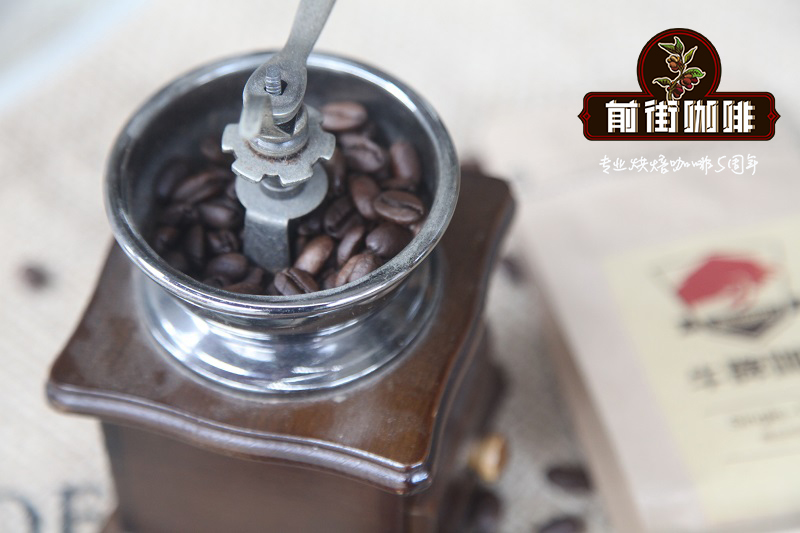
PWN GOLD Mandheling Gold Mandheling
01 | Origin Introduction
Indonesia's main coffee producing regions are Sumatra, Java, and Sulawesi, and among them the "Mandheling" beans of Sumatra are the most famous.
Mandheling, also called "Sumatra coffee," is grown mainly in North Sumatra as Gayo, mostly of the Ateng variety. The Lake Tawar area in the north can be called Aceh coffee or Lake Tawar coffee, while the Lintong and Lake Toba regions to the south produce what is called Mandheling. Lintong is the true Mandheling producing area. The finest Mandheling varieties include four types: Sidikalang, Bergendar, Siborong Borong, and Telok Sanggul.
Lake Toba lies in central North Sumatra Province, where Dutch colonists moved "Java Mandheling" north to the Lake Toba region in 1888, creating the modern Mandheling legend.
Lake Tawar lies in the central Aceh Special Autonomous Region, at the northern tip of Sumatra. Its area is less than one-tenth that of Lake Toba, yet in recent years its coffee quality and production have overtaken Lake Toba.
The Gayo Mountains sit in the Aceh producing area of northern Sumatra Province. Most of the coffee farmers working in Gayo are local. The term "Gayo" comes from tribes in Indonesia's Aceh region. The area has ideal growing conditions, a long cultural history, and distinctive flavours. Organic methods are widely used for cultivation, with no chemical fertilisers, and the region is considered a world green coffee production area. Gayo coffee is therefore often called green coffee or Gayo organic coffee.
What is "Gold Mandheling"?
To talk about Gold Mandheling, we have to start with PWN. That abbreviation often appears alongside Mandheling coffee names, but it is actually the shortened form of a company, Pwani Coffee Company.
The company is a very famous coffee acquisition firm in Indonesia, buying mainly Mandheling coffee. It takes in almost all the country's best producing areas, so most beans from PWN are unique specialty coffees. Gold Mandheling is one of its products. After buying the green beans, the company runs them through several rounds of hand selection to pick out full, defect-free beans. Only these beans, chosen layer by layer like contestants in a talent show, qualify as Gold Mandheling.
PWN has registered Gold Mandheling as a trademark, which means that from now on only Gold Mandheling produced by PWN can be considered genuine. Much of the coffee on the market that is not made by PWN but carries the Gold Mandheling name should really be called Premium Mandheling.
"Gold Mandheling" is simply a product name the company designated.
02 | Processing Method
Wet hulling, called giling basah in the local language, is the traditional Indonesian coffee processing method. Judging by the name alone, wet hulling looks similar to the washed process, yet the cupping flavours of the two methods are completely different. Coffee processed by wet hulling typically tastes rich and intense, with a very distinct personality.
Wet Hulling Processing Steps
1. Remove skin and pulp, retaining parchment and mucilage
2. Ferment in water pools
3. Wash away mucilage
4. Sun-dry with parchment for 2-3 days until moisture content reaches 20-24%
5. Hull off parchment
6. Dry raw beans until moisture content reaches 12-13%
7. Prepare for export
Why Use Wet Hulling?
a. Climate Reasons
Indonesia's tradition of wet hulling stems from local weather. Humidity stays between 70-90% all year, typhoons are constant, and in some areas annual rainfall can reach 2,000mm. Green beans fear rain above all, so how does Indonesia overcome such harsh weather to produce rich, mellow Mandheling? That is where wet hulling comes in.
Under tropical conditions, coffee takes an average of 2-3 weeks to dry. In Indonesia's humid climate, drying becomes a serious problem. It must continue longer, and during that stretch the coffee holds high moisture, which makes it easier for bacteria to penetrate the green bean.
In a regular washed process, drying is done with the parchment still on, which protects the green bean from outside damage to some degree. Wet hulling, by contrast, removes the parchment before the final drying stage, letting direct sunlight hit the surface of the green bean and making the coffee dry 2-3 times faster than washed processing.
b. Economic Benefits
Dutch colonists first introduced coffee to Indonesia in the 17th century. They were after faster, larger economic returns, and wet hulling cuts on-farm time dramatically and lowers labour costs. That fits an investor mentality of quick profit and reduced cost, and it was another force driving the method's adoption.
c. Defects and Kuku Kambing (Goat Hoof Beans)
When parchment is hulled off in wet hulling, the coffee's moisture content is still as high as 20-24%, while in general processing methods the coffee drops to 10-12% before hulling. In that "semi-dry" state the parchment tends to cling to the surface of the green bean, making hulling harder than hulling a "fully dry" bean and requiring more friction.
On the other hand, semi-dry green beans are very fragile at this stage, far softer than fully dry beans, so they crush more easily and form small gaps. These are the beans commonly called horse hoof or goat hoof beans, locally known as kuku kambing.
The ultra-fast pace of wet hulling also gives Mandheling a higher defect rate. Processing plants put staff on manual defect sorting, generally including DP (double picking) and TP (triple picking). Mandheling that goes through triple picking will show a lower defect rate than double picking.
As for flavour, subtle differences aside, wet-hulled beans are generally held to carry earthy, smoky, and chocolate notes. Acidity is described as "low acid," rich yet seemingly dull.
That low acidity comes from shorter, less effective fermentation and longer drying. The "earthy flavour" and similar impressions in wet-hulled beans attract various explanations. Some link it to the varieties used in wet-hulling regions, Timor hybrid and Catimor, which carry Robusta bloodlines; some say it is the result of organic interaction between the green bean and the outside environment; some even say it comes down to too many defective beans.
03 | Raw Bean Analysis
Gold Mandheling Raw Beans
Gold Mandheling
Origin: Sumatra Island, Indonesia
Processing Method: Wet Hulling
Variety: Typica
Roast Level: Medium-Dark
We choose to drop the beans before the second crack to retain some soft acidity. The cup has high sweetness, rich aroma, and a mellow body. Flavours: toasted bread, pine, caramel, cocoa, with slight earthy notes.
In the specialty coffee system, Sumatra coffee is a wondrous existence. The famous Mandheling is not the name of a producing area, nor the name of a coffee variety, and even its varietal origins are quite mixed.
Ateng
Ateng is a hybrid between Arabica and Robusta, with several subtypes, widely planted in Sumatra and other Indonesian islands. Put plainly, it is a branch of Catimor, and Ateng is the local name.
Djember
Djember, which turns up as a place name in Sumatra at first glance, looks rather mysterious, but the variety is actually S-795, named by locals after the Jember Coffee Research Centre that spread it across the island.
What is S-795? It is a hybrid created by Indian botanists who crossed the Typica mutation Kent with S-288.
What is S-288? It is a natural hybrid of Arabica and Liberica.
TimTim
TimTim is Timor Hybrid, translated as East Timor Hybrid, a cross of Arabica and Robusta. Our familiar Catimor was created by hybridising with it again.
Tim Tim - Longberry Mandheling
Tim Tim is an Indonesian bean. Because of its long shape, many people call it horse face bean, and some call it long Mandheling. Tim Tim is not a pure variety but a natural hybrid of Arabica and Robusta coffee trees. It was discovered on Timor Island in the 1940s and cultivated for its natural disease resistance. In America the variety is called Hybrido de Timor, shortened to Tim Tim. In Indonesia it is also called Bor Bor.
04 | Roasting Analysis
Gold Mandheling is a green bean with relatively high moisture content, with values that deviate far from natural processed beans, so dehydration needs special attention. For high-moisture green beans, you can close the air damper immediately after loading, steam for 30 seconds, then open to 3; once the beans turn light green or white, open the damper to 4, and after first crack open to 5, the maximum.
FrontStreet Coffee suggests keeping good records before roasting: bean moisture content, density, origin, processing method, and the temperature and humidity of the roasting room, then planning your roasting curve. Record the relevant chemical and physical changes during roasting. This helps you understand the final result and improve your curve.
Roasting Curve:
Heat the roaster to 200°C, set the air damper to 3. After 1 minute, adjust heat to 160°C, keeping the damper unchanged. Roast until 5'40", temperature 148°C, when the bean surface turns yellow, the grassy smell disappears completely, and dehydration is complete. Adjust heat to 140°C and change the air damper to 4.
At 9'40, ugly wrinkles and black spots appear on the bean surface, and the toast aroma clearly turns to coffee aroma, which can be defined as the prelude to first crack. At this point, listen carefully for the sound of first crack. At 9'54", first crack begins; adjust heat down to 60°C and open the air damper fully, adjusting heat very carefully so the crack sounds do not disappear. Drop at 204.5°C.
Cupping Report:
Gold Mandheling tastes cleaner than Lintong Mandheling. The original herbal, earthy, and woody flavours of Mandheling are almost gone, but the caramel sweetness is more intense and the fruit acidity brighter and more elegant. Lintong Mandheling is generally best roasted to after the second crack to reduce off-flavours effectively, whereas Gold Mandheling keeps good clarity and sweetness whether dropped before or after the second crack, offering a wider window for roast interpretation.
05 | Brewing Analysis
Medium-dark roasted beans generally have a higher dehydration rate and are lighter in weight. When brewing, the grounds do not fully sink to the bottom. On the first pour the water is absorbed immediately, and because degassing is vigorous, bubbles surround the grounds and create channels. These channels last longer with fresher beans, causing the water level to drop quickly. I generally use a coarse stream and a slow circular pour.
1. Dripper: KONO
2. Water temperature: 88°C
3. Grind size: Fuji Royal R4
4. Roast level: Medium-dark roast
5. Bloom time: 25 seconds
Flavor: Multi-layered, clean, balanced, with a persistent caramel sweetness in the aftertaste
Specific Technique:
15g of grounds, Fuji Royal ghost tooth grinder at R4, Kono dripper, 88-89°C water. First pour 30g of water for a 25s bloom, then pour to 104g and stop. Wait until the water level in the bed drops by half, then continue pouring slowly to 220g. Do not use the last 5g. Water-to-coffee ratio 1:15. Extraction time around 2:00.
Sumatra Coffee Bean Brand Recommendations
FrontStreet Coffee's roasted Sumatra Mandheling coffee beans stand behind both brand and quality. More importantly, they offer outstanding value: one 227-gram package costs only 89 yuan. Calculated at 15g of grounds per cup of coffee, one package makes 15 cups, putting each cup at only about 6 yuan. Compared with cafes selling cups for dozens of yuan each, that is a genuinely fair deal.
FrontStreet Coffee Recommendation
If the wet-hulled process described above has made you curious, FrontStreet Coffee roasts the coffees that show it best. The PWN Gold Mandheling is the benchmark. PWN is a trading house that buys only high-grade Mandheling lots, and Gold Mandheling is its flagship: beans are selected at 18 mesh and above, with fewer than three defective beans allowed per 300g sample so the lot meets the top G1 standard, then triple hand-sorted to remove any remaining defects. The payoff is a cup cleaner and sweeter than an ordinary Mandheling, its herbal, earthy, and woody notes almost gone while caramel sweetness stands out, low in acidity and full-bodied with dark chocolate and herbal depth.
For a more traditional expression, the Lintong Mandheling from the Lake Toba area keeps the wilder side of the style: cloves, woody aroma, spice, a hint of mint, and a strong, lasting bittersweetness. If you want Mandheling at the espresso bar, the Classic Espresso Blend layers it over Brazilian creamy nuttiness, adding butter, roasted chestnut, and caramel, with sandalwood, herbs, and spice lifted by a touch of Robusta for a richer crema. Brew any of them as pour-over with water at 87-88°C, 15g of coffee, a 1:15 ratio, and a three-stage pour, and the thick body and caramel sweetness come through clearly.
Important Notice :
FrontStreet Coffee is a long-established specialty coffee roaster in Guangzhou China, selling freshly roasted beans from its own farm in Yunnan as well as dozens of carefully selected single-origin beans from around the world for both pour-over and espresso. The products deliver consistently excellent quality and great value, with shipping within 24 hours. Guangzhou's FrontStreet Coffee shop is recommended by many coffee lovers, and the beans are now available online at the Tmall 。
FrontStreet Coffee has moved to a new address:
FrontStreet Coffee Address: 315,Donghua East Road,GuangZhou
Tel:020 38364473
 Scan and follow the En Gafei WeChat official account. Please indicate that the reprint comes from "En Gafei".