Introduction to Panama Elida Estate - Boquete Growing Region, Panama Elida Green Tip Geisha
Elida Estate: A Premium Coffee Destination
Elida Estate sits in the Boquete region of Chiriqui Province, on Panama's western border. The province's best-known landmark is the 3,300-meter-high Baru Volcano, one of the highest volcanoes in Central America. Covering roughly 14,000 hectares, the volcano can be divided into 7 distinct microclimate zones by altitude. Many rare plants, birds, and mammals live within the volcanic area, which is protected as a national park where hunting and human development or destruction are prohibited.
Boquete lies on the eastern side of Baru Volcano in a valley carved by flowing lava. It borders Volcan Valley, another famous Panamanian coffee region, on the far side of the volcano. Boquete has always been Panama's most prominent coffee area, home to numerous world-renowned estates including Esmeralda, Hartman (a frequent Best of Panama champion), Mama Cata, Kotowa, and Santa Teresa. Elida Estate is itself one of Boquete's heavyweight star estates.
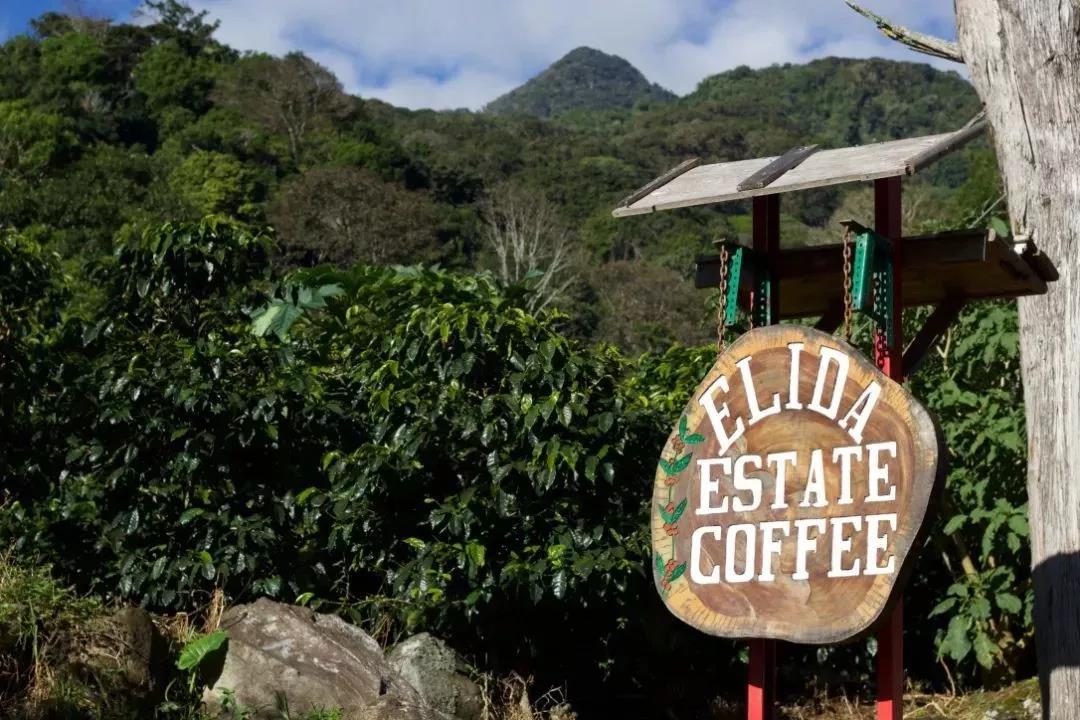
Over five consecutive years it has won Best of Panama awards with impressive results, second only to Esmeralda Estate.
Elida Estate belongs to the Wilford Lamastus family, which began growing coffee in 1918. Besides the estate itself, the family now owns another property, El Burro Estate, also in Boquete. More than half of the cultivated area here falls inside Baru Volcano National Park, which helps preserve a relatively pristine ecosystem. Baru Volcano is among Central America's highest, and its altitude variation produces as many as seven distinct microclimates.
El Burro Estate's coffee sits at a very high altitude of about 1,800 meters. Low temperatures, lingering cloud and mist through the dry season, and natural forest shade create cold nights, so a coffee tree needs four and a half to five and a half years before it bears fruit — two to three years longer than trees in typical conditions — and cherry ripening can be delayed by about a month, allowing fuller development. In 2015, the two estates offered seven coffee lots at auction. Beyond coffee, many native tree species are planted not only for shade but to protect the ecosystem; the family fertilizes by hand and refuses environmentally damaging herbicides and pesticides. Alongside Catuai, Typica, and Bourbon, they also began planting Geisha in recent years. Despite growing many varieties, they still enter Catuai in Best of Panama competitions and have placed repeatedly, which speaks to the quality of their environment and processing. Elida is one of Panama's two highest-altitude coffee estates; the other at a comparable elevation is Carmen Estate in Volcan Valley.
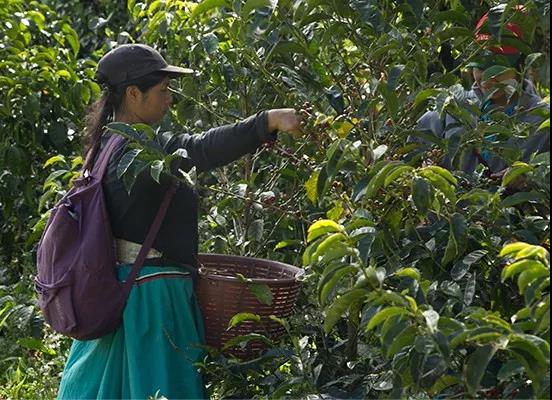
The estate covers 65 hectares in total, more than half inside Baru Volcano National Park. Only 30 hectares are planted with coffee; the other 35 hectares are pristine forest. High altitude and year-round low temperatures slow cherry maturation, while the volcanic soil feeds the trees richly, which is how this estate's beans reach such results in competition. This batch is Catuai, showing the purest, most original flavor. Because of Elida's distinctive processing, the lot departs from the estate's more usual washed method and uses natural processing: Catuai cherries picked at altitude carry heavy humidity, which makes the most traditional natural approach a better fit here than the estate's better-known washed processing.
Elida Estate (Finca Elida) Award Records
- 2016 Best of Panama (BOP) Traditional Washed Category - 1st Place
- 2015 Best of Panama (BOP) Traditional Washed Category - 2nd Place
- 2015 Best of Panama (BOP) Traditional Natural Category - 3rd Place
- 2015 Best of Panama (BOP) Geisha Washed Category - 4th Place
- 2015 Best of Panama (BOP) Geisha Natural Category - 5th Place
- 2014 Best of Panama BOP Natural Category - 3rd and 7th Places, Natural Geisha Category - 3rd Place
- 2014 Selected bean variety for Taiwan champion who placed 7th in WBC World Championship
- 2013 Best of Panama BOP Natural Category - 6th and 11th Places
- 2012 Best of Panama BOP Natural Category - 5th and 7th Places
- 2011 Best of Panama BOP Natural Category - 3rd and 4th Places
El Burro Estate Award Records
- 2015 Best of Panama (BOP) Traditional Natural Category - 3rd Place
- 2015 Best of Panama (BOP) Geisha Natural Category - 3rd Place
- 2015 Geisha Washed was an auction lot
FrontStreet Coffee's Recommended Brewing Method: Pour-Over
V60
Because the V60's ribs vary in length and run in a curve from top to bottom, exhaust during brewing is smoother and flow is faster, which makes the extracted layers more distinct. Geisha's flavor layers are already rich, so FrontStreet Coffee uses a staged extraction to raise the extraction rate.
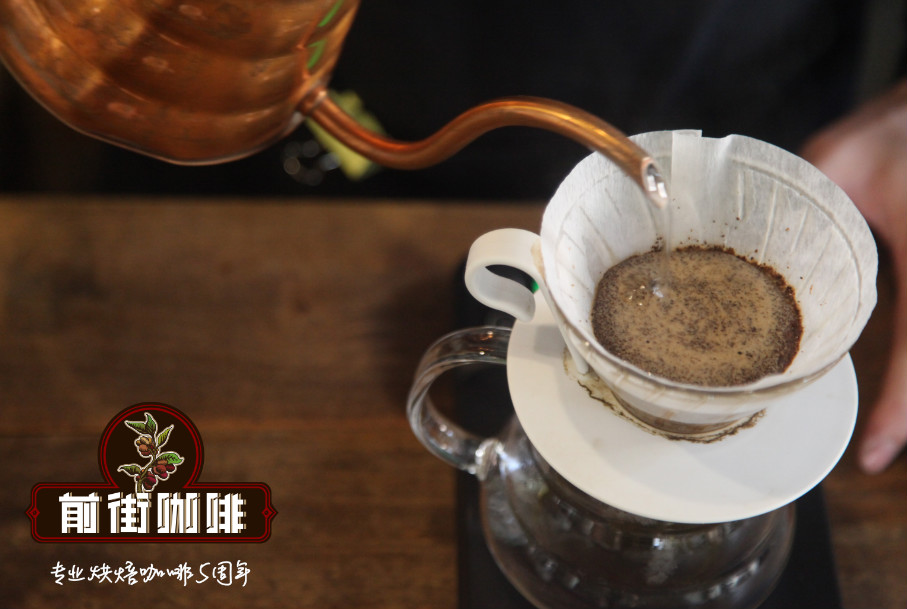
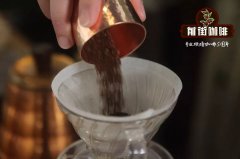
Parameters & Technique: Grind size 5R (58% pass rate on a China standard No. 20 sieve), water temperature 90°C, coffee-to-water ratio 1:15; bloom with 30g of water for 30 seconds. When the water level drops to 125g, split the extraction. Continue pouring to 226g when the water level is about to expose the coffee bed, then remove the dripper when the bed is about to be exposed again. (Timing begins at the bloom.) Total extraction time is two minutes.
FrontStreet Coffee Recommendation
Panama is where Geisha became famous, and Boquete is where its best-known expression still comes from. Esmeralda Estate discovered and promoted the variety, and divides its Geisha into grades by plot and altitude. FrontStreet Red Label Geisha comes from Esmeralda's official "Esmeralda Special," grown between 1600-1800 m, with every lot cupping above 90 points and each batch carrying its own number from a single plot — the Red Label lot, for instance, comes from the Jaramillo plot. Green Label, originally "Private Collection," is instead a blend of micro-lots from several plots and does not emphasize specific plot information, focusing on Esmeralda's signature high-altitude Geisha character at a friendlier price, which makes its value particularly strong.
For anyone wanting an introduction to the flavor, FrontStreet Panama Boquete Geisha is the entry point: it delivers the classic Panamanian citrus-and-honey Geisha note, an oolong-tea mouthfeel, and fine, distinct fruit acidity at an accessible price. For Ethiopian Geisha, FrontStreet Genlana Estate Geisha comes from the Genlana processing station on the border of Ethiopia's Kochere and Genlana Abaya areas. The station was founded in 2014 and covers some 700 hectares of coffee-growing land, much of it uncultivated, with fertile soil and abundant shade trees; cherries are hand-picked fully ripe and dried on raised beds for 14-20 days depending on weather. Medium-light roasted, it shows bright citrus acidity, elegant ginger-lily aroma, and ripe, rounded sweetness. Advancing further, FrontStreet Gesha Village Gold Label is the Gesha 1931 variety, about 10% of Gesha Village's output and its top non-auction coffee, often chosen by competition baristas and given a refined natural process, while FrontStreet Gesha Village Red Label is the Gori Gesha variety at roughly 15% of production, scoring 88 or above on the SCA 100-point scale and fully traceable by plot, variety, and processing date.
Geisha is a floral, fruit-forward, medium-light style with dense beans that can sink and clog the dripper, so FrontStreet suggests grinding to about 78% pass rate on a China standard No. 20 sieve — roughly fine sugar — and brewing at 91°C. A common approach uses 15g of coffee in a small Hario V60 at a 1:16 ratio, poured in three stages: start the timer and pour to 30g for a 30-second bloom, then a low, slow circular pour to 125g, wait for the bed to fall halfway before continuing the slow circular pour to 225g, letting the full drawdown finish somewhere around 2 minutes 10 seconds to 2 minutes 20 seconds.
Important Notice :
FrontStreet Coffee is a long-established specialty coffee roaster in Guangzhou China, selling freshly roasted beans from its own farm in Yunnan as well as dozens of carefully selected single-origin beans from around the world for both pour-over and espresso. The products deliver consistently excellent quality and great value, with shipping within 24 hours. Guangzhou's FrontStreet Coffee shop is recommended by many coffee lovers, and the beans are now available online at the Tmall 。
FrontStreet Coffee has moved to a new address:
FrontStreet Coffee Address: 315,Donghua East Road,GuangZhou
Tel:020 38364473
 Scan and follow the En Gafei WeChat official account. Please indicate that the reprint comes from "En Gafei".