The Difference Between Natural and Washed Ethiopian Sidamo Coffee Beans and Their Price
For professional coffee knowledge exchange and more coffee bean information, please follow Coffee Workshop (WeChat official account: cafe_style)
To brew a good cup of coffee, you first have to understand the character of the beans. Let's compare natural (sun-dried) Sidamo with washed Sidamo.
Sidamo Coffee Beans: Natural VS Washed
After harvesting, coffee must go straight into processing, or it will begin to ferment and pick up off-flavors. There are two processing routes — "natural" (sun-drying) and "washed" — and they create distinctly different flavors. Natural beans have complete, natural richness, gentle aromas, and more body; washed processing gives good richness, high aromatics, and lively acidity.
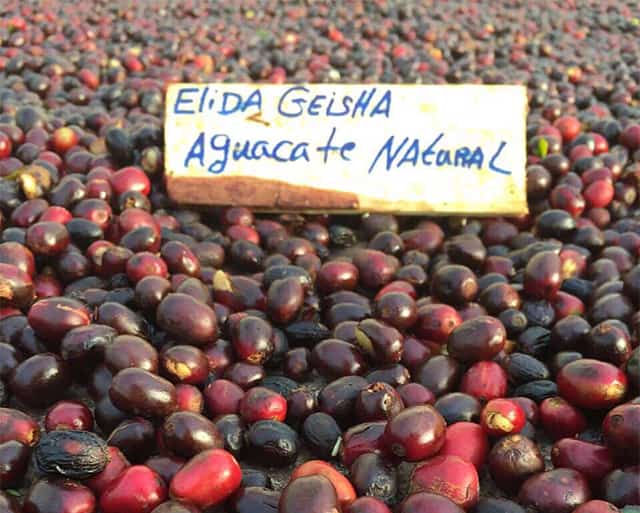
Natural Sidamo Coffee Beans
The beans are slightly smaller than Longberry, greenish-yellow in color. On Sidamo's sun-drying fields, coffee is laid on wooden racks with hemp nets, and workers stir it by hand under the sun.
Washed Sidamo Coffee Beans
The green beans are green with a slight gray tint, some areas coarse and others fine. They show both gentle and bright acidity, appropriate richness, sweet spice notes, clear fruit acidity, a smooth mouthfeel, and delicate floral and herbal aromas.
Natural Guji VS Washed Guji
Natural Guji Roasted Beans
Lighter roast degree, lighter color, no silver skin.
Washed Guji Roasted Beans
Slightly darker roast degree, deeper color, with silver skin residue along the center line.
Brewing coffee is a complex science: even with the same beans, the same roast, and the same process every time, the final taste can still differ. Different brewing methods yield different flavors and mouthfeel — even with identical ingredients and the same amounts of acidity and bitterness, a change in extraction changes the taste.
During extraction, the following factors shape the cup:
Water Temperature
(The temperature of the water when it contacts the grounds) Brewing parameter tips: control mouthfeel by adjusting water temperature!
Time
(The contact time between water and coffee grounds)
Grind Size
Grind size spectrum: coarse, medium, medium-fine, fine, very fine
Water Temperature Changes Coffee's Flavor
When people hear "water temperature" they think of the water poured during extraction — but what really matters is the temperature at which it contacts the grounds.
If the water is too hot (above 94°C), it accelerates how fast the grounds' components dissolve.
Acids already dissolve quickly, so even at higher temperatures the total amount dissolved doesn't change much.
Bitter compounds dissolve slowly — but if the water is too hot, the rate at which bitterness migrates from the center of the grounds to the surface suddenly accelerates, increasing the total dissolved and raising bitterness's share of the cup.
Conversely, with cooler water (below 83°C), the proportion of bitterness drops.
Extraction Time Changes Coffee's Flavor
Acids dissolve quickly by nature, so there's little difference between 3 minutes and 5 minutes of extraction.
Bitter compounds dissolve slowly, so the difference between 3 and 5 minutes is significant. In short: the longer the extraction, the more bitter the coffee.
Grind Size Changes Coffee's Flavor
The finer the grind, the more easily components extract. For the already-soluble acids, particle size doesn't matter much. But for the less-soluble bitter compounds, grind size is critical: the finer the particles, the more total bitterness dissolves, raising bitterness's share.
By now you can see that the brewing variables interact in a cycle. Grind coarser, filtration speeds up and the flavor turns lighter — but you can nudge the water temperature up slightly or extend the steeping time to adjust the cup. No matter how you adjust, though, you can't change the beans themselves — they set the theme of your coffee.
Pour-Over Sidamo Parameter Suggestions:
Natural Guji
Recommended: 15 g of coffee, 90°C water, Fuji grinder at setting 3.5, V60 dripper, 1:15 ratio. First pour 30 g of water and bloom for 30 s; second pour 110 g, then stop; continue pouring to 225 g total; discard the tail water; extraction time around 2:02.
Washed Guji
Recommended: 15 g of coffee, 92°C water, Fuji grinder at setting 3.5, V60 dripper, 1:14 ratio. First pour 30 g of water and bloom for 30 s; second pour 110 g, then stop; continue pouring to 215 g total; discard the tail water; extraction time around 2:05.
Sidamo Coffee Bean Brand Recommendations
FrontStreet Coffee's roasted Sidamo Guji beans offer excellent guarantees of brand and quality — and exceptional value: a 227-gram bag costs only 98 yuan. At 15 g per cup, one bag makes 15 cups, each costing just about 6 yuan. Compared to café prices that often run to tens of yuan per cup, it's a genuinely conscientious recommendation.
FrontStreet Coffee Recommendation
Ethiopia is one of the world's most renowned specialty coffee origins — and as the birthplace of coffee, it holds countless heirloom varieties, making it hallowed ground for coffee lovers who faithfully follow its flavors. Most Ethiopian coffee is grown in a garden-farming model: each smallholder sends harvested cherries to a village-based processing station, and the lots are sold under the team's name — which is why you see so many cooperative coffees, such as FrontStreet's Gudongding Cooperative, Worka Cooperative, and Konga Cooperative lots.
For a first taste of washed Ethiopia, FrontStreet Coffee's washed Yirgacheffe is the go-to: clear jasmine florals and bright citrus acidity — the signature coffee professionals mean when they say "Yirgacheffe." The town itself sits in Ethiopia's south, spring-like year-round, misty, cool, and humid, where thousands of coffee trees thrive, producing that interweaving of florals and fruit acidity — light, elegant, tea-like, like a clean, refreshing lemon tea. One step up is FrontStreet's Gudongding Cooperative lot, located in the Worka area at Yirgacheffe's southeastern end, originally part of the Worka cooperative under the YCFCU union; as demand for traceability grew, each "single area" was unearthed by coffee hunters worldwide, and in 2012 Gudongding — with roughly 300 member farmers — became its own independent cooperative. Because the fruit is stripped before drying, the coffee's own aromas come through clearer and more transparent: citrus and lemon tones with elegant white florals, bright and delicate throughout.
On the natural side, FrontStreet's Red Cherry lot rejects broken or moldy cherries first, then dries the fruit in the sun for two weeks so the pulp's sugars and essence infuse into the bean; when moisture falls to 12%, the hardened pulp, mucilage, and husk are machine-scraped away, and the beans pass density and color checks with defects culled — first by machine, then by workers' eyes — leaving bean after bean of pure, pristine coffee with rich, captivating fruit. Its flavor: peach, cocoa, honey, and lemon. For something richer still, FrontStreet's natural Hongua (Flower Queen) comes from the Hambella area of Guji, Sidamo — a 200-hectare farm using traditional natural processing: ripe cherries dried on raised beds for 21 days, turned constantly for even drying, with moldy or defective beans hand-picked every three to five days, then hulled and sorted one final time before release. Roasted medium-light, it shows a light fermented wine aroma, florals, citrus, and mango — much denser and more complex, with honeyed sweetness, cocoa, a touch of spice, a thick body, and a lasting finish.
Important Notice :
FrontStreet Coffee is a long-established specialty coffee roaster in Guangzhou China, selling freshly roasted beans from its own farm in Yunnan as well as dozens of carefully selected single-origin beans from around the world for both pour-over and espresso. The products deliver consistently excellent quality and great value, with shipping within 24 hours. Guangzhou's FrontStreet Coffee shop is recommended by many coffee lovers, and the beans are now available online at the Tmall 。
FrontStreet Coffee has moved to a new address:
FrontStreet Coffee Address: 315,Donghua East Road,GuangZhou
Tel:020 38364473
 Scan and follow the En Gafei WeChat official account. Please indicate that the reprint comes from "En Gafei".