How Much Does a Cup of Guatemala Antigua La Folie Coffee Cost? Recommended Most Famous Guatemala Coffee Beans
Guatemala Antigua
Guatemala Antigua Coffee Beans - La Folie
(Guatemala La Minita La Folie)
Region: Antigua Volcanic Zone
Estate: La Minita
Export: La Minita Group's brand "La Folie"
Varieties: Caturra, Catuai, Bourbon
Altitude: 1200 to 1600 meters
Grade: European Preparation Washed Strictly Hard Bean (SHB)
Processing Method: Traditional washed
Harvest Period: N/A
Certification: N/A
Flavor Profile: La Folie carries a very pleasant, elegant floral aroma with soft acidity and a chocolate-like aftertaste. The overall mouthfeel is clean and bright — sweet and smooth, with well-defined fruit acidity and fruity-floral notes.
01 | Introduction to Guatemala's Growing Regions
Guatemala sits on the Central American isthmus, a land of mountains and plateaus forged by volcanoes, producing superb Central American high-altitude strictly hard beans and ranking as the world's 9th largest coffee producer. Its main growing regions span seven major areas: Antigua, Huehuetenango, Atitlan, Coban, Fraijanes, Acatenango, and more. All seven grow Arabica in subtropical highland terrain, with abundant, stable rainfall and fertile volcanic ash soil — natural conditions that suit coffee cultivation across the entire country.
The Antigua valley is ringed by three volcanoes: Agua, Fuego, and Acatenango. Volcanic ash from eruptions enriches the region's soil with minerals, volcanic pumice holds moisture and offsets Antigua's low rainfall, and dense tree shade wards off the occasional frost.
Characteristics of Guatemalan coffee: rich wet aroma, good balance, high sweetness, and a delicate body.
Each region has its own signature flavors, with excellent acidity and fruity smoothness — coffees that rank among the world's best and shine as single origins. Antigua lies within the Madre plateau country that crosses Guatemala, and thanks to these natural conditions it has become Guatemala's most famous growing region.
Introduction to the Antigua Region
La Folie is a brand lot under the La Minita company, grown near Antigua City, Guatemala — a highland surrounded by active volcanoes at an altitude of 1850 meters, and the country's most decorated, best-known region.
Antigua sees little rain in summer and an occasional hard winter frost — on paper, not ideal coffee country. But fortune lies beneath: located in an active volcanic zone, its soils are laced with erupted volcanic pumice that, once cooled, is riddled with fine pores superb at retaining moisture. The estates also plant generous shade trees, sheltering the coffee from winter cold. These workarounds, combined with a wide day-night temperature swing, create Antigua's unique microclimate and give its beans a subtle smoky note and rich fruit aroma.
La Minita is famous for superb cultivation, processing, and brutally strict quality control. It commissions Las Pastores — the largest wet mill in the Antigua area — to process the green beans to its standards, and names the coffee La Folie. Alongside the region's original character, the dry aroma offers rich floral and tea notes; in the cup, lime acidity and berry flavors give way to a honeyed aftertaste. Excellent cleanliness and richly layered complexity are La Folie's hallmarks.
02 | Guatemalan Coffee Processing Methods
Full Washed
1. Removing Floaters
Beans are poured into large water tanks. Underdeveloped, inferior beans float to the surface while mature, full fruits sink. Scoop off the floaters and that step is done.
2. Removing Skin and Pulp
A pulping machine strips the cherry's outer skin and pulp, leaving mucilage, parchment, and silver skin.
3. Fermentation
The goal is to remove the mucilage biologically. Pulped coffee goes into fermentation tanks for 16-36 hours, where fermentation bacteria dissolve the mucilage layer.
4. Washing
Once fermentation is complete, bacteria and impurities still cling to the beans, so they're washed again — a step that consumes large amounts of fresh water to guarantee thorough cleaning.
5. Drying and Removing Parchment and Silver Skin
The beans are dried until moisture falls to 10-14%, then a hulling machine removes the remaining parchment and silver skin. Processing complete.
03 | Green Bean Analysis
Guatemala La Folie — Washed Process
La Folie's varieties are mainly Bourbon, Caturra, and Catuai. Bourbon and Typica are both ancient, high-quality varieties; Bourbon's beans are smaller and rounder than Typica's.
Caturra shows lemon or citrus acidity but can't match Typica or Bourbon in sweetness, because Caturra's sweetness depends on how often and how heavily growers fertilize. It has high yield potential, but sustaining it demands constant fertilizing and pruning, producing short, bushy, many-branched trees. And although yields rise, the harvest takes 2 years to establish and care costs are high, so production remains somewhat limited.
04 | Roasting Analysis
These Guatemalan beans are round, greenish-yellow, uniform, and of medium moisture. The roast target is medium — preserving bright acidity and floral-fruit aromatics while building richness and balance.
In the first batch, the charge temperature ran high, entering at 200°C with generous heat. During the roast we found the beans to be high-grown and dense. To protect the acidic aromatics, we used a technique of raised-temperature development with an earlier first crack, cutting heat at the yellowing point, after dehydration, and again before first crack to avoid scorching the surface. The beans were dropped 1 minute 50 seconds after the end of first crack, shortening caramelization to preserve more floral and fruity aftertaste.
Roasting Machine: Yangjia 600g Semi-Direct Heat
Charge at 200°C, damper at 3. After 30 seconds, reduce heat to 160°C, damper unchanged. Turning point at 1'36", hold the heat. At 4'50" the bean surface turns yellow, the grassy aroma vanishes completely, and dehydration is complete — reduce heat to 140°C and set the damper to 4.
At 4'50", dehydration was complete and the heat had been reduced to 140°C. At 8'32", ugly wrinkles and black specks appear on the surface and the toast aroma clearly turns to coffee — the prelude to first crack. Listen carefully now. At 8'37", first crack begins; reduce heat to 80°C and open the damper fully to 5 (adjust the heat very gently — never so far that the cracks fall silent). After first crack, develop for 1'50" and drop at 195.3°C.
This washed Guatemala La Folie shows prominent citrus acidity with juicy fruit notes, rich floral aroma, pleasant sweetness, medium body, and slight caramel and smoky tones in the finish. Overall it is clean and mild, with a smooth texture and balanced, lively, intricately layered flavors.
05 | Brewing Analysis
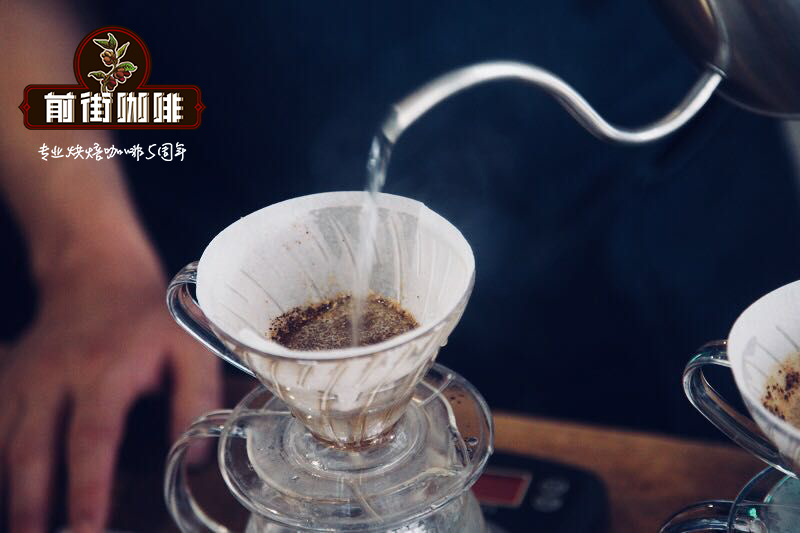
Recommended Brewing Method: Pour-over
Grind Size: (Japan Fuji R440) 3.5
V60 Dripper: 15g of coffee, water temperature 91°C
Water-to-Coffee Ratio: 1:15
Pouring Method: Small water flow up to 125g, pause, then pour slowly up to 225g
Total Time: Approximately 1 minute 50 seconds
BG Grind: 4R
Sweetness: ☆☆☆
Acidity: ☆☆☆
Bitterness: ☆
Other Drip Extraction Suggestions: French press — grind 3.5-4, water temperature 91°C
AeroPress — grind 2.5, water temperature 90°C
Guatemala Coffee Bean Brand Recommendation
FrontStreet Coffee's roasted Guatemala beans carry full guarantees of brand and quality — and outstanding value. A 227-gram bag costs only 118 yuan. At 15g per cup, one bag brews 15 cups at roughly 8 yuan each — against café prices of dozens of yuan a cup, a genuinely conscientious deal.
FrontStreet Coffee Recommendation
If La Folie's washed clarity is your style, FrontStreet Coffee's Kenya Little Tomato is another washed masterpiece worth tasting. Grown at 1550-1750 meters in the Thika region on classic SL28 and SL34 varieties, it undergoes Kenya's signature 72-hour double washed fermentation for luminous fruit and a spotless cup — cherry tomato, dried plum, snow pear, black amber plum, and golden sugar, as juicy as fresh-pressed juice and endlessly recognizable.
Important Notice :
FrontStreet Coffee is a long-established specialty coffee roaster in Guangzhou China, selling freshly roasted beans from its own farm in Yunnan as well as dozens of carefully selected single-origin beans from around the world for both pour-over and espresso. The products deliver consistently excellent quality and great value, with shipping within 24 hours. Guangzhou's FrontStreet Coffee shop is recommended by many coffee lovers, and the beans are now available online at the Tmall 。
FrontStreet Coffee has moved to a new address:
FrontStreet Coffee Address: 315,Donghua East Road,GuangZhou
Tel:020 38364473
 Scan and follow the En Gafei WeChat official account. Please indicate that the reprint comes from "En Gafei".