The Difference Between Kenyan Coffee Beans AB and AA Grade: The Relationship Between Kenyan Coffee Grading and Coffee Bean Prices

Introduction to Kenyan Coffee
When people think of African coffee, most immediately name either Ethiopia or Kenya. Ethiopian beans offer fresh, clean acidity, while Kenyan coffee is known for rich berry juice, with notes such as tomato juice and a plum-like acidity that leave a lasting impression. Many drinkers ask FrontStreet Coffee's baristas: what is Kenyan AA?
Kenyan AA is a grading system for coffee beans in Kenya. Follow FrontStreet Coffee as we explore Kenya as a country and understand its coffee through growing regions, varieties, roasting approach, cupping, and brewing methods.

Kenyan Coffee Growing Regions
Kenya lies in eastern Africa, with the equator crossing its center and the East African Rift Valley running north to south. It borders Somalia to the east, Tanzania to the south, Uganda to the west, and Ethiopia and Sudan to the north, with the Indian Ocean to the southeast. The country is mostly highland, with an average elevation of 1,500 meters. Mount Kirinyaga (Mount Kenya) in central Kenya reaches 5,199 meters and has snow-covered peaks, making it Africa's second-highest mountain.
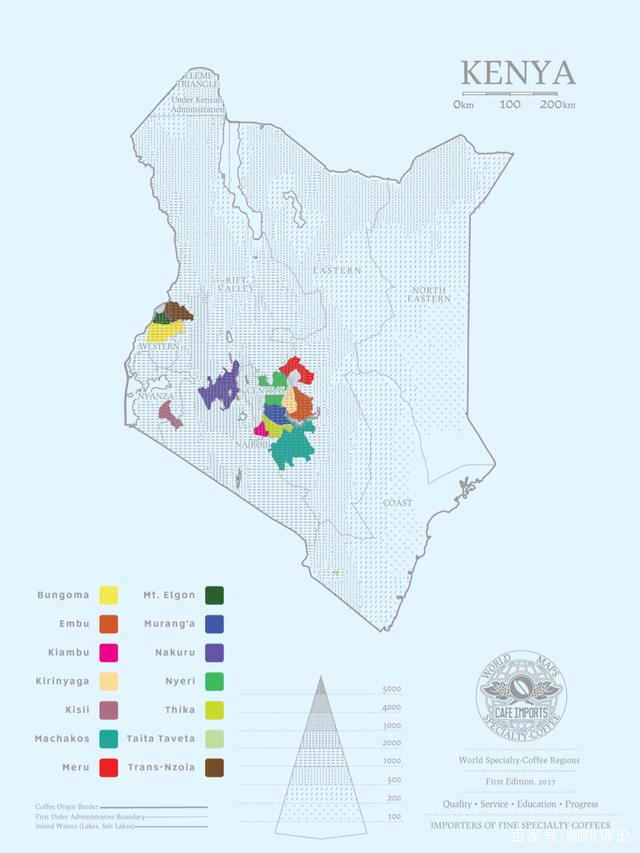
Kenya's coffee regions are best known for seven main areas: Thika, Kirinyaga, Mt. Kenya West, Nyeri, Kiambu, Ruiri, and Muranga. The foothills of Mt. Kenya and the Aberdare Range are the primary growing areas, with the specialty regions mainly Thika, Nyeri, Kirinyaga, and Muranga.
Nyeri Region
Located in central Kenya, Nyeri is home to the dormant volcano Mount Kenya. The region's red volcanic soil nurtures some of Kenya's finest coffee, and agriculture is central to the area, with coffee as the primary crop. Nyeri has more smallholder cooperatives than large estates. Elevation: 1,200 to 2,300 meters. Harvest period: October to December (main season) and June to August (secondary season).

Muranga Region
Part of the Central Province, this region has approximately 100,000 coffee farmers. It was one of the first inland areas chosen by missionaries for settlement, since the Portuguese barred them from the coast. Another region that benefits from volcanic soil, it also has more smallholder farms than estates. Elevation: 1,350 to 1,950 meters. Harvest period: October to December (main season) and June to August (secondary season).
Kirinyaga Region
Situated on the slopes of Mount Kenya next to Nyeri, Kirinyaga is world-renowned for coffee with intense, complex flavors and a solid mouthfeel, and together with Nyeri it is recognized as one of Kenya's two finest regions. Most producers here are smallholders who join cooperatives, which coordinate the work by running washing stations where farmers bring their cherries for processing.

"Kirinyaga" originally referred to Mount Kenya, but under British colonial rule the name was considered hard to remember, so the mountain became "Mt. Kenya." Mount Kenya is Africa's second-highest peak, and although it sits in the tropics, its summit is often covered with snow. Kirinyaga means "white peaks." The mountain is a UN protected area and a popular tourist destination where wildlife gathers to feed on the surrounding foothills and grasslands.
"Kirinyaga" comes from the Kikuyu people and means "white mountains," and is considered the dwelling place of gods. The Kikuyu are Kenya's largest ethnic group, making up one-fifth of the population. Elevation: 1,300 to 1,900 meters. Harvest period: October to December (main season) and June to August (secondary season).
Thika Region
Thika is a small town near Kenya's capital, Nairobi. Many coffee fields surround Nairobi, and while Thika is an industrial town, it is ringed by agriculture and waterfalls. The region has approximately 2,000 farmers. Kenyan Thika coffee has been cultivated since the late 19th century, when varieties were introduced from neighboring Ethiopia to the north. After variety improvement, the common types now include Bourbon, Kents (SL34, SL28), Typica, and Riuri 11. Today about 90% of the coffee is SL34 and SL28. The new variety Batian, released in 2007, has not yet been widely planted. Coffee from this region features bright fruit acidity, rich berry juice flavors, and honey-like sweetness. Elevation: 1,550-1,750 meters.

Kenyan Coffee Varieties
SL28 Coffee Variety
SL28 is one of Africa's most famous and respected varieties. It has spread from its selection in Kenya in the 1930s to other parts of Africa, particularly Uganda's Arabica areas, and now to Latin America. SL28 suits medium to high altitudes, resists drought, but is sensitive to major coffee diseases. It is found in many parts of Kenya and remains highly productive even at 60-80 years of age.
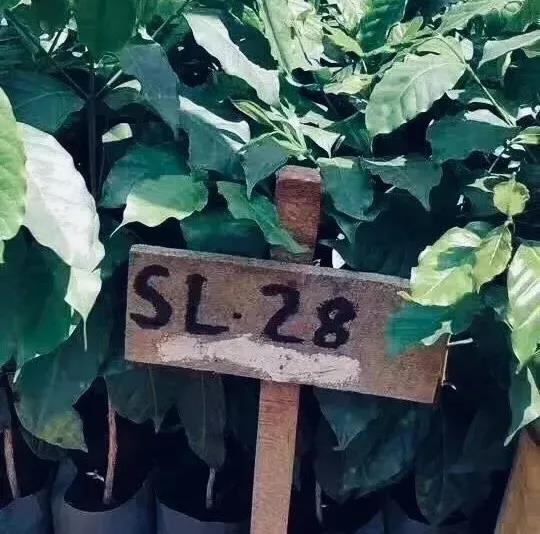
SL28 was selected in 1935 as a single variety from drought-resistant populations in Tanganyika. In 1931, A.D. Trench, senior coffee officer at Scott Laboratories, led visitors to Tanganyika, now Tanzania. According to historical records, he noticed a variety growing in the Modi region that appeared tolerant to drought, disease, and pests. Seeds were collected and brought to Scott Laboratories, where their drought resistance was confirmed.
SL34 Coffee Variety
SL34 was first selected in the late 1930s at Scott Agricultural Laboratories in Kenya. It came from a tree at the Kabete Loresho estate, known as the "French Mission."
In 1893, French missionaries established a mission in the Taita Hills of Kenya, where they planted Bourbon coffee seeds from Reunion Island. In 1899, seedlings from the Taita Hills were taken to another French mission at St. Austin near Nairobi, and from there seeds were distributed to settlers willing to grow coffee, becoming the origin of so-called "French Mission" coffee. Because French missionaries historically transported seeds directly from Reunion Island, French Mission is widely understood to be a Bourbon variety. Recent genetic testing, however, shows that SL34 is related to the Typica genome, which has created debate about the story that SL34 was selected from French Mission stock.

After cupping the two varieties separately, FrontStreet Coffee finds that SL28 and SL34 have similar profiles, both featuring complex, varied berry-like acidity and a caramel-sweet aftertaste. Compared with SL28, SL34 has a heavier mouthfeel, with acidity leaning toward blackberry, an overall sweet-sour balance, and a caramel finish. As SL28 cools, it tends toward blueberry-like acidity, with slightly elevated acidity and higher sweetness, matching Bourbon's characteristic high sweetness.
Kenyan Coffee Processing: The 72-Hour Wash
Kenya uses a repeated washing method after fermentation. Processing starts the same day as harvest, with the highest-quality cherries selected for pulping and fermentation. Fermentation runs 24 hours, after which the beans are washed with clean river water. They then undergo another 24-hour fermentation in clean river water, followed by washing again. The cycle repeats 3 times for a total of 72 hours, which is why it is called the Kenyan 72-hour fermentation wash, abbreviated as K72. FrontStreet Coffee believes that beans processed this way, fermented at low temperatures for extended periods and finally dried and dehydrated, end up brighter and cleaner while still full-bodied.

Kenyan Coffee Bean Grading
AA Plus (AA+): AA grade with particularly excellent cup quality in flavor and mouthfeel.
AA: Bean size, Screen Size 17-18.
AB: Bean size, Screen Size 15-16, accounting for the majority of production.
C: Bean size smaller than AB.
TT: Lighter-weight beans sifted from AA and AB grades using air classifiers.
T: Lighter-weight beans sifted from C grade using air classifiers.
E Elephant Bean: Large mutant beans where two beans merge into one, also called elephant ear beans.
PB Peaberry: Round beans classified by shape, unrelated to flavor or weight.

Kenyan Coffee Profile
Region: Thika, Kenya
Processing Station: Asali Honey Processing Station
Elevation: 1,550-1,750 meters
Grade: AA TOP
Varieties: SL28, SL34
Processing Method: Kenyan 72-hour wash
FrontStreet Coffee Roasting Recommendations
Preheat the roaster to 200°C and set the damper to 3. After 30 seconds, turn on the flame and adjust the heat to 160, keeping the damper unchanged. The return-to-temperature point comes at 1'34"; hold the heat, and the color changes to yellow at 5'30" as the grassy smell disappears and the dehydration phase begins. Reduce the heat to 130 to enter the Maillard reaction. On reaching 178°C, reduce the heat again to extend the Maillard phase, and open the damper to 3.5.
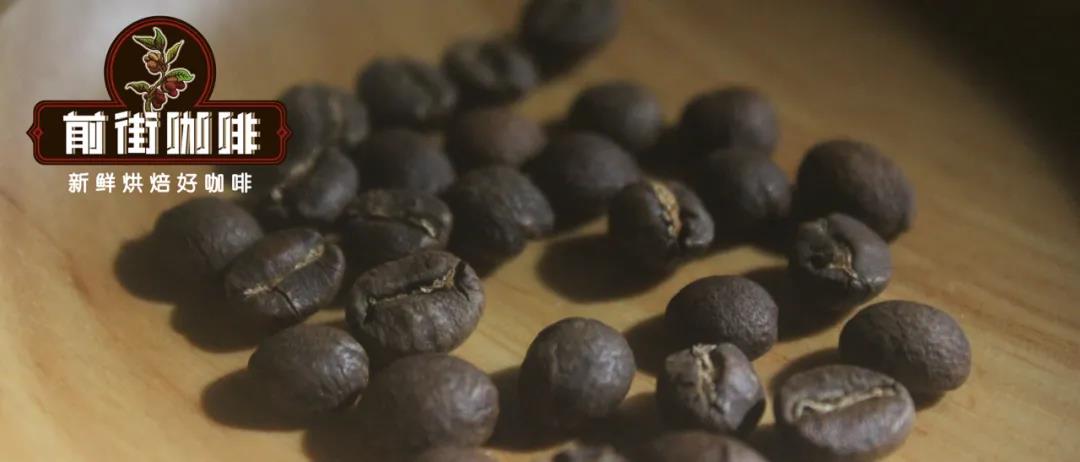
At 7'45" dehydration is complete, so reduce the heat to 80. At 8'30" wrinkles and dark spots appear on the bean surface and the toast smell turns to coffee aroma, foreshadowing first crack, so listen for the first crack sounds. At 8'52" first crack begins; open the damper to 5 and reduce the heat to 50 to limit caramelization. Heat absorption is strong at first crack, so it is best to hold the heat at this stage to avoid stalling. A longer first-crack development helps reduce acidity and build flavor. Post-first-crack development time is 2 minutes 10 seconds, dropping at 191.6°C.
FrontStreet Coffee Cupping Report
The wet aroma has mature tomato and floral notes. On entry there are cherry tomato and plum flavors, bright acidity, a clean mouthfeel, and medium body, with prominent mid-palate sweetness that has a juice-like quality. The aftertaste brings berry fragrance and brown sugar sweetness, with a green tea aroma.

FrontStreet Coffee Brewing Recommendations
FrontStreet Coffee, considering that this bean is roasted light-to-medium, uses a higher water temperature and a faster-flowing dripper. High temperature is needed to extract its bright acidity, but over-extraction at high temperature must be avoided, so a fast-flowing V60 dripper is the choice.
Coffee-to-water ratio: 1:15 (15g coffee to 225ml water)
Water temperature: 90°C-91°C
Grind size: Fine sugar (78% retention on a #20 standard sieve)

First pour 30g of water for a 30-second bloom, then pour 95g more (about 125g on the scale), finishing in about 1 minute. When the water level drops to two-thirds of the coffee bed, pour the remaining 100g (about 225g on the scale), finishing in about 1 minute 40 seconds. At 2'00" the drip filtration is complete; remove the dripper and the extraction is finished.
Brewing Flavor
On entry there are plum and cherry tomato flavors, with strong, solid acidity in the mouthfeel and prominent mid-palate sweetness that has a juice-like quality. The aftertaste brings berry fragrance and brown sugar sweetness, with a green tea aroma.
FrontStreet Coffee Recommendation
Kenya's berry-forward acidity and its neighbor Ethiopia's floral, citrus-driven character are two sides of the same East African terroir, and tasting them side by side is one of the most rewarding comparisons in coffee. FrontStreet Coffee roasts a spread of Ethiopian origins that make a natural next step from Kenyan lots.
The entry point for most drinkers is the washed Yirgacheffe, which shows clear jasmine florals and bright citrus acidity, and which many baristas describe as Yirgacheffe's signature: the town sits in southern Ethiopia where the climate stays spring-like year-round, veiled in mist, cool and humid, and thousands of coffee trees thrive there, yielding a light, elegant cup with a tea-like body that drinks like a clean lemon tea. The Gedebeb cooperative sits at the southeastern end of Yirgacheffe in the Woka district and began as part of the YCFCU union's Woka cooperative before splitting off as a single origin around 2012 with roughly 300 member farmers; because the fruit is stripped before drying, the bean's own aroma comes through more clearly, with citrus and lemon and elegant white florals. The natural Red Cherry plan dries cherries whole for about two weeks until the flesh's sugars and essence seep into the bean and moisture falls to 12%, then removes the hardened fruit, mucilage, and parchment, giving peach, cocoa, honey, and lemon. For tropical fruit, the natural Sidamo Huakui, from the 200-hectare Hambella farm in Guji, is dried on raised beds for 21 days with regular turning and sorting, and after a medium-light roast shows a light fermented wine note, florals, citrus, and mango over a rich, layered body with honeyed sweetness, cocoa, and a hint of spice. FrontStreet also carries the Sidamo natural Hamasho 74158, with perfume lemon, strawberry, and star fruit that turn into strawberry, star fruit, and green grape sweetness on the palate, and the Kaffa Forest, grown wild between 1,400 and 2,100 meters under shade, whose medium-light roast gives white florals, bright lemon acidity, sweet orange, and bergamot with a green-tea texture.
Brew these with a pour-over or a cold brew to keep their delicate aromatics intact, using a moderate temperature so the florals and citrus stay bright rather than turning flat or bitter.
Important Notice :
FrontStreet Coffee is a long-established specialty coffee roaster in Guangzhou China, selling freshly roasted beans from its own farm in Yunnan as well as dozens of carefully selected single-origin beans from around the world for both pour-over and espresso. The products deliver consistently excellent quality and great value, with shipping within 24 hours. Guangzhou's FrontStreet Coffee shop is recommended by many coffee lovers, and the beans are now available online at the Tmall 。
FrontStreet Coffee has moved to a new address:
FrontStreet Coffee Address: 315,Donghua East Road,GuangZhou
Tel:020 38364473
 Scan and follow the En Gafei WeChat official account. Please indicate that the reprint comes from "En Gafei".