Introduction to Panama Jansen Estate Geisha Coffee Beans - How Much Does Authentic Panama Geisha Coffee Cost Per Bag
FrontStreet Coffee shares professional coffee knowledge and coffee bean information for enthusiasts and professionals alike.
Janson Estate Panama Geisha Coffee
Estate: Janson Estate
Region: Volcan Region
Variety: Geisha
Processing: Natural
Altitude: 1750m
Annual Rainfall: 3000mm
Average Temperature: 20°C
Soil: Volcanic soil
Harvest: Hand-picked
Flavor: Delicate berry notes, clean mouthfeel, honey and lychee
About Janson Estate
In 2004, the Peterson family of Panama introduced the Geisha variety to the world, and the international coffee community has been enchanted ever since, dubbing it the champagne of coffee. In 2013, when the Specialty Coffee Association of Panama (SCAP) handed out its Best of Panama awards, a new contender stepped onto the stage: Carl Janson's Panama Janson Estate Geisha.
"A Microclimate Like No Other"
The microclimate found in Panama's highlands is the single most important resource behind the country's inimitable coffee. Because the Republic of Panama runs east to west, cold air currents sweep across the central mountain range and converge above 6,500 feet, spawning a patchwork of microclimates across the Boquete and Volcán-Candela regions. These zones have become the heartland of Panama's most distinctive coffees, grown in the nutrient-rich, well-balanced soils around Barú Volcano. The right mix of microclimate, soil, temperature, and altitude makes these highlands ideal for sowing, cultivating, and harvesting exceptional coffee.
The Estate Founder - Mr. Janson (Carl Janson)
A native of Switzerland, Mr. Carl Janson fell head over heels for the Volcan area when he first arrived in Panama, moved by mountains that reminded him of his homeland. After marrying his wife Margaret, he bought the estate in 1940. A passionate rancher, Carl Janson was also the first person to bring Angus cattle into Panama.
Panama Janson Estate Geisha
Geisha: One Name, Two Spellings
The word Geisha is pronounced exactly like the Japanese "geisha," which is why the variety carries that alternative name. Because the trees grow taller than ordinary coffee plants, they were originally planted only in small plots within estates and used as windbreaks.
Geisha Is a Variety
The Geisha variety was first collected in 1931 in the Geisha forest of western Ethiopia and later sent to a coffee research station in Kenya. In 1936 it reached Uganda and Tanzania, and in 1953 Costa Rica brought it in as well.
For decades, hardly anyone paid the variety any attention. Then Don Pachi carried it from the small town of GESHA in southwestern Ethiopia to Costa Rica, and from there Geisha entered Panama along its southern route. Hacienda La Esmeralda was the first to separate it from other varieties, and after winning the national coffee competition, Geisha was thrust squarely into the spotlight.
Geisha is famously demanding about where it grows: it needs high altitude, cloud cover and shade, fertile soil, and abundant accumulated heat.
In 2013, when the Specialty Coffee Association of Panama (SCAP) presented the Best of Panama award, a new contender appeared: Carl Janson's Panama Janson Estate Geisha, a cup worthy of the title "champagne of coffee," with rich jasmine florals, delicate berry notes, a clean mouthfeel, and honey and lychee flavors.
Geisha offers abundant sweetness, an exceptionally clean mouthfeel, and layers of aroma that stretch from berries and citrus to mango, papaya, and peach. An unmistakably bergamot-like aftertaste is another of its signature cupping traits. To this day, Geisha remains the champion among coffee varieties.
Panama Janson Estate Geisha is relatively unknown in China, largely because the estate sells mainly domestically and does not export.
With high altitude, nutrient-rich volcanic soil, plentiful rainfall, and mild temperatures, Panama Janson Estate has grown into the second-largest Geisha producer among Panama's estates, with 50% of its land planted in Geisha. The ripe cherries it harvests are nicknamed "ox-blood coffee cherries" for their exceptionally high sweetness.
To keep the natural environment in balance, Janson Estate runs livestock alongside coffee cultivation, and today three generations of the family manage the property together. Carl's four sons—Carl, Michael, Richy, and Peter—run the farm: Carl oversees the JANSON FAMILY roasting facility and part of the coffee farm that Michael manages, while Richy and Peter handle overall management.
At an average altitude of roughly 1,700 meters, the estate sits on nutrient-rich volcanic soil with ample rainfall and suitable temperatures. The Janson family follows environmentally friendly principles with 100% sustainable farming, and has built its own processing plant so that coffee pulp can be recycled as fertilizer after processing.
Only 2,000 Geisha plants are set per hectare to give each tree enough room in the soil; half of the estate is planted with Geisha, ranking second in Panama's Geisha output, and every batch of green beans carries a highly recognizable batch number that is 100% traceable.
The estate not only operates a dedicated processing plant for its cherries but also invests heavily in roasting, so that its cupping results carry real reference value.
These efforts have steadily raised the quality of the estate's beans, and they paid off when Panama Janson Estate Geisha took runner-up in the Panama (BOP) competition.
In recent years, coffees from the Volcan region have been making waves in the specialty market, with a growing number of estates entering the Best of Panama competition—some even taking the championship. Volcan generally receives less annual rainfall than Boquete, and its location on the western flank of Barú Volcano lends its coffees stronger dried-fruit flavors, sweetness, and aroma than their Boquete counterparts.
In its early days, the Volcan area was planted mostly with fruits, vegetables, and other cash crops, and only a handful of farmers grew coffee. Among the pioneers of coffee cultivation in Volcán were two famous names: the Hartmann family and the Janson family.
Green Bean Analysis
Geisha green beans are strikingly beautiful, with a blue-green color. They are relatively slender with pointed ends and a jade-like warmth to the touch, giving off fresh grass, peach, and berry aromas plus the distinctive milky sweetness of oolong tea that most coffee beans lack. Aroma and flavor here reward an associative imagination, but the light tea fragrance is something anyone can clearly perceive.
Roasting Analysis
These are large, dense beans that absorb considerable heat during roasting, so the Maillard reaction moves along quickly. In my first roast, I charged at a high drop temperature of 200°C and kept applying heat steadily until the beans finished drying and turned yellow, making sure enough energy would carry through to the end of the roast.
Afterward, I settled on a charge temperature of 200°C with somewhat reduced heat, raising the gas gradually as the roast demanded. Under this approach the drying phase stretched out compared with the first batch, and the roast climbed at a rate of 6-8 degrees every thirty seconds.
Roasting the Geisha
To showcase this bean's character and aroma, a light roast is the way to go: at that level the bean's intrinsic qualities shine, while anything too dark would smother the floral notes and fruit acidity. That said, the profile should always be tuned to the specific bean and the roaster's own understanding of it.
During the roasting stage, a smaller starting charge of 140°C and a slower rhythm are used to express this coffee's many layered flavors.
Roasting machine: Yangjia 600g semi-direct flame
Preheat the roaster to 200°C with the air damper set to 3.5. After 30 seconds, drop the heat to 160°C and close the damper to 3. The turning point comes at 1'32'', and when drum temperature reaches 153.3°C, adjust the heat once more. By then the bean surface has yellowed, the grassy aroma has vanished completely, and drying is done. Cut the heat to 140°C and open the damper to 4.
At 9'00', ugly wrinkles and black spots show on the bean surface and the toast aroma gives way unmistakably to coffee aroma—the prelude to first crack. Listen carefully from here. At 9'47", first crack begins; reduce the heat to 50°C and open the damper fully to 5 (ease the heat down carefully so the cracks do not fall silent). Develop for 2'40" past first crack and drop the beans at 197.1°C.
Cupping Results
Flavor: Maple, lemon citrus, apple, rose aroma, dark chocolate fruit notes, pomegranate, ripe grapes, peach, and dark berries—a multi-layered interplay of sweet and tart
Recommended Brewing Method: Pour-over
Grind Size: 3.5 (Fuji R440, Japan)
Water Temperature: 91°C
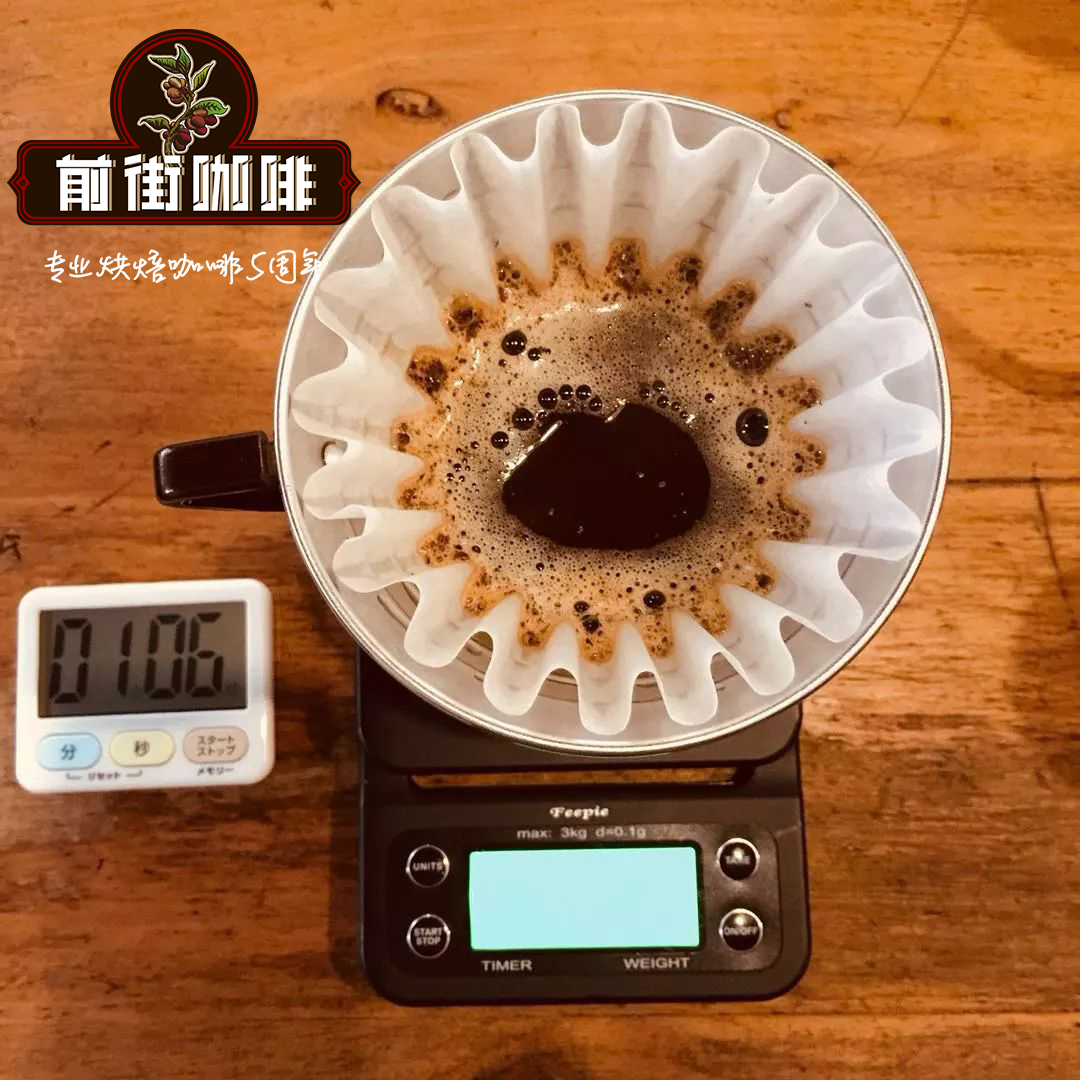
Cake cup, 15g of coffee, water temperature 91°C
Grind at 3.5, with a water-to-coffee ratio close to 1:15
30g of water for the bloom, blooming for 30s
Pour hot water from the kettle in clockwise circles around the center of the dripper. Start timing when the brew begins: pour to 30g, stop, and wait 35 seconds before the second pour.
For the second pour, circle clockwise around the center of the dripper just as before. Keep the stream away from the seam where the coffee bed meets the filter paper to avoid channeling. Since the cake cup brews by immersion, 91°C water draws out Geisha's flavors beautifully.
Pour structure: pour to 120ml, pause, then pour slowly up to 225ml.
In other words: 30-120-95
Geisha's Signature Flavor
What sets Geisha apart is its vivid, unmistakable floral and citrus character, remarkable clarity, soft and elegant acidity, a lingering cotton-candy sweetness, and the refined mouthfeel of premium black tea.
Among the world's many coffees, heady florals paired with intense tropical-fruit sweetness—that one-of-a-kind floral and fruit perfume—is the throughline of every great Geisha.
Sweetness: ☆☆☆☆
Panama Janson Estate Natural Geisha Coffee Brand Recommendation:
FrontStreet Coffee's roasted Panama Geisha coffee beans offer full assurance on both brand and quality. Better still, they deliver outstanding value: each 100g pack costs only 138 yuan. At 15g of beans per cup, a single pack brews 6 cups, working out to roughly 22 yuan a cup. Set against café prices of tens of yuan per cup, it is a genuinely conscientious buy.
FrontStreet Coffee Recommendation
Geisha (transliterated from the English "Geisha") is one of the most beloved varieties among Arabica coffees. Its one-of-a-kind florals and superb sweet-tart character have won over countless coffee lovers, while its low yield, weak disease resistance, and demanding cultivation keep prices climbing. If you want a Geisha that tastes great without breaking the bank, it pays to know the different tiers first.
FrontStreet Esmeralda Red Label and Green Label Geisha: Esmeralda Estate—famous the world over as the estate that made Geisha a star—currently splits its Geisha line into two grades. The Red Label is officially named "Esmeralda Special," grown at 1,600-1,800m, with every batch required to cup above 90 points. Each batch carries an independent number and comes entirely from a single small plot, so buyers can pick the batch whose subtle flavor profile suits them best. The Green Label, officially "Private Collection," blends lots from multiple plots rather than emphasizing detailed plot information, showcasing Esmeralda's signature high-altitude Geisha character at a more affordable price—making FrontStreet's Esmeralda Green Label outstanding value.
FrontStreet Boquete Geisha: for newcomers who want a first taste of the legendary "Geisha flavor," FrontStreet always points to this entry-level Panama lot first. At an accessible price you get the classic orange-blossom honeyed sweetness of top-grade Panamanian Geisha, an oolong-tea feel, delicate fruity acidity, and clearly defined layers.
FrontStreet Geisha Village Gold Label and Red Label: Ethiopia, the birthplace of coffee, also has an estate famous for the Geisha variety—Geisha Village—with a grading system even stricter than Panama's. It grows three Geisha varieties (Gori Gesha, Gesha 1931, and Illubabor Forest) and grades them into Gold Label RARITIES, Red Label GROWERS RESERVE, Green Label SINGLE-TERROIR, and CHAKA lots, distinguished further by variety. The Gold Label comes from the Gesha 1931 variety, accounts for 10% of Geisha Village's total output, and is the estate's top coffee outside auction lots, frequently chosen by baristas for international competitions; FrontStreet's Gold Label lot is meticulously natural-processed, with complex, layered flavors whose unique dry fragrance, sip, and finish linger long on the palate. The Red Label comes from the Gori Gesha variety, makes up 15% of production, scores 88 or above on the SCA 100-point scale, and belongs to the estate's single-terroir series, so every lot number carries full traceability—farm block name, variety, and processing date.
FrontStreet Genlana Gesha: from the Genlana Gesha (Genji) farm in Ethiopia's Yirgacheffe, this is a rare single-variety estate. The lot comes from the Genlana washing station, founded in 2014 and run by Mr. Israel Degefa, at the border of Kochere and Gedeb Abaya; the surrounding coffee-growing area spans 700 hectares, most of it uncultivated, fertile, and shaded. Thanks to the rich soil of the original rainforest and a fully shaded growing environment, this heirloom Ethiopian Geisha shows remarkable layered depth. Ripe cherries are hand-picked and raised-bed natural-dried for 14-20 days depending on the weather. Roasted medium-light, it reveals bright citrus acidity, elegant ginger-flower aroma, the full sweetness of mature fruit, and a silky-smooth body with the variety's signature delicate finish.
Brewing tip: Geisha is a medium-light roast with floral-fruit character and a hard, dense structure, so grounds tend to sink and clog the dripper. FrontStreet recommends a coarser grind—78% pass-through on a Chinese No. 20 sieve (about the size of fine granulated sugar)—and a water temperature of 91°C. For pour-over, use 15g of coffee in a Hario V60 small dripper at a 1:16 ratio with a three-pour method: start the timer, pour to 30g and bloom for 30s; then pour in small circles up to 125g, wait until half the water has drained from the bed, and pour again in small circles up to 225g. Once all the water has drawn down, total extraction time should be around 2 minutes 10 seconds to 2 minutes 20 seconds.
Important Notice :
FrontStreet Coffee is a long-established specialty coffee roaster in Guangzhou China, selling freshly roasted beans from its own farm in Yunnan as well as dozens of carefully selected single-origin beans from around the world for both pour-over and espresso. The products deliver consistently excellent quality and great value, with shipping within 24 hours. Guangzhou's FrontStreet Coffee shop is recommended by many coffee lovers, and the beans are now available online at the Tmall 。
FrontStreet Coffee has moved to a new address:
FrontStreet Coffee Address: 315,Donghua East Road,GuangZhou
Tel:020 38364473
 Scan and follow the En Gafei WeChat official account. Please indicate that the reprint comes from "En Gafei".