One of the World's Top 10 Most Expensive Coffees: Panama Geisha Coffee Beans - Price, Flavor, and Taste Characteristics
One of the World's Ten Most Expensive Coffees: Panama Geisha
Once named by Forbes as one of the world's ten most expensive coffees, Panama Geisha has been regarded as a symbol of quality since its rise to fame. Three factors explain it: limited production with exacting standards from harvest through processing; a clean cup with refined berry-floral notes perfectly suited to new-generation drinkers; and the way Geisha shattered the old assumption that coffee must be dark-roasted and heavy. Geisha's unique floral character and exceptional sweet-tart balance won over countless enthusiasts — while its low yields, weak disease resistance, and demanding cultivation keep prices climbing.
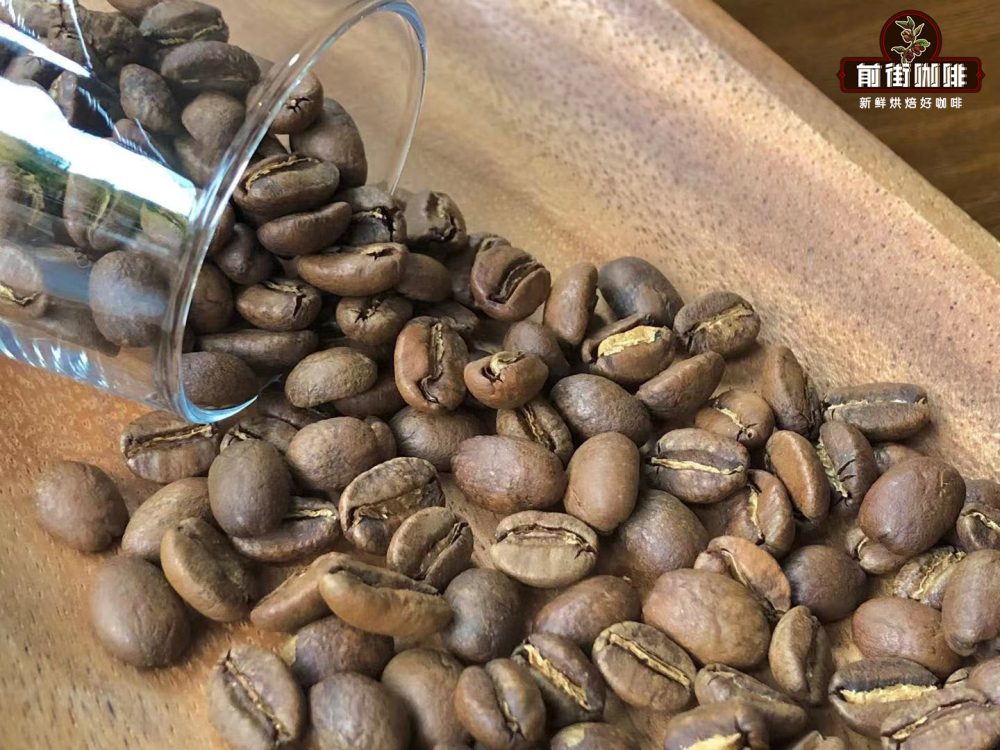
After Geisha's overnight success, other estates across Panama — and high-altitude regions throughout Central and South America, such as Costa Rica and Colombia — began planting the variety in subsequent years, so enjoying a cup of Geisha is no longer a rare treat. But coffee is an agricultural product, and its flavor varies with terroir, climate, and region. Even within a single estate like Panama's Hacienda La Esmeralda, Geisha from different independent plots shows noticeable flavor variation.
Hacienda La Esmeralda: The Legendary Estate
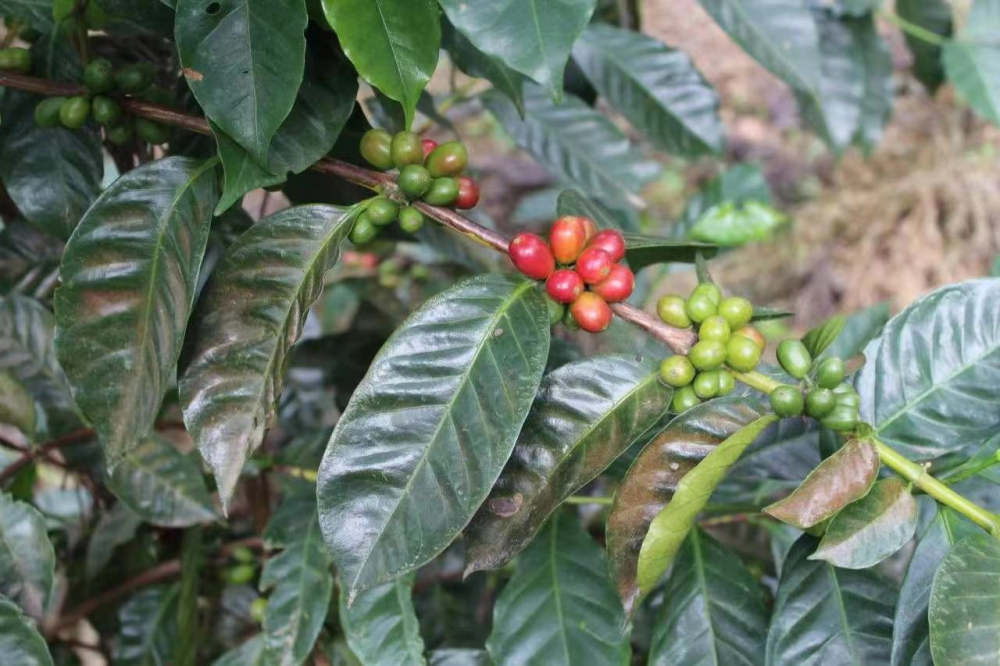
Hacienda La Esmeralda is located in Boquete, Panama's premier coffee-growing region, where Typica, Bourbon, Catuai, and Geisha are the primary varieties. Thanks to its dedicated care of the natural environment, the estate holds Rainforest Alliance certification. Although it is world-famous for Geisha, its exceptional estate environment and green-bean processing have earned widespread admiration in their own right.
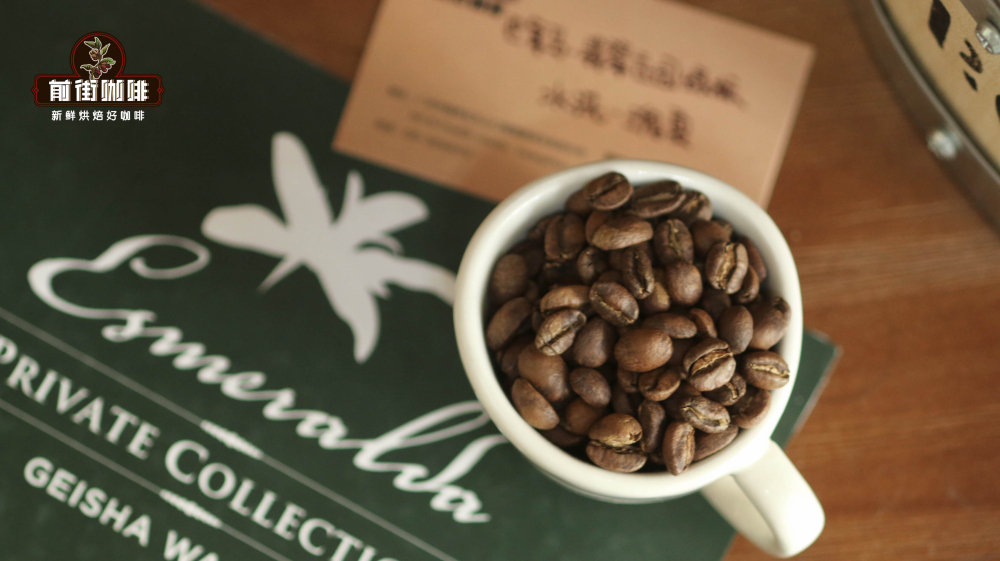
The estate has three main plots — Jaramillo, Canas Verdes, and El Velo — each further subdivided into smaller sections. To guarantee quality and let more people experience great Geisha, La Esmeralda divides its Geisha sales into two tiers: "Esmeralda Special" and "Private Collection," known everywhere as the Red Label and Green Label.
Red Label vs. Green Label
The Esmeralda Special series (Red Label) is the estate's highest-quality Geisha, grown on specific plots at 1,600–1,800 meters, with every batch required to score over 90 points in cupping. Each batch carries its own lot number, and all the beans in a batch come from a single small plot — typically in the Jaramillo or Canas Verdes sub-estates — so buyers can choose the lot that matches their flavor preferences.
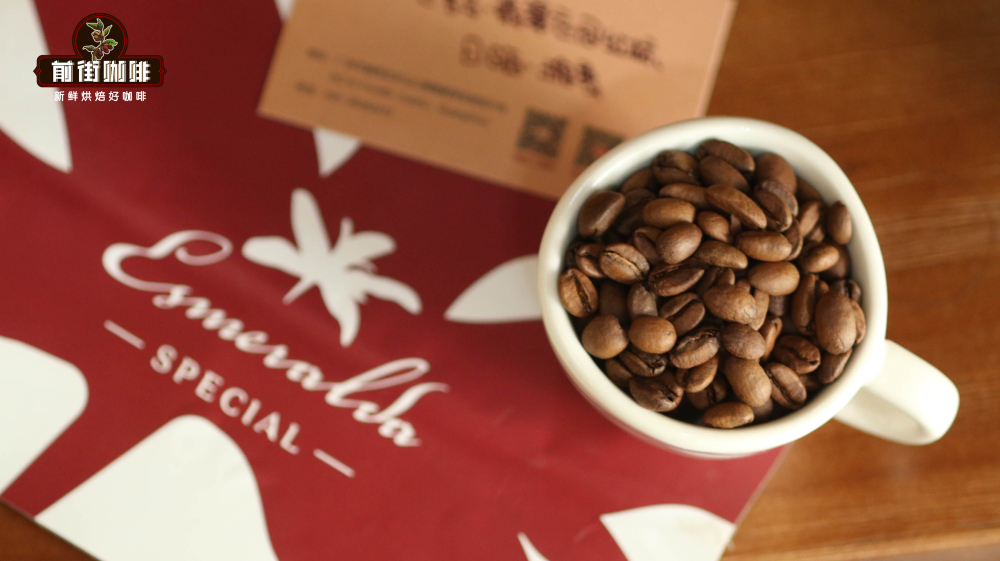
FrontStreet Coffee's new-harvest Esmeralda Red Label is a natural-processed Geisha from the Mario plot in the Jaramillo sub-estate, grown at 1,700 meters. On the cupping table it shows mature strawberry, rose, black tea, and grapefruit — sweet-tart floral and fruit-tea notes with berry sweetness in the aftertaste. This lot is not an auction batch, so the roasted beans are priced at 350 yuan/100g, and a cup in the shop costs 75 yuan (brewed with 15 g of grounds).
The Private Collection series (Green Label) emphasizes the signature profile of La Esmeralda's high-altitude Geisha rather than highlighting specific plots: it blends batches from multiple plots — essentially a Red Label without lot separation. FrontStreet Coffee's new-harvest Green Label is a washed Geisha from three sub-estates at 1,600–1,800 meters, showing fresh white florals like jasmine and ginger flower, clean acidity reminiscent of sweet orange and lemon, honey-like sweetness, and an aftertaste similar to Tieguanyin tea. Roasted beans are priced at 168 yuan/100g, and a cup in the shop costs 60 yuan.
Beyond Esmeralda: Panama's Geisha Terroir
FrontStreet Coffee also offers an entry-level washed Geisha from the Boquete region, grown at 1,600 meters, with citrus acidity, white florals, honey sweetness, and a green tea finish — priced at 98 yuan/100g, with a cup in the shop costing 30 yuan.
Panama's coffee cultivation is concentrated in the western highlands: Boquete, Volcán, and Renacimiento, with the Boquete valley and the Volcán area around Barú Volcano the most renowned. Both lie in Chiriquí Province, squarely in the heart of the coffee belt, with fertile volcanic soil and ancient forest. Boquete sits on the eastern side of Barú Volcano at 1,000–2,000 meters, facing the warm, humid monsoon winds of the Caribbean while backed by cold Atlantic currents. The Barú Volcano National Park conservation area shelters rich biodiversity and seven microclimates, and year-round mist plus abundant rainfall create outstanding growing conditions. Thanks to this terroir, the coffee develops an elegant floral-fruit harmony with layered acidity.
Brewing Guide: Geisha at Home
To experience Geisha's flavors at home, buy roasted beans and grind them fresh. Note that FrontStreet Coffee's flavor descriptions are based on freshly roasted beans; aroma fades noticeably after a month of storage, so only beans roasted within 5 days are shipped.

Geisha is world-renowned for its florals and complex fruit character, so the roasters choose a medium-light roast (with slight adjustments per batch) to preserve its quality acidity. High-altitude beans stay hard at this roast level and need a higher extraction rate to open up: use hotter water and a slightly finer grind. For clearer flavor expression, the coffee-to-water ratio is a slightly wide 1:16.
The V60 is the dripper of choice. Its ribs connect top to bottom and its large central hole accelerates flow, while the spiral ribs lengthen the water's path and increase contact time — each stream converges on the center of the bed, concentrating extraction and producing richer layering.

Brewing Parameters (Esmeralda Red Label Natural)
V60 dripper; water temperature 91–92°C; dose 15 g; coffee-to-water ratio 1:16; grind at fine-sugar texture (80% passing a #20 sieve).
Three-Stage Pour
Add 15 g of grounds to the dripper and zero the scale. First stage: pour 30 g of water for a 30-second bloom, starting the timer, using a small flow spiraling outward from the center so the whole bed is wetted.

Second stage: pour with a slightly larger flow to 120 g (scale reading 150 g) to lift the entire coffee bed, keeping the stream vertical and even; complete around 55 seconds. When the liquid drops to about half the bed, begin the third stage: 90 g with a small flow in tight circles — avoid wide spirals, which scatter the grounds and cause under-extraction. Total water: 240 g, with drawdown finishing around 2 minutes 10 seconds. Remove the dripper, swirl the coffee in the server, and taste.

FrontStreet Coffee Recommendation
For newcomers who want to taste the legendary "Geisha flavor" without the flagship price, FrontStreet Coffee recommends starting with the washed Boquete Geisha: classic Panamanian orange-blossom and honey notes, an oolong-tea mouthfeel, delicate fruit acidity, and distinct layering at an accessible price. Stepping up, the Green Label offers the estate's signature high-altitude profile as a multi-plot blend, while the Red Label — natural-processed from the Mario plot at 1,700 meters — is the full experience: strawberry, rose, black tea, and grapefruit in a sweet-tart fruit-tea cup.
Ethiopia, Geisha's birthplace, deserves equal attention. The Geisha Village estate, built by a couple 12 miles from the wild Gesha forest on 475 hectares, grows three varieties — Gori Gesha, Gesha 1931, and Illubabor Forest — graded as Gold (Rarities, 10% of production), Red (Growers Reserve, 15%, scoring 88+ on the SCA 100-point scale), Green (Single Terroir), and Chaka. FrontStreet Coffee's Granana Gesha, natural-dried on raised beds for 14–20 days at a station founded in 2014 by Israel Degefa, offers citrus brightness, elegant ginger-flower aromatics, and ripe fruit sweetness at a medium-light roast. Geisha also makes a striking single-origin espresso: the Granana SOE, pulled at 20 g in, 40 g out in 25 seconds, turns into dried apricot, caramel, and nuts — or try the "Strawberry Candy" blend of honey-processed Costa Rica and Panama Geisha, which also makes a superb cold brew (30 g coarsely ground, 360 g water at 1:12, steeped 8 hours refrigerated, then rested 3 more hours for grape juice, rose, sweet orange, and fruit-wine flavors).
Important Notice :
FrontStreet Coffee is a long-established specialty coffee roaster in Guangzhou China, selling freshly roasted beans from its own farm in Yunnan as well as dozens of carefully selected single-origin beans from around the world for both pour-over and espresso. The products deliver consistently excellent quality and great value, with shipping within 24 hours. Guangzhou's FrontStreet Coffee shop is recommended by many coffee lovers, and the beans are now available online at the Tmall 。
FrontStreet Coffee has moved to a new address:
FrontStreet Coffee Address: 315,Donghua East Road,GuangZhou
Tel:020 38364473
 Scan and follow the En Gafei WeChat official account. Please indicate that the reprint comes from "En Gafei".