Why is Americano Bitter? Is Adding Sugar to Americano Considered Low-Class? Americano Coffee Bean Characteristics and Stories
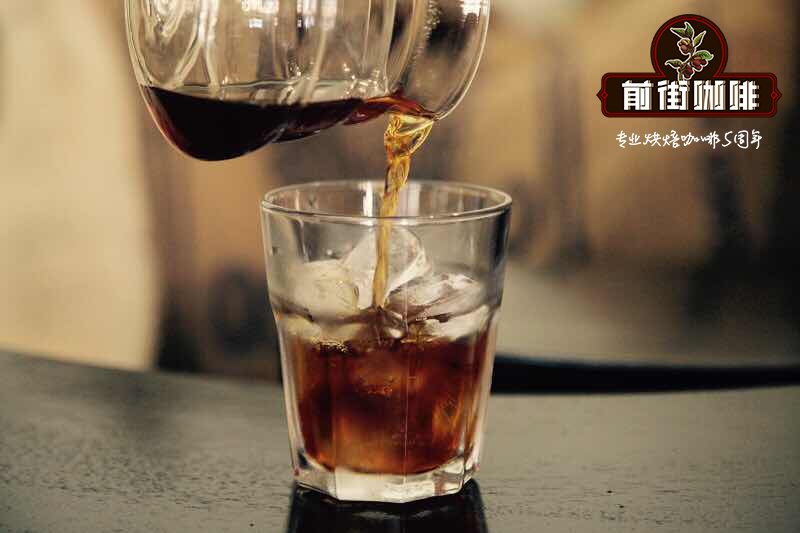
Is Adding Sugar to an Americano Low-Class?
Americano and latte are the two most common orders in coffee shops everywhere, but few people realize the two drinks represent a genuine cultural divide between the United States — a massive coffee market — and Italy, a nation defined by its coffee culture.
Strictly speaking, the Americano as we know it isn't really sold in the United States. Before espresso — that intense concentrate extracted under high pressure — spread across America, the default American coffee was drip coffee: the machine that percolates endlessly in the diners of American movies is what Americans simply called "coffee."
Americans live at a hurry, and the culture shows: fast food conquered the country, and convenient drip coffee conquered American coffee drinking. Left on the burner too long without fresh grounds, drip coffee brews thin and weak — which may be exactly why the drink made by diluting a shot of espresso with a large amount of water came to be called an Americano.
But drip coffee and a watered-down espresso are not the same drink. Because espresso extracts its concentrate so quickly, it actually contains relatively little caffeine; diluted with plenty of water, an Americano ends up with less caffeine than the drip coffee Americans grew up drinking. Contrary to popular assumption, espresso is not especially high in caffeine.
The espresso machine is credited to Italian inventors of the 19th century, though its popularization really began in the 1950s, and Starbucks later carried it worldwide. Italian communities around the globe helped spread it too. Curiously, some Italians maintain that what comes out of an espresso machine isn't quite orthodox coffee at all.
Italian coffee culture is also not the leisurely café-hanging most people imagine. Italians typically drink lattes or americanos in a café after breakfast, sipping quickly and leaving. Raised on coffee since childhood, they are thoroughly accustomed to the strong, bitter, acidic punch of espresso concentrate; many will order an espresso at the bar and down it in seconds, believing the concentrate loses its best flavor within a few dozen seconds. Plenty of Italians also add sugar or custard cream to soften the bitterness — a habit that surprises outsiders, which circles back to the original question: is adding sugar to an Americano low-class? In Italy, clearly not.
For Italians, a latte — mostly milk — barely counts as coffee at all. The word "latte" literally means "milk" in Italian: order a "latte" in Italy and the waiter will bring you a glass of milk. You need to say "caffè latte." Outside Italy, smooth lattes and cappuccinos dominate, but for Italians who may drink 5 or more espressos a day, "coffee" means one thing: espresso.
FrontStreet Coffee Espresso Recommended Parameters
Single shot: 14g coffee grounds, extract for 25-30 seconds, yield 21g of espresso
Double shot: 21g coffee grounds, extract for 25-30 seconds, yield 40g of espresso
FrontStreet Coffee Recommendation
Whether you take your Americano straight or with sugar, the bean decides whether the cup is harsh or sweet. For a traditional-style Americano, FrontStreet Coffee's Classic Blend combines Indonesia Mandheling, Brazil red Bourbon, and Vietnam washed Robusta into an Italian-style recipe with Asian low-acid depth and herbal, woody tones alongside American smoothness and creaminess — expect butter, nut, spice, and dark-chocolate aromas with wild character and thick crema in both Americano and latte. For a budget-friendly everyday option, the FrontStreet Dark Cocoa Basic Blend (Yunnan small-bean plus Brazil Cerrado) brings nut, chocolate, and cream notes with a gentle plum-like acidity. And if deep-roasted blends have grown tiresome, try the medium-roast FrontStreet Strawberry Sugar espresso blend — Colombian, Costa Rican, and Ethiopian washed, natural, and honey-processed Arabicas united with rose aromatics, low bitterness, and flavors of grape, dried blueberry, sweet orange, and candy in the cup.
Important Notice :
FrontStreet Coffee is a long-established specialty coffee roaster in Guangzhou China, selling freshly roasted beans from its own farm in Yunnan as well as dozens of carefully selected single-origin beans from around the world for both pour-over and espresso. The products deliver consistently excellent quality and great value, with shipping within 24 hours. Guangzhou's FrontStreet Coffee shop is recommended by many coffee lovers, and the beans are now available online at the Tmall 。
FrontStreet Coffee has moved to a new address:
FrontStreet Coffee Address: 315,Donghua East Road,GuangZhou
Tel:020 38364473
 Scan and follow the En Gafei WeChat official account. Please indicate that the reprint comes from "En Gafei".