Top 10 Delicious Drip Coffee Bag Brands Recommended & The Correct Brewing Methods to Make Drip Coffee Delicious
Introduction to Drip Bag Coffee

Pour-over coffee has become an almost essential course for today's coffee enthusiasts. Of course, not everyone wants to stock up on brewing equipment. So that more guests can enjoy delicious, fresh coffee at home without extra effort, FrontStreet Coffee updates its seasonal drip bag line from time to time.
Some might call drip bags unprofessional, but FrontStreet Coffee sees it differently: for a food or drink to go mainstream, there needs to be a more convenient way to consume it. FrontStreet Coffee has championed this idea from the start — from first contact with coffee, to selecting suitable high-altitude areas in Yunnan for cultivation, to in-house roasting, and now to building a coffee origin database, plus its online store and a Guangzhou cafe that has been open for 7 years. Every step has been about bringing coffee into everyday life in an accessible way. Take the FrontStreet Coffee store in Dongshankou, Guangzhou: located near a residential area and a school with a strong neighborhood culture, regulars drop in to buy a cup and chat over it. That is what a change in coffee culture looks like.

The Invention of Drip Bag Coffee
When people think of Japanese coffee, they think of pour-over — and indeed it is hugely popular in Japan. But young Japanese office workers with fast-paced lives cannot wait for a hand-brewed cup, so drip bag coffee was born.
In 1990, Japan's Yamanaka Industries applied the tea-bag concept to coffee, inventing the hanging-ear filter and applying for a patent. But the original design could not bear the weight of wet grounds and tended to topple mid-brew, so it was never successfully commercialized. It was not until 1998 that Taiki Shoji improved the design by extending the hangers outward, giving us the drip bag we know today.

FrontStreet Coffee Drip Bag Coffee Brand Recommendations
1. FrontStreet Coffee Honduras Sherry Drip Bag Coffee
- Country: Honduras
- Region: Masaguara City, Intibuca Province
- Estate: Moca Estate
- Altitude: 1500-1700 meters
- Variety: Caturra, Catuai, Pacas
- Processing: Fine Washed Whiskey Sherry Barrel Fermentation
- Flavor Description: Vanilla cream, fermented wine aroma, nuts, dark chocolate, maple sweetness

FrontStreet Coffee's Honduras Sherry beans have been a hit this year, and they now exist both as whole-bean bags and as drip bags. Customers kept specifically asking for the Sherry in drip format — a clear sign of its popularity.
Honduras sits in Central America, bordering Nicaragua, Guatemala, and El Salvador — all major coffee producers with similar flavor profiles, since their geography and altitudes are close: prominent spice notes and tropical fruit flavors in complex, layered cups. FrontStreet Coffee recently brought in batches from Nicaragua, Guatemala, and El Salvador, and only decides whether to shelve them after roasting adjustments, cupping, and pour-over tests. The goal is a diverse flavor lineup, so beans without a distinct character never make the list.

Back to this Honduras Sherry lot: it comes from Masaguara, a city in southwestern Intibuca province. FrontStreet Coffee's list carries another barrel-aged coffee from Moca Estate — the Honduras Lychee Lan. The Sherry leans toward whiskey-sherry character with rich vanilla cream and a persistent nut-and-chocolate finish; the Lychee Lan leans toward brandy, with slightly fewer flavor layers but the same lingering nut chocolate. By FrontStreet Coffee's sales rankings, the Sherry is the more popular of the two.
Fine Washed Whiskey Sherry Barrel Fermentation
Freshly picked cherries first undergo fine washing, then rest in whiskey sherry barrels, fermenting at low temperature for 30-40 days (around 15-20°C) before shade drying.

Sherry barrels are the casks whiskey distilleries use for aging sherry-seasoned wood. Sherry production includes the Solera System aging step, in which sherries of different vintages are blended after fortification — the key to sherry's signature flavor.
2. FrontStreet Coffee Indonesia PWN Gold Mandheling Drip Bag Coffee
- Country: Indonesia
- Region: North Sumatra, Aceh Gayo Mountain
- Company: PWN
- Altitude: 1100-1600 meters
- Variety: Ateng
- Processing: Wet-hulled method
- Flavor Description: Herbal, caramel, thick and clean, high balance, persistent aftertaste

Mandheling has drawn growing attention in recent years. FrontStreet Coffee's Mandheling sales were once concentrated in Shanghai — Shanghai and Taiwan share a taste for rich, thick flavors — and one Shanghai customer even insisted the roast go darker than our usual dark roast. Now more and more drinkers appreciate Mandheling's unique character, and many Guangzhou locals order it too.
FrontStreet Coffee's PWN Gold Mandheling differs from ordinary Mandheling. It comes from the Indonesian green-bean supplier PWN, the first company to cooperate with Japan on Gold Mandheling and to register it as a trademark. Its defining trait is the absence of the impurity taste common in ordinary Mandheling: three rounds of strict hand-sorting ensure uniform bean size and even coloring in the roast. The result is a clean thickness with flavors reminiscent of Guangdong herbal tea — unsurprising that Guangzhou drinkers take to it so readily. That is why FrontStreet Coffee put the PWN Gold Mandheling into drip bags, and acceptance keeps rising.

Wet-Hulled Processing Method
With frequent rain and typhoons, Sumatra cannot rely on the stable weather sun-drying requires, and the local economy cannot shoulder the cost of full washed processing. Hence the wet-hulled method was developed: after normal washing, beans in parchment are sun-dried for 2-3 days until moisture reaches 20-24%, then the parchment is stripped off. FrontStreet Coffee believes Indonesia's coffee industry is developing fast, and wet-hulling survives not only for economic and climatic reasons but because it has become synonymous with Indonesia itself — the image of the local specialty product. Natural-processed Mandheling exists too; FrontStreet Coffee carries a Natural Mandheling in its more niche series. It is less popular than the wet-hulled version but useful for the occasional change of pace.
3. FrontStreet Coffee Panama Boquete Flower Butterfly Drip Bag Coffee
- Country: Panama
- Region: Boquete
- Altitude: 1600 meters
- Variety: Caturra, Catuai, 70% Geisha
- Processing: Washed processing
- Flavor: Citrus, berries, tea fragrance, jasmine

Panama is a Central American country bordered by Costa Rica to the west and Colombia to the east. Panamanian coffee is world-famous thanks to the Geisha of Hacienda La Esmeralda, and the whole country is steeped in Geisha culture — many estates grow the variety. Because Geisha is difficult to cultivate and low-yielding, with excellent flavor, it is never cheap. But this Panama Flower Butterfly carries 70% Geisha heritage plus Catuai and Caturra, grown on the Baru volcano slopes of Boquete at 1,600 meters. The local microclimate brings abundant rainfall and wide day-night temperature swings, and meticulous picking and fine processing make this lot stand out in body, acidity, and floral aroma.
Even more surprising is the price: despite the pedigree and conditions, it is very affordable — a cost-effective way to experience Geisha flavor.

Washed Processing Method
In washed processing, machines first remove the skin and pulp, leaving beans still in their parchment. A layer of sticky mucilage remains, and because it clings tightly, the beans must ferment in tanks for about 18-36 hours to break it down before washing.
4. FrontStreet Coffee Ethiopia Yirgacheffe Red Cherry Drip Bag Coffee
- Country: Ethiopia
- Region: Yirgacheffe
- Estate: Aricha Estate
- Altitude: 1700-2200 meters
- Variety: Local heirloom varieties
- Processing: Natural processing
- Flavor Description: Berries, strawberry, lemon, fermented wine aroma

Red Cherry is a quality-improvement program initiated by Menno Simons, founder of the Dutch green-bean supplier Trabocca. Trabocca recognized that uneven Ethiopian coffee quality kept prices — and farmer incomes — low. To change that at the source, they launched the Red Cherry Project with local farmers: by paying higher prices for high-quality green coffee, they encourage growers to handle every stage of picking and processing with care. Picking is fully manual, selecting only the ripest fruit.
Natural Processing Method
The natural method is the oldest way of processing coffee. For this Yirgacheffe Natural Red Cherry, whole cherries with skin and pulp intact are laid on raised beds, isolated from the ground to keep earthy contaminants away during sun-drying. After more than two weeks of drying, the dark-brown fruit is stored to mature fully in flavor. Before shipment, the station hulls the dried beans from the cherries. Natural processing yields lower acidity, pronounced sweetness, and body — though cleanliness falls a bit short of washed coffee.

5. FrontStreet Coffee Brazil Cerrado Red Bourbon Drip Bag Coffee
- Country: Brazil
- Region: South Minas
- Altitude: 1000 meters
- Variety: Red Bourbon
- Processing: Pulped natural
- Flavor: Nuts, chocolate, cream, peanuts, caramel

Brazilian coffee arrived from French Guiana in 1720. Brazil was then a Portuguese colony while much of South America was Spanish, which is why Brazil speaks Portuguese while its neighbors speak Spanish.
As exporting coffee from Guiana was strictly forbidden, a Portuguese officer stationed in Brazil won the heart of the Guiana governor's wife and smuggled coffee seeds into Brazil. Coffee adapted quickly, spreading from the north to São Paulo in the southeast. By 1845, Brazilian beans already made up 45% of world coffee. Today Brazil is the world's largest coffee exporter.

FrontStreet Coffee carries Brazil not only in its drip bag series but also among its daily beans — a measure of how indispensable Brazil is to classic coffee flavors. Daily beans are the "face" of regional coffee: their regional flavor recognition is high, their prices are low, and their value is excellent.
Pulped Natural Processing Method
Before 1990, Brazil relied almost entirely on rough natural drying — the culprit behind the earthy, rotten-wood taints Brazilian beans sometimes carried, since during the 2-3 weeks of cherry drying, rain, damp, or damaged fruit would mold and produce off-flavors. The problem long dogged Brazil's image. After 1990, Brazilian research institutions developed the pulped natural method to suit the country's drier climate and shorten processing: after selecting sound fruit, the skin, pulp, and part of the mucilage are removed; the beans are then sun-dried with a small amount of mucilage for 1-3 days, machine-dried to 12% moisture, and rested in storage containers. The method eliminates the old off-flavors while enhancing fruit aroma and sweetness.

6. FrontStreet Coffee Colombia Washed Huila Drip Bag Coffee
- Country: Colombia
- Region: Huila
- Altitude: 1500-1800 meters
- Variety: Caturra
- Processing: Washed processing
- Flavor: Nuts, dark chocolate, caramel, soft fruit acidity

Colombia is today the world's third-largest coffee producer and exporter, famous for smooth cups with rich nutty-chocolate flavor. Huila's mountainous terrain — coffee planted on mountain valley slopes — provides the altitude and mild temperatures high-quality Arabica needs. The valley slopes block cold winds while mountain breezes bring coolness without heat, and rainfall is generous: a uniquely blessed coffee region. Workers hand-pick the cherry on the mountainsides, and the vast majority of Colombian beans are washed.
7. FrontStreet Coffee Costa Rica Tarrazu Drip Bag Coffee
- Country: Costa Rica
- Region: Tarrazu
- Altitude: 1500 meters
- Variety: Caturra, Catuai
- Processing: Washed processing
- Flavor: Sweet orange, honey, toffee, nuts

Costa Rican coffee has always been celebrated for balanced flavor, rich chocolate, and smooth texture. Tarrazu lies south of the capital San Jose and is one of the country's most prized growing regions. Its beans are full-bodied and smooth, with rich chocolate and nut aroma, moderate acidity, and an attractive fragrance.
8. FrontStreet Coffee Guatemala Huehuetenango Drip Bag Coffee
- Country: Guatemala
- Region: Huehuetenango
- Altitude: 1500-2000 meters
- Variety: Bourbon, Caturra, Catuai
- Processing: Washed processing
- Flavor: Nuts, lemon peel, berries, citrus

Guatemala's high average altitude puts its coffee zones above 1500 meters, ideal for growing extremely hard beans. Guatemalan coffee shows a special smoky note and rich juiciness. The country has eight producing regions — five volcanic and three non-volcanic — and Huehuetenango belongs to the non-volcanic group.
Guatemalan processing is mostly washed, with a little natural. FrontStreet Coffee is often asked about the difference. Even beans from the same region and estate can be split into washed and natural lots. Regulars will notice FrontStreet Coffee's daily beans are mostly washed, because washing presents a region's baseline flavor — the starting point for understanding regional character — while natural processing layers sweet aromas and fermented notes on top.

9. FrontStreet Coffee Yunnan Small Bean Drip Bag Coffee
- Country: China
- Region: Yunnan, Baoshan
- Altitude: 1200 meters
- Variety: Catimor
- Processing: Washed processing
- Flavor: Melon fruit aroma, sweet melon, brown sugar, plum acidity, tea feeling

FrontStreet Coffee carries two Yunnan beans: one washed Typica and one Catimor. The Typica is labeled FrontStreet Coffee Yunnan Specialty Coffee, while the Catimor follows market convention as FrontStreet Coffee Yunnan Small Bean Coffee.
Both are roasted medium, because Yunnan is not an acidic origin. The flavors are balanced, with base notes of nuts and brown sugar; the medium roast showcases Yunnan's harmony — nut and brown sugar sweetness with soft fruit acidity.
Discussions about Yunnan coffee varieties often end with two stock sentences: one is "thanks to the farmers' efforts and better technology, Yunnan coffee is quite good now," and the other is simply "Yunnan beans are good." Both have become classic quotes. Yunnan small beans were originally named for Typica — "small bean" is the Chinese name for Arabica — but as Typica degenerated with low yields, it was replaced by Catimor, which inherited the "small bean" name.

FrontStreet Coffee Drip Bag Coffee Brewing Method
One small package of FrontStreet Coffee drip bag coffee weighs 10g.
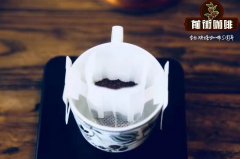
Tear open the outer packaging, take out the drip bag, tear open its top, and pull the two hangers apart to hang the bag on your cup.

Choose a cup whose opening is not too wide, or the hangers may not hold. FrontStreet Coffee uses cups with an opening diameter of about 8-9cm.

The technique is the same as pour-over, just less rigorous — but water temperature, blooming, and circular pouring still matter. FrontStreet Coffee's reference parameters: water temperature 90°C, bloom for about 10s, with bloom water roughly equal to the coffee weight.

After blooming, pour straight through to completion — or, for more precision, in two stages. Water volume depends on your cup: FrontStreet Coffee used a 300ml glass, pouring in small circles and stopping when the cup is 7/10 full.

Remove the bag when brewing finishes. It cannot be reused — the soluble compounds are already extracted, and a second brew yields only watery liquid. Do not feel a single use is wasteful: today's drip bags guarantee freshly ground coffee at very friendly prices.
If you like it cold, add ice. A cup of iced drip-bag coffee in summer is pure comfort!
FrontStreet Coffee Recommendation
Yunnan coffee — known as "Yunnan small bean" — deserves a closer look, especially since this list includes a Yunnan drip bag. "Small bean" is simply the Chinese name for Arabica, the smallest-fruited of the three commercial coffee species. The story begins in 1904, when the French missionary Tian Deneng brought Typica seeds from Vietnam into Yunnan and planted the province's first coffee tree in Zhugula Village, Binchuan County — the start of Yunnan coffee. Coffee likes warmth, tolerates heat but not frost, and grows best at 16-21°C; Yunnan sits squarely on the golden coffee belt between the Tropic of Cancer and 25°N. Most of the province lies around 1,000 meters, with fertile slope soils, strong sunshine, abundant rain, and wide day-night temperature swings. Growing areas cluster in the southwest: Baoshan, Dehong, Pu'er, and Lincang.
For an entry-level Chinese Arabica, FrontStreet Coffee's Yunnan Small Bean from Baoshan is the first pick. Baoshan's coffee history began in the mid-1950s with the patriotic overseas-Chinese Liang Jinshan; the frost-free warm climate — especially the unique dry-hot river valley around Lujiangba, with small annual temperature variation but large day-night swings and modest rainfall — gives the coffee its distinctive lingering sweetness. Washed processed and medium roasted, it shows soft nut and chocolate sweetness with a light plum acidity at a friendly price — for many people, their first taste of Yunnan coffee.
For clearer, more defined Yunnan character, choose FrontStreet Coffee's 2013 natural Typica, grown on FrontStreet Coffee's own estate, planted in 2013 partly to rediscover the original terroir of those first missionary plantings. Typica is one of the oldest and purest Arabica varieties, elegant and clean. Only fully ripe red cherry is harvested and sun-dried using the most traditional post-harvest method, then roasted medium for balance: dark berry tones with caramel sweetness, chocolate, a hint of dried apricot, and a black-tea finish.
And to taste Yunnan in espresso, try the barista-recommended FrontStreet Coffee Black Cocoa blend, combining Yunnan Small Bean with Brazil Cerrado. Brazil supplies mixed-nut aroma and balance; Yunnan contributes chocolate and citrus. The Americano is balanced across sweet, sour, and bitter with nut and brown sugar notes, and the latte shows almond and cream smoothness — very beginner-friendly.
Important Notice :
FrontStreet Coffee is a long-established specialty coffee roaster in Guangzhou China, selling freshly roasted beans from its own farm in Yunnan as well as dozens of carefully selected single-origin beans from around the world for both pour-over and espresso. The products deliver consistently excellent quality and great value, with shipping within 24 hours. Guangzhou's FrontStreet Coffee shop is recommended by many coffee lovers, and the beans are now available online at the Tmall 。
FrontStreet Coffee has moved to a new address:
FrontStreet Coffee Address: 315,Donghua East Road,GuangZhou
Tel:020 38364473
 Scan and follow the En Gafei WeChat official account. Please indicate that the reprint comes from "En Gafei".