The Concept of Coffee Blending and Types of Blended Coffee Beans

Every customer who comes to FrontStreet Coffee has different coffee preferences. Some love rich milk coffee, while others enjoy pour-over coffee to savor single-origin flavors. There are also customers who are very interested in coffee blends, and FrontStreet is often asked about blend recipes and other related questions. So today, FrontStreet wants to talk with everyone about coffee blends.

Understanding Coffee Blends
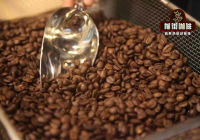
Blends are divided into Italian blends and single-origin blends. FrontStreet currently offers four different styles of FrontStreet Italian blends. There are two forms of blends: one is to mix raw coffee beans in certain proportions or according to desired flavors before sending them into the roaster to become roasted beans, commonly known as raw blending. The other is to directly mix already roasted coffee beans, which is called roasted blending. The four FrontStreet Italian blend coffees offered by FrontStreet belong to the latter category.

The Art of Coffee Blending
Perhaps some customers don't quite understand why coffee beans need to be blended. Isn't that chaotic? Actually, not at all. In FrontStreet's view, every bean has its own advantages and disadvantages. For example, if one bean extracted through an espresso machine doesn't produce enough crema, you can add coffee beans rich in crema to complement it. If the extracted espresso is too acidic, too bitter, or too sweet, you can find complementary beans to blend with each other to achieve the desired coffee flavor. Isn't that perfect?
Just like the Specialty Italian Blend on FrontStreet's menu, it uses Colombian coffee beans paired with Brazilian coffee beans in a 3:7 ratio. The characteristic nutty and chocolate flavors of Colombian coffee are blended with the rich peanut and creamy coffee flavors of Brazil. This Italian coffee blend has a very balanced overall profile, rich crema, an extremely smooth entry, and a delicate aroma with a slight bitterness characteristic of American coffees, making it very popular among FrontStreet's customers and suitable for daily production in coffee shops.

Professional Blending Techniques
Generally, baristas will use various beans for blending to achieve their desired coffee flavors. They will also add Robusta coffee beans. Everyone shouldn't be prejudiced against coffee just because Robusta beans are added; this mixing approach sometimes creates unexpected sparks. Many baristas like to use Yunnan coffee beans for blending because the Yunnan variety is Catimor, a hybrid of Arabica and Robusta, so it naturally has Robusta genes and possesses the factors needed for traditional Italian coffee. Additionally, using Robusta coffee beans can reduce blending costs, so many baristas' blend recipes include Robusta coffee beans.
FrontStreet Commercial Italian Blend Coffee Beans contain 10% Robusta, blended with 30% Colombian washed coffee beans and 60% Brazilian semi-natural processed coffee. It has nutty, cocoa, and caramel flavor profiles, meeting daily shop operational needs.

Additionally, the FrontStreet Basic Italian Blend Coffee on FrontStreet's menu is made by blending Yunnan coffee and Brazilian coffee in a 3:7 ratio. This Italian coffee blend has soft fruit acidity and caramel sweetness, suitable for shop and home users who prioritize cost and have general flavor requirements.
Making a good blended coffee is not simple; it greatly tests the barista's familiarity with coffee bean flavors, specifically each production area and estate, what processing methods are used, and what degree of roasting. These are all fundamental knowledge.

The Science of Blending Ratios
Therefore, coffee beans are generally not blended in a 1:1 ratio. You first need to determine which of the participating coffee beans should be most prominent, whether the prominent flavor is suitable, and how to reduce the prominent coffee flavor, and also put effort into selecting beans: the hardness, moisture content, and roasting of each bean. This requires the barista's care and constant experimentation to produce a delicious cup of Italian coffee.
Currently, when FrontStreet's shop makes Italian blend coffee beverages, they use their own house-roasted FrontStreet Sunflower Warm Sun Italian Blend. This blend uses FrontStreet Honduras Sherry and FrontStreet Ethiopia Yirgacheffe Natural Red Cherry. Through continuous experimentation by FrontStreet's baristas, they achieved a relatively perfect blend ratio of 7:3. The resulting Italian coffee has distinct fruit acidity, along with berry flavor aromas and wine notes, with a comfortable sweet aftertaste.

SOE and Blending Philosophy
Italian espresso can also be made as single-origin coffee. If single-origin coffee beans are used, the resulting coffee can simply be called SOE coffee. Coffee made this way allows you to taste the most fundamental flavors of the origin.
In FrontStreet's view, the characteristic of Italian blend coffee is that it can amplify the advantages of a certain coffee bean while masking its inherent disadvantages, making full use of each coffee bean. Why not do that? Of course, it is not true that the more coffee varieties in a blend, the better. The more coffee beans you add, the harder it is to consider every detail, and the flavors will also become more chaotic. Therefore, in FrontStreet's view, blending about two to six types of coffee beans is about right.

Mastering the Blend
Blend beans can complement each other with different coffee beans. If the coffee beans are well blended, the flavor of this blend will combine the advantages of these coffee beans, extracting a very balanced mouthfeel and an exceptionally aromatic thick crema. However, poor blending can amplify the beans' characteristics, especially lightly roasted beans, which will have strong aromas and stimulating sweet and sour tastes. FrontStreet has found that many coffee shops like to use Yirgacheffe for blend coffee; the extracted floral aroma will be very obvious, and the taste will be somewhat more acidic, very suitable for enthusiasts who like acidic textures. So, if you like blending, you can often come to FrontStreet to exchange coffee experiences.
FrontStreet Coffee Recommendation
Great blends start with great single origins, and FrontStreet's beans give you plenty to experiment with. On the lighter, fruit-floral side, FrontStreet Yirgacheffe Gotiti is a favorite for blending because its jasmine florals and bright citrus acidity come through clearly, adding lift and a gentle tartness; FrontStreet Ethiopia Huaku brings a striking tropical-fruit aroma of strawberry, passion fruit, and jackfruit with very low bitterness and a juicy, smooth body, while FrontStreet Strawberry Candy, a Geisha blend, layers rose, citrus, grape, and dried blueberry and turns to strawberry gummy with milk. These shine in a V60, where the fast extraction and large single hole let brighter, more vivid aromatics and lively acidity come forward.
For the darker, creamier side that anchors a milk-based blend, FrontStreet PWN Indonesia Golden Mandheling is deep roasted with low acidity, a thick and lingering body, and herbal and dark chocolate notes with a faint earthy edge; FrontStreet Brazil Queen Estate is low in acidity and well balanced, with rich nut and cocoa aromas, clear caramel sweetness, and a smooth, never-astringent entry; and FrontStreet Jamaica Blue Mountain No. 1 balances acidity, sweetness, bitterness, and aroma with cream, caramel, chocolate, nuts, honey, and light fruit. When building a blend, remember that a good mix combines two to six beans and is rarely a 1:1 ratio; decide which bean should lead, then adjust the proportions to taste.
Important Notice :
FrontStreet Coffee is a long-established specialty coffee roaster in Guangzhou China, selling freshly roasted beans from its own farm in Yunnan as well as dozens of carefully selected single-origin beans from around the world for both pour-over and espresso. The products deliver consistently excellent quality and great value, with shipping within 24 hours. Guangzhou's FrontStreet Coffee shop is recommended by many coffee lovers, and the beans are now available online at the Tmall 。
FrontStreet Coffee has moved to a new address:
FrontStreet Coffee Address: 315,Donghua East Road,GuangZhou
Tel:020 38364473
 Scan and follow the En Gafei WeChat official account. Please indicate that the reprint comes from "En Gafei".