How to Blend Blue Mountain Coffee Beans? What is the Proportion of Blue Mountain Flavor Coffee?

FrontStreet Coffee's Blue Mountain coffee is precious for its scarcity, its excellent flavor, and its superior bean variety. That is precisely why so many coffees on the market borrow the Blue Mountain name — some labeled "Blue Mountain flavor," others "Blue Mountain blend" — while genuine Blue Mountain coffee is typically enjoyed as a single origin. Only siphon and pour-over brewing can best express its mellow aroma and long aftertaste.
Understanding Coffee Blends
Blended coffee means combining two or more single-origin beans, either as roasted-bean blends or raw-bean blends. FrontStreet Coffee blends after roasting. For example: the FrontStreet Coffee Sunflower Warm Sun Blend combines FrontStreet Honduras Shirley with FrontStreet natural Yirgacheffe Red Cherry in a 7:3 ratio.
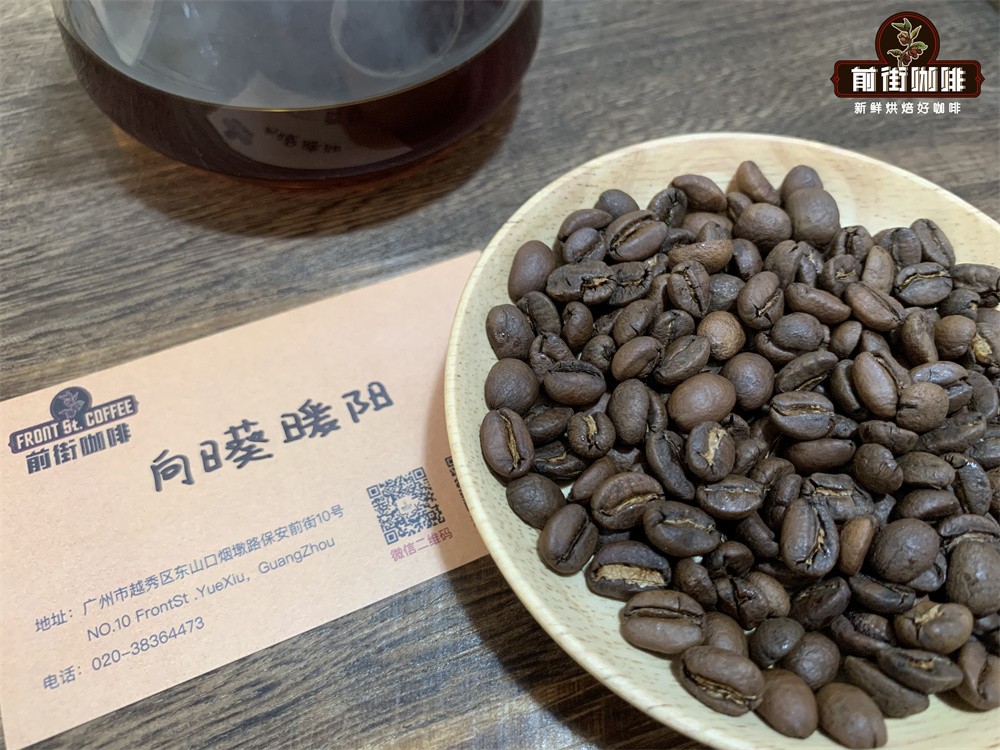
FrontStreet Coffee Blended Coffee Beans Collection
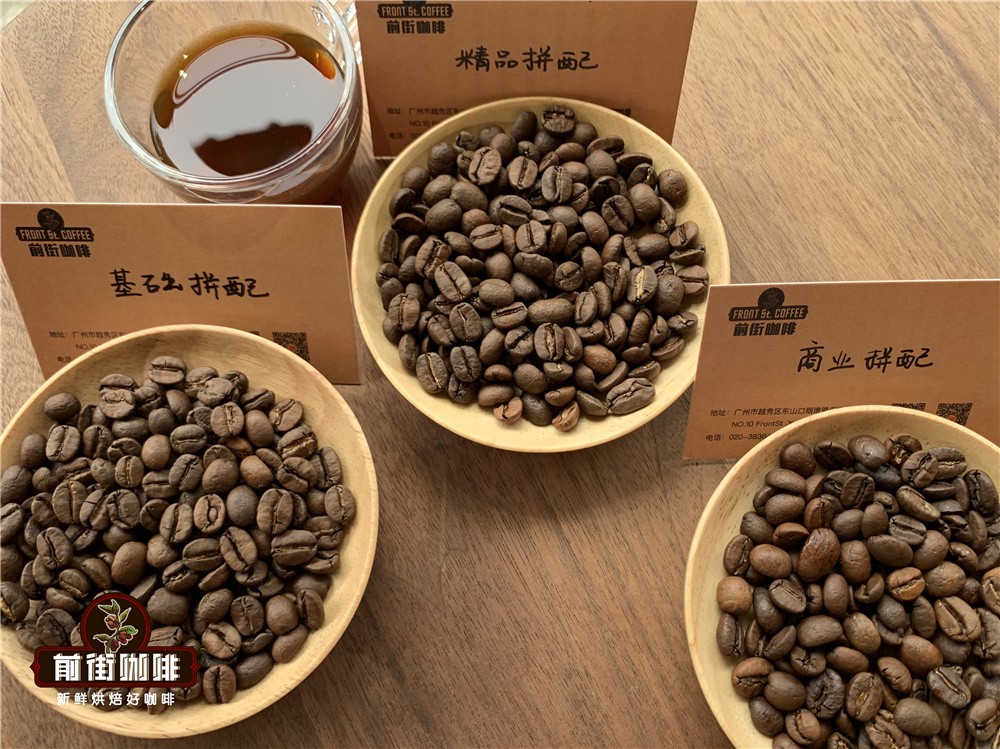
FrontStreet Coffee - Basic Blend Coffee Beans: Yunnan Washed Arabica (30%) + Brazil Natural Process Coffee Beans (70%), featuring soft fruit acidity, caramel, and nutty notes. Suitable for business and home users who prioritize cost while maintaining moderate flavor requirements.
FrontStreet Coffee - Premium Blend Coffee Beans: Colombia Washed Coffee Beans (30%) + Brazil Natural Process Coffee Beans (70%), featuring nutty, dark chocolate, and caramel notes to meet daily business needs.
FrontStreet Coffee - Commercial Blend Coffee Beans: Robusta Washed Coffee Beans (10%) + Colombia Washed Coffee Beans (30%) + Brazil Natural Process Coffee (60%), featuring nutty, cocoa, and caramel notes suitable for daily café production.
Blends rarely use a 1:1 ratio, since equal parts can suppress each other's character. A blend should have a primary and a secondary bean, creating a flavor more wonderful than either single origin alone. If you want a more complex, layered blend, lower the proportion of the base bean — and vice versa.
FrontStreet Coffee Blue Mountain Coffee
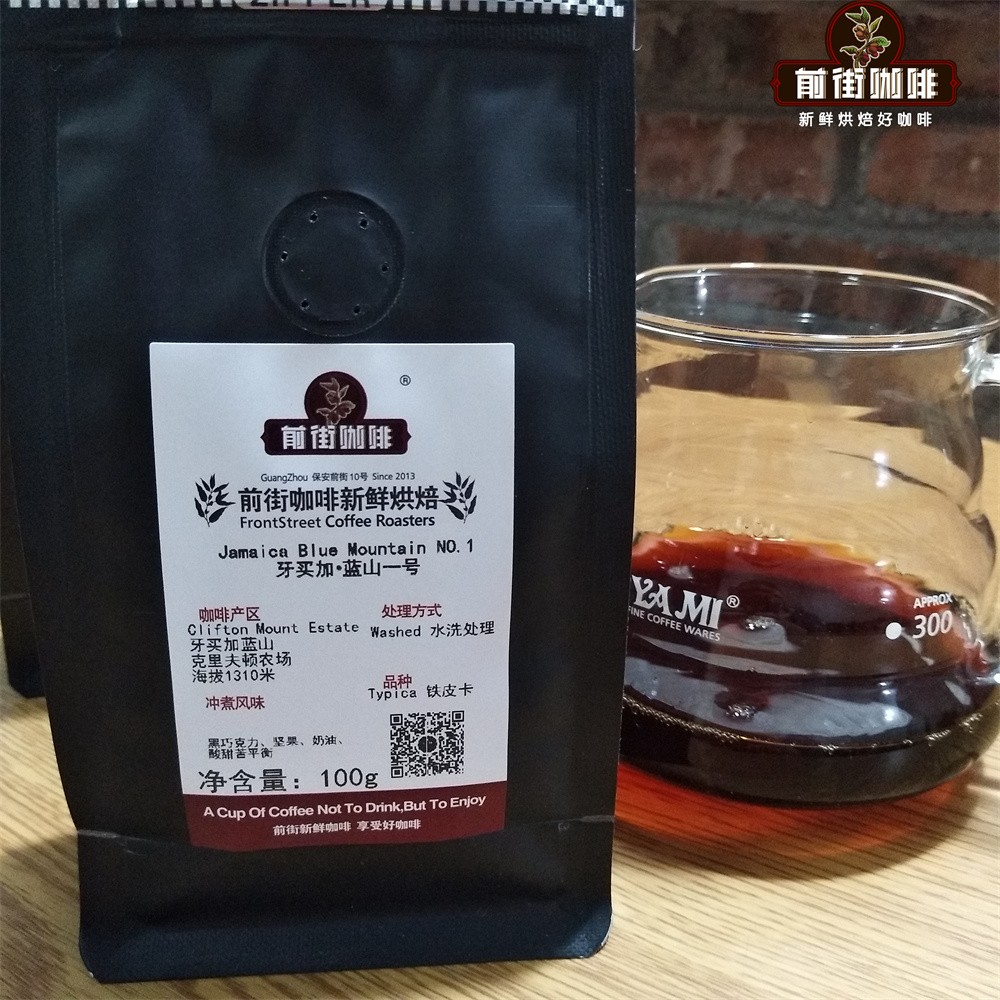
FrontStreet Coffee's Blue Mountain has won coffee lovers over with its mellow taste and the perfect balance of acidity, bitterness, aroma, body, and sweetness. Jim, general manager of an American company famous for coffee and tea, described it this way: "Blue Mountain coffee's flavor is aromatic, smooth, and rich, giving me a feeling as precious as a gem." Because its taste is moderate and perfectly proportioned, it is generally drunk black. Its caffeine content is very low — less than half that of other coffees — fitting modern ideas of healthy drinking and suitable for most people.
Blue Mountain Coffee Growing Environment
Jamaica is an island nation in the Caribbean Sea. Coffee cultivation began there in the early 18th century — nearly three hundred years of history. While Jamaica was still a British colony, then-Governor Nicholas Lawes brought a coffee tree from Martinique and began promoting cultivation in the St. Andrew area.

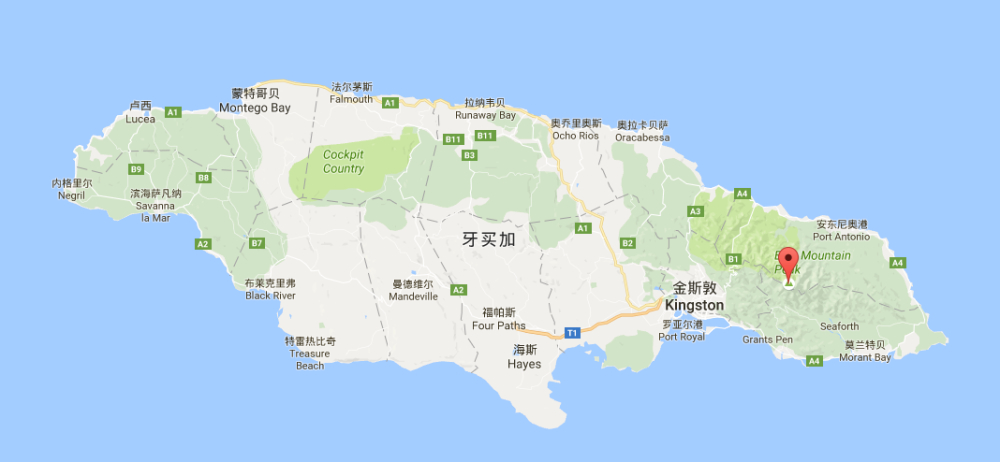
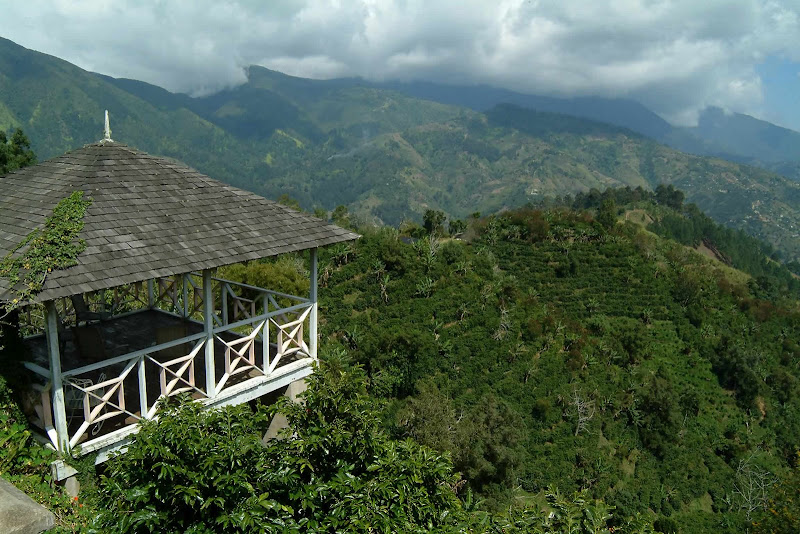
Genuine Blue Mountain coffee grows in the Blue Mountain range in eastern Jamaica. Surrounded by the Caribbean Sea, the mountain takes its name from the brilliant blue reflected off the sea when sunlight strikes it on clear days. Its highest peak reaches 2,256 meters — the highest in the Caribbean — and is a famous tourist destination. The area sits in the coffee belt with fertile volcanic soil, fresh unpolluted air, a humid climate, and year-round fog and rain (average precipitation of 1,980 mm, temperatures around 27°C). That climate and altitude created the world-renowned Jamaica Blue Mountain.
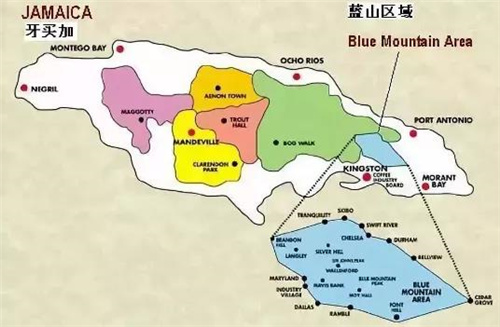
The Blue Mountain range occupies only a small corner of eastern Jamaica. Since the region's coffee cannot achieve mass production, the focus has shifted to high-end premium lots. Jamaica Blue Mountain belongs to the Typica variety — an ancient Arabica known for elegant flavor but weak disease resistance and low yield, demanding heavy investment of labor.
Clifton Estate Introduction
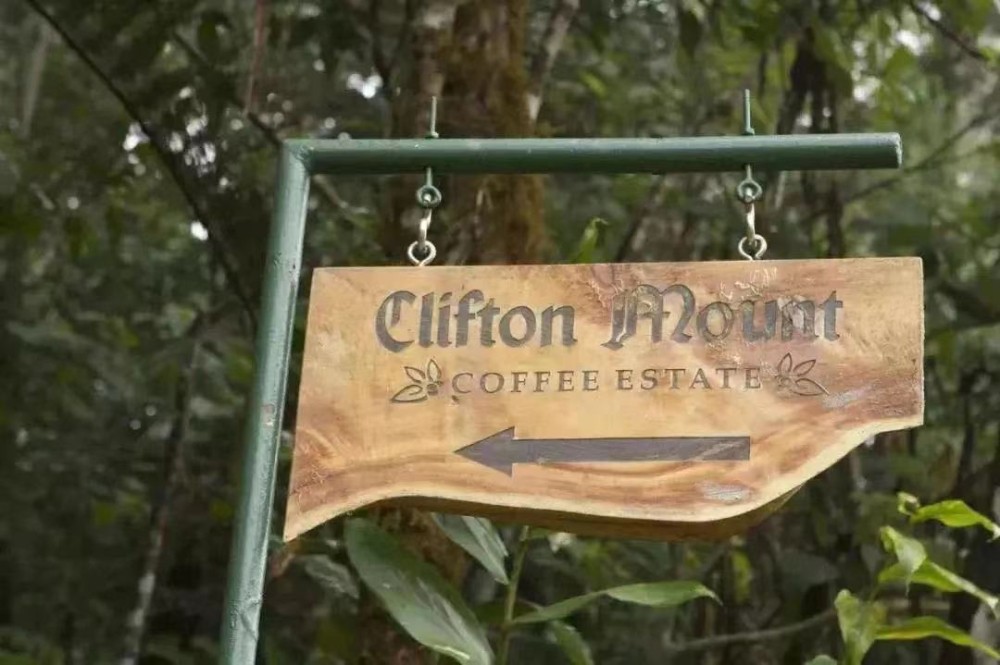
As early as the mid-18th century (around 1750), Clifton Estate began planting and producing coffee. Clifton Mountain is Jamaica's oldest coffee estate still in normal operation, and Clifton is the only Jamaican estate holding "Rainforest Alliance" certification. It is recognized as a very high-quality, world-renowned Blue Mountain producing region. Its elegant great house sits in the Newcastle area of the island, on the eastern slope of Catherine's Peak at an altitude of 4,300 feet.
According to an 1810 survey by the Jamaica Institute,
Robert Hamilton was the owner of the farm at that time. Clifton Mountain was divided into two parts: 80 acres of coffee and 427 acres of pasture on the mountaintop; 111 acres of coffee and 264 acres of pasture at the mountain base.
The Blue Mountain area is a small region with only 6,000 hectares of cultivation area, making it impossible for all coffees labeled "Blue Mountain" to be grown there. Today's Clifton Estate is the largest estate in this region, and by international standards, it's still considered small-scale cultivation, with many estate owners being small landholders whose families have worked this land for two centuries.
In 1953, the Jamaican government established the Coffee Industry Board (CIB) to regulate and ensure the quality of Jamaican coffee. Jamaica was the first country in the world to designate a specific geographical location to a particular coffee brand, somewhat similar to how the French wine industry created the AOC system.
All coffee exported from Jamaica is certified by the CIB. And through strict testing by trained quality control experts, all exports are guaranteed to be 100% authentic Jamaican Blue Mountain coffee.
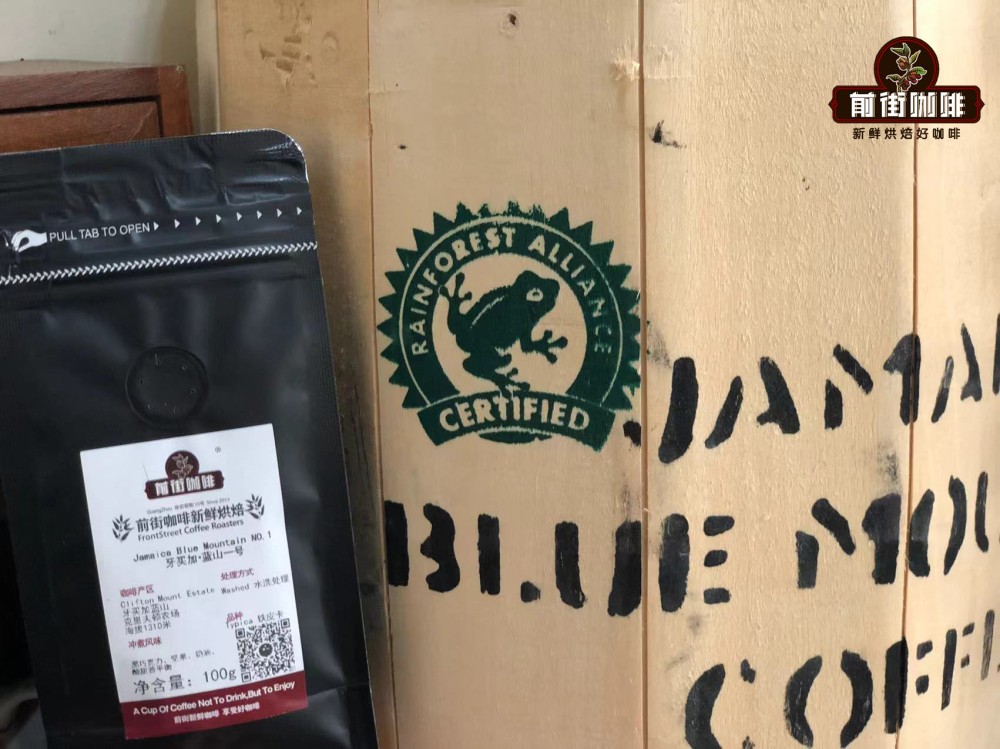
Among all coffee green beans, only Blue Mountain coffee beans are packed in wooden barrels and are labeled with the Rainforest Alliance's tree frog logo.
FrontStreet Coffee's purchased Blue Mountain Number 1 beans come from the highest grade of Clifton Estate coffee. The green beans are 17/18 screen size, with a defect rate not exceeding 2%, moisture content around 13%, with uniform, full, and even particles.

Blue Mountain Coffee Bean Grading
Coffee from Jamaica's Blue Mountain region has three grades: Blue Mountain Coffee, Jamaica High Mountain Supreme Coffee Beans, and Jamaica Prime Coffee Beans. Both Blue Mountain Coffee and High Mountain Coffee are each divided into two grades. Ranked by quality from highest to lowest: Blue Mountain Number 1, Blue Mountain Number 2, High Mountain Number 1, High Mountain Number 2, Jamaica Prime Coffee. Ranked by quality from highest to lowest: NO.1, NO.2, NO.3, and PB, where PB stands for Peaberry.
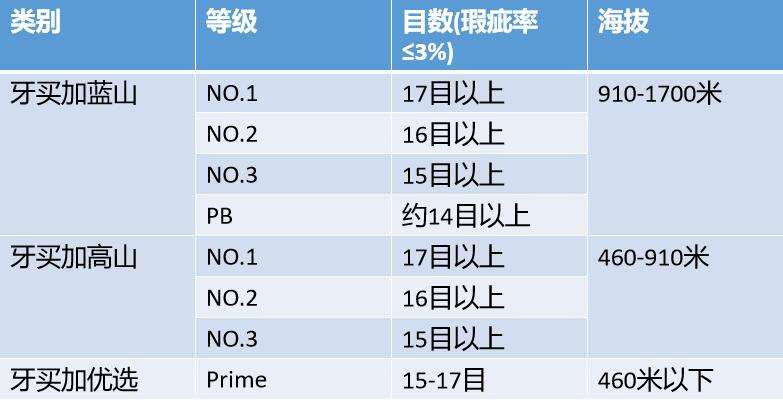
The CIB has established strict standards, dividing Jamaican Blue Mountain coffee into 4 grades based on green bean size and defect ratio. Among these, the highest-grade Blue Mountain Number 1 coffee beans, NO.1, are considered Jamaica's national treasure. The particles must be 17-18 screen size, with a defect rate below 3% and moisture content around 13%. Only coffee beans produced according to these standards can guarantee their flavor. It is precisely through such strict selection that the excellent quality of rare Blue Mountain coffee is maintained. FrontStreet Coffee has obtained several well-known Blue Mountain coffees from Jamaica, and after cupping comparisons, finally decided to choose Blue Mountain Number 1 beans produced by the historic Clifton Estate.
Coffee grown at lower altitudes is classified by the CIB as "Jamaica High Mountain Coffee" and "Jamaica Supreme." The flavors developed at lower altitudes are far from reaching the excellent quality of high-altitude Blue Mountain coffee beans, so the price is correspondingly lower.
Blue Mountain Coffee Bean Varieties
Jamaica Blue Mountain belongs to the Typica variety, one of the oldest Arabica varieties with a long history. Its flavor is among the best, but its disease resistance is weak, resulting in low yields, which is one of the reasons for the high price of Jamaica Blue Mountain coffee.
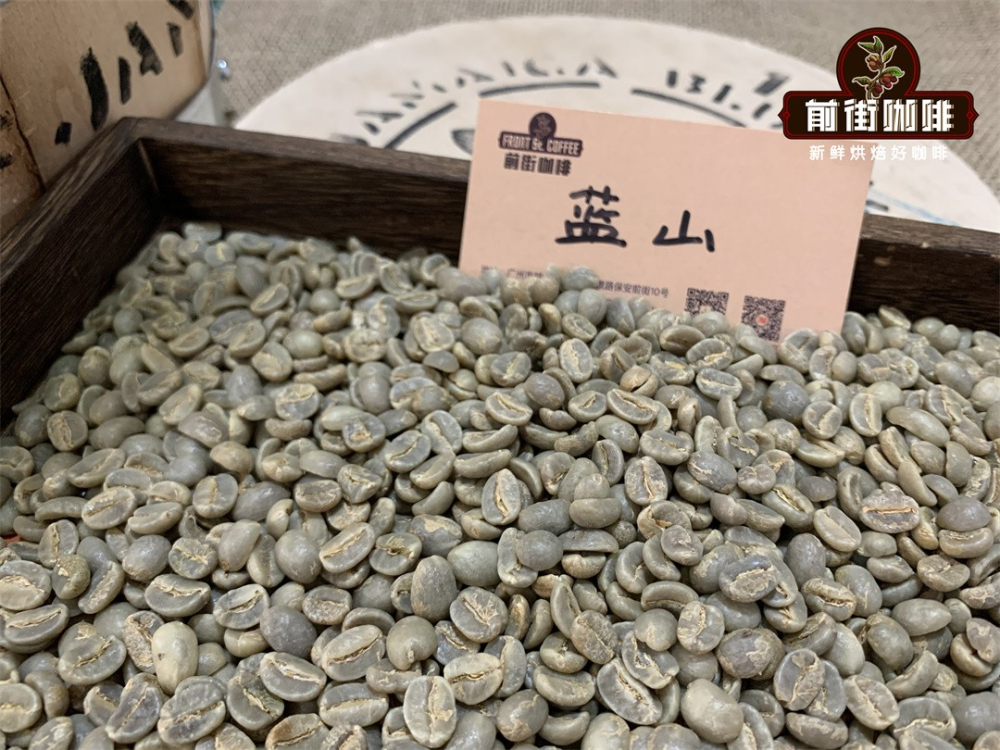
Typica trees are tall and elegant, with copper-colored young leaves at the top, so they are often called red-top coffee. Typica has pure and elegant flavor, but its constitution is weak with poor disease resistance, and the yield per plant is very low. This is why fewer Typica variety coffees appear today. Typica was introduced to Blue Mountain for cultivation in the 18th century and has been there for over two hundred years. Blue Mountain's Typica has adapted to the local island-style terroir and evolved better disease resistance, particularly against coffee berry disease, which is much stronger than typical Typica.
FrontStreet Coffee Blue Mountain Coffee Bean Processing
Blue Mountain coffee comes in both washed and natural processes.
Washed Processing: Hand-picked coffee cherries are placed in water, using flotation to remove impurities and unripe fruits. Next, the pulp and skin are removed, allowing them to ferment in pools for 12-18 hours. The fermented beans are then placed in pools and moved back and forth, using the friction between beans and water flow to wash the coffee beans until smooth and clean. They are then spread under the sun for dehydration drying until the moisture content reaches 12-14%, after which they can be packed and stored in warehouses before being sent for quality inspection before export. The washed process significantly reduces the defect rate, better restoring the natural aroma of Blue Mountain coffee beans with higher clarity in taste.

FrontStreet Coffee's Jamaica Blue Mountain Brewing Parameters
FrontStreet Coffee uses the KONO dripper. The KONO's ribs stop at less than half the height of the dripper - this design actually ensures that after wetting, the filter paper closely adheres to the dripper wall, limiting airflow. This increases the water absorption time of the coffee grounds, resulting in more uniform extraction and enhanced rich mouthfeel, suitable for brewing FrontStreet Coffee's medium-dark roasted Blue Mountain coffee.
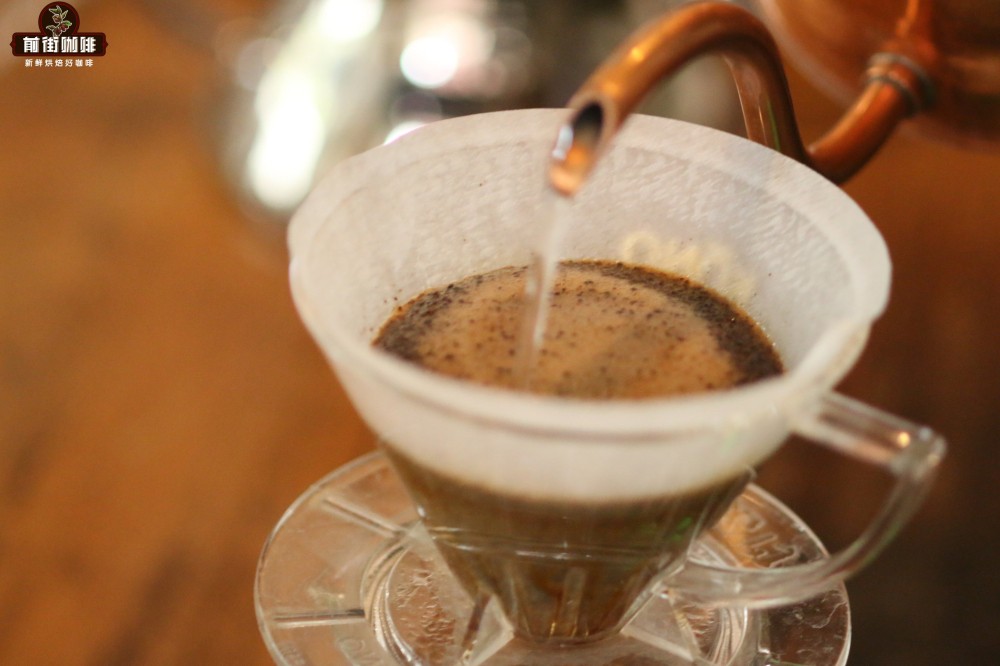
KONO dripper, 88°C water temperature, 1:15 coffee-to-water ratio, 15g coffee grounds, grind size (75% pass-through on #20 standard sieve), three-stage extraction.
Using segmented extraction, bloom with twice the amount of water as the coffee grounds, i.e., 30g water for 30 seconds. The blooming process is necessary to allow the coffee grounds to release internal carbon dioxide gas, ensuring more stable extraction in the later stages. Using a small water flow in circular motions, pour water to 125g for the first segment, then continue pouring to 225g and stop. Wait until the water finishes dripping from the dripper, then remove the dripper. Time from the start of pouring is 2'00". Next, take the entire cup of coffee and shake it well, then pour into cups for tasting.
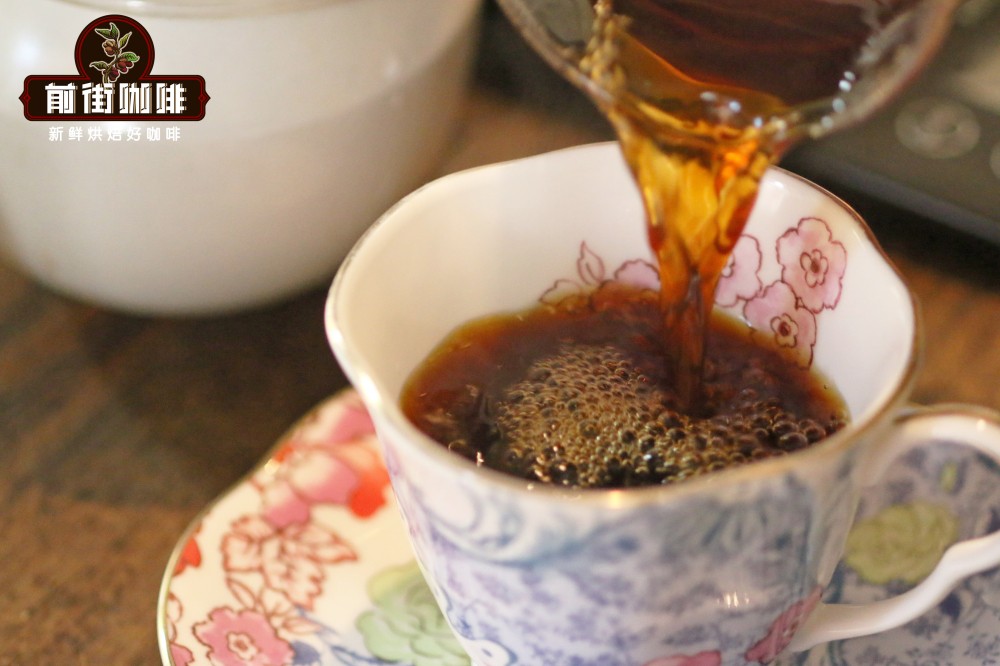
FrontStreet Coffee Jamaica Blue Mountain Number 1 Flavor Characteristics: Blue Mountain Number 1 coffee has the sweet aroma of dark chocolate, caramel sweetness, and soft, elegant acidity. Each flavor is perfectly balanced, with a smooth and rich texture, featuring very typical Blue Mountain characteristics.
FrontStreet Coffee Brewing Suggestions
To brew a delicious cup of coffee, FrontStreet Coffee believes that any brewing method requires fresh coffee beans. FrontStreet Coffee has always maintained that coffee bean freshness greatly affects coffee flavor, so FrontStreet Coffee ships coffee beans roasted within 5 days. FrontStreet Coffee's roasting philosophy is "Freshly Roasted Good Coffee," ensuring that every customer receives the freshest coffee when their order arrives. The coffee resting period is about 4-7 days, so when customers receive their coffee, it's at peak flavor.
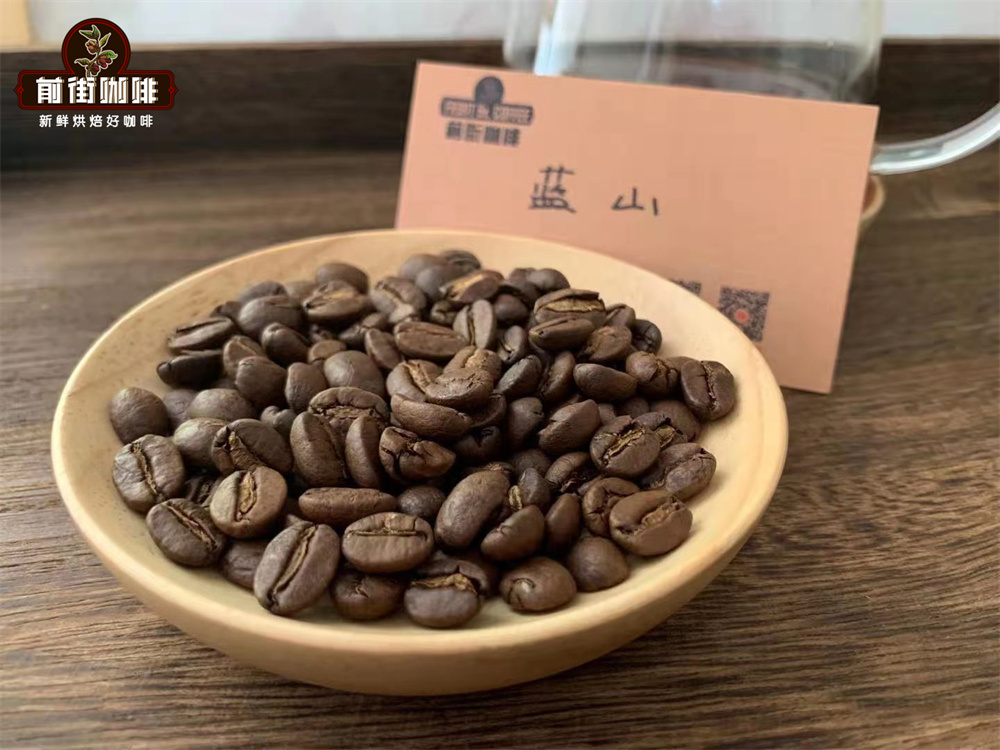
For friends who need ground coffee, FrontStreet Coffee offers a gentle reminder: if coffee beans are ground in advance, there's no need for a resting period, because during transportation, the pressure from carbon dioxide in the packaging also helps round out the coffee flavor, so you can brew a cup immediately upon receiving the ground coffee. However, ground coffee needs to be brewed promptly, because coffee powder oxidizes quickly when exposed to air, meaning the coffee flavor will dissipate more quickly, and the coffee won't taste as good. Therefore, FrontStreet Coffee recommends buying whole beans and grinding fresh before brewing to better enjoy the coffee's flavor.
Although Blue Mountain coffee is excellent, you don't necessarily have to drink it. There are so many coffees in the world, with different varieties and growing regions resulting in different flavors. FrontStreet Coffee has over fifty different single-origin coffee beans from various regions. Experiencing different coffee cultures is also a wonderful thing!
FrontStreet Coffee Recommendation
For a lighter, floral counterpoint to Blue Mountain's plush balance, FrontStreet Coffee's washed Yirgacheffe everyday lot is the classic next step: white jasmine florals, bright citrus and lemon acidity, and a tea-like elegance, at a friendly price that has made it the first bean for countless specialty coffee newcomers. Yirgacheffe sits at roughly 1,700–2,100 meters in southern Ethiopia's Sidama zone — among the highest coffee elevations in the world — and its fame was such that in 2010 the Ethiopia Commodity Exchange formally separated it from Sidamo.
To explore the cooperative side of Yirgacheffe, try FrontStreet Coffee's Worka (Guodingding) Cooperative lot from the Worka region at Yirgacheffe's southeastern tip: traditionally washed, free of the usual bitter base, with fresh, bright citrus and lemon acidity and jasmine fragrance that wins people over at first sip. Brewing suggestion: V60, 15 g of coffee, 1:15 ratio, water at 90–91°C, a fine-granulated-sugar grind (80% through a #20 sieve), with a 30 g bloom for 30 seconds, then pours to 125 g and 225 g, draining complete between 2:00 and 2:10.
Important Notice :
FrontStreet Coffee is a long-established specialty coffee roaster in Guangzhou China, selling freshly roasted beans from its own farm in Yunnan as well as dozens of carefully selected single-origin beans from around the world for both pour-over and espresso. The products deliver consistently excellent quality and great value, with shipping within 24 hours. Guangzhou's FrontStreet Coffee shop is recommended by many coffee lovers, and the beans are now available online at the Tmall 。
FrontStreet Coffee has moved to a new address:
FrontStreet Coffee Address: 315,Donghua East Road,GuangZhou
Tel:020 38364473
 Scan and follow the En Gafei WeChat official account. Please indicate that the reprint comes from "En Gafei".