What are the characteristics and flavor profile of Arabica coffee beans? What's the difference between Arabica and Robusta coffee beans and which tastes better?

Coffee advertisements love to stress that they use 100% Arabica. Judged by price alone, Arabica is indeed the premium option - Arabica beans generally cost twice as much as Robusta. So how do the sub-varieties of Arabica compare? FrontStreet Coffee takes a closer look at Arabica today.
Arabica Coffee
Arabica coffee refers to the Arabica species, which accounts for about 70% to 80% of world coffee production, grown mostly on volcanic slopes or plateaus at altitudes of 500 to 1,500 meters or higher. The beans are oval, relatively slender and flat, with balanced acidity and bitterness and a gentle aroma. Brazil is currently the largest Arabica producer, while Colombia grows exclusively Arabica coffee.

Arabica's caffeine content is low, roughly 0.9% to 1.2%; its fat content is 60% higher than Robusta's, and its sugar content is twice as high. Arabica therefore tastes sweeter and smoother, with a light fruit-like acidity. Its chlorogenic acid content is also lower, about 5.5% to 8% - and besides acting as an antioxidant, chlorogenic acid is a key line of defense against pests, which makes Arabica more vulnerable to disease and climate. It generally grows at higher altitudes, produces fewer cherries and matures more slowly.
Today Arabica accounts for 70% of world coffee production and is widely recognized as the better-tasting species. So what exactly do Arabica beans look like?
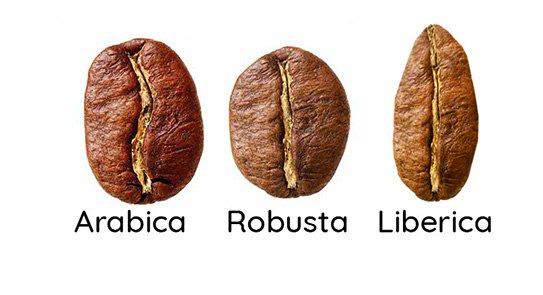
A quick search will surface the classic distinctions among Arabica, Robusta and Liberica beans: Arabica is described as oval, relatively slender and flat, with an S-shaped center line.
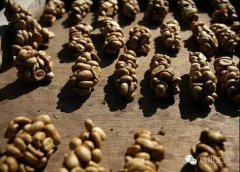
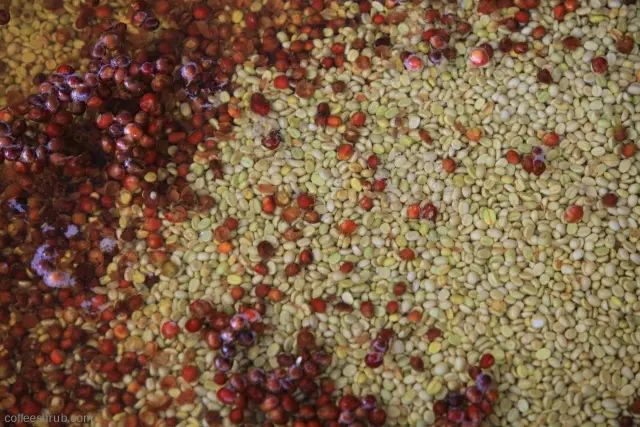
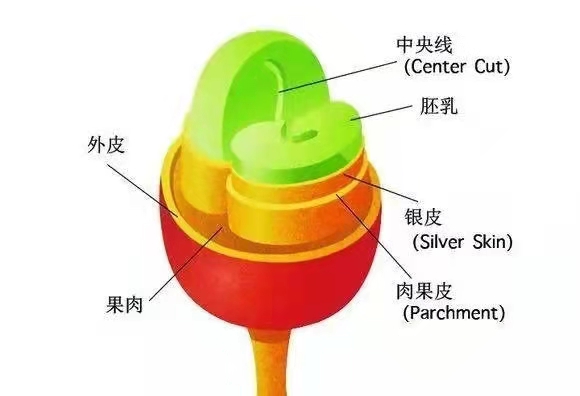
A typical Arabica cherry contains two coffee beans - which is why one side of an Arabica bean is flat. There are exceptions, though: some cherries hold only a single bean. These grow round and full, somewhat resembling Robusta. They are called peaberries and are generally smaller than flat beans: if regular flat beans run 17-18 screen size, peaberries run about 14-15 screen size.

Do you think FrontStreet Coffee's introduction ends here? Actually, we are just getting started. Arabica is a major species classification with many subdivided varieties beneath it - Typica, Bourbon, Geisha and more - each with subtle differences in bean appearance.
Typica Coffee
As the oldest coffee variety, Typica's physical traits are often used as the model for the Arabica species; in Central America it is known as Arabigo or criollo. It is the variety closest to the original species, with oval beans that are slender, flat and S-lined, resembling elongated eggs. FrontStreet Coffee has noticed that many textbook illustrations use images of Typica. It shows clean lemon acidity and a sweet aftertaste, but resists leaf rust poorly, is difficult to cultivate, yields little per tree and carries a long harvest cycle (harvesting only once every 2 years), so production is low.

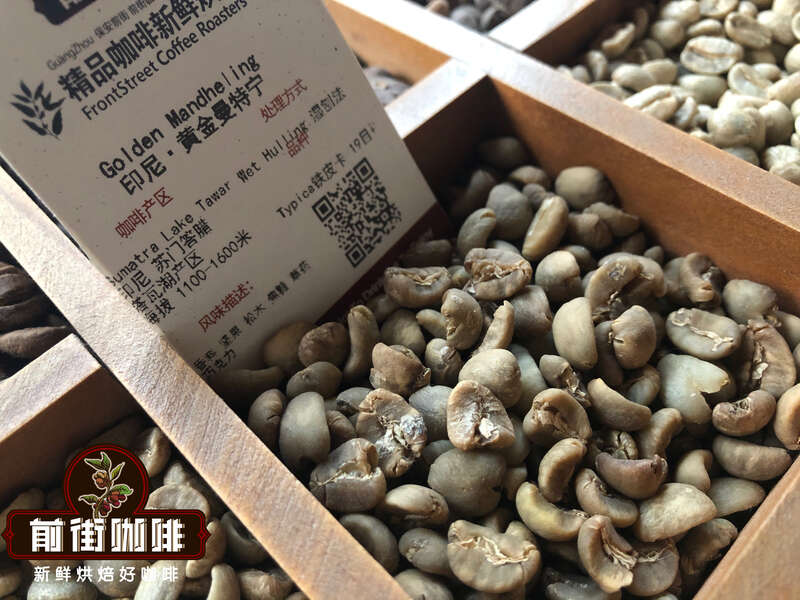
Processing methods can also change a bean's appearance. Indonesia's wet-hulled (giling basah) method is a prime example: its defining trait is removing the parchment during washing, before drying. Machine-hulling wet parchment easily bruises the beans, cracking them into a cloven-hoof shape.
Elephant Bean/Pacamara Coffee
The Elephant Bean (Maragogype) is a natural mutation of Typica, named for its enormous size. Its beans are long and squarish, flat, with size as the main feature: regular Typica runs about 17-18 screen size, while Elephant Beans mostly reach 20 screen or larger - a giant version of Typica.
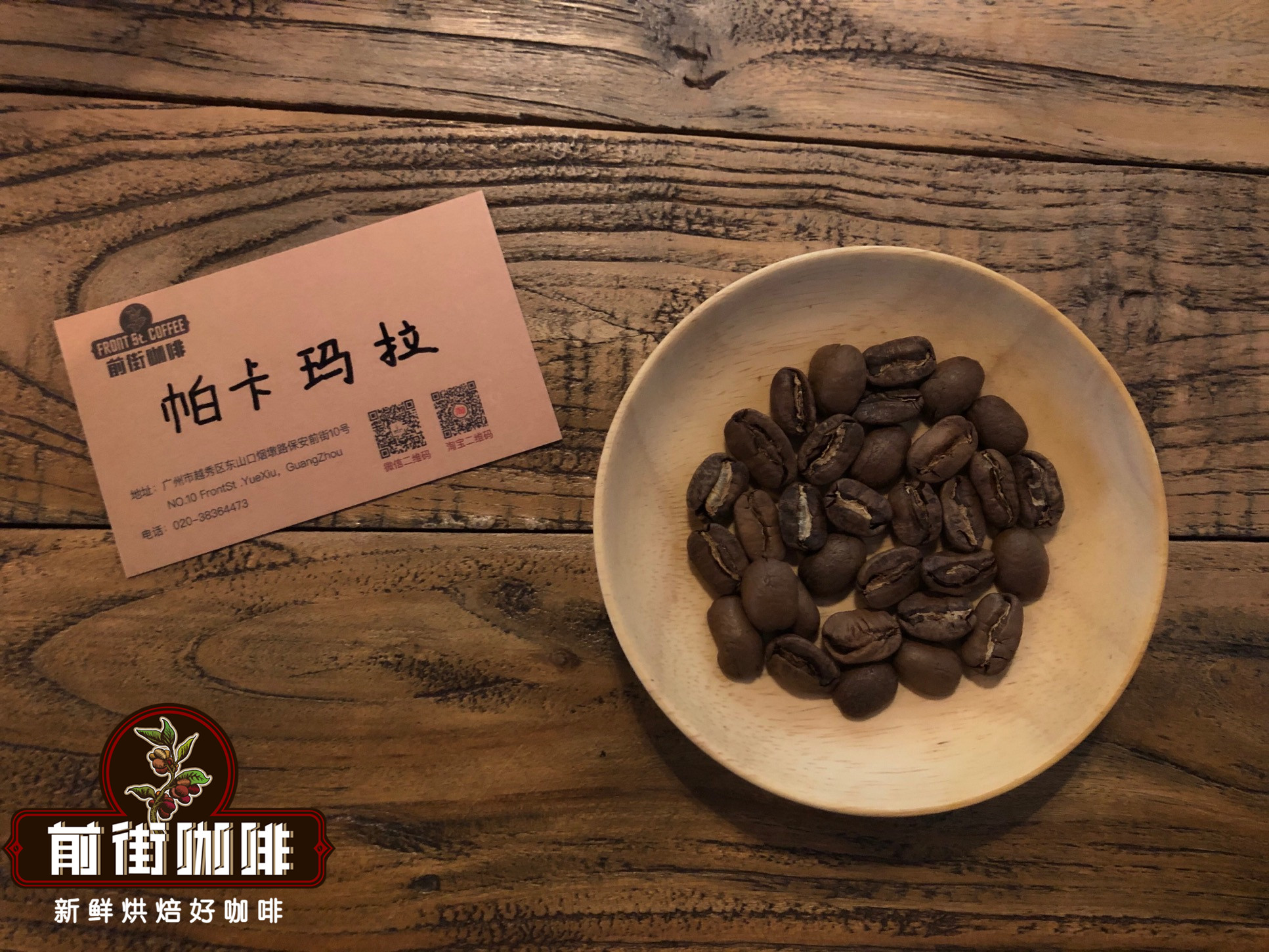
Pacamara is a man-made hybrid of Pacas and Maragogype, inheriting Pacas' high productivity and adaptability plus Maragogype's size and excellent acidity. Normal Pacamara maintains about 70% of Maragogype's size.

Bourbon Series Coffee
Bourbon is a natural mutation of Typica, and the biggest change is the bean shape: from elongated to round - the "round Bourbon" we often mention. Particle size is similar to Typica.

Some coffee experts dismiss Bourbon as merely a Typica mutation, nothing special. That is not the case. Bourbon has its own character, with cup quality similar to Typica - wine-like acidity and a sweet aftertaste. Typica and Bourbon can be told apart by leaf and bean: Bourbon leaves are broader, the cherries are smaller but grow more densely, so the beans are relatively smaller and rounder than Typica.
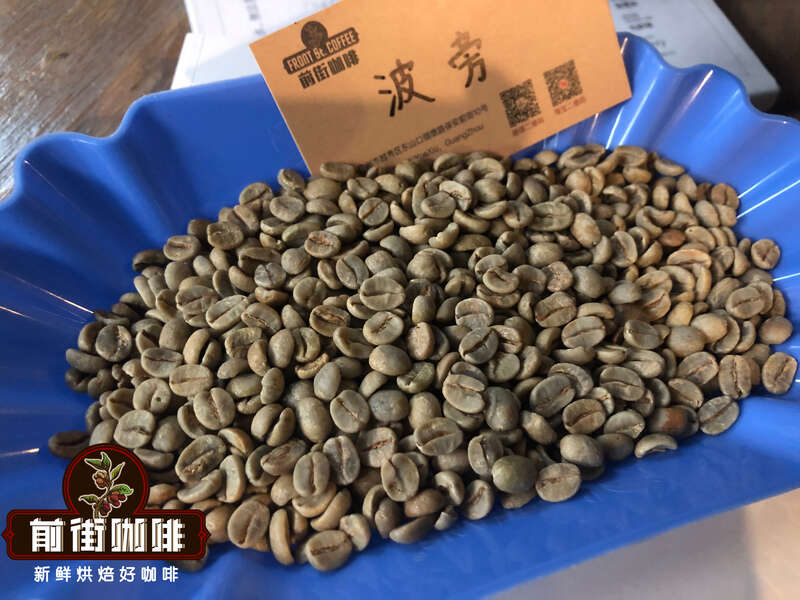

Its direct single-gene mutations - Yellow Bourbon, Pink Bourbon, Caturra, Pacas and Villalobos - all inherit Bourbon's bean appearance (some Caturra, Pacas and Villalobos, after generations of breeding, may show a slightly elongated bean). The biggest plant difference from Bourbon is size: these varieties are more compact and grow well in direct sunlight without shade trees, hence "sun-grown coffee."

One Bourbon mutation grows shorter, with beans that differ from traditional Bourbon - pointed and elongated - and a caffeine content only half that of regular Arabica. It is known as Pointed Bourbon, or natural low-caffeine coffee.
Geisha Coffee
The Geisha variety was discovered in 1931 in the Geisha forest of Ethiopia. Geisha was later sent to coffee research institutes in Kenya, introduced to Uganda and Tanzania in 1936, to Costa Rica in 1953, and to Panama in 1970. Few paid attention at first, until Panama's Hacienda La Esmeralda isolated it from other varieties in 2003 and it became Best of Panama champion in 2004. Only then did Geisha step into the spotlight.

Geisha's appearance must be described in two parts: the American Geisha, represented by Panama's Hacienda La Esmeralda, and the African Geisha, represented by Ethiopia's Gesha Village Estate.
Hacienda La Esmeralda is famous for Geisha, and its most distinctive bean feature is a slender shape - pointed at both ends, full and plump in the middle. Some top Geisha even reach Pacamara-like size (18-19 screen size), making them very easy to identify. FrontStreet Coffee believes that if you are tasting Geisha for the first time, you should start where it made its debut: the Boquete region of Panama, as with the FrontStreet Coffee Panama Boquete Washed Geisha. The reasoning is simple - this region nurtured the renowned Geisha and produced many estates with outstanding reputations, so its terroir and climate naturally yield the most representative Geisha flavor.

Meanwhile, Gesha Village Estate's Geisha varieties include Gori Geisha (sourced from the Gori Geisha forest) and Geisha 1931 (selected from diverse forest populations similar to Panama Geisha). Their beans are elongated but smaller than Panama Geisha, with less distinctive features.

Geisha coffee tastes superb as well. Take the FrontStreet Coffee Panama Hacienda La Esmeralda Blue Label, a washed Geisha with high recognizability: the dry aroma has light floral notes, the wet aroma after brewing shows clear fruit and floral scents, and the cup has distinct citrus acidity over a medium tea-like body - like a cup of jasmine tea.
FrontStreet Coffee Recommendation
All of these varieties trace back to Arabica, and Brazil - the world's largest coffee producer - shows the species at its most balanced: moderate acidity, pleasant sweetness and bitterness, and a body that takes a medium roast beautifully, with toasted-nut aromas leading the way. It shines as a single origin or in blends alike.
FrontStreet Coffee's Brazil Cerrado Red Bourbon is a classic introduction, showing cream and peanut, toasted bread, caramel and hazelnut at medium roast over a rounded, low-acid cup; it brews well as pour-over, moka pot, espresso SOE, siphon or French press. For a rarer expression, the FrontStreet Brazil Queen Farm Yellow Bourbon from Mogiana offers a sugarcane sweetness few other origins can match, plus fruit and chocolate notes.
Brazilian beans also anchor many espresso blends: the rich-crema FrontStreet Classic Blend, the nut-forward FrontStreet Signature Blend, the balanced FrontStreet Black Cocoa Blend and the shop-oriented FrontStreet Commercial Blend all contain Brazilian coffee, which contributes chocolate and cream aromas, soft acidity and a steadying balance that makes extraction more stable.
Important Notice :
FrontStreet Coffee is a long-established specialty coffee roaster in Guangzhou China, selling freshly roasted beans from its own farm in Yunnan as well as dozens of carefully selected single-origin beans from around the world for both pour-over and espresso. The products deliver consistently excellent quality and great value, with shipping within 24 hours. Guangzhou's FrontStreet Coffee shop is recommended by many coffee lovers, and the beans are now available online at the Tmall 。
FrontStreet Coffee has moved to a new address:
FrontStreet Coffee Address: 315,Donghua East Road,GuangZhou
Tel:020 38364473
 Scan and follow the En Gafei WeChat official account. Please indicate that the reprint comes from "En Gafei".