Indonesia Aceh Gayon Mantening Coffee Beans Flavor Profile Characteristics - Fair Trade Coffee
For professional coffee knowledge exchange and more coffee bean information, follow Coffee Workshop on WeChat (official account: cafe_style).
FrontStreet Coffee Indonesian Coffee Bean Recommendation - Aceh Mandheling Tiger
Indonesia is the world's largest archipelagic nation. As early as the 18th century, under Dutch rule, Arabica coffee trees were introduced, and the main producing areas today lie on Sumatra, Java, and Sulawesi. The Mandheling grown there has a deep, low-acid, richly flavored profile that some call "the world's most important coffee." Sumatra produces the most, and its leading growing area is Aceh province in the north.
The cooperative behind this coffee carries a somewhat tragic history. In a part of Sumatra that has long suffered natural disasters and ongoing conflict, almost every adult man has taken part in local armed fighting, while harvesting and planting have become the most important, and often only, source of income for many single mothers.
Mandheling is often described as the world's most mellow and aromatic coffee. Before Blue Mountain became widely known, it was regarded as the world's number one premium coffee. After roasting, the beans are fairly large, and the raw beans appear brown or dark green. It has a distinctive caramel-like fragrance and a rich, full taste, sweet and bitter without a soft acidity, yet still carrying bitterness. Production is relatively small, so the price runs a little higher than general coffee. The main Mandheling producing areas are Java, Sulawesi, and Sumatra, and about 90% of that output is Robusta; among them, the Mandheling from Sumatra is the most famous.
Because Mandheling beans lack acidic character of their own, they are generally used as a base for special brewing methods. During long periods of holding, or when made into iced coffee, there is no unpleasant astringent acidity. When you taste Mandheling, you feel an obvious smoothness on the tongue. It also has lower acidity, though that acidity can still be clearly tasted. The leaping micro-acidity mixes with the most intense fragrance and a long, sweet aftertaste, letting you appreciate the lively elements inside a gentle richness. Mandheling also carries a faint earthy aroma, which some describe as the fragrance of herbal plants.
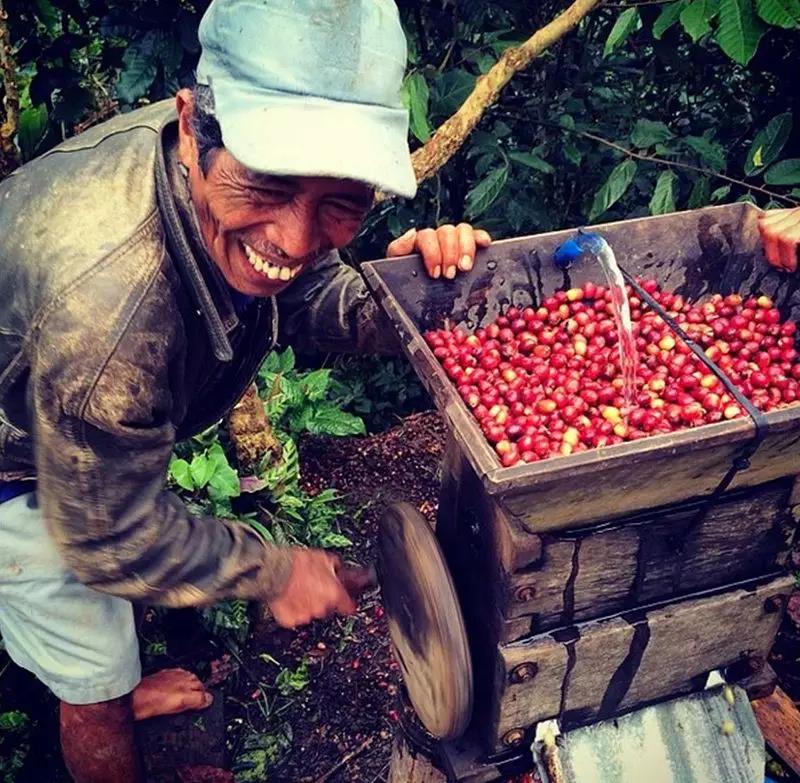
Indonesian Mandheling Coffee Processing Method
Indonesian Mandheling generally uses the wet-hulling method. Farmers harvest ripe cherries, remove the outer skin and pulp but keep the thin mucilage layer on the beans. After a water-soaking and fermentation step that floats off unstable, inferior beans, the firm, dense beans with their surface film are sun-dried either on raised racks or directly on the ground. Finally, a dryer brings them to a uniform moisture standard. Most distinctive of all: the beans, still wrapped in parchment and mucilage, are polished and cleaned of the surface film before shipment, then exposed on raised tarpaulin racks until they reach a dark green, dry color. The world calls this special method the Indonesian semi-washed, or wet-hulled, process. Large processing factories can control every step precisely, bringing flavor and mouthfeel to a certain level, while small farmers process raw beans in their own courtyards, so quality rises or falls with each farmer's methods and skill.
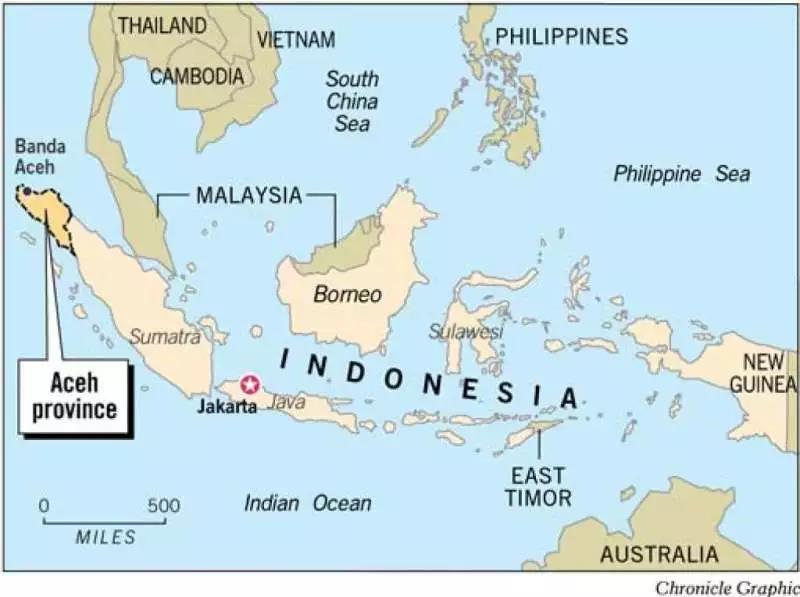
Gayo Mountain Mandheling Characteristics
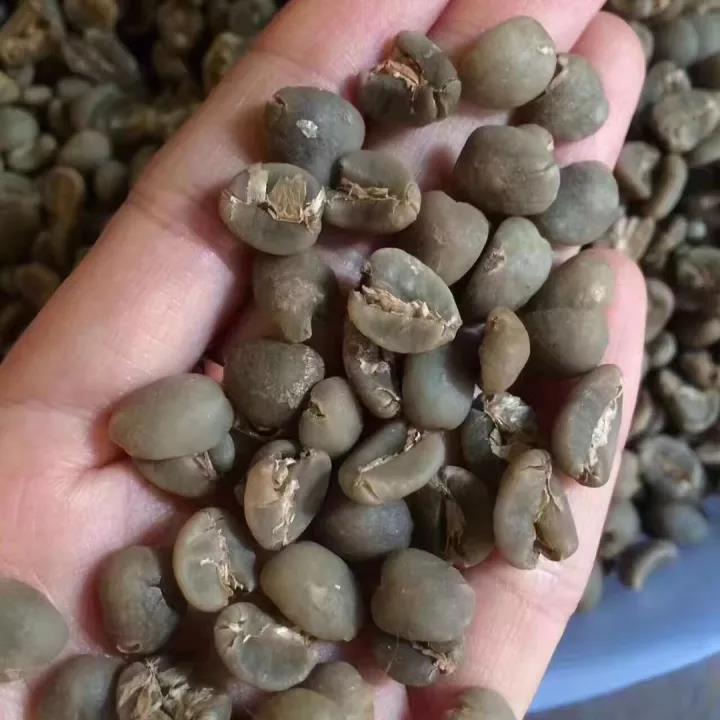
Mandheling grown on Gayo Mountain is Fair Trade (FT) certified coffee. Its raw beans are smaller, leaning toward a soy-bean shape, and most are PB small round beans, a clear contrast with the well-known Golden Mandheling. Golden Mandheling raw beans are larger, trending toward dark green, and appear as neat flat beans (Brouwer has comparison photos). In flavor, Golden Mandheling is rich and thick with honey and cream aromas, unique and irreplaceable on the coffee market. Gayo Mountain's Aceh Mandheling, meanwhile, shows spice with almond sweetness and a fresh grass fragrance, lower in complexity and smoother in the cup, making it one of Indonesia's two mainstreams alongside Golden Mandheling.
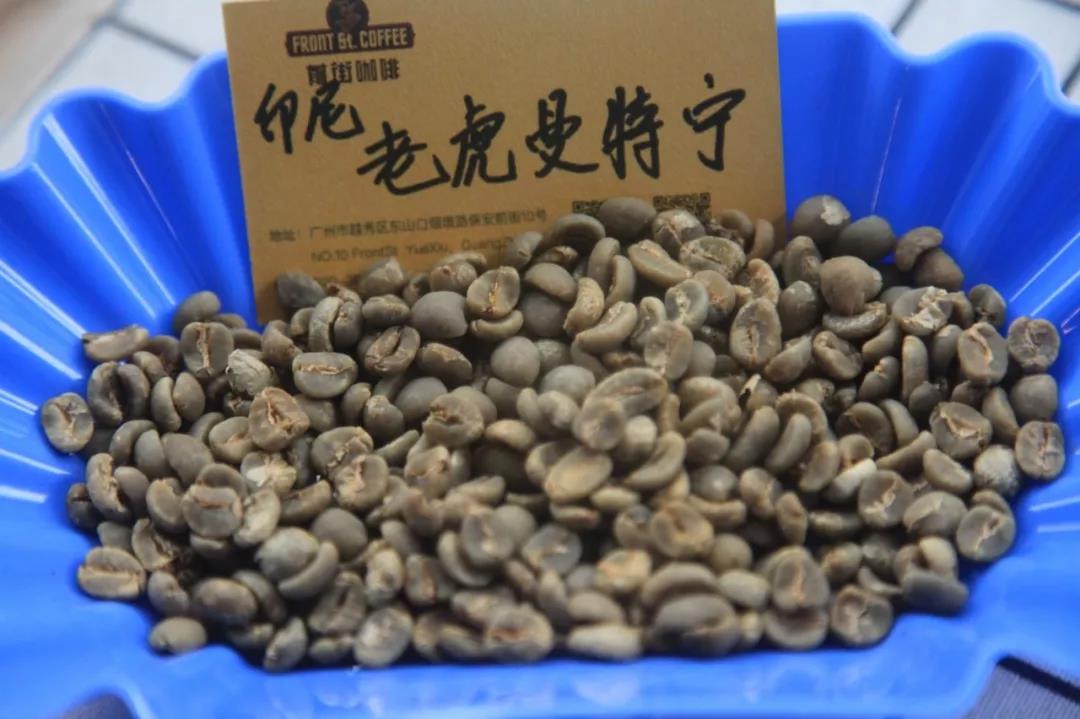
Aceh Mandheling Tiger: Roasting and Selection
Defective beans are carefully hand-selected at a rate of about 3%. Roasted to a dark roast (Full City+), the beans lose 18% of their weight, with empty shells and inferior beans accounting for 4%. When roasting Mandheling, you must extend the medium-low temperature phase to dehydrate and dry the coffee completely and reduce greenness. Mandheling suits dark roasting best because the beans are hard and whole, and will not develop the bitter, burnt taste that dark roasting can otherwise produce and that would mask its fragrant, low-acid character.
Gayo Mountain Mandheling raw beans appear yellowish-brown.
Flavor Profile by Roast Level
Dark roast (slightly strong to rich aroma): caramel biscuit sweetness. The biggest difference from Golden Mandheling is that Sumatra Gayo Mountain Mandheling carries some earthy aroma, with honey-almond sweetness and a fresh grass fragrance. The taste is more balanced and smooth than Golden Mandheling, with a slightly apple-like acidic aftertaste that is pleasant.
Gayo Mountain Mandheling also works well at medium-light roasts (City and Full City). At a light roast (City), it develops a spicy fruit flavor very much like the distinctive green-apple acidity of Panama coffee. At a dark roast (Full City), it has a very strong spice aroma, with a smooth, ester-like taste and honey-brown-sugar sweetness in the aftertaste.
Fair Trade Coffee
Fair trade coffee centers on trading directly with local coffee farmers at fair prices. Through transparent management models and business structures, it safeguards producers' working conditions and protects the local environment. It also provides related production technology and training, and helps build bridges, schools, hospitals, and other facilities. Its purpose is sustainable development and poverty reduction.
In 1989, the collapse of the International Coffee Agreement sent coffee market prices into free fall, pushing the lives of millions of coffee growers worldwide into crisis. In 1991, to respond to that crisis, several UK charities including Oxfam, Traidcraft, Equal Exchange, and Twin Trading joined forces to establish Cafédirect. It was an innovative achievement: the enterprise bypassed traditional markets and bought coffee beans directly from vulnerable growers in developing countries without going through intermediary suppliers.
FrontStreet Coffee Recommendation
To taste the Gayo Mountain style described here, FrontStreet Lintong Mandheling is a rewarding place to start. Grown in Sumatra's Lintong area and roasted to a medium-dark level, it brings out the herbal and woody aromas and the full, syrupy body that wet-hulled Sumatran coffee is known for, with low acidity, a bittersweet depth, and a long, sweet finish.
For a cleaner and sweeter take on the same terroir, FrontStreet PWN Golden Mandheling comes from the Gayo highlands of Aceh and is hand-sorted three times after rigorous screening. The result is a particularly clean cup with gentle herb and black chocolate aromas, a faint earthy note, and a pronounced caramel sweetness; it performs beautifully as a pour-over and holds its own on the espresso machine.
Important Notice :
FrontStreet Coffee is a long-established specialty coffee roaster in Guangzhou China, selling freshly roasted beans from its own farm in Yunnan as well as dozens of carefully selected single-origin beans from around the world for both pour-over and espresso. The products deliver consistently excellent quality and great value, with shipping within 24 hours. Guangzhou's FrontStreet Coffee shop is recommended by many coffee lovers, and the beans are now available online at the Tmall 。
FrontStreet Coffee has moved to a new address:
FrontStreet Coffee Address: 315,Donghua East Road,GuangZhou
Tel:020 38364473
 Scan and follow the En Gafei WeChat official account. Please indicate that the reprint comes from "En Gafei".