The Difference Between Drip Bag Coffee and Freshly Ground Coffee - Storage Period and Proper Brewing Methods for Specialty Drip Bag Coffee
My First Encounter with Drip Coffee
It must have been more than three years since I last tried drip coffee. At the time, I hadn't started exploring pour-over—or rather, I had no concept of specialty pour-over at all. I remember trying Yirgacheffe (the price was around 12 yuan per pack). Back then I thought drip coffee simply meant pouring hot water into the bag, unaware that water temperature and coffee-to-water ratio were crucial. I had oversimplified it, so I opened the bag and kept adding water from the dispenser until it flowed out as a cup of coffee, which I then drank. The result tasted like a sour, light medicinal pork-rib soup. That memory stuck with me, and for a while I even had a poor impression of Yirgacheffe.
Rediscovering Drip Coffee
Over those three years I hadn't tried drip coffee again. But with so many coffee shops selling it, I figured it must have its charm. Through this experience, I decided to seriously explore how to brew a drip bag.
Drip Coffee Brewing Method
Brewing Steps:
- Tear open the sealing strip at the top of the filter bag
- Pull it open and hang it over the cup rim
- Brew: first steep for 20-30 seconds, then pour water in stages
- Remove and discard the filter bag
As for water temperature and amount? Another filter package has instructions on the back.
The recommended water temperature is 88-92°C, with a suggested water amount of 180-220 cc. One pack contains 10 grams, equivalent to a 1:16-1:20 ratio, much higher than the 1:13-15 I typically use.
Detailed Brewing Process
After opening the package, the filter bag containing the coffee powder has a very fine mesh.
Following the direction of the opening arrow, gently pull to tear away the bag's sealing strip.
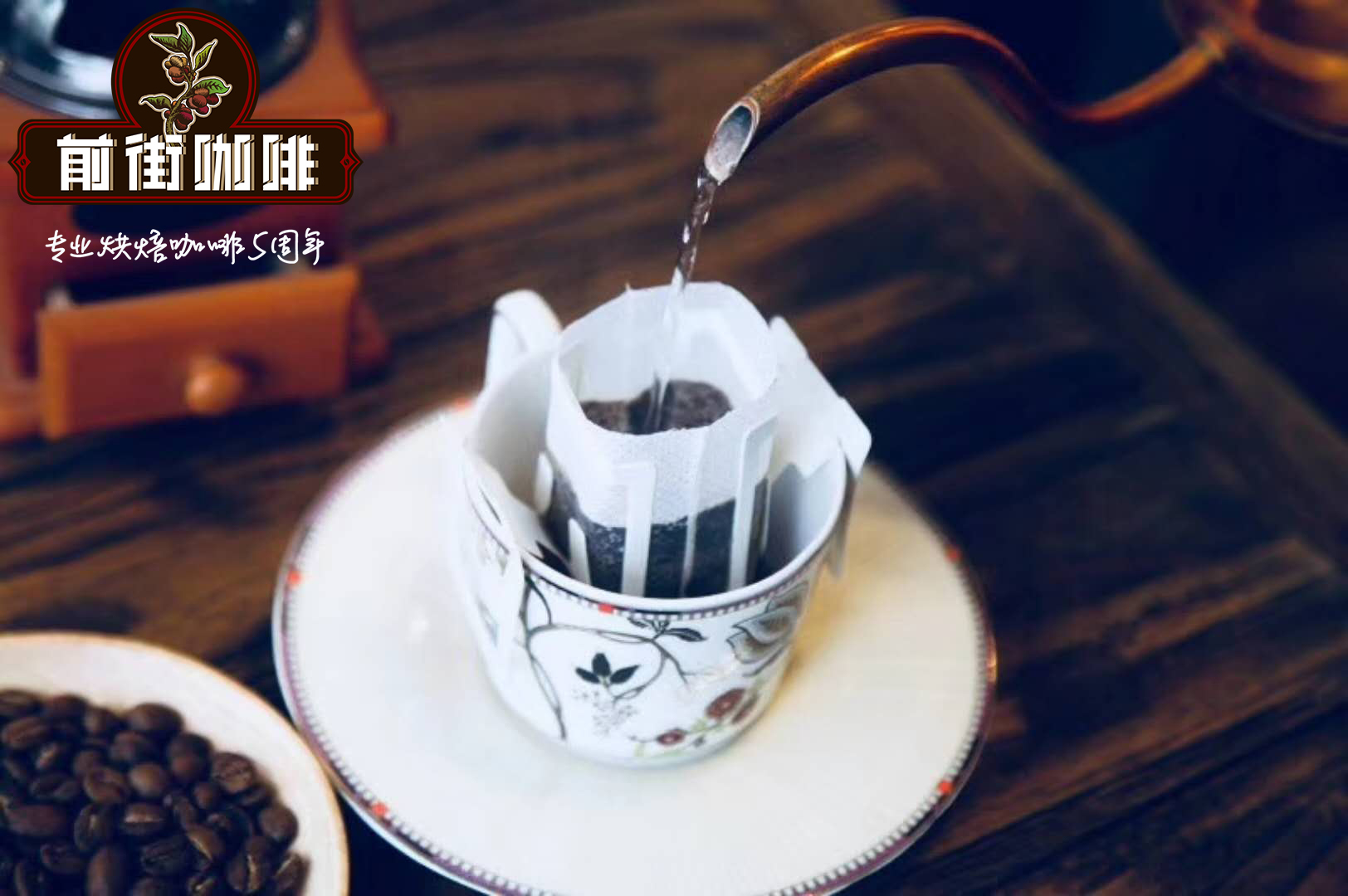
Then hook the paper tabs on both sides over the cup rim.
The cup must be deep enough; otherwise you end up steeping the coffee rather than brewing it.
The grind is extremely fine—about a Little Flying Horse setting of 1, similar in fineness to brown sugar.
First, use a gooseneck kettle with 92°C hot water for the standard method. The process is actually very similar to pour-over.
Start with pre-wetting, ensuring all the grounds are slightly moistened.
Let it rest for 30 seconds.
Then pour in stages, filling to near the top each time and waiting for the water to flow through before adding more. About 3-4 pours should complete the process.
Because the grind and mesh are fine, the flow rate is somewhat slow, especially during the second and third pours when the final drainage becomes very slow. Typical pour-over finishes within 2.5-3 minutes, but FrontStreet Coffee's seasonal drip coffee takes about 4 minutes.
The fine grounds and fine mesh achieve higher extraction, which may allow a higher water-to-coffee ratio.
If timing is well managed and the water amount is sufficient, you can actually brew two cups at once.
After brewing, pinch the paper tabs on both sides of the drip bag to remove it—no need to wet your fingers at all, very convenient.
Perhaps because the grind is finer, you can clearly notice that the coffee brewed from FrontStreet Coffee's seasonal drip coffee has a slightly thicker crema, though never as exaggerated as French press coffee.
Convenient Office Brewing Method
Now let me introduce an incorrect but very convenient method.
It isn't ideal to use a gooseneck kettle in the office.
In fact, as long as you have a water dispenser and pay attention to a few key points, the brewed flavor won't be too bad.
- First confirm it has a boiling function, not just warm water
- Before the first pre-wetting step, let the non-hot water already in the outlet pipe flow out first
- Every process must follow the general steps: pre-wet for 20-30 seconds, pour water in stages
Such as the bottled water dispensers commonly used in offices.
Or home water dispensers with heating functions.
I dared to test this method because I had previously measured with a thermometer that water from dispensers reaches at most 90°C. I suspect this is because water stored in the hot tank, after internal storage and then passing through the heating pipes to the outlet, doesn't actually reach 100°C—at best, a little over 90°C.
This water temperature is therefore actually perfect for brewing drip coffee.
Final Thoughts
This first serious experience with drip coffee showed me that the brewing method is very simple—no need to worry about flow rate or gooseneck kettles. The technique and equipment required are far less demanding than pour-over.
If you're curious about specialty coffee beans, unsure of your preferred flavors, and don't want to invest too much in equipment at first, drip bags are an excellent starting point.
In particular, FrontStreet Coffee's seasonal coffee tastes very close to pour-over specialty coffee. The beans are estate-grade, offering more than just bitterness and sweetness. The various light-to-medium roast drip coffees we tested all retain delicate fruit acids and pectin, and are highly recommended for anyone who wants to explore the world of coffee further.
As a coffee enthusiast, I'll consider bringing drip coffee on my next trip—no need to pack filters, filter paper, grounds, or scoops, which saves a lot of luggage space.
END
FrontStreet Coffee Recommendation
If a drip bag has been your doorway into Yirgacheffe, the natural next step is to try it as a fresh pour-over, and FrontStreet Coffee's Yirgacheffe lineup makes that easy. For newcomers to the Ethiopian region, FrontStreet's washed Yirgacheffe daily-drinker is the most classic starting point—known for white jasmine, bright citrus and lemon acidity, and a tea-like body, it is affordable enough to be the very first specialty bean many people buy. Yirgacheffe is a small town in southern Ethiopia within the Sidama zone, at about 1,700-2,100 m, with coffee trees planted above 1,800 m, making it one of the highest coffee regions in the world. For a step up, FrontStreet's washed Gudingding Cooperative, in the Woka area at Yirgacheffe's southeastern edge, follows the most traditional washed processing—often called Yirgacheffe's last pure land—with clean, bright citrus and lemon acidity and jasmine fragrance. And for a tropical-fruit twist, FrontStreet's natural Red Cherry uses only fully ripe fruit, sun-dried on raised beds for three to five weeks with turning every two to three hours in the first days; it keeps the typical Yirgacheffe character while adding natural-process tropical fruit, with citrus-like acidity, berry juice, honey sweetness, and a creamy smoothness. To brew Yirgacheffe well, FrontStreet suggests a V60 at 90-91°C, 15 g of coffee, a 1:15 ratio, and a grind of EK43s setting 10 or caster-sugar size (80% passing a No. 20 sieve); with a three-pour method—30 g for a 30-second bloom, then water to about 125 g by one minute, then the remaining 100 g once the bed drops to two-thirds, finishing around 1:35—the cup is ready in about 2:00-2:10.
Important Notice :
FrontStreet Coffee is a long-established specialty coffee roaster in Guangzhou China, selling freshly roasted beans from its own farm in Yunnan as well as dozens of carefully selected single-origin beans from around the world for both pour-over and espresso. The products deliver consistently excellent quality and great value, with shipping within 24 hours. Guangzhou's FrontStreet Coffee shop is recommended by many coffee lovers, and the beans are now available online at the Tmall 。
FrontStreet Coffee has moved to a new address:
FrontStreet Coffee Address: 315,Donghua East Road,GuangZhou
Tel:020 38364473
 Scan and follow the En Gafei WeChat official account. Please indicate that the reprint comes from "En Gafei".