Why is Yunnan coffee called small bean coffee? How to identify authentic Yunnan small bean coffee?
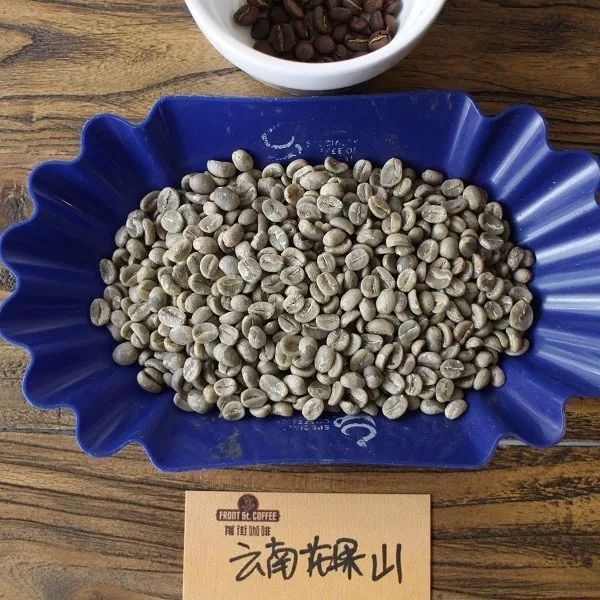
Why is Yunnan Coffee Also Called Small-Bean Coffee?
Q: What are the three common coffee varieties we encounter?
- Arabica
- Robusta
- Liberica
Q: How does China's agricultural department classify these three varieties by bean size?
They are classified as large beans, medium beans, and small beans.
- Large beans originate from Liberia, are widely distributed, and are of poor quality
- Medium beans originate from Central Africa and are used mainly for instant coffee production
- Small-bean coffee was first planted in the Cameroon and Guinea highlands, later introduced to Latin America and Asia, and is also the finest variety (this is the variety introduced to Yunnan)
Yunnan's coffee varieties today include Bourbon, Typica, and Catimor. Of these, only Typica and Bourbon are pure Arabica varieties. Catimor is merely a hybrid cross between medium and small beans, with noticeably larger beans that inherit the high yield of medium beans but only mediocre flavor. Typica, by contrast, is a small-bean variety with a smaller bean shape, commonly known as the small-bean variety, and it is also the authentic Yunnan small-bean coffee.
Common varieties on the market include Typica and Catimor. Typica is an old variety, while Catimor has produced many newer types, such as Catimor AA, Catimor Peaberry, Catimor Natural, and Catimor Honey Process, all belonging to the Catimor family. So there are currently as many as 5 common varieties on the "Yunnan small-bean" market. To taste authentic Yunnan small-bean coffee, you need to keep your eyes open and recognize the Typica variety.
Flavor Characteristics of 5 Coffee Varieties (for reference only, not for commercial evaluation)
Each of the 5 coffee varieties has its own flavor characteristics:
- Typica: Clean mouthfeel, round and smooth, relatively balanced
- Catimor AA: Balanced texture, soft and bright entry, slightly fruity
- Catimor Peaberry: Rich aroma, nutty, mellow entry
- Catimor Natural: Balanced mouthfeel, sweet and round, black tea aftertaste
- Catimor Honey Process: Fruit sweetness, vanilla, lively and diverse flavors
The flavor descriptions above (overall impressions of aroma, acidity, bitterness, sweetness, and body) have been laid out in detail. You should now have a general sense of how each bean differs.
Overall, each variety tastes different and has its own character:
01. Typica (Old Variety)
The oldest variety among Yunnan beans, close to the original type. The trees are old, yield is low, and bean quality is high, with a clean mouthfeel and balanced, soft, smooth flavors.
02. Catimor AA (Large Beans)
AA refers to the grade, with bean sizes between 16 and 18 mesh, carrying a slight fruit acidity and a bright texture.
03. Catimor Peaberry (Peaberry Variety)
Coffee beans generally grow in pairs (the double-seeded type), while peaberry varieties are single-seeded. Generally speaking, they absorb more of the "essence of sun and moon" than flat beans, so the mouthfeel is relatively mellower and richer, with a good aftertaste.
04. Catimor Natural (Natural Drying)
Natural refers to the processing method, also called the natural drying method. This variety has a richer mouthfeel, sweet and round, with an aftertaste. It is my personal favorite, offering fruit sweetness and sourness with red-wine fermentation notes.
05. Catimor Honey Process (High Sweetness)
Honey process is a processing method, divided into red honey and black honey. This variety uses fully red cherries. Its advantages are high sweetness, good cleanliness, and rich, lively, diverse flavors.
Speaking of processing methods, you might ask how they differ in mouthfeel:
- Washed Process / WASH (simple mouthfeel): Emphasizes brightness, acidity, and floral notes
- Honey Process / HONEY (like eating dried fruit): Emphasizes sweetness and a fruity mouthfeel
- Natural Process / NATURAL (with the taste of sunshine): Emphasizes richness and sweet-and-sour notes
The varieties and processing methods above are the common ones encountered day to day. This year also produced a very distinctive Yunnan bean, "Caturra" (a new variety), cultivated at an altitude of 1600 meters: "Balanced mouthfeel, balanced bitterness and acidity, thick aftertaste with sweetness," very close to Jamaican Blue Mountain coffee.
06. Caturra (New Variety)
Balanced mouthfeel, balanced bitterness and acidity, thick aftertaste with sweetness.
FrontStreet Coffee Recommendation
If authentic Yunnan small-bean coffee is what you are after, FrontStreet Coffee's Yunnan small-bean beans are the straightforward starting point. Grown in the Baoshan region and given a washed process and a medium roast, they show soft nut and chocolate sweetness with a light plum acidity, a gentle, balanced cup that has become many drinkers' first taste of Yunnan.
To see what the old Typica variety can do in Yunnan, try FrontStreet Coffee's 2013 natural Typica. FrontStreet established its own estate in 2013 and planted Typica there, both because it is one of the oldest coffee varieties with pure Arabica genetics and because Typica was the first variety planted in Yunnan. Only fully ripe red cherries are used, naturally processed and given a medium roast, so the cup is more balanced with brighter sweet-and-sour notes, dark berry character, caramel sweetness, chocolate, a hint of dried apricot, and a black-tea finish.
For a Yunnan flavor in espresso form, FrontStreet Coffee's Black Cocoa Blend brings together Yunnan small-bean coffee and Brazil's Cerrado. The Brazilian beans supply mixed-nut aroma and balance, while the Yunnan beans contribute chocolate and citrus; the resulting Americano is balanced across sweet, sour, and bitter with nut and brown-sugar notes, and as a latte it turns smooth with almond and cream.
Important Notice :
FrontStreet Coffee is a long-established specialty coffee roaster in Guangzhou China, selling freshly roasted beans from its own farm in Yunnan as well as dozens of carefully selected single-origin beans from around the world for both pour-over and espresso. The products deliver consistently excellent quality and great value, with shipping within 24 hours. Guangzhou's FrontStreet Coffee shop is recommended by many coffee lovers, and the beans are now available online at the Tmall 。
FrontStreet Coffee has moved to a new address:
FrontStreet Coffee Address: 315,Donghua East Road,GuangZhou
Tel:020 38364473
 Scan and follow the En Gafei WeChat official account. Please indicate that the reprint comes from "En Gafei".