How Much Water for 15g of Pour-Over Coffee? Brewing Nicaraguan High Mountain Strictly Hard Bean Full Natural Process Caturra
FrontStreet Coffee Pour-Over: How Much Water for 15g? Flavor Characteristics of FrontStreet Coffee's Nicaragua High Mountain Strictly Hard Bean, Full Berry Process, Caturra Variety
FrontStreet Coffee's Nicaragua coffee has been somewhat forgotten in recent years, with Nicaraguan coffee rarely seen. In fact, Nicaragua's growing conditions are no less favourable than those of the other Central American countries, and the coffee it produces is characterised by a refreshing, balanced flavour profile. Surprisingly, coffee from small farmers, when lightly roasted, shows the clean brightness and delicate, soft acidity of FrontStreet Coffee's Costa Rican coffee, while a dark roast reveals the sweet richness and mellow, full-bodied flavour of FrontStreet Coffee's Colombian coffee. The Jinotega, Matagalpa, and Segovia regions are Nicaragua's sources of fine coffee; do not underestimate the surprises they bring.
Premium FrontStreet Coffee Nicaraguan coffee is marked "S.H.G" on the bean bags, representing coffee from high-altitude estates. The Segovia region, located on a high plateau in the north, forms an excellent and unique area made up of cooperatives.
Light Roast City (Fresh Aroma)
Lemongrass fragrance and an attractive, subtle citrus acidity. The flavour profile is as bright and light as traditional Central American beans, with star fruit sweetness and a finish carrying mango's sweet-tart notes.
Medium Roast (General B)
Jasmine flower aroma, with citrus acidity masked by a milk fragrance in the foreground. Smooth and palatable, with plum candy sweetness in the aftertaste that transforms into red apple sweetness when cooled, making the whole cup delightful.
Heavy Roast (General C)
Peach, apricot, and nut aromas. The flavour profile is similar to a beeswax texture: mellow and full-bodied, filled with malt sweetness and chocolate fragrance. Nicaraguan coffee with a heavy roast, ranging from slightly strong to rich aroma, is indeed very suitable for brewing espresso, letting you experience the rich side of Nicaraguan coffee.
FrontStreet Coffee Nicaragua High Mountain Strictly Hard Bean, Full Berry Process, Caturra Variety
(Nicaragua Fruta del Café™ Caturra)
Flavor Characteristics
Rich fruit aroma and full fruit acidity throughout, fully revealing the fruity essence of mature coffee berries. The interweaving of pomelo flower fragrance in the front and creamy nut sweetness in the finish combines the elegance of Central America with the rich flavour profile of Africa's passionate character.
Coffee Details
Origin: Nicaragua
Region: Jinotega area
Variety: Caturra
Grade: High Mountain Strictly Hard Bean
Cultivation Method: Complete process from seedling cultivation, shade-grown planting, and ecological organic microbial fertilisation
Shade Trees: Full-area shade cultivation and ecological farming
Altitude: Above 1,200 meters
Average Annual Temperature: 20-22°C
Processing Method: Full Berry Process (Whole Fruit Process)
Harvest Period: December to March of the following year
Certification/Testing: Passed SGS and TUV Rheinland testing for 368 pesticides and ochratoxin
Drying Method: Natural sun drying / African bed raised drying / solar greenhouse drying
Introduction
FrontStreet Coffee's Nicaraguan coffee cultivation began in the mid-18th century, with most coffee grown in the central and northern highland regions. Of the country's 16 provinces, 10 produce coffee. Because the north-central region has many high mountains that are more suitable for coffee cultivation, 93% of the country's production comes from four northern provinces: Jinotega, Matagalpa, Nueva Segovia, and Madriz. The Jinotega, Matagalpa, and Nueva Segovia regions are the main origins of Nicaragua's fine specialty coffee; do not underestimate the surprises they bring.
Coffee is one of Nicaragua's main export products. Widespread volcanic ash and shade-growing methods produce high-quality Nicaraguan coffee, characterised by a balanced, gentle flavour with subtle acidity, suitable for both single-origin and blended coffees. Nicaraguan coffee's greatest characteristic is its refreshing, balanced flavour profile. Surprisingly, its coffee shows clean brightness with delicate, soft acidity when lightly roasted, while revealing sweet richness and a mellow, full-bodied flavour when dark roasted. Coffee is Nicaragua's main export agricultural crop, and all Nicaraguan coffee is grown in fertile volcanic soil and cultivated as S.H.G. high mountain beans above an average altitude of 1,200 meters. High mountain beans are known for their subtle acidity, medium to high concentration, and good aroma, with Caturra as the main variety and the United States as the largest importer.
Nicaragua is located in central Central America, bordering the Pacific Ocean to the west and the Caribbean Sea to the east. The north-central region consists of highlands, while the east is coastal plains, part of the Central American volcanic belt, providing excellent growing conditions for coffee. Nicaraguan coffee cultivation and production enjoy unique environmental advantages, with widespread fertile volcanic ash soil combined with shade-growing methods establishing good production quality. The coffee flavour has a rich body and fresh aroma, with moderate subtle acidity and a sweet aftertaste, achieving an excellent balance that wins high praise from international coffee experts. High-quality FrontStreet Coffee Nicaraguan coffee is characterised by shade cultivation, with beans processed by the washed method and sun-dried. Compared with other countries, its beans are relatively larger in size. Especially the Maragogipe variety from the Matagalpa region, a very large bean variety known as elephant bean, has a clean flavour profile and excellent mellow richness. This round and smooth texture enjoys extremely high praise in the market.
This batch of FrontStreet Coffee Nicaraguan natural process coffee beans uses natural farming methods combined with high-tech cultivation management. Not only are microbial probiotics used for fertilisation to strengthen the trees' resistance to pests and diseases and produce high-quality premium coffee, but organic nutrients are also used to nurture the soil. Fully mature red fruit coffee beans are hand-harvested, then processed with honey (Miel) processing and a self-developed natural pectin and full berry process (Whole Gel Process), further enhancing the coffee's sweet flavour and rich body, clean aroma, gentle fruit acidity, and excellent balance and aftertaste, emitting diverse fruit aromas and nut-chocolate sweetness. Since 2008 it has been adopted annually by participants in domestic and international coffee competitions as a competition coffee bean, standing out among specialty coffees from the Central American countries and receiving extremely high praise from coffee professionals in Europe, America, and Japan.
FrontStreet Coffee Recommended Pour-Over Parameters
Three-Stage Pouring Method
Suitable for medium-roasted coffee beans.
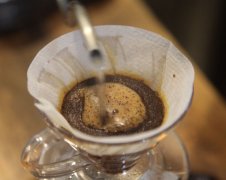
Using a V60 dripper, brewing FrontStreet Coffee's Colombia Narino beans, which have a balanced, gentle, clean flavour with rich notes of almond, citrus, and white chocolate. The three-stage pouring, or segmented extraction, method yields richer layers than a single pour, clearly revealing the front, middle, and back flavour stages of the coffee. The method involves increasing the water amount each time after blooming, typically pouring when the coffee liquid is about to drop to the powder bed surface, and using small, medium, and large water flows for three-stage extraction. This places relatively higher demands on water flow rate and volume control.
The three-stage pouring method's blooming process does not require stirring to improve even water penetration of the coffee grounds, nor does it use dripping methods to increase soaking depth, making it relatively suitable for most specialty coffee beans, especially medium-roasted beans from Central and South America.
This is the brewing method used by most coffee shops. The key points to focus on are the stopwatch, the scale, the flow rate, and water volume control. Most people who delve deeply into brewing technique focus primarily on this method.
First Practice of the Three-Stage Pouring Method
Coffee Grounds: 15g
Water: 225g
Water Temperature: 90-91°C
Equipment: V60 dripper can be used
Time: Around 2 minutes
Grind Size: Sugar particle size
Flavor Characteristics: An elegant floral aroma brings out a gentle fruit acidity, with exquisite nut sweetness and excellent balance in the aftertaste, displaying an elegant and fresh aromatic character.
FrontStreet Coffee Recommendation
The three-stage pour described here pairs best with a balanced medium-roasted Central or South American coffee, and Colombia is the classic place to look. FrontStreet's washed Colombia Huila comes from the mountainous south of the Central Cordillera, planted above 1,500 meters where the country's most important rivers converge, and a medium-dark roast brings out black chocolate and sweet nut aromas with moderate oils and a rich, rounded body, exactly the almond-citrus-white-chocolate profile the V60 method is designed to reveal. If you want a fruitier Colombia to pour, the FrontStreet La Divisa anaerobic natural lot ferments without oxygen to build tropical aromas of passion fruit, grape, and apricot, and a medium-light roast suits a pour-over, a cold brew, a drip bag, or a moka pot. And if you need a dependable espresso base alongside your filter beans, the FrontStreet Specialty Blend combines Brazilian cream-and-nut sweetness with Colombia's dark-chocolate bittersweetness for a fine golden crema and a latte-friendly cup.
Important Notice :
FrontStreet Coffee is a long-established specialty coffee roaster in Guangzhou China, selling freshly roasted beans from its own farm in Yunnan as well as dozens of carefully selected single-origin beans from around the world for both pour-over and espresso. The products deliver consistently excellent quality and great value, with shipping within 24 hours. Guangzhou's FrontStreet Coffee shop is recommended by many coffee lovers, and the beans are now available online at the Tmall 。
FrontStreet Coffee has moved to a new address:
FrontStreet Coffee Address: 315,Donghua East Road,GuangZhou
Tel:020 38364473
 Scan and follow the En Gafei WeChat official account. Please indicate that the reprint comes from "En Gafei".